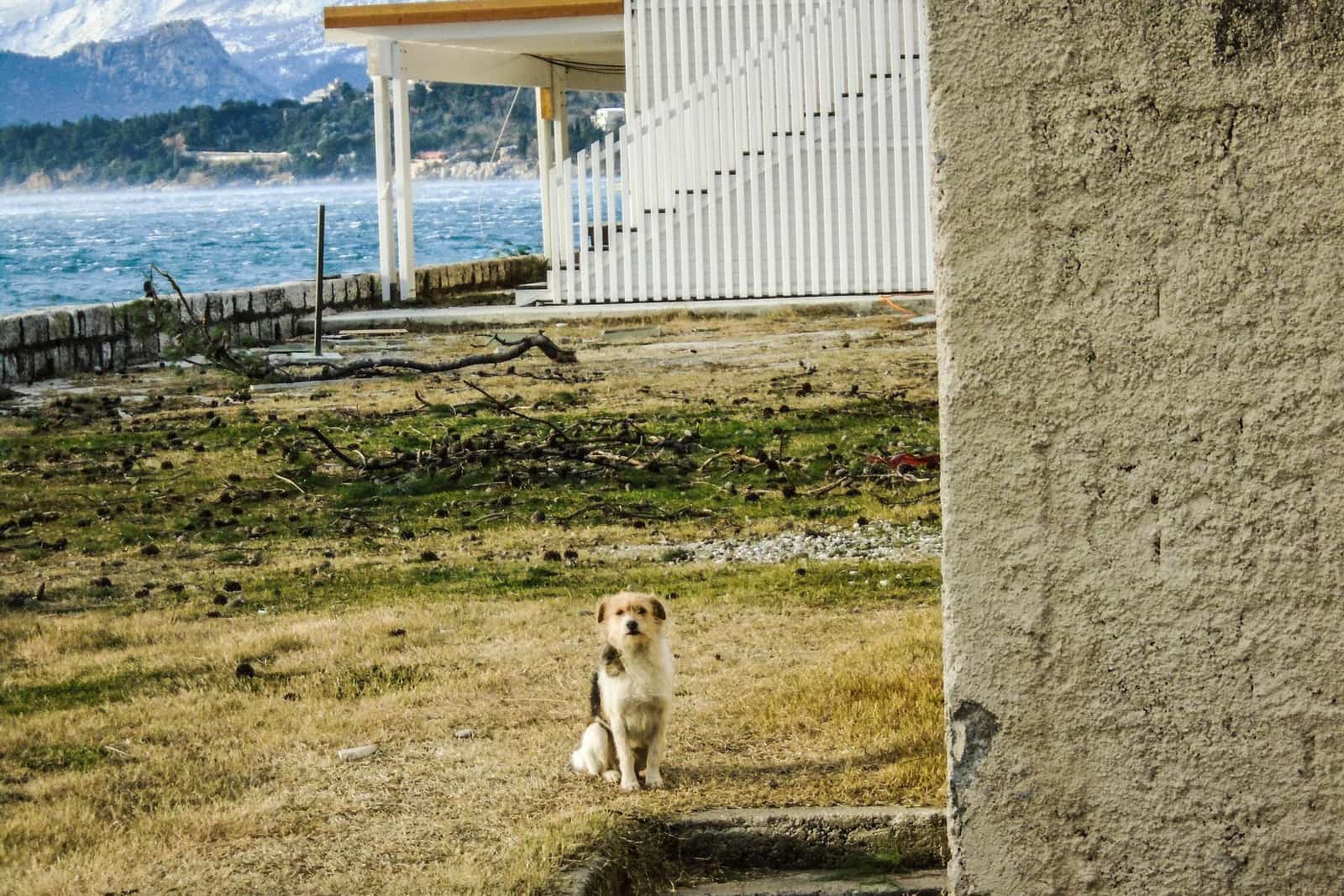
Travelling to Montenegro with a dog or cat

Up to five dogs or cats may enter Montenegro with their owner. Each needs a microchip, a pet passport, a rabies vaccination given after 12 weeks of age (at least 21 days before travel if it is the first) and a health certificate from an official vet of the country you leave from, issued no more than 10 days before the border check. Dogs also need a tapeworm treatment 24 to 120 hours before entry. A rabies titre test is required for pets from countries outside the EU list (official texts disagree on whether that still applies; see below). Going home to the EU, no titre test has been needed since 19 June 2026, but the certificate of a Montenegrin veterinary inspector still is.
Entry rules for dogs and cats (by where you travel from)
Montenegro's rules are in the Rulebook on non-commercial movement of pets (Sl. list CG 42/2016), which takes over EU Regulation 576/2013. The competent authority is the Directorate for Food Safety, Veterinary and Phytosanitary Affairs (Uprava za bezbjednost hrane, veterinu i fitosanitarne poslove, UBHVFP). Every pet needs:
- To travel with the owner or a person the owner authorises, not for sale; up to five pets. More than five only for competitions, shows or sporting events, with written proof of registration, and only animals over six months old.
- A microchip or other prescribed identification.
- A pet passport.
- A rabies vaccination given when the animal was older than 12 weeks; after a first vaccination, 21 days must pass before travel. The Directorate also sets a minimum age of three months.
- A veterinary health certificate issued by an official vet of the country of departure.
Montenegro's certificate model for dogs, cats and ferrets is valid for 10 days from the day the official vet issues it to the document and identity check at the border, extended by the length of a sea voyage. In it the owner declares that the animals will be with the owner or the authorised person within five days of the owner's own travel. From the US, an accredited vet issues the certificate, USDA APHIS endorses it, and the printed endorsed copy travels with the animal.
| Travelling from | Rabies titre test | Tapeworm treatment |
|---|---|---|
| An EU state or a country listed in Annex II of Reg. 577/2013 (the list the certificate model names) | Not required | Dogs: 24 to 120 hours before entry. Cats: not covered by the E. multilocularis rulebook (see below) |
| Any other country | Required under the certificate model and the 2016 rulebook; plan for the test | Dogs: 24 to 120 hours before entry. Cats: not covered by the E. multilocularis rulebook (see below) |
The titre test: what the texts say
The 2016 rulebook (Art. 4) lists a rabies antibody titre test for every pet, taken 30 days after vaccination and at least three months before travel. Montenegro's certificate model, in the June 2025 version, narrows it to pets that come from or pass through a country not on the EU list (Annex II of Reg. (EU) 577/2013); the certificate is the document the border checks, so that is the rule that applies in practice. The EU added Montenegro to its own list on 19 June 2026 (Reg. 2026/1228). The Embassy of Montenegro in Italy reads this as the end of the titre test for travel to Montenegro too, but the regulation governs pets entering the EU, the Directorate's notice of 16 June 2026 speaks only of pets going from Montenegro to EU states, and no published Montenegrin act has changed the entry rule.
The safe plan: a pet from the EU or from a country on the EU list needs no test. A pet from any other country should have one unless the Directorate confirms otherwise: a blood sample at least 30 days after vaccination and three months before the certificate (the rulebook says before travel), a result of at least 0.5 IU/ml, tested in an EU-approved laboratory. The Directorate's veterinary inspection phone is +382 20 201 945.
Tapeworm treatment for dogs
Dogs entering or leaving Montenegro are treated against the tapeworm Echinococcus multilocularis with praziquantel or an equivalent, no more than 120 and at least 24 hours before the planned entry or exit, and the treatment is recorded on a certificate (Art. 4 of the 2016 rulebook on E. multilocularis in dogs). The rulebook on non-commercial movement (Art. 4) lists this treatment for dogs and cats "in the prescribed way", but the only prescribed treatment, in the E. multilocularis rulebook, covers dogs. If you travel with a cat, ask the Directorate whether anything is needed.
Veterinary border inspection posts
The Directorate's list of border inspection posts (1 September 2022) names ten, at nine crossings, with Dobrakovo road and Dobrakovo railway counted separately:
- Božaj, road (Albania)
- Podgorica, railway (Albania)
- Podgorica Airport
- Bar, sea port
- Dobrakovo, road and railway (Serbia)
- Debeli Brijeg, road (Croatia)
- Dračenovac, road (Serbia)
- Kula, road (Kosovo)
- Ilino Brdo, road (Bosnia and Herzegovina)
Hours differ by post (as listed in 2022; confirm with the Directorate): Božaj and Bar Monday to Friday 07:00 to 15:00; Debeli Brijeg and Dobrakovo Monday to Friday 07:30 to 15:00, Dobrakovo road also Saturday 08:00 to 12:00; Podgorica railway and airport on call on weekdays; Dračenovac only Thursday and Friday, Kula and Ilino Brdo only Monday and Friday, 07:00 to 15:00. Most posts also list an on-call service. Tivat Airport, Kotor port and the other crossings are not on the list. The list covers border inspection in general and does not say whether pets travelling with their owners must enter at one of these posts, although the certificate model has a box for the entry post. If you plan to arrive at Tivat or by another crossing, ask the Directorate first. All crossings are on the border crossings page.
Going home: re-entering the EU
Since 19 June 2026 Montenegro is on the EU list for non-commercial pet movement (Annex II of Reg. (EU) 2026/636, added by Reg. 2026/1228), so dogs, cats and ferrets going from Montenegro into the EU no longer need a titre test. The Directorate announced the change on 16 June 2026 (its notice cites Reg. 2026/1169); the certificate of a Montenegrin veterinary inspector is still required. You need:
- A microchip implanted before the rabies vaccination, and a valid rabies vaccination given at 12 weeks or older; after a first vaccination, 21 days must pass before travel.
- An EU animal health certificate issued by an official vet in Montenegro no more than 10 days before entry into the EU. It is then valid for six months of travel within the EU, or until the rabies vaccination expires, whichever is earlier.
- The owner's written declaration that the movement is non-commercial. If someone else accompanies the pet, the owner gives written permission and is reunited with it within five days.
- Entry through a travellers' point of entry designated by the EU country, with at most five pets.
- Dogs going to Finland, Ireland, Malta, Northern Ireland or Norway: tapeworm treatment 24 to 120 hours before entry.
A pet living in the EU can come back on its EU pet passport without a certificate if an authorised vet completed the passport before it left the EU, showing a valid rabies vaccination (and a titre test where one was required). The EU rules are in Delegated Regulation (EU) 2026/131, applying from 22 April 2026. Montenegro's own rule on tapeworm treatment also applies to dogs leaving the country.
Dogs on beaches
The national beach rulebook makes a bathing area for pets (dogs) one official type of public beach. Such a beach has rules for owners, supplies to clean up after dogs, water and food bowls, play equipment, dog showers and separate zones for dogs on a leash and dogs running free. The rulebook itself does not ban dogs from other beaches; the bans come from municipal decisions (see the table below).
Seven bathing areas are designated pet-friendly, with their beach atlas codes:
- Herceg Novi: Pet Danica promenade below the Military Hospital (13C)
- Kotor: Benovo (11B)
- Tivat: Kukoljina (8A1)
- Budva: central part of Slovenska plaža (8F)
- Budva: eastern end of Buljarica (27L)
- Bar: Topolica, near the Željeznica bridge (8A)
- Ulcinj: Mojito beach in the centre of Velika plaža (10J), the only one in Ulcinj
Designations can change between seasons, so check on arrival that the area is still marked. Other beaches are on the beaches page.

Leash rules in Podgorica, Bar, Tivat and Kotor
Leash, muzzle and no-go areas are set by each municipality. The table covers Podgorica, Bar, Tivat and Kotor; Budva has no published decision on pets.
| Town | Rules |
|---|---|
| Podgorica (decision 27/2010) | Leash: suited to the dog. Not allowed: lawns, flower beds, children's and sports playgrounds, bathing areas, cemeteries. Fine: a quarter to ten times the minimum wage; on the spot, one minimum wage. |
| Bar (decision of February 2024) | Leash: required; off the leash only in marked dog areas. Not allowed: lawns, flower beds, children's and sports playgrounds, bathing areas, cemeteries; owners pick up droppings. Fine: EUR 100 to 1,000 for an individual, for a dog off the leash or in a banned area. |
| Tivat (decision 33/2010, amended 34/2014) | Leash: leash and muzzle; toy breeds on a leash only; a dangerous dog only with an adult, on a 1.5 m leash and muzzled. Not allowed: lawns, flower beds, playgrounds, markets, bathing areas, cemeteries, promenades. Fine: EUR 50 to 500. |
| Kotor (2010 text, published as a proposal with corrections) | Leash: required; dangerous and aggressive dogs on a short leash with a muzzle; small-breed dogs, or puppies up to 3 months, may go without a leash; free running in designated areas only with a muzzle. Not allowed: flower beds, school and kindergarten yards, public buildings, markets, cemeteries, playgrounds, sports grounds, open pools, public bathing areas and organised public beaches, places with a no-dogs sign, public transport. Fine: 1 to 10 times the lowest labour price in Montenegro, for an individual. |
In Podgorica, Bar and Tivat, dogs go into shops, cafés and tourist premises only with the consent of the owner or manager; in Kotor, assistance dogs are exempt from the bans.
Dangerous breeds
The Rulebook on keeping dangerous dogs (2017) lists twelve breeds and their crosses: Pit bull terrier, American Staffordshire terrier, Bull terrier, Central Asian shepherd, Tosa Inu, Caucasian shepherd, Fila Brasileiro, Šarplaninac, American bulldog, Kangal, South Russian shepherd and Tornjak. Dogs that have attacked and injured a person or animal without cause, dogs kept to guard property or people, and dogs trained for fighting also count. Outside its enclosure such a dog goes only on a leash suited to its size and strength and with a muzzle. Only an adult may keep one, the dog must be neutered and trained, and it may be left only with someone over 21. The rulebook does not ban these breeds from entering and does not say how the keeper conditions apply to visitors' dogs.
Dogs on buses, trains, taxis and the Kamenari-Lepetane ferry
There is no published rule on dogs for trains, taxis or the Kamenari-Lepetane ferry (its price list has no fare for animals), so ask the operator before you travel. Kotor's 2010 decision bans dogs on public transport.


Dogs in national parks
The Law on National Parks only bans releasing hunting dogs to chase game, and the parks company publishes no visitor rule on dogs, so ask the national parks company (npcg@nparkovi.me, +382 20 60 10 15) before a visit.

Vets
The vets directory lists veterinary clinics by town from the state register of veterinary organisations. The certificate for the EU is issued by a veterinary inspector of the Directorate on the documents you submit, so ask the Directorate where to apply before the trip home.
Pet travel rules change, on the EU side and in Montenegro. Before you travel, confirm the current requirements with the Directorate's veterinary inspection (+382 20 201 945) and with your own vet, who issues the papers.
Common questions
Can I bring my dog or cat to Montenegro?
Yes, up to five per owner, each with a microchip or other prescribed ID, a pet passport, a rabies vaccination given after 12 weeks of age (21 days before travel if it is the first) and a health certificate from an official vet of the country of departure. Dogs also need tapeworm treatment 24 to 120 hours before entry.
Does my pet need a rabies titre test to enter Montenegro?
Not if it comes from the EU or a country on the EU list. For other countries the certificate model and the 2016 rulebook require it. The Embassy of Montenegro in Italy writes that the test was dropped on 19 June 2026, but the EU change it cites concerns entry into the EU, not into Montenegro. Test the pet unless the Directorate confirms otherwise (+382 20 201 945).
Do cats need the same papers as dogs?
Yes, apart from the tapeworm treatment, which the rulebook on Echinococcus multilocularis prescribes only for dogs; the general pet rulebook lists it for dogs and cats, so ask the Directorate if you travel with a cat.
Can I fly in with a pet at Tivat?
Tivat Airport is not on the Directorate's 2022 list of border inspection posts; Podgorica Airport is. The list does not say whether pets travelling with their owners must use these posts, so ask the Directorate before booking a flight to Tivat.
Can I take my dog to the beach?
Only where dogs are allowed. Podgorica, Bar and Tivat ban dogs from bathing areas, and Kotor's 2010 decision bans them from organised public beaches. Seven bathing areas are designated pet-friendly, from Herceg Novi to Velika plaža in Ulcinj.
Does my dog need a titre test to go back to the EU from Montenegro?
No, not since 19 June 2026, when Montenegro was added to the EU list. It still needs an EU animal health certificate from a Montenegrin veterinary inspector, issued no more than 10 days before entry into the EU.
Related
Sources
- Pravilnik o uslovima za nekomercijalno kretanje kućnih ljubimaca, Sl. list CG 42/2016 (30.6.2016, FAOLEX copy)
- Rulebook on measures to prevent the occurrence of Echinococcus multilocularis in dogs (23.3.2016, FAOLEX copy)
- Rulebook on keeping dangerous dogs, Sl. list CG 31/2017 per ECOLEX/UNEP LEAP (3.5.2017, FAOLEX copy)
- UBHVFP, Nekomercijalno kretanje kućnih ljubimaca (gov.me, 4.3.2020, archived)
- UBHVFP, Ukinut titar antitijela protiv bjesnila za nekomercijalno kretanje kućnih ljubimaca u države EU (gov.me, 16.6.2026)
- Montenegro animal health certificate for non-commercial entry of dogs, cats and ferrets (USDA APHIS copy, June 2025)
- USDA APHIS, Pet travel from the US to Montenegro (30.7.2025)
- Embassy of Montenegro in Italy, Putovanje u Crnu Goru sa kućnim ljubimcem
- National Tourism Organisation of Montenegro, Conditions for entering Montenegro
- UBHVFP, List of Montenegro Border Inspection Posts designated as official points of entry (1.9.2022)
- Commission Implementing Regulation (EU) 2026/1228 of 11 June 2026 (Montenegro added to Annex II of Reg. 2026/636)
- Commission Delegated Regulation (EU) 2026/131, pets entering the EU (applies from 22.4.2026)
- European Commission, Non-commercial movement of pets from non-EU countries
- EU Delegation to Montenegro, Travelling with your pets to Europe (2.8.2024)
- Glavni grad Podgorica, decision on keeping pets, Sl. list CG - opštinski propisi 27/2010 (FAOLEX copy)
- Opština Bar, Odluka o kućnim ljubimcima (adopted 26.2.2024)
- Opština Tivat, decision on keeping pets, Sl. list CG - opštinski propisi 33/2010, 34/2014 (FAOLEX copy)
- Opština Kotor, decision on pets, proposal with corrections (session of 25.2.2010)
- Beach rulebook, Sl. list CG 23/19, 76/19 (Morsko dobro copy)
- National Tourism Organisation of Montenegro, Pet-friendly beaches
- Zakon o nacionalnim parkovima, Sl. list CG 28/2014, 39/16 (CMS copy)
- National Parks of Montenegro, Dokumenti
- JP Morsko dobro, Kamenari-Lepetane ferry price list (September 2026)
- Željeznički prevoz Crne Gore, news (no published rule on animals)
- Law on Road Transport, Sl. list CG 71/17, 67/19, Art. 87 (taxi conditions set by municipalities)
- UBHVFP, Register of veterinary organisations and services (28.4.2025)