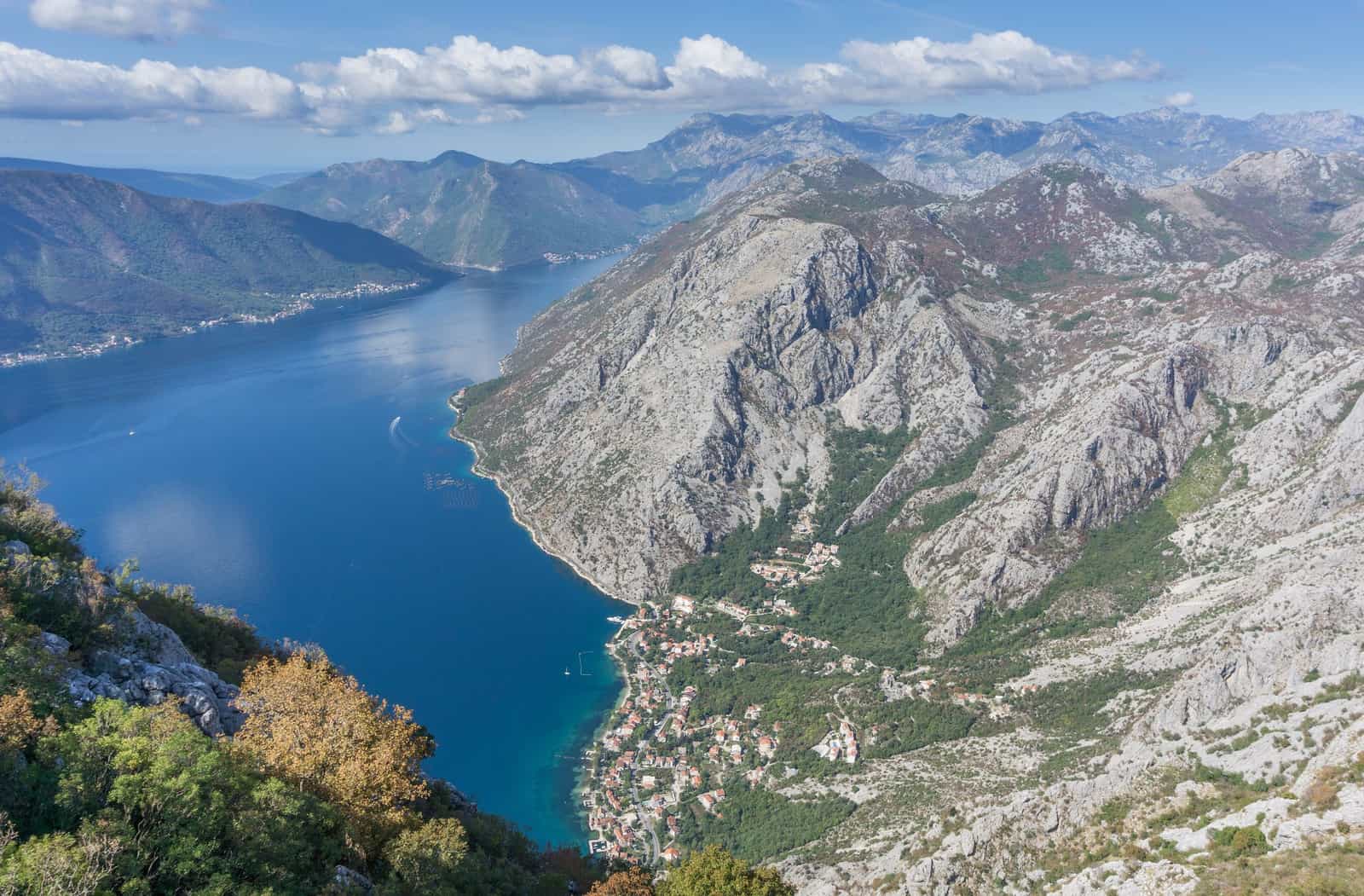
Montenegro travel information
Photo: Michal Klajban · CC BY-SA 4.0

Most visitors enter Montenegro without a visa, pay in euros and call 112 for anything urgent. Citizens of 82 countries and territories, including the US, UK, Canada, Australia and most EU states, enter with a passport for up to 90 days; citizens of some countries need a visa, Russia and Turkey among them since 1 November 2026 (visa and entry rules). Entry rules can change, so confirm on the Government's country page for your passport before you travel. Every foreign visitor is registered with the police within 24 hours of arrival, which a hotel or registered flat does for you within 12 hours of check-in, and a tourist tax per person per night, set by each municipality, is added to the bill (registration and tourist tax). The cards below lead to each practical page; the live lines on them show today's roads, weather, fuel week and 24-hour pharmacies.
Getting around. Montenegro drives on the right, a valid foreign licence is enough and an international permit is not required; dipped headlights stay on all day, winter tyres are required in winter conditions, and the alcohol limits and speed limits are on the driving in Montenegro page. There is no vignette: a car pays EUR 2.50 through the Sozina tunnel and EUR 3.50 for the Smokovac-Mateševo motorway, per passage, and nothing anywhere else (tolls). Fuel has one maximum price per litre for the whole country, set each week (fuel prices). Without a car: private carriers run the intercity buses, with departures and tickets for the whole country on busticket4.me; the Bar-Belgrade railway stops at Podgorica Airport, Podgorica and Kolašin, Bar to Podgorica at EUR 2.80 in second class; the Kamenari-Lepetane ferry crosses the Bay of Kotor day and night, free for cyclists (transport). Tivat Airport is 8 km from Kotor and 21 km from Budva, with no published airport bus; Podgorica Airport has buses to the bus station, a train halt and parking at EUR 1.50 an hour. By road you enter at one of the border crossings; the Ministry of the Interior's cameras at some of them show the queue.
Money and phone. The currency is the euro, sole legal tender since March 2002, although Montenegro is in neither the EU nor the euro area. Banks charge a fee for withdrawals with foreign cards, so withdraw at machines inside banks and carry some cash; the fees per bank are on the ATM page (ATMs, cards and cash). Three operators, Crnogorski Telekom, One and m:tel, sell tourist packages, online as an eSIM or in their shops in town; every SIM needs a passport or ID card. Phones on EU networks do not roam at home prices: a voluntary operators' declaration only caps the price of EU data, while SIMs from Serbia, Bosnia and Herzegovina, Albania, North Macedonia and Kosovo get home prices (SIM cards, eSIM and roaming). The dialling code is +382 and the time zone Central European Time; Montenegrin is the official language, and 38% of adults know English (travel tips).
Health and safety. 112 answers every emergency and calls are free; the direct lines are 124 for an ambulance, 122 police, 123 fire and rescue and 129 help at sea. Healthcare is not free for most visitors: the EHIC is not valid on its own, British citizens get emergency treatment with a certificate from the Health Insurance Fund, and travel health insurance is required by law only for people who need a visa (emergency numbers and healthcare). The pharmacies list shows which ones are open 24 hours, and the hospitals list shows where the emergency departments are. The risks to plan for are the ordinary ones: pickpocketing in crowded places, taxi overcharging, wildfires in summer and the roads, with 6,831 accidents and 67 deaths in 2025; for a breakdown, AMSCG roadside help is on 19807 (is Montenegro safe?).
Today and the planning pages. For today: the road conditions from the daily AMSCG report, the forecast for every town, the weekly fuel maximums, planned power cuts and air quality, webcams at the borders and ski resorts, and the EV chargers. For planning: when to visit, with the swimming season from mid-May to mid-October, things to do, travelling with a dog or cat (up to five animals, each with a microchip, pet passport and rabies vaccination), and the national parks, which charge a daily entrance fee (EUR 5 a day for Durmitor); the fee for each park is on its page.


Live today
Before you go and arriving
- Where is MontenegroMontenegro on the map of Europe: neighbours, capital, area, population, coast, EU and Schengen status, the euro, time zone and how to get there.
- Things to do in MontenegroThings to do in Montenegro: Kotor and its bay, beaches, Skadar Lake, Ostrog, Lovćen, Durmitor and Tara rafting, by region and season, with kids and free.
- Visa requirementsWho enters Montenegro visa-free, who needs a visa, ID-card entry, the 24-hour registration rule, pets, duty-free limits and the EUR 10,000 cash rule.
- Registering your stay and the tourist taxRegister within 24 hours (12 if your hotel does it); tourist tax EUR 1.00 a night in Budva, Kotor, Bar, Tivat and more; children, exemptions and fines.
- When to visitJune or September for the sea, July to September for the mountains, December to March for skiing. Temperatures, rain days and arrivals month by month.
- Public holidays in MontenegroMontenegro's six public holidays, the non-working days for 2027 and 2028, the two-day and Sunday rules, religious holidays and shop closing.
- Podgorica Airport (TGD): taxi, bus, train, parking and distancesPodgorica Airport: two taxi firms, three bus carriers, the Aerodrom train halt (EUR 1.20), parking at EUR 1.50 an hour, drive times to Budva and Kotor.
- Tivat Airport (TIV): distances to Kotor, Budva and Herceg NoviTivat Airport to Kotor (8 km, 12 min), Budva (21 km, 27 min) and Herceg Novi by ferry: drive times, buses, taxi rules, parking, terminal.
- Border crossingsAll 20 road crossings into Montenegro by country: which take goods, which have MUP cameras, the 24/7 posts, drive times, and the rail, sea and air borders.
- Travelling to Montenegro with a dog or catEntry rules for dogs and cats (microchip, rabies, titre test, certificate), veterinary border posts, the trip back to the EU, dog beaches and leash rules.
- Montenegro with kidsDocuments for children at the border, car seat rules and fines, child fares on trains, ferry, cable car and parks, shallow beaches and emergency care.
- Embassies & consulatesForeign embassies, consulates general and honorary consulates in Montenegro, with address, phone, e-mail and hours, checked against each mission’s own site where possible.
- ItinerariesThree routes through Montenegro, 3 to 10 days: road km and drive times between every stop, park fees, the two tolls, base towns and the months each works.
Getting around
- DrivingDriving in Montenegro: speed limits, fines, the 0.3 alcohol limit, under-21 rules, winter tyres from 15 November, foreign licences, parking, tolls.
- Tolls in Montenegro: Sozina tunnel, the motorway and no vignetteNo vignette in Montenegro. Car tolls: EUR 2.50 at the Sozina tunnel, EUR 3.50 on the Smokovac-Mateševo motorway. All vehicle classes, ENP tag, live status.
- TransportHow to get around Montenegro: intercity buses on busticket4.me, the Bar-Belgrade railway, the Kamenari-Lepetane ferry, two airports and two road tolls.
- Getting around Montenegro by busBuses in Montenegro: intercity times and tickets on busticket4.me, Podgorica city buses (EUR 0.90, live map), coast timetables and the airport buses.
- Bar-Belgrade trainNight train Bar-Belgrade: Bar 20:10, Beograd Centar 07:08, €23.80 one way, online tickets, sleeper and car-carrier, station phones, stops in Montenegro.
- Train stationsAll 47 passenger stations and halts on the Bar-Bijelo Polje and Nikšić-Podgorica railway lines, with fares on the main routes.
- Kamenari-Lepetane ferryKamenari-Lepetane ferry over the Bay of Kotor: who crosses free, summer and winter timetables, 15-minute crossing, online tickets, the road round the bay.
- Car rentals
- Gas stationsEKO, Petrol and Lukoil fuel stations in Montenegro by town, with address and map, and the weekly maximum retail fuel prices set by the Ministry of Energy and Mining.
- Tourist informationTourist board offices and information bureaus in Montenegro by town, with address, phone, opening hours and season.
Money and phone
- Shopping in MontenegroMost shops close on Sundays and holidays. Mall and market hours in Podgorica, Budva, Kotor, Tivat and Bar, and how the VAT refund works.
- ATMs & banksThe euro, what three banks' ATMs charge foreign cards, why to refuse conversion at the till, where the ATMs are, the EUR 10,000 cash limit, ATMs by town.
- SIM cards, eSIM and roaming in MontenegroTourist SIM and eSIM packages from Montenegro's three operators with prices and data, where to buy them, ID rules, and how EU and regional roaming work.
- Travel tipsThe euro without the EU, EU roaming caps, three mobile operators, 112, 24-hour pharmacies, health cover, beach rules and which languages Montenegro speaks.
- Post officesAll 165 Pošta Crne Gore post offices by town, with postcode, address, opening hours and phone, from the post office’s own list.
Health and safety
- Emergency & healthWhich number to call, what the EHIC, GHIC and health agreements cover, when travel insurance is required, hospitals and 24-hour pharmacies.
- PharmaciesPharmacies in Montenegro by town, with the four open around the clock in Podgorica, Nikšić and Budva, the state Montefarm chain.
- Hospitals & clinicsHospitals, health centres and emergency units in Montenegro by town: the emergency numbers 124 and 112, the 12 public hospitals with phones.
- Is Montenegro safe? Crime, roads, sea, wildfires and who to callThe real risks for visitors to Montenegro: pickpockets, taxis, roads, sea, wildfires and earthquakes, with the official rules and numbers, and who to call.
- VetsVeterinary clinics in Montenegro by town, with address, from the state register of veterinary organisations.
Rules to know
- Drone rulesCurrent drone rules: classes, registration from 250 g or with a camera, 120 m ceiling, Podgorica and Tivat airport zones, national parks, fines.
- CampsitesCampsites in Montenegro checked against the official register, their own sites and the map: season, category, contacts and location.
- FishingFishing permits in Montenegro for the sea, rivers, Skadar Lake and the parks: who sells them, prices, daily limits, fly-fishing zones and closed seasons.
- National parksThe five national parks, Durmitor, Lovćen, Biogradska gora, Skadar Lake and Prokletije: entrance fees, main trails and how to get there.
Quick answers
Do I need a visa for Montenegro?
Most visitors do not. Citizens of 82 countries and territories, including the US, UK, Canada, Australia and most EU states, stay up to 90 days with a passport; 23 states may enter with an ID card for up to 30 days; a valid Schengen, US, UK or Irish visa or residence permit allows 30 days. Citizens of some countries need a visa, Russia and Turkey among them since 1 November 2026. Details: visa and entry rules.
Do I have to register my stay?
Yes. A foreigner staying up to 90 days is registered with the police within 24 hours of arriving at the place of stay. Paid accommodation registers you itself within 12 hours; staying with friends or in your own flat, you register at the local tourist organisation or the police. Details: registration and tourist tax.
Is there a vignette in Montenegro?
No. The only tolls are the Sozina tunnel (EUR 2.50 per car) and the Smokovac-Mateševo motorway (EUR 3.50 per car for the full section), paid per passage. Details: tolls in Montenegro.
Do I need an international driving permit?
No. A valid foreign licence is enough; the international permit is accepted alongside it, not required. Rental companies may still ask for one. Details: driving in Montenegro.
What is the emergency number?
112 for any emergency; calls are free. Direct lines: 124 ambulance, 122 police, 123 fire and rescue, 129 help at sea. Details: emergency numbers and healthcare.
Can I bring my dog or cat?
Yes, up to five dogs or cats with their owner, each with a microchip or other prescribed ID, a pet passport, a rabies vaccination (21 days before travel if it is the first) and a certificate from an official vet of the country of departure. Dogs also need tapeworm treatment 24 to 120 hours before entering. Tivat Airport is not a border inspection post for pets. Details: travelling with a dog or cat.
Can I pay by card everywhere?
Not everywhere, so carry some cash and withdraw it at ATMs inside banks, which charge a fee for foreign cards. Details: ATMs, cards and cash.
Does EU roaming work in Montenegro?
Not at home prices. EU roam-like-at-home does not apply to Montenegro; the EU Council authorised negotiations to extend it on 4 June 2026, so check your operator's current terms before you travel. A voluntary declaration caps the price of data from EU networks for the operators that signed it. SIMs from Albania, Bosnia and Herzegovina, Kosovo, North Macedonia and Serbia have roamed here at home prices since 1 July 2021. Details: SIM cards, eSIM and roaming.
Sources
- Government of Montenegro, MFA country pages (visa regime section)
- EKIP, press release for European 112 Day (10.02.2023)
- Central Bank of Montenegro, History (euro since 2002)
- MFA country page: Germany (ID-card entry)
- MFA country page: Gibraltar (visa-holder rule wording)
- MFA country page: Russian Federation
- Zakon o strancima, Sl. list CG 12/2018 (Paragraf.me consolidated text, current to 31.3.2021)
- GOV.UK, Montenegro travel advice: Entry requirements
- Monteput, Cjenovnik Tunel Sozina
- Monteput, Cjenovnik Autoput Bar-Boljare
- Zavod za hitnu medicinsku pomoć, Kontakt (124 for all municipalities)
- Pravilnik o uslovima za nekomercijalno kretanje kućnih ljubimaca, Sl. list CG 42/2016 (FAOLEX copy)
- Rulebook on measures to prevent the occurrence of Echinococcus multilocularis in dogs (23.3.2016, FAOLEX copy)
- UBHVFP, List of Montenegro Border Inspection Posts designated as official points of entry (1.9.2022)
- GOV.UK, Montenegro travel advice: Safety and security (updated 13.8.2026)
- European Western Balkans (news report), Council authorises talks on extending free roaming scheme to the Western Balkans (4.6.2026)
- EKIP, U romingu kao kod kuće: najčešća pitanja (Western Balkans, from 1.7.2021)
- Zakon o bezbjednosti saobraćaja na putevima, Sl. list CG 33/2012, 58/2014, 14/2017, 66/2019 (Paragraf.me consolidated text, current to 31.3.2021)
- Auto-moto savez Crne Gore (AMSCG), home page (Pomoć na putu 19807)
- trajekt.me, Cjenovnik usluga, redovna trajektna linija Kamenari-Lepetane (PDF, September 2026)
- Hipotekarna banka, Odluka o tarifi naknada (adopted 28.08.2026, October 2026 file), items C1.18-C1.20
- NLB Banka, Pregled naknada, applied from 21.09.2026 (V2), items 4.14-4.15
- CKB, Lista uslova za fizička lica (valid from 1.9.2026), p. 12, section 14 'Uplate i isplate inostranih Mastercard i Visa kartica', items 14.1-14.3
- Montefarm, Apoteke (Kruševac and Gojko Darić 1 marked 00-24)
- MONSTAT, Census 2023, release 160/2024: knowledge of foreign languages, population aged 15+
- busticket4.me, Bus from Kotor to Budva (route page)
- ŽPCG, Red vožnje (timetable search with fares)
- Airports of Montenegro, Tivat Airport: How to reach us
- Airports of Montenegro, Podgorica Airport: Parking and transportation (EN)
- Crnogorski Telekom, Tourist prepaid packages (EN)
- One Crna Gora, For tourists: tourist prepaid package
- m:tel, For tourists (Turist prepaid cards and data add-ons)
- European Commission, Roam like at home: Commission proposes to open negotiations to extend EU roaming to the Western Balkans (25.2.2026)
- Fond za zdravstveno osiguranje Crne Gore, Osiguranici i osigurana lica Fonda
- MONSTAT, Godišnja statistika saobraćaja, skladištenja i veza 2025 (May 2026)
- National Parks of Montenegro: Durmitor price list
- Zakon o boravišnoj taksi, consolidated (011/04, 013/04, 073/10, 048/15), Katalog propisa via Unija poslodavaca
- Ministry of Energy and Mining via data.gov.me, Nove cijene goriva (weekly datasets)
- MFA country page: Turkey (visa from 1.11.2026)
- Ministry of Energy and Mining via data.gov.me, Nove cijene goriva (weekly datasets)