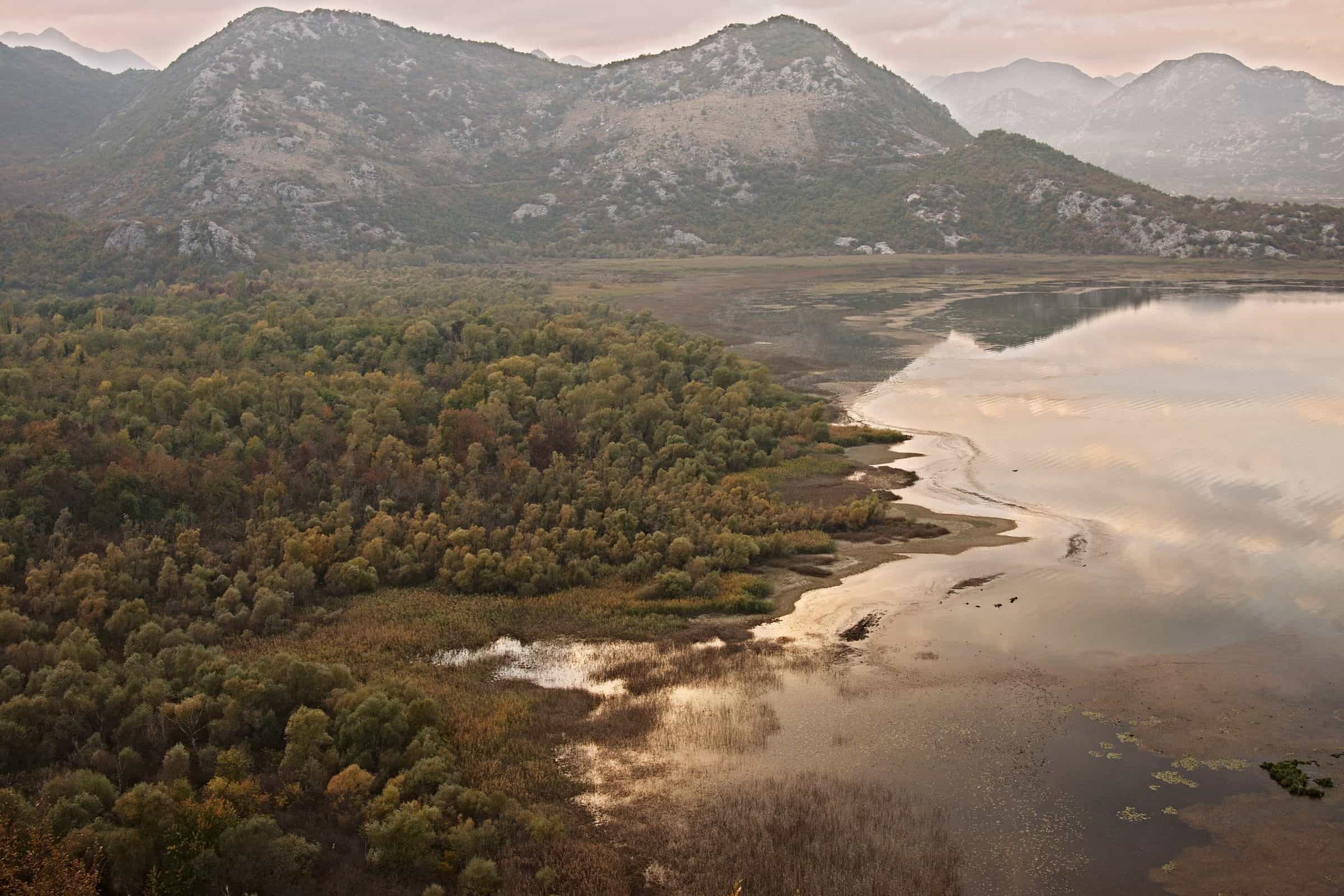
When to visit Montenegro: the best time, month by month

For the sea with fewer people, June or September: coastal highs of 25 to 26 °C and about a fifth fewer arrivals than August. The bathing season runs from May to October, when Morsko dobro tests the sea water and staffs the beaches, with lifeguards densest in July and August. The high mountains are walkable from June to the end of October, the coast's own hills from mid-April. Ski season begins in December; Kolašin 1600 ran into early April in 2025/26. July and August are the crowded months: hotels and campsites recorded 234,000 and 245,000 arrivals in 2025, against 35,000 in January.


Climate by month
Long-term averages from the national weather service (ZHMS), 1961-1990: Bar on the coast, Žabljak in the mountains. The current month is highlighted.
| Bar | Žabljak | ||||
|---|---|---|---|---|---|
| Month | Average high, °C | Average low, °C | Days with precipitation | Average high, °C | Average low, °C |
| Jan | 12.3 | 4.3 | 13 | 0.3 | -8.8 |
| Feb | 12.9 | 5.1 | 13 | 0.9 | -7.9 |
| Mar | 14.9 | 6.7 | 12 | 3.7 | -5.2 |
| Apr | 17.9 | 9.2 | 12 | 7.8 | -1.2 |
| May | 21.9 | 13 | 9 | 13.4 | 3.2 |
| Jun | 25.2 | 16.3 | 7 | 16.8 | 6.6 |
| Jul | 27.8 | 18.4 | 5 | 19.5 | 8.1 |
| Aug | 27.8 | 18.3 | 5 | 19.6 | 7.9 |
| Sep | 25.3 | 15.9 | 7 | 16.3 | 5.2 |
| Oct | 21.7 | 12.6 | 9 | 11.5 | 1.4 |
| Nov | 17.3 | 9.2 | 14 | 6.1 | -2.6 |
| Dec | 13.7 | 5.9 | 14 | 1.9 | -6.5 |
Sources
Month by month
Temperatures are ZHMS climate normals for 1961 to 1990. Arrivals are MONSTAT's 2025 monthly counts for collective accommodation (hotels, campsites and similar; private flats not included).
January
Bar and Herceg Novi average 8 °C with 13 to 14 rain days; Podgorica 5 °C; Žabljak -4.5 °C with frost on 29 days. The quietest month, with 34,770 arrivals. The ski season, which begins in December, is under way. The Njegoš Mausoleum on Lovćen is closed from 16 November to mid-April.
More: Montenegro in January
February
Much the same on the coast (Bar 8.9 °C, 13 rain days); Žabljak -3.8 °C. 39,969 arrivals. Skiing continues.
More: Montenegro in February
March
Coast 10.6 °C in Bar and Herceg Novi, 12 to 13 rain days; Podgorica 10 °C; Žabljak still -1 °C with 27 frost days. 54,965 arrivals. The traffic law's winter period, in which a car driven in winter conditions needs winter tyres on all wheels, runs to 1 April.
More: Montenegro in March
April
Bar 13.6 °C with highs of 18 °C; Podgorica 13.9 °C; Žabljak 3 °C with 19 frost days. Arrivals double to 117,801. Coastal hiking starts in mid-April, and the mausoleum reopens at the same time.
More: Montenegro in April
May
Bar 17.7 °C with highs of 22 °C and only 9 rain days; Herceg Novi 18 °C; Podgorica 19 °C; Žabljak 8.4 °C. 169,353 arrivals. The bathing season opens: Morsko dobro's water testing and lifeguard staffing run from May. Bjelasica and Sinjajevina trekking opens.
More: Montenegro in May
June
Coast highs of 25 to 26 °C (Bar 25.2, Herceg Novi 26.2, Ulcinj 26.2) with 7 to 8 rain days; Podgorica already reaches 28 °C highs with 11 days over 30 °C. 195,642 arrivals. The high mountains open for hiking; Žabljak reaches 11.9 °C.
More: Montenegro in June
July
The hottest and driest month: Bar highs 27.8 °C with 5 rain days, Herceg Novi and Ulcinj 29.4 and 29.2 °C, Podgorica 31.8 °C with 23 days over 30 °C and 18 tropical nights. Žabljak stays a mild 13.9 °C. 234,403 arrivals. Lifeguards at one per 50 m of beach. The best months for Durmitor and Žabljak begin.
More: Montenegro in July
August
As hot as July (Bar 27.8 °C highs, Podgorica 31.6 °C) with a few more showers. The peak: 244,904 arrivals and 1,061,386 nights in collective accommodation, seven times January's arrivals.
More: Montenegro in August
September
Still summer on the coast: Bar highs 25.3 °C, Herceg Novi 26.1 °C, 7 to 8 rain days; Podgorica 27.4 °C highs. Arrivals fall to 189,447. Lifeguard staffing drops to one per 100 m. Durmitor is in its best window until the end of the month.
More: Montenegro in September
October
Bar and Ulcinj 16.8 °C mean, highs around 21 °C, 9 to 10 rain days; Herceg Novi 16.6 °C; Podgorica 15.9 °C. Žabljak 5.6 °C with 11 frost days. 137,374 arrivals. The bathing season and the high-mountain hiking season both end this month.
More: Montenegro in October
November
The wettest month: Cetinje averages 500 mm, Herceg Novi 256 mm on 14 rain days, Bar 182 mm. Coast 12 to 13 °C mean. 50,061 arrivals. From 15 November a car driven in winter conditions must have winter tyres on all wheels (traffic law, Art. 132). The Njegoš Mausoleum on Lovćen closes on 16 November until mid-April.
More: Montenegro in November
December
Coast 8.6 to 9.8 °C mean (Ulcinj to Bar) with 12 to 15 rain days; Žabljak -2.6 °C with 28 frost days. 36,079 arrivals. Ski season begins. The Njegoš Mausoleum is closed (16 November to mid-April).
More: Montenegro in December
Coast or mountains: two climates
Žabljak is 133 km by road from Podgorica airport and 12 °C cooler than Podgorica in July (13.9 against 26.0 °C). The coast gets its rain in winter and almost none in July (Ulcinj 25 mm); the inland hills get far more, with Cetinje at about 3,300 mm a year against Ulcinj's 1,260 mm. Sunshine runs the other way: about 2,560 hours a year in Ulcinj, 1,810 in Kolašin.


Sea temperature by month
The bathing season the sea authority works to is May to October. Current night-time sea-surface readings at five points on the coast, with the last 14 nights, are on the sea temperature page.
Crowds and prices
MONSTAT's 2025 monthly arrivals in collective accommodation, in thousands: January 35, February 40, March 55, April 118, May 169, June 196, July 234, August 245, September 189, October 137, November 50, December 36. Official prices do not change with the season: national park entry is EUR 5 per day for Durmitor and Skadar Lake, EUR 4 for Biogradska gora and EUR 3 for Lovćen and Prokletije, or EUR 13.50 for a year in all five; the Kamenari-Lepetane ferry is EUR 5 per car; the Sozina tunnel EUR 2.50.
Shoulder seasons: May-June and September-October
June and September have coastal highs of 25 to 26 °C, about half the rain days of November, and 80 per cent or less of the August arrivals. May and October bracket the bathing season with highs of 22 °C and 21 °C and 9 to 10 rain days. Both shoulder months fall inside the coastal hiking window (mid-April to end October).
Winter
Skiing from December; the ski resorts pages carry each resort's lifts and passes. The coast in winter averages 8 to 10 °C with two weeks of rain days a month. What closes: the Njegoš Mausoleum (16 November to mid-April) and the seasonal tourist information offices listed with a season in the directory. The national parks publish winter hours on each park page.


Common questions
What is the best month to visit Montenegro?
For the sea with fewer people, June or September: coastal highs of 25 to 26 °C and far fewer arrivals than August. For the high mountains, July to September; for skiing, December to March.
Is Montenegro warm in October?
On the coast, yes by day: highs around 21 °C in Bar and Ulcinj on the normals, with 9 to 10 rain days. Žabljak averages 5.6 °C.
Can you swim in Montenegro in May or September?
The bathing season the sea authority works to is May to October, with lifeguards on duty in both months. Current readings are on the sea temperature page.
When is high season in Montenegro?
July and August: 234,000 and 245,000 arrivals in collective accommodation in 2025, against 169,000 in May and 189,000 in September.
When do the ski resorts open?
The season begins in December; Kolašin 1600 stayed open into early April in 2025/26. Dates are on each resort's page.
Is Montenegro worth visiting in winter?
For skiing and for an empty coast at 8 to 10 °C, yes. Expect rain on about half the days on the coast and the Lovćen mausoleum closed until mid-April.
Related
- Practical
- Montenegro in JanuaryMontenegro in February and MarchMontenegro in AprilMontenegro in MayMontenegro in JuneMontenegro in JulyMontenegro in AugustMontenegro in SeptemberMontenegro in OctoberMontenegro in November and DecemberWeatherBeachesSki resortsNational parksHikingRaftingCitiesRoad conditionsPower, water and airWebcams
Sources
- Zavod za hidrometeorologiju i seizmologiju, Klimatske normale 1961-1990
- MONSTAT, Turizam - kolektivni smještaj, monthly releases 2025
- MONSTAT, Turizam - kolektivni smještaj, januar 2025
- MONSTAT, Turizam - kolektivni smještaj, april 2025
- MONSTAT, Turizam - kolektivni smještaj, maj 2025
- MONSTAT, Turizam - kolektivni smještaj, jun 2025
- MONSTAT, Turizam - kolektivni smještaj, septembar 2025
- JP Morsko dobro, Praćenje kvaliteta morske vode (May to October)
- JP Morsko dobro, Spasilačka služba (July-August vs May, June, September, October)
- NTO, Hiking and trekking (coast mid-April to end October; high mountains June to end October; Durmitor July-September; snowshoe and ski touring December-March)
- Kolašin 1600 season 2025/26 reports (secondary)
- Narodni muzej Crne Gore, Radno vrijeme (Njegoš Mausoleum: open 15 April-15 November, 09:00-16:00; closed 16 November-14 April)
- National Museum of Montenegro, Visit: Njegoš Mausoleum (open 11 April-15 November; closed 16 November-10 April)
- National Parks of Montenegro price lists: Durmitor, Biogradska gora, Lovćen, Skadar Lake, Prokletije
- trajekt.me, Cjenovnik usluga (PDF, September 2026)
- Monteput, Cjenovnik Tunel Sozina
- Zakon o bezbjednosti saobraćaja na putevima, Art. 132 (winter period 15 Nov to 1 Apr; Paragraf.me consolidated text, current to 31.3.2021)
- TO Bar, About Bar (swimming season mid-May to mid-October)
- Airports of Montenegro, Podgorica: Parking and transportation (Žabljak 133 km)