Montenegro travel tips: money, language, phone, health, safety
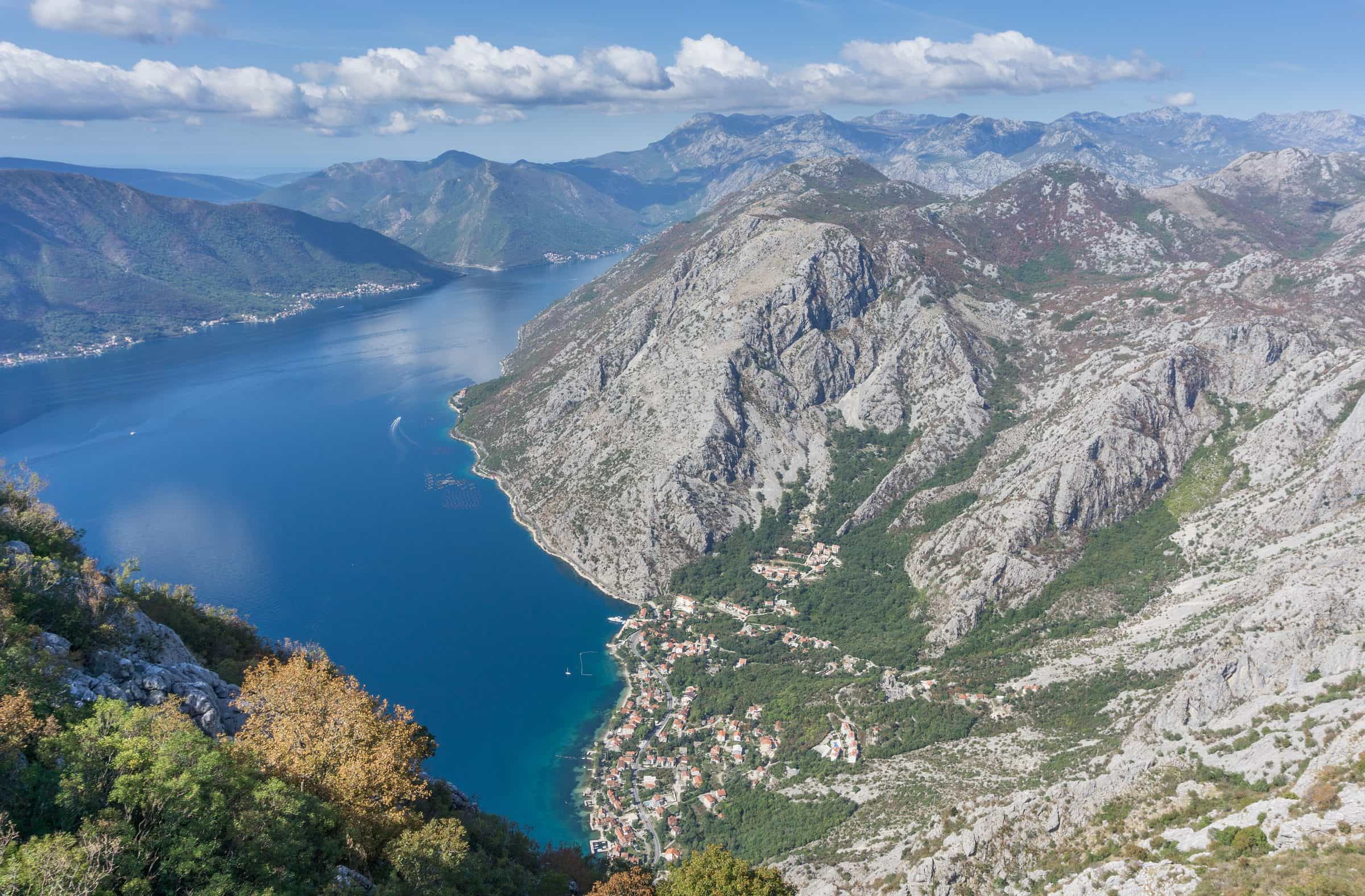
Photo: Michal Klajban · CC BY-SA 4.0

Montenegro uses the euro without being in the EU, dials +382, keeps Central European Time and answers every emergency on 112. Montenegrin is the official language, Serbian is the one most people speak at home, and 38% of adults know English, more than half of them in Budva, Kotor and Tivat. An EU SIM roams here at capped prices rather than home prices; a SIM from Serbia, Bosnia and Herzegovina, Albania, North Macedonia or Kosovo gets home prices. Below, in short: money, phones, emergencies, health, safety, the beach rules, language, opening hours and the drink-driving limit, each with a link to the detailed page.
The country in six facts
- Currency: the euro, sole legal tender since March 2002, adopted without EU or euro-area membership.
- Dialling code +382; time zone Central European Time.
- Emergency number 112; direct lines 122 police, 123 fire and rescue, 124 ambulance, 129 help at sea.
- Drive on the right.
- Official language Montenegrin; Serbian, Bosnian, Albanian and Croatian in official use; Cyrillic and Latin scripts equal.
- EU candidate since December 2010, accession talks open since June 2012; not in Schengen.


Money: the euro, ATM fees and the cash limit
Prices are in euros and there is nothing to exchange. Three of the eleven banks publish what a cash withdrawal with a foreign card costs: EUR 5.88 at Hipotekarna banka, EUR 5.99 at NLB Banka and 1%, with a minimum of EUR 5.99, at CKB; the other eight publish no figure. Conversion charges, the banks' networks and ATMs by town are on the ATMs, cards and cash page. Cash of EUR 10,000 or more must be declared at the border, on entry and on exit.
Phone and internet: SIM cards and roaming
Three operators sell SIM cards and eSIMs: Crnogorski Telekom, One Crna Gora and m:tel. Their tourist packages, the documents you need to buy one and where the shops are, are compared on the SIM card and eSIM page. Both airports have free Wi-Fi.
Roaming works two ways. If your operator is in the Western Balkans (Albania, Bosnia and Herzegovina, Serbia, North Macedonia, Kosovo), you have paid home prices in Montenegro since 1 July 2021, subject to fair use. An EU SIM does not get home prices: roaming between the EU and the Western Balkans runs on a voluntary declaration of 2022, signed by all three Montenegrin operators, that caps data at EUR 18 per GB from 1 October 2023, EUR 14 per GB from 2026 and EUR 9 per GB from 2028, for the signatory operators.
Emergency numbers
- 112: the single European emergency number. The OKC 112 centre coordinates the other services and its operators speak several languages. Roaming phones receive an SMS about 112 on entering the country.
- 122 police · 123 protection and rescue (fire) · 124 emergency medical help · 129 help at sea.
- Calls are free. Roadside help from the motoring association AMSCG: 19807 (from a phone in Montenegro).
The emergency and health hub lists the emergency medical unit in each municipality.
Healthcare for visitors
Whether you are treated free depends on an agreement between your country and Montenegro. Social security agreements exist with Austria, Belgium, Bosnia and Herzegovina, Bulgaria, Croatia, Czechia, Hungary, Luxembourg, North Macedonia, Romania, Serbia, Slovakia, Slovenia, Switzerland, Turkey and Albania. The agreements with Austria, Belgium, Croatia, Czechia, Romania, Slovakia and Turkey contain a clause on urgent care during a temporary stay; the Swiss agreement deals with pensions. For the other states, ask your insurer what applies.
UK travellers: a reciprocal agreement gives British nationals free emergency treatment, but only with a certificate of entitlement from the Montenegrin Health Insurance Fund. Apply with a valid British passport and the GHIC, in advance or as soon as possible after an urgent admission. The certificate gives free or subsidised care at state facilities; without it you pay, and paid bills cannot be reimbursed. Everyone else should carry travel insurance. Hospitals, health centres and private clinics are in the hospitals directory; the Tivat health centre runs a tourist clinic in season.
Pharmacies
A few pharmacies are open 00-24; they are shown below and at the top of the pharmacies directory. The directory covers the state Montefarm pharmacies, the private pharmacies under contract with the Health Insurance Fund and other private pharmacies, with opening hours where known. There is no rota of on-duty pharmacies, so the 24-hour ones are the night option.
Montefarm, Apoteka Gojko Darić 1
Open 24 hoursPharmacy · Public · Nikšić
Narodnih heroja br.8, Nikšić
Montefarm, Apoteka Kruševac
Open 24 hoursPharmacy · Public · Podgorica
Bul.Sv.Petra Cetinjskog br.45/a, Podgorica
Apoteka "BENU Budva Autobuska"
Open 24 hoursPharmacy · Private · Budva
Mediteranski sportski centar br 11, Budva
Apoteka BENU Moskovska
Open 24 hoursPharmacy · Private · Podgorica
Moskovska 22, Podgorica
Sources
montefarm.co.me: Montefarm: Lokacije naših apoteka
fzocg.me: Health Insurance Fund: private pharmacies under contract 13.10.2025-12.10.2027 (list of 20.06.2026)
apoteke.me: apoteke.me: Apoteka BENU Autobuska (category "Dežurne apoteke 00-24h") · apoteke.me: Apoteka BENU Moskovska
openstreetmap.org: OpenStreetMap: node 6533833185 (pharmacy, opening_hours 24/7) · OpenStreetMap: node 2270743857 (pharmacy)
Safety
Pickpocketing happens in tourist spots, on beaches, at airports and on public transport, and wildfires are common from April to October. Carry an identity document at all times: a foreigner must have a travel document or ID card on them and show it to an authorised official on request (Law on Foreigners, Art. 145). Crime, the roads, the sea, the mountains and who to call are on Is Montenegro safe?
On the beach: flags, lifeguards, free access
Beach rules come from the coastal authority, Morsko dobro. At leased beaches half of the beach must stay free of sunbeds and umbrellas; a free strip at least 3 m wide runs along the water (1 m on beaches up to 500 m²); and there must be free access to the sea at least 1 m wide every 20 m. Flags: green means safe swimming, yellow restricted and possibly dangerous, red forbidden or no lifeguard on duty. Lifeguards are one per 50 m of coast in July and August and one per 100 m in the other months of the May to October season. Beach boards must be in Montenegrin and English. 36 bathing areas held the Blue Flag in 2026: Budva 18, Ulcinj 11, Bar 4, Tivat 2, Herceg Novi 1. Every beach has its own page in the beaches section.
Language: what language is spoken in Montenegro
Montenegrin is the official language under Article 13 of the Constitution; Serbian, Bosnian, Albanian and Croatian are in official use, and the Cyrillic and Latin scripts are equal. In the 2023 census people declared both their mother tongue and the language they usually speak:
| Language | Mother tongue | Usually spoken |
|---|---|---|
| Serbian | 43.18% | 43.52% |
| Montenegrin | 34.52% | 36.23% |
| Bosnian | 6.97% | 6.68% |
| Albanian | 5.25% | 4.49% |
| Russian | 2.36% | 2.21% |
| Serbo-Croatian | 2.08% | 1.51% |
Albanian is the mother tongue of 74.28% of people in Ulcinj, 60.25% in Tuzi and 34.15% in Gusinje. Beach information boards must be in Montenegrin and English.
Do people speak English?
Often, and most on the coast. In the 2023 census 229,558 of the 511,189 people aged 15 and over, about 45%, said they know at least one foreign language (self-declared: understand, speak, read and write): 164,180 know one, 53,261 two and 12,117 three or more. English leads with 37.97% of adults, then Russian 7.46%, Italian 4.83%, German 3.72%, French 2.01% and Spanish 1.02%. More than half of adults know English in Budva (54.06%), Kotor (54.05%) and Tivat (51.15%), 47.02% in Herceg Novi and 46.83% in Podgorica, and fewest in Petnjica (13.74%), Plužine (16.37%) and Šavnik (17.54%). Russian is strongest in the north, in Žabljak (18.27%), Mojkovac (15.67%), Šavnik (15.43%), Plužine (14.51%) and Kolašin (13.25%); Italian in Kotor (14.88%), Cetinje (9.42%) and Tivat (9.04%); German in Ulcinj (12.12%), Petnjica (9.05%) and Rožaje (8.54%). English is a compulsory subject from the first grade of primary school, and a second foreign language from the sixth grade.
Opening hours, Sundays and holidays
State holidays and the two-day rule are on the public holidays page; Sunday and holiday shop closing is on the shopping page. Post office hours per office are in the post offices directory.
Alcohol and driving
The driving limit is 0.3 g/kg, and zero for drivers up to 24 or with less than 12 months' experience (Art. 182 and 182a). Driving with 0.3 to 0.5 g/kg costs EUR 150 to 300, 0.5 to 1 EUR 300 to 600, 1 to 2 EUR 500 to 1,000 or up to 60 days in prison, and 2 or more 15 to 60 days in prison. The rest of the road rules are on the driving page.
Common questions
What currency does Montenegro use?
The euro. It has been sole legal tender since March 2002, although Montenegro is not in the EU or the euro area. There is no local currency to exchange.
Which ATMs have no fee?
None advertises one. Hipotekarna banka charges a foreign card EUR 5.88, NLB Banka EUR 5.99 and CKB 1% (minimum EUR 5.99); the other eight banks publish no figure.
What language is spoken in Montenegro?
Montenegrin is the official language under the Constitution; Serbian, Bosnian, Albanian and Croatian are in official use. In the 2023 census Serbian was the language most people usually speak (43.52%), then Montenegrin (36.23%), Bosnian (6.68%) and Albanian (4.49%).
Do people speak English in Montenegro?
In the 2023 census 37.97% of people aged 15 and over said they know English, and more than half in Budva, Kotor and Tivat. Russian (7.46%), Italian (4.83%) and German (3.72%) follow.
Where do I buy a SIM card?
From one of the three operators, Crnogorski Telekom, One Crna Gora or m:tel. The SIM card and eSIM page compares their tourist packages and lists what you need to buy one.
Does EU roaming work in Montenegro?
It works, but not at home prices. Under the voluntary operators' declaration, data from EU networks is capped at EUR 14 per GB in 2026, falling to EUR 9 in 2028. Western Balkans subscribers get home prices.
What is the emergency number?
112 for everything; 124 for an ambulance directly, 122 police, 123 fire and rescue, 129 at sea. Calls are free.
Is healthcare free for tourists?
Only under an agreement. UK GHIC holders get free or subsidised emergency treatment with a certificate of entitlement from the Health Insurance Fund (paid bills cannot be reimbursed), and nationals of Austria, Belgium, Croatia, Czechia, Romania, Slovakia and Turkey have an urgent-care clause in their agreements. Others should check their own country's agreement; see the emergency and health page.
How much cash can I bring into Montenegro?
Any amount, but cash of EUR 10,000 or more must be declared at the border, on entry and on exit.
What is the drink-driving limit?
0.3 g/kg, and zero for drivers up to 24 or with less than 12 months' experience. From 0.3 to 0.5 g/kg the fine is EUR 150 to 300; from 2 g/kg it is 15 to 60 days in prison.
Do I have to carry my passport?
Yes. A foreigner must have a travel document or ID card on them and show it to an authorised official on request (Law on Foreigners, Art. 145).
Is the beach free?
Half of every leased beach must stay free of sunbeds and umbrellas, with free access to the sea at least every 20 m, so you can always use your own towel. Loungers on the furnished half are paid.
Related
- Practical
- Christmas in MontenegroIs Montenegro safe? Crime, roads, sea, wildfires and who to callMimosa Festival in Herceg Novi (Praznik mimoze)New Year in MontenegroPublic holidays in MontenegroSIM cards, eSIM and roaming in MontenegroTravelling to Montenegro with a dog or catMontenegro with kidsEmergency & healthPharmaciesHospitals & clinicsATMs & banksEmbassies & consulatesVisa requirementsDrivingBeachesAirportsWeatherRoad conditionsPower, water and airWebcams
Sources
- Central Bank of Montenegro, History (euro since 2002)
- EKIP, Numbering Plan (Sl. list CG 44/25): country code 382
- NTO, Facts about Montenegro (time zone)
- EKIP, press release for European 112 Day (10.02.2023)
- Zavod za hitnu medicinsku pomoć, Kontakt (124 for all municipalities)
- Law on Road Traffic Safety, Art. 29 (Paragraf.me consolidated text)
- Zakon o bezbjednosti saobraćaja na putevima, Art. 182, 182a and penalty articles 317a-325 (Paragraf.me consolidated text, current to 31.3.2021)
- Constitution of Montenegro, Art. 13 (Paragraf.me consolidated text)
- Council of the EU, Montenegro (enlargement)
- Hipotekarna banka, Odluka o tarifi naknada (adopted 28.08.2026, October 2026 file), items C1.18-C1.20
- NLB Banka, Pregled naknada, applied from 21.09.2026 (V2), items 4.14-4.15
- CKB, Lista uslova za fizička lica (valid from 1.9.2026), p. 12, section 14 'Uplate i isplate inostranih Mastercard i Visa kartica', items 14.1-14.3
- Uprava carina, Uputstvo o kontroli fizičkog unošenja i iznošenja sredstava plaćanja (D-8222/1, 2016)
- EKIP, U romingu kao kod kuće: najčešća pitanja
- EKIP, Deklaracija o romingu WB-EU (data caps 2023-2028; three operators)
- Airports of Montenegro, Podgorica: Facilities and services (free Wi-Fi)
- Airports of Montenegro, Tivat: Facilities and services (free Wi-Fi)
- Zavod za zapošljavanje CG, laws ratifying social security agreements (16 states)
- GOV.UK, Montenegro travel advice: Health (GHIC)
- GOV.UK, Montenegro travel advice: Safety and security
- Zakon o strancima, Sl. list CG 12/2018, Art. 145 (Paragraf.me consolidated text, current to 31.3.2021)
- Auto-moto savez Crne Gore (AMSCG), home page (Pomoć na putu 19807)
- Health Insurance Fund, list of contracted pharmacies (20.06.2026)
- Dom zdravlja Tivat, home page (tourist clinic in season)
- Montefarm, Apoteke (Kruševac and Gojko Darić 1 marked 00-24)
- JP Morsko dobro, Organizacija kupališta (Pravilnik, Sl. list CG 23/19, 76/19)
- JP Morsko dobro, Spasilačka služba
- Blue Flag Montenegro (ECOM), Plave zastavice u Crnoj Gori 2026
- Zakon o izmjenama i dopuni Zakona o unutrašnjoj trgovini, Sl. list CG 21/2026 (19.02.2026), Art. 35b
- ATM networks of 11 banks (docs/research/atms), rendered in the ATMs and banks directory
- OpenStreetMap, pharmacies in Montenegro (extract 14.10.2026, ODbL)
- apoteke.me, pharmacy directory (cross-check only)
- Zakon o izmjenama i dopunama Zakona o bezbjednosti saobraćaja na putevima, Sl. list CG 111/2026 (30.7.2026, in force 7.8.2026), Art. 24 (new Art. 176a) and Art. 60-68 (penalty articles 318-326)
- MONSTAT, Popis 2023, saopštenje 135/2024 (15.10.2024): maternji jezik, jezik kojim se uobičajeno govori
- MONSTAT, Census 2023, release 160/2024: knowledge of foreign languages, population aged 15+
- Eurydice (European Commission), Montenegro: teaching and learning in single-structure education (English from grade 1)