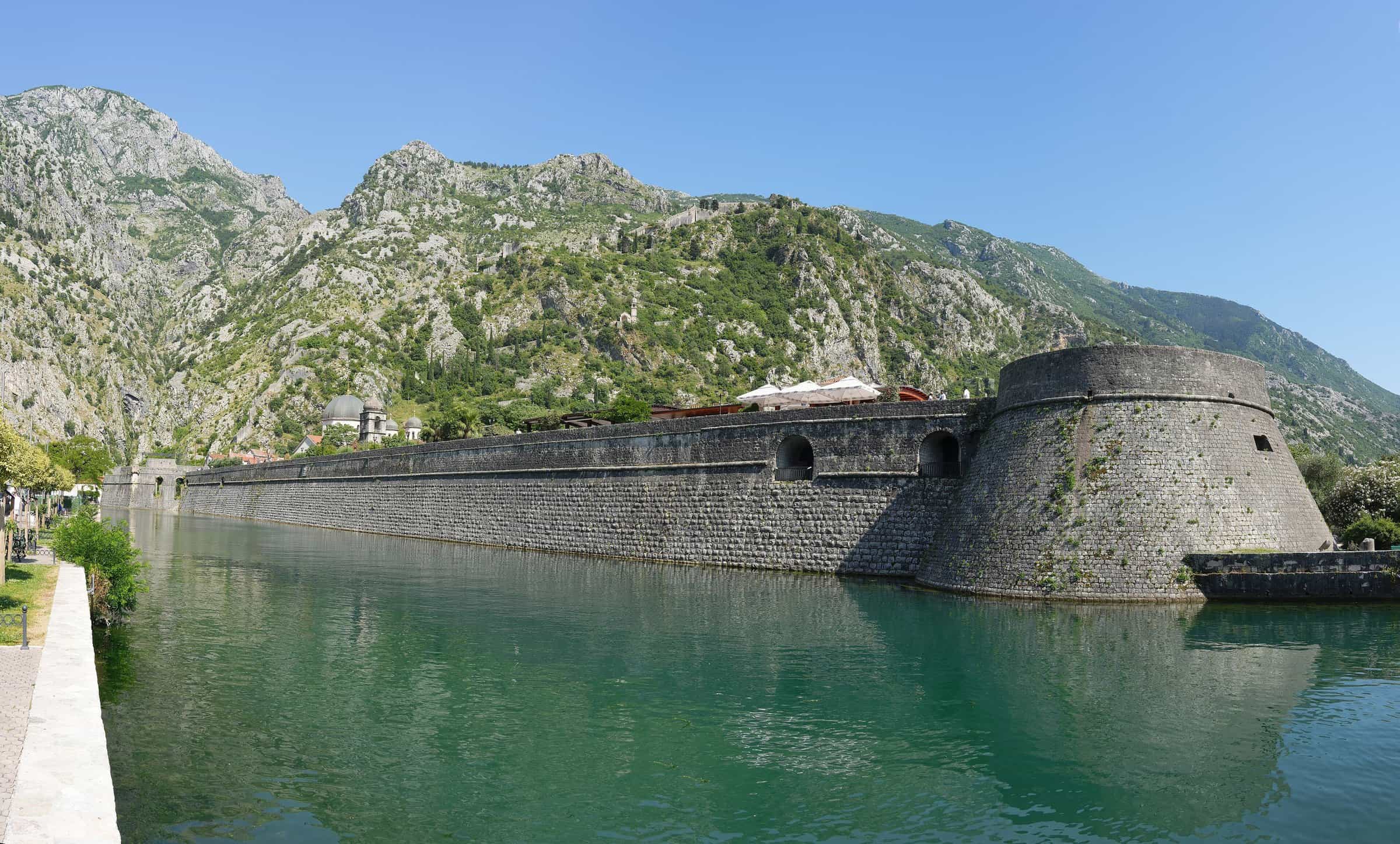
Fortresses of Montenegro
9 places · Coastal Region 8 · Central Region 1
Photo: Ingo Mehling · CC BY-SA 4.0
Montenegro's fortresses stand on the coast and along the old frontier with the Ottoman interior. The largest is the wall system of Kotor: about 4.5 km of walls, up to 20 m high, climbing from the sea to St John's Fortress some 260-300 m above the town by roughly 1,400 steps, for a €15 ticket (residents of Montenegro free). The walls are a UNESCO site twice over, inside the Kotor region (1979) and the Venetian Works of Defence (2017). Four more sites sell tickets: Kanli kula and Forte Mare in Herceg Novi (€4), the Budva walls (€2) and Citadel (€5), and Stari Bar (€3). Haj-Nehaj, Mogren, Španjola and Bedem are open ruins with no gate and no fee. The table below gives hours and tickets; each fortress has its own page with directions and history.

9 results
Nothing matches these filters.
Featured
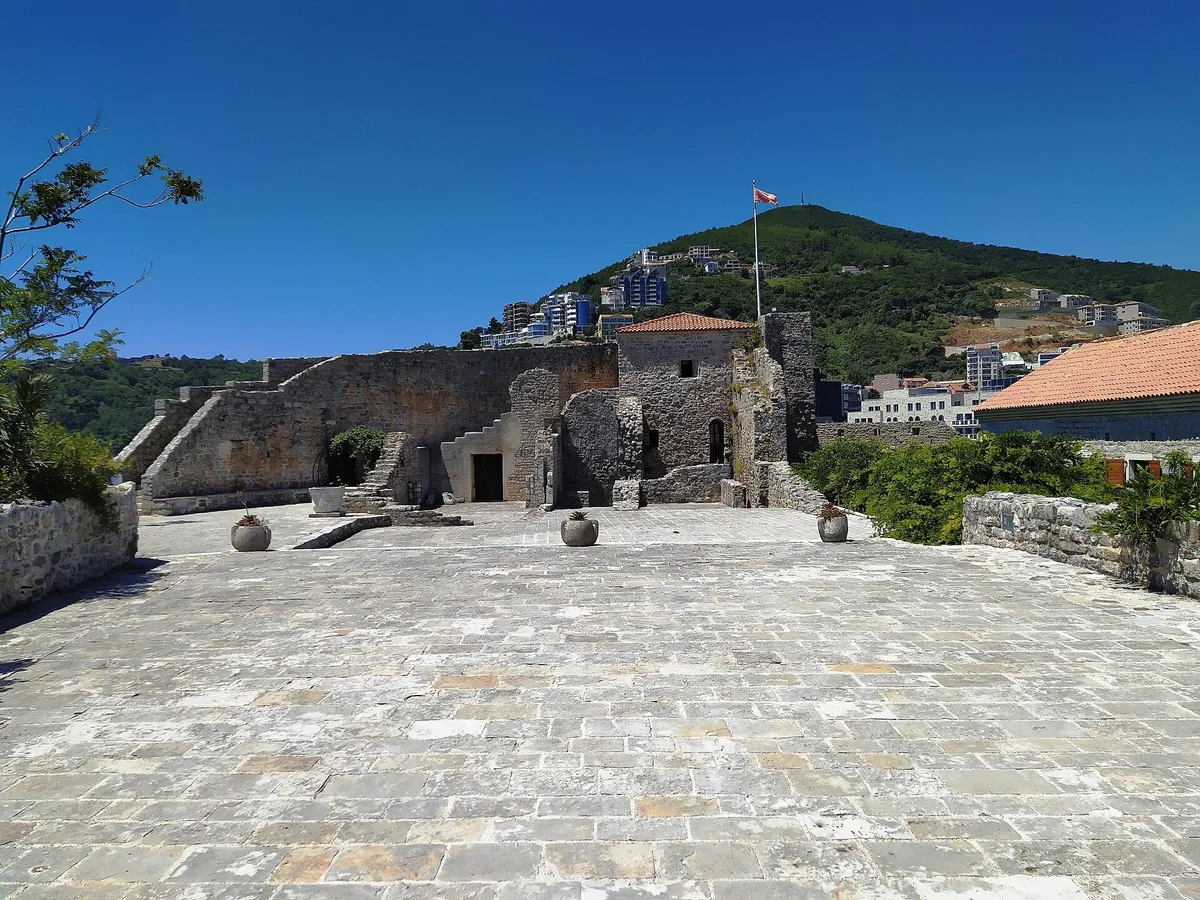


All fortresses
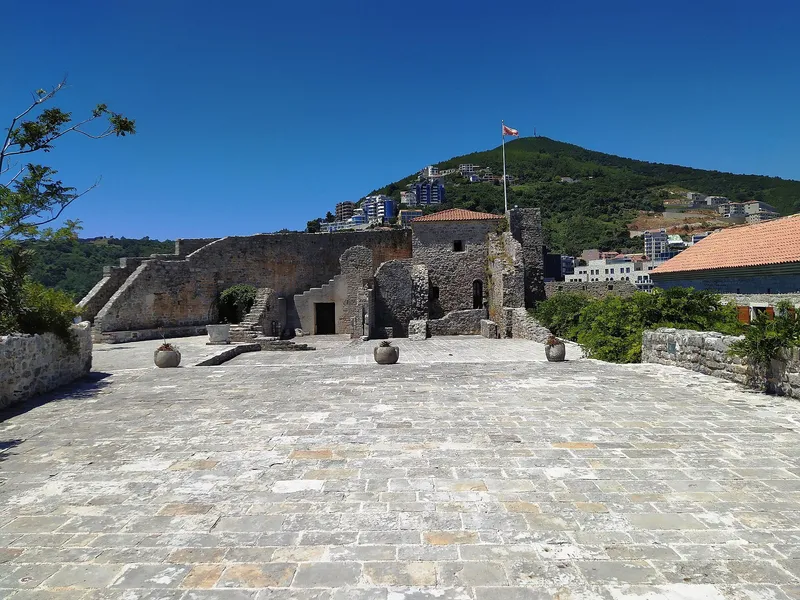
Budva Citadel
Budva · Town fortress
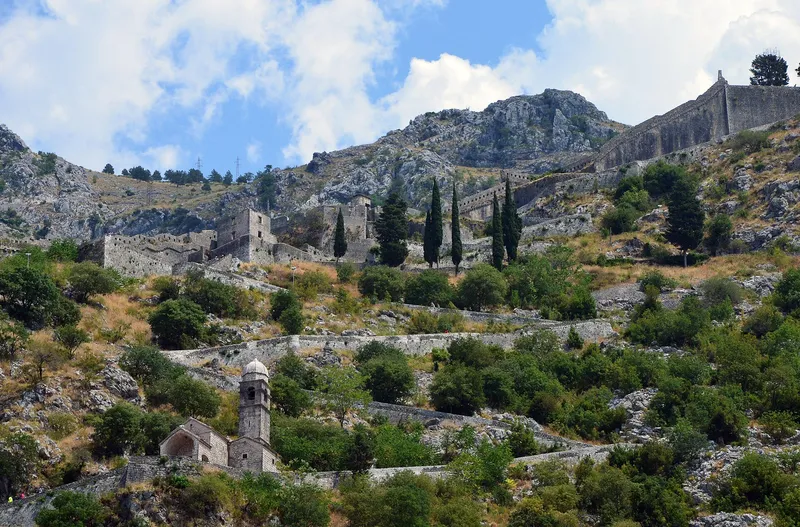
Kotor walls and St John's Fortress
Kotor · City walls and hilltop fortress
Walls built between the 6th and 19th centuries
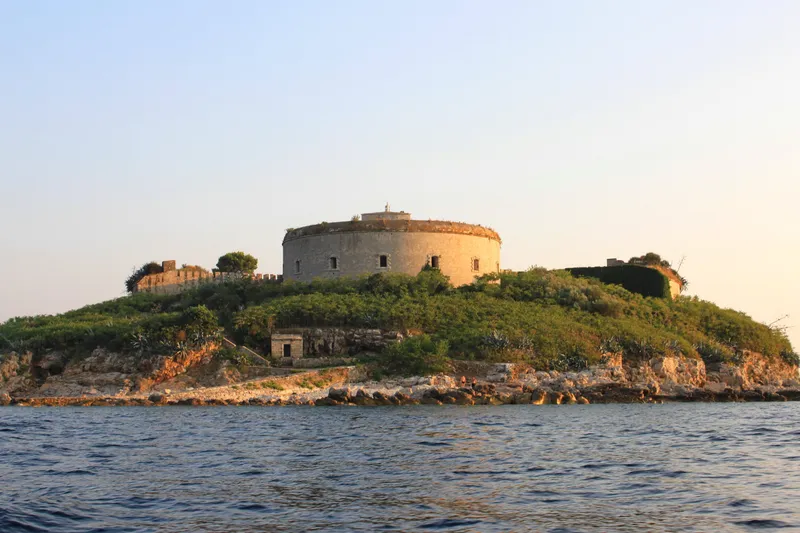
Mamula (Lastavica island)
Herceg Novi · Island fort
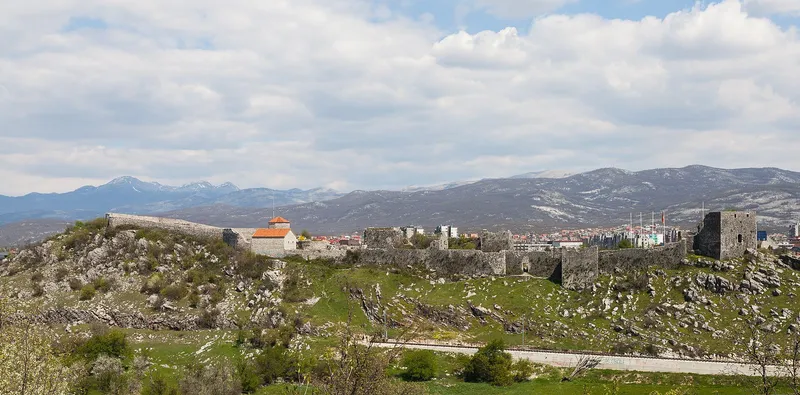
Bedem (Onogošt fortress)
Nikšić · Fortress
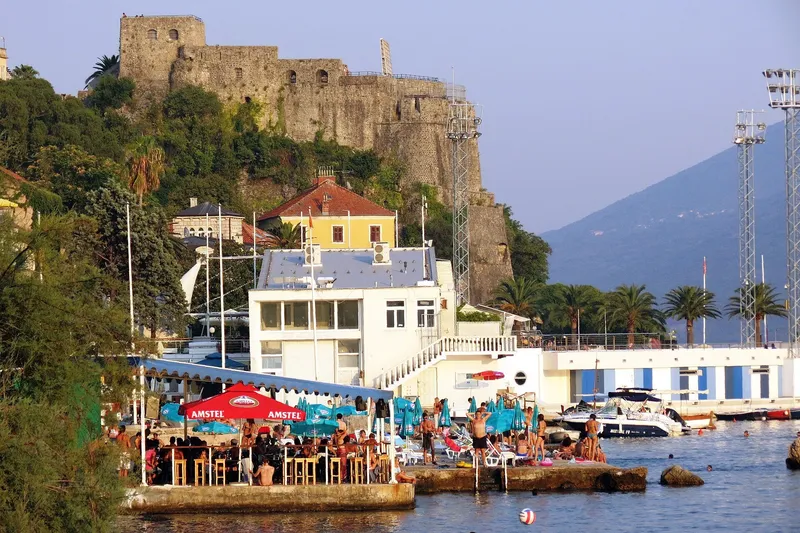
Forte Mare
Herceg Novi · Sea fortress
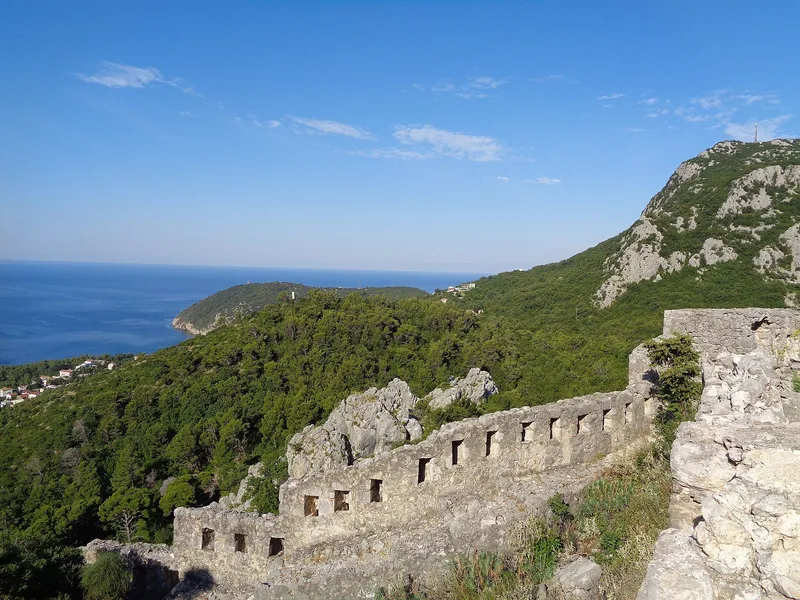
Haj-Nehaj fortress
Bar · Ruined medieval fortified town
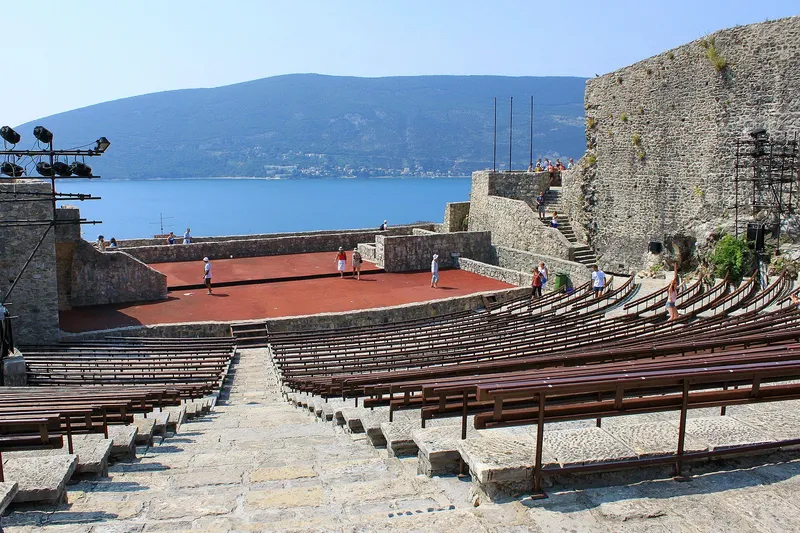
Kanli Kula fortress
Herceg Novi · Ottoman fortress
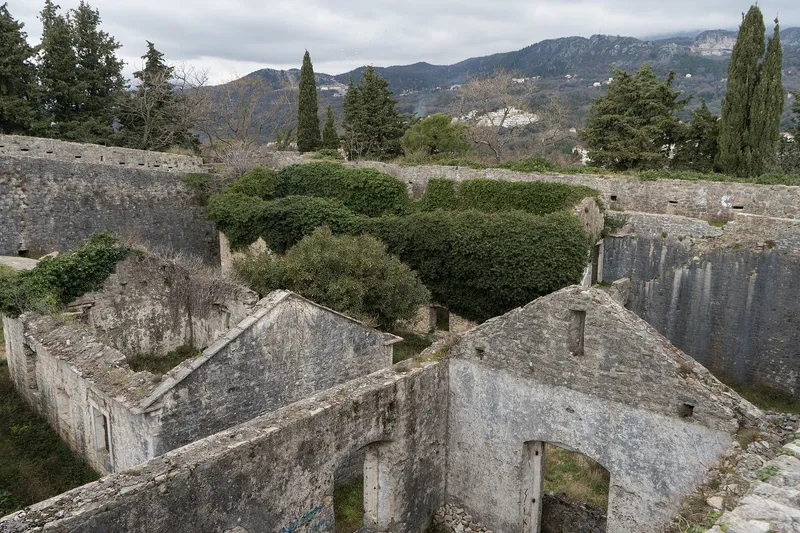
Španjola fortress
Herceg Novi · Hill fortress with four round bastions
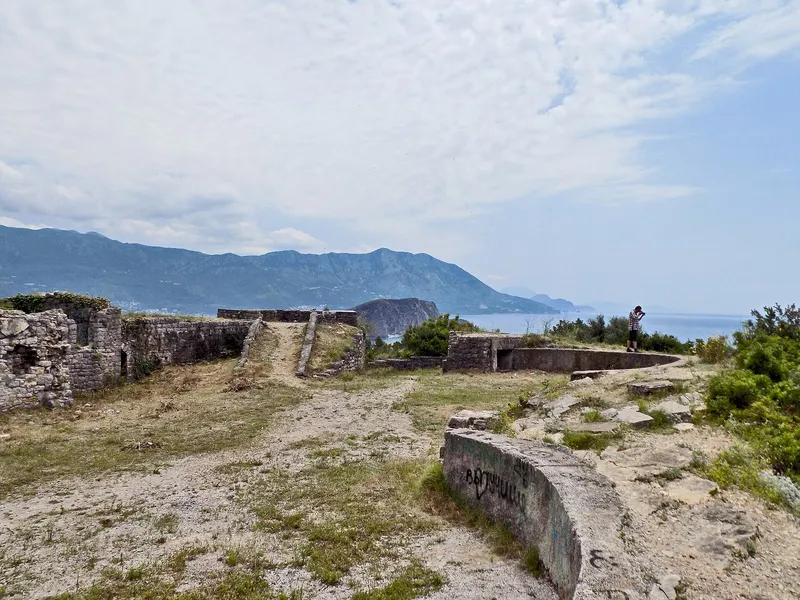
Mogren fortress
Budva · 19th-century military fortress
Built 1860
Which fortress for what
- The climb and the view: the Kotor walls, about an hour up roughly 1,400 steps to St John's Fortress above the bay. For the height without the stair, the Kotor-Lovćen cable car leaves from Dub, 4.2 km from Kotor.
- A fortress by the water: Forte Mare on the Herceg Novi shore, with Kanli kula 85 m above it, a summer stage since 1960.
- A walled town to wander: Stari Bar, over 260 ruined buildings 4 km inland from Bar, open all year for €3.
- A free walk up: Haj-Nehaj above Sutomore, about 1 km and 40 minutes from the Maljevik road with free parking; Mogren above Budva, under 2 km on foot from the centre.
- A fortress with a festival: Bedem in Nikšić hosts Bedem Fest in late August; Kanli kula is Herceg Novi's open-air stage; Mogren has been used by Budva's Grad teatar festival since 2025.
- Seen from a boat: Mamula, the island fort at the mouth of the Bay of Kotor, now a hotel; the boat tours from Herceg Novi and Kotor pass it.
Coast
- Herceg Novi: Forte Mare on the shore, built between the 14th and 17th centuries and tied to the town's founding in 1382; Kanli kula, the Ottoman fortress of 1539 at 85 m, once a prison and since 1960 a summer stage; Španjola on Bajer hill at 170 m, begun by the Spanish in 1538 and rebuilt by the Ottomans in 1539-1548, now an open ruin. Off the entrance to the bay, between Luštica and Prevlaka, lies Mamula, a round islet about 200 m across with an Austro-Hungarian fort of the mid-19th century: a prison in the First World War, an Italian camp in the Second, leased in 2015 for 49 years and a hotel since 2022-2023.
- Kotor: the walls and St John's Fortress, built between the 6th and 19th centuries, with the North Gate, the triple South Gate over the Gurdić spring and the church of Our Lady of Remedy halfway up the stair. The Old Town inside the walls is free; the ticket is for the climb.
- Budva: the Citadel, first mentioned in 1425 and reshaped as an Austro-Hungarian fortification in the 19th century, now privately run; the Venetian walls, completed in 1459 with the Gradenigo bastion of 1498 and rebuilt after the earthquake of 1667; and the Mogren fortress, an Austrian barracks of 1860 on Spas hill above the second Mogren beach, a ruin since the 1979 earthquake.
- Bar: Stari Bar, a walled town 4 km from the sea with over 260 ruined buildings and an aqueduct outside the walls; Haj-Nehaj, the ruined fortified town of Nehaj on a hill about 225 m above the sea, about 10 km north-west of Bar, first mentioned in 1542, with the small church of St Demetrius inside the walls.
- Ulcinj: the Old Town and Balšić Tower, with Illyrian wall remains, 6th-century gates and a citadel attributed to the Balšić rulers of 1360-1421. The five walled towns are compared on the old towns page.
Inland
Bedem in Nikšić carries the medieval name Onogošt, first recorded in the 12th century. The Ottomans took the town in 1465 and built the present fortress from the end of the 17th century; Montenegro took it in 1877. The upper fortress on the ridge was 214 m long and about 30 m wide, with a walled lower town at its foot. It has no gate or ticket and serves as a concert venue. In Podgorica the Ottoman clock tower is one of the few Ottoman buildings to survive the Second World War. All the walled sites, with the churches and memorials, are on the monuments page.
Opening hours and tickets
A dash means the site sets no fixed hours. "Open ruin" means no gate, no staff and no fee.
| Fortress | Hours | Ticket |
|---|---|---|
| Kotor walls and St John's Fortress | - | €15; residents of Montenegro free |
| Kanli kula and Forte Mare, Herceg Novi | daily 09:00-19:00 | €4; groups of 10 or more €3 each |
| Španjola, Herceg Novi | open ruin | free |
| Mamula, Herceg Novi | hotel; seen from the boat tours | - |
| Budva town walls | daily 10:00-20:00, April to November | €2, brochure included |
| Budva Citadel | - | €5; Budva residents free |
| Mogren fortress, Budva | open ruin | free |
| Stari Bar, Bar | 08:00-21:00 in season, 08:00-17:00 off season | €3; children to 12 €1 |
| Haj-Nehaj, Sutomore | open ruin | free; free parking |
| Ulcinj Old Town and Balšić Tower | - | free |
| Bedem, Nikšić | -; event venue | free |
Common questions
Is the Kotor fortress climb free?
No. The ticket for the walls and St John's Fortress is €15; people with residence in Montenegro climb free. There are no fixed official hours, so check at the ticket point on the day.
Which fortresses are free?
Haj-Nehaj, Mogren, Španjola, Bedem and Ulcinj Old Town have no ticket and no gate. The Kotor walls, the Budva walls and Citadel, Kanli kula, Forte Mare and Stari Bar charge.
Which fortress needs the least climbing?
Forte Mare stands on the Herceg Novi shore and Stari Bar is a walled town on a low hill; Kanli kula is at 85 m. Haj-Nehaj is a 40-minute walk, and St John's Fortress about 1,400 steps.
Can you visit Mamula?
Mamula has been a hotel since 2022-2023 and has no road or public boat; the boat tours from Herceg Novi and Kotor pass close by. Whether day visitors may land is a question for the hotel.
Related
Sources
- NTO, Fortresses
- TO Herceg Novi, Kanli kula
- TO Herceg Novi, Španjola
- Herceg Fest, hours notice 14 Apr 2026
- Muzeji i galerije Budve, walls and fortresses
- TO Bar, Haj-Nehaj
- TO Ulcinj, Stari grad
- Centar za konzervaciju i arheologiju, 2018 (Bedem)
- Boka News, Kotor walls fee, 2023
- Radio Slobodna Evropa, Mamula island, 2022
- Muzeji i galerije Budve, Tvrđava Mogren
- Aktuelno, Mogren fortress works, 2025
- TO Bar, Stari Bar
- RTV Budva, Citadel ticket, 17 Mar 2025
- Montenegrina, Nikšić Bedem
- Expeditio, Nehaj