Visa and entry rules for Montenegro
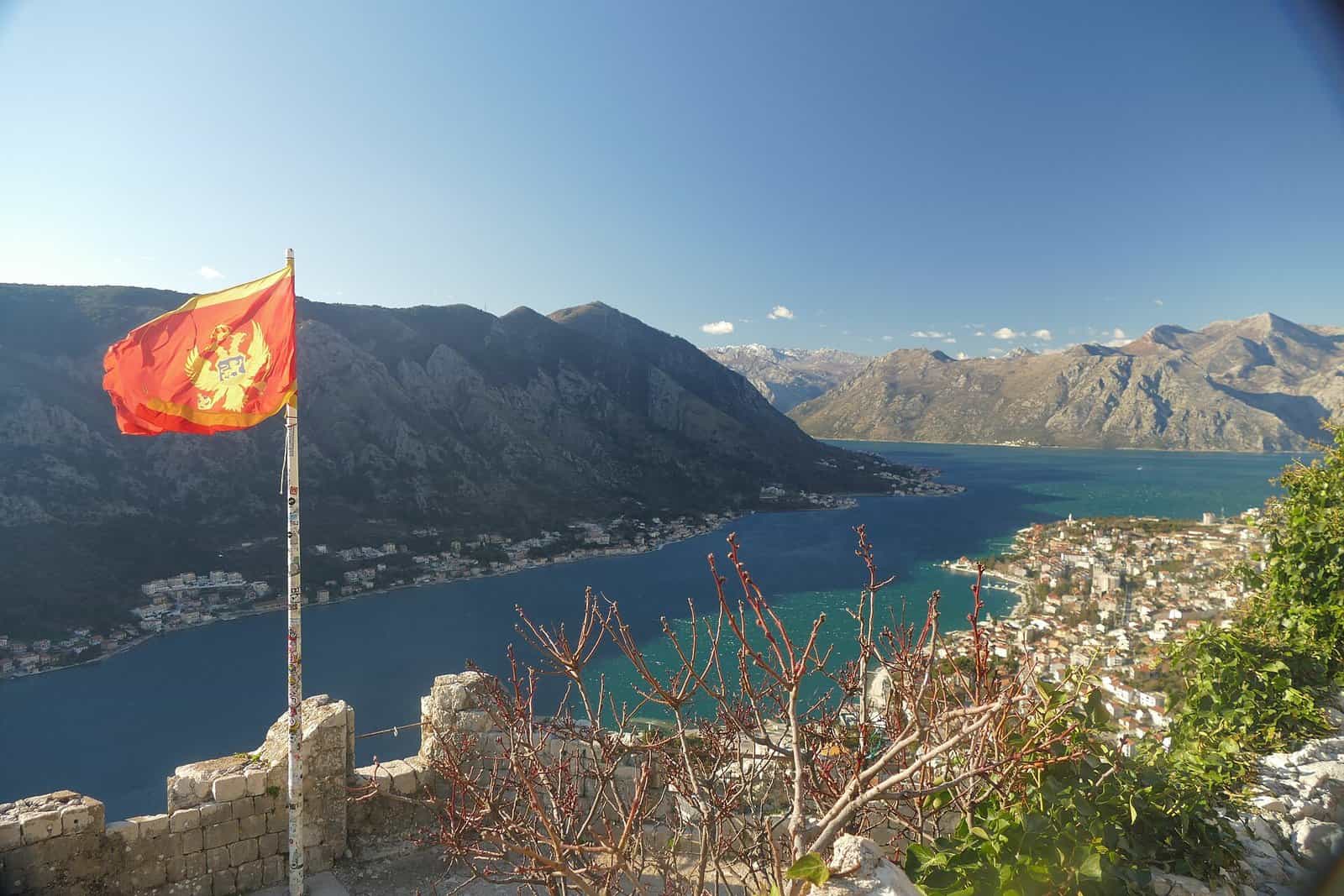
Photo: Hibasi · CC BY-SA 4.0

Most visitors need no visa for Montenegro. A passport alone admits citizens of 82 countries and territories, the US, UK, Canada, Australia, Japan and most EU states among them, for up to 90 days. Citizens of 23 states, including Germany, Italy, Croatia and Serbia, may enter on a national ID card instead, for up to 30 days. Citizens of Russia, Turkey, Belarus, Saudi Arabia and China need a visa (since 1 November 2026). Any traveller who would otherwise need a visa may enter for up to 30 days on a valid Schengen, US, UK or Irish visa or residence permit. Montenegro is not in the EU or Schengen.
Do you need a visa?
Find your passport in the table. The entry rules for every country are on the official list of Montenegrin embassies and consulates, in each country's visa section.
| Passport group | Visa | Maximum stay | Examples |
|---|---|---|---|
| 82 countries and territories | No visa, passport | 90 days | US, UK, Canada, Australia, New Zealand, Japan, South Korea, Israel, Ukraine, UAE, Brazil, Mexico, most EU states |
| 23 states with ID-card entry (also in the 90-day group) | No visa, national ID card accepted | 30 days with the ID card | Austria, Belgium, Bosnia and Herzegovina, Bulgaria, Croatia, Czechia, Denmark, Germany, Holy See, Hungary, Italy, Kosovo, Liechtenstein, Luxembourg, Monaco, Netherlands, North Macedonia, Norway, Romania, Serbia, Slovakia, Slovenia, Sweden |
| Holders of a valid Schengen, US, UK or Irish visa or residence permit | No Montenegrin visa | 30 days, never beyond the visa's expiry | Any visa-required nationality with one of these documents |
| Peru | No visa, by agreement | 30 days | |
| Russia, Turkey, Belarus, Saudi Arabia, China | Visa required (since 1 November 2026) | Per the visa | Russia: VFS centres in Moscow and seven other cities; Turkey: VFS centres in Ankara and Istanbul; China: Embassy of Montenegro in Beijing; Belarus: covered by the Embassy in Moscow; Saudi Arabia: no resident Montenegrin mission |
| 88 other countries | Visa required | Per the visa | India, Kazakhstan, Egypt, Armenia, Azerbaijan, Uzbekistan, Kuwait, Qatar, Oman, Bahrain, Thailand, Philippines, Indonesia, South Africa |
The change of 1 November 2026 ended the 30 visa-free days that Russian, Turkish, Belarusian and Saudi citizens had until then, and the 30-day exception for organised Chinese tourist groups; it brought Montenegro's visa list into line with the EU's, a condition of its accession talks. Kazakh citizens need a visa; a seasonal visa-free window applied from 1 May to 1 October 2026.
How long you can stay
Visa-free entry with a passport gives 90 days within any 180, counted from the first entry (Law on Foreigners, Art. 34). Entry with an ID card gives 30 days. A short-stay (C) visa gives the same 90 days within 180, and a multiple-entry C visa is issued for six months to five years. There is no separate transit visa: the C visa covers transit as well (Art. 17).
Entering with an ID card
Citizens of the 23 states in the table may enter on a national ID card, under an international agreement or the visa-regime rules of the Law on Foreigners. The card must stay valid for at least three months after your planned departure (Art. 9). France, Spain, Portugal, Greece and Poland are not on the list, so their citizens travel on a passport.
Passport validity and applying for a visa
A passport is accepted at the border if it was issued within the last ten years and stays valid for at least three months after your planned departure (Law on Foreigners, Art. 9). For a visa application the passport must outlast the visa by at least three months; in urgent, justified cases a shorter validity is accepted, but never one that ends before departure. Apply in person at a Montenegrin embassy or consulate at least 15 days before travel for a C visa and 60 days before for a D visa (Art. 21).
The border police may refuse entry to a foreigner who cannot show the purpose and conditions of the stay, who lacks the money for the stay and for the journey home or onward, or who has already spent 90 days in Montenegro within the last 180 (Law on Foreigners, Art. 8).


Children travelling with one parent
Every child needs a valid travel document of its own, or an ID card where the nationality allows one; the Law on Foreigners (Art. 9) makes no exception for children. A minor travelling with an adult who is not a parent needs the parents' written, certified consent. A child travelling with one parent should carry the other parent's certified consent and the child's birth certificate. The Montenegro with kids page has more on documents for children.
Travelling with a dog or cat
Up to five dogs or cats may enter with their owner (rulebook on non-commercial movement of pets, Sl. list CG 42/2016). Each needs a microchip or other prescribed ID, a pet passport, a rabies vaccination (given at least 21 days before travel if it is the first) and a certificate from an official vet in the country of departure. Dogs also need tapeworm (E. multilocularis) treatment 24 to 120 hours before entering or leaving Montenegro. For a pet from a country outside the EU list, confirm before you travel whether a rabies antibody titre test is needed. Pets enter through one of the ten designated border inspection posts; Tivat Airport is not one of them. The travelling with a dog or cat page has the details.
Customs: what you can bring in duty-free
Personal luggage is duty-free up to EUR 430 for air and sea travellers, EUR 300 for travellers by land and EUR 150 for travellers under 15. A single item worth more than the allowance cannot be split so that part of its value falls within it. Private aircraft and leisure boats do not count as air or sea travel.
| Item | Air travellers | Land and sea travellers |
|---|---|---|
| Tobacco | 200 cigarettes, or 100 cigarillos, or 50 cigars, or 250 g tobacco | 40 cigarettes, or 20 cigarillos, or 10 cigars, or 50 g tobacco |
| Spirits | 1 litre over 22% vol. or 2 litres up to 22% (or a combination) | Same |
| Wine and beer | 4 litres still wine and 2 litres beer | Same |
| Under 17 | No allowance for alcohol or tobacco | Same |
Cash and other means of payment worth EUR 10,000 or more must be declared to customs on entry and on exit, on the prescribed form; cheques and bearer instruments count. Undeclared cash of that size costs an individual EUR 550 to 2,000; when there is no suspicion of crime, the cash itself is not seized.
After arrival: register within 24 hours
A foreigner staying up to 90 days must be registered with the police within 24 hours of arriving at the place of stay. Paid accommodation registers you itself, within 12 hours. If you stay with friends or in your own flat, register yourself at the local tourist organisation or the police. The registration and tourist tax page explains who does what and what the tax costs.
Staying longer
A longer stay generally needs a temporary residence permit under the Law on Foreigners. A long-stay (D) visa covers stays of more than 90 and up to 180 days in a year for set purposes, among them work, family reunification, study, medical treatment, owning property in Montenegro and remote work as a digital nomad (Art. 18). Residence applications go to the Ministry of the Interior.
Embassies and consulates
The embassies and consulates directory lists foreign missions in Montenegro with address, phone and hours; start there after a lost passport.
Common questions
Can I enter Montenegro with a Schengen visa?
Yes. Holders of a valid Schengen, US, UK or Irish visa, or a residence permit from one of those, may enter and stay up to 30 days, never beyond the visa's expiry.
Do US, UK, Canadian or Australian citizens need a visa?
No. All four are in the 90-day visa-free group and enter with a passport.
Can Indian citizens with a US visa enter Montenegro?
India is visa-required, but a valid US, UK, Irish or Schengen visa or residence permit allows entry for up to 30 days within that visa's validity.
Which countries can enter with an ID card?
Austria, Belgium, Bosnia and Herzegovina, Bulgaria, Croatia, Czechia, Denmark, Germany, Holy See, Hungary, Italy, Kosovo, Liechtenstein, Luxembourg, Monaco, Netherlands, North Macedonia, Norway, Romania, Serbia, Slovakia, Slovenia and Sweden, for up to 30 days.
How many days can I stay without a visa?
90 days within 180 for the passport group; 30 days with an ID card; 30 days on a Schengen, US, UK or Irish visa, never beyond its expiry.
Do Russian citizens need a visa for Montenegro?
Yes, since 1 November 2026, as do citizens of Turkey, Belarus, Saudi Arabia and China. Russian citizens apply at the VFS centres in Moscow and seven other cities, Turkish citizens in Ankara and Istanbul, Chinese citizens at the Embassy in Beijing.
Is Montenegro in the EU or Schengen?
No. Montenegro has been an EU candidate since December 2010, with accession talks open since June 2012, and it is not in Schengen. It uses the euro all the same.
Can I bring my dog into Montenegro?
Yes, up to five dogs or cats per owner, microchipped or otherwise identified, with a pet passport, a veterinary certificate and a rabies vaccination given at least 21 days before travel if it was the first. Dogs also need tapeworm treatment 24 to 120 hours before entry. For pets from countries outside the EU list, confirm whether a rabies antibody titre test is needed with the Food Safety, Veterinary and Phytosanitary Administration (Uprava za bezbjednost hrane, veterinu i fitosanitarne poslove, +382 20 201 945).
How much cash can I bring in?
Any amount, but EUR 10,000 or more must be declared on entry and on exit. Not declaring it costs an individual EUR 550 to 2,000.
Related
Sources
- Government of Montenegro, MFA country pages (visa regime section)
- MFA country page: Germany (ID-card entry)
- MFA country page: Gibraltar (visa-holder rule wording)
- MFA country page: Russian Federation
- MFA country page: Turkey
- MFA country page: India
- Government of Montenegro, Visas and visa regime
- Zakon o strancima, Sl. list CG 12/2018 (Paragraf.me, base text to 3/19)
- Zakon o strancima, amendments 86/22, 77/24, 3/26, 33/26 (official gazette register)
- Paragraf.me daily news 19.06.2017 (reprint of RTCG, 16.06.2017), Ministry of Foreign Affairs statement on Serbian citizens and minors
- US Department of State, Montenegro travel advisory (27.8.2026)
- Council of the EU, Montenegro (enlargement)
- GOV.UK, Montenegro travel advice: Entry requirements
- Uprava carina, Oslobođenje od plaćanja uvoznih dažbina na robu u ličnom prtljagu (act 14388/1-25, 31.10.2025)
- Uprava carina, Uputstvo o kontroli fizičkog unošenja i iznošenja sredstava plaćanja (D-8222/1, 2016)
- Uprava carina, Obavještenje o operativnom postupanju na graničnim prelazima u vezi sa prenosom sredstava plaćanja (gov.me, 21.11.2025)
- Pravilnik o uslovima za nekomercijalno kretanje kućnih ljubimaca, Sl. list CG 42/2016 (FAOLEX copy)
- Rulebook on measures to prevent the occurrence of Echinococcus multilocularis in dogs (23.3.2016, FAOLEX copy)
- UBHVFP, List of Montenegro Border Inspection Posts designated as official points of entry (1.9.2022)
- Embassy of Montenegro in Italy, Putovanje u Crnu Goru sa kućnim ljubimcem
- gov.me, Ukinut titar antitijela protiv bjesnila za nekomercijalno kretanje kućnih ljubimaca u države EU (16.06.2026)
- UBHVFP, Nekomercijalno kretanje kućnih ljubimaca (gov.me, 2020, archived)
- N1 Montenegro, 28.07.2026: amendments to the Regulation on the visa regime (Uredba o viznom režimu), visas for Russia, China, Turkey, Belarus and Saudi Arabia from 1 November 2026
- MFA country page: Belarus (visa-free until 31 October 2026; covered by the Embassy in Moscow)
- MFA country page: Saudi Arabia (visa-free until 31 October 2026; no resident mission)
- MFA country page: China (visa required; group exception until 31 October 2026; Embassy in Beijing)