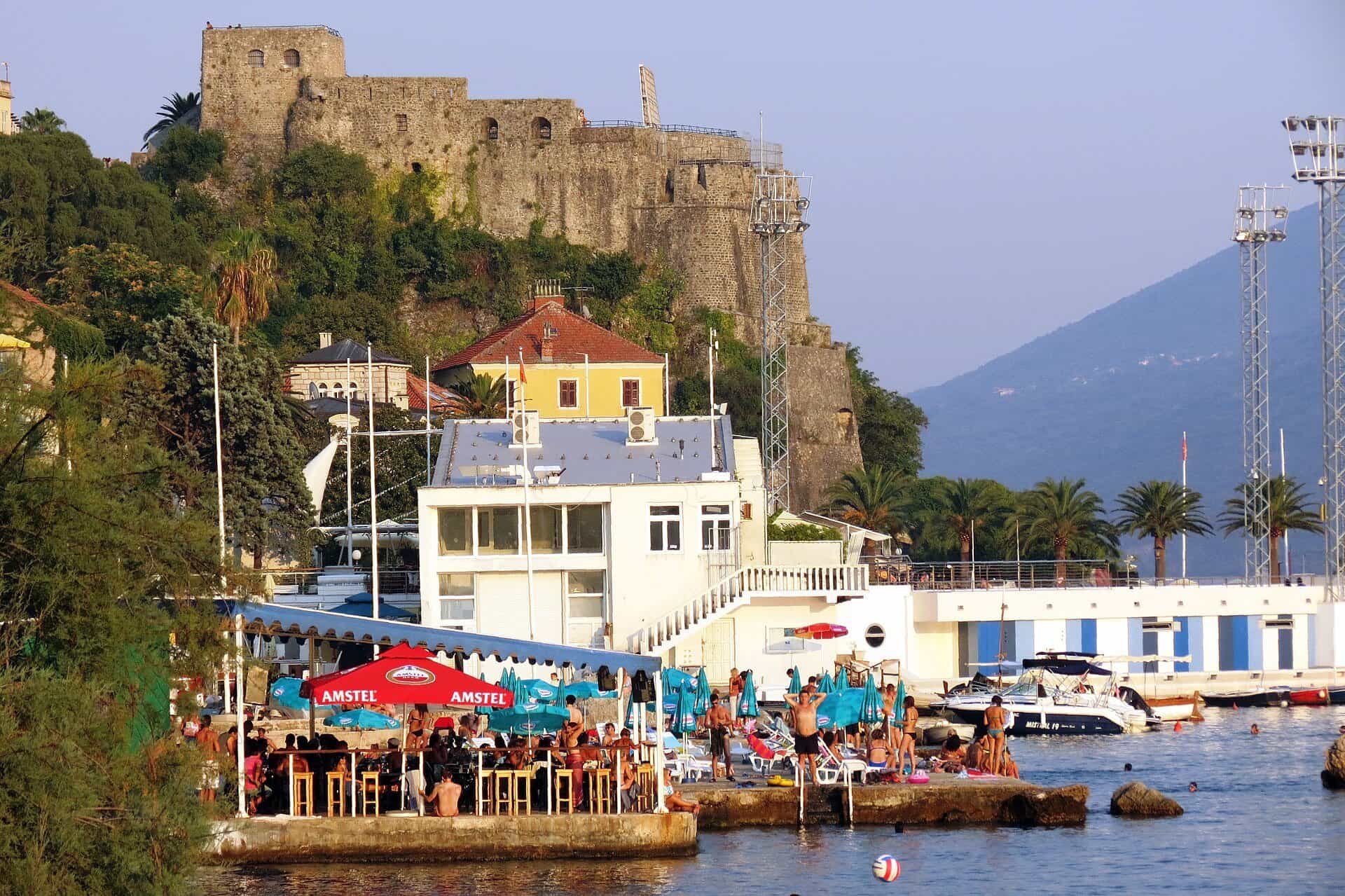
Forte Mare
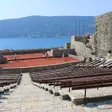
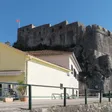
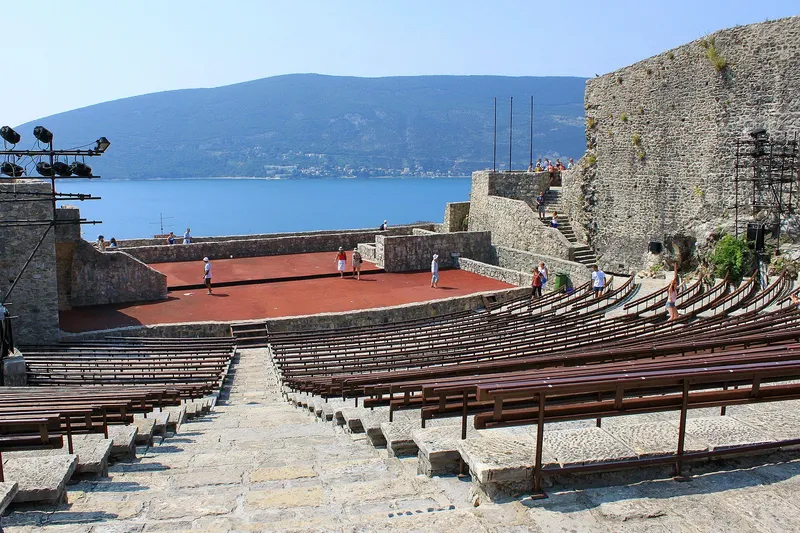
The sea fortress of Herceg Novi below the Old Town, 14th-17th century, Austro-Hungarian in its present look, summer cinema since 1952
Sea fortress · Shore of Herceg Novi
Photo: Natalia Semenova · CC BY 3.0
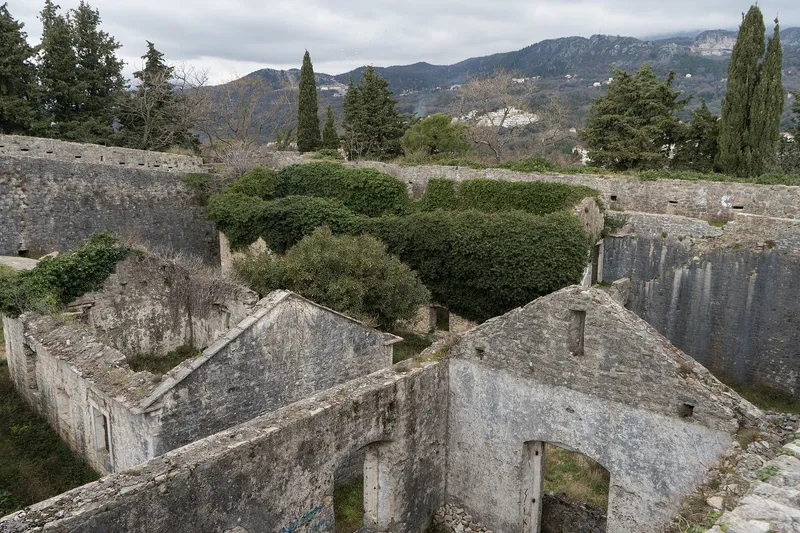
Forte Mare, the "sea fortress", stands on the shoreline of Herceg Novi directly below the Old Town, where it guarded the town's entrance from the sea. It is the oldest of the town's fortresses, linked to the town Tvrtko I Kotromanić founded in 1382, and was built and rebuilt between the 14th and 17th centuries by Bosnians, Ottomans and Venetians before Austria-Hungary gave it its present look. Since 1952 it has been the town's open-air summer cinema. It is open daily, 09:00-17:00 in winter and 09:00-19:00 from mid-April, with a EUR 4 ticket.
Opening hours and tickets
| Hours, winter (from early November) | Daily 09:00-17:00 |
| Hours from mid-April | Daily 09:00-19:00 |
| Individual ticket | EUR 4 |
| Groups of 10 or more | EUR 3 per person |
The fortress is run by JUK Herceg Fest, the town's cultural institution, which keeps the same hours and prices at Kanli Kula at the top of the Old Town, and announces each change of hours; the two make a natural pair.

What to see
- The oldest fabric. A short wall on the south-east and a narrow stair on the east are all that survive from the first, Bosnian-period fortress.
- The Sea Gate on the upper side, which keeps fortification elements from the Bosnian period.
- The spring and Šantić's plaque. At the foot of the fortress is the spring that the Holy League forces cut off in 1687, in the siege that ended Ottoman rule; a marble plaque above it carries verses by the poet Aleksa Šantić.
- The terraces over the water, with the view along the Herceg Novi shore to the mouth of the bay.
- The summer cinema, in the fortress since 1952: open-air screenings on summer evenings for more than six decades.

History
Forte Mare belongs to the first town on this shore, founded by the Bosnian king Tvrtko I in 1382 as Sveti Stefan. Each power that held Herceg Novi rebuilt it. The Ottomans, who ruled the town from 1482 to 1687, carried out the largest reconstruction and gave the fortress the dimensions it has today. Venice, which took the town in 1687, restored it in the 17th century and gave it its present name. Austria-Hungary worked on it in the 19th century, using cement here for the first time in 1833, and the silhouette a visitor sees from the promenade is largely the Austrian one. In 1952 the interior was adapted as a summer stage, and the fortress has been the town's open-air cinema since.
Forte Mare is not on the UNESCO World Heritage list. Montenegro's part of the 2017 inscription of the Venetian Works of Defence is Kotor.

Getting there
The fortress is on the waterfront below the Old Town; the Pet Danica shore promenade runs past it, and from the town centre it is about 800 m (9 minutes) on foot down through the Old Town or along the shore. Drive times without traffic to Herceg Novi: Igalo 3.6 km, about 7 minutes; Tivat 23 km, about 40 minutes; Kotor 33.1 km, about 53 minutes. Parking in the town is in zones; the garage and the zone prices are on the Herceg Novi page.
Nearby
- Kanli Kula, at the top of the Old Town, same hours and ticket.
- Clock tower, the Old Town gate.
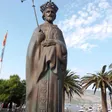
- Monument to King Tvrtko I, on Škver, the harbour square below the fortress.
- Španjola fortress on the hill above the town.
- Herceg Novi town museum.
History
1382
Founding of the town
Tvrtko I Kotromanić founds the town as Sveti Stefan; the fortress belongs to this first town, and the Sea Gate keeps elements from the Bosnian period.
1482-1687
Ottoman reconstruction
Under Ottoman rule the fortress undergoes its largest reconstruction and gains its present dimensions.
1687
Venetian restoration
The Holy League forces cut off the spring at the fortress foot; Venice takes the town, restores the fortress and gives it the name Forte Mare.
1833
Austrian works
Cement is used for the first time in the Austrian works, which give the fortress its present look.
1952
Summer cinema
The interior is adapted as a summer stage; open-air film screenings have run here for more than six decades.
On these trips
- 3 days in Montenegro: Kotor, Lovćen, BudvaDay 2 · Perast, Our Lady of the Rocks and Herceg Novi
- 7 days in Montenegro: coast to Durmitor loopDay 2 · Perast, Our Lady of the Rocks and Herceg Novi
- Day trips from Kotor: 7 trips with drive timesTrip 4 · Herceg Novi and the ferry back
- 10 days in Montenegro: the full loop by carDay 2 · Perast, Our Lady of the Rocks and Herceg Novi
Sources
Herceg Novi Tourist Board, Forte Mare · JUK Herceg Fest, Produženo radno vrijeme na tvrđavama Kanli kula i Forte Mare (hours from 15 April, tickets) · JUK Herceg Fest, Od 3. novembra novo radno vrijeme za posjete (winter hours 09:00-17:00) · National Tourism Organisation of Montenegro, Fortresses · National Tourism Organisation of Montenegro, Cultural heritage: UNESCO · Herceg Novi Tourist Board, Kanli kula (Ottoman rule 1482-1687) · Tourist Organisation Herceg Novi, useful information (parking zones, garage) · OSRM routing (car and foot, OpenStreetMap data, ODbL; times without traffic)