Three days is enough for the Bay of Kotor, the Lovćen road and Budva, and not for anything further. This route starts at Tivat airport, sleeps two nights in Kotor and one in Budva, and keeps the driving to one half-day on day 2 and one on day 3. Every distance and time on this page is computed by road and dated; the park, museum and ferry prices come from the operators' own price lists with the date they were read.
The route
Tivat airport → Kotor → Budva · 175 km · 4 h 25 min driving
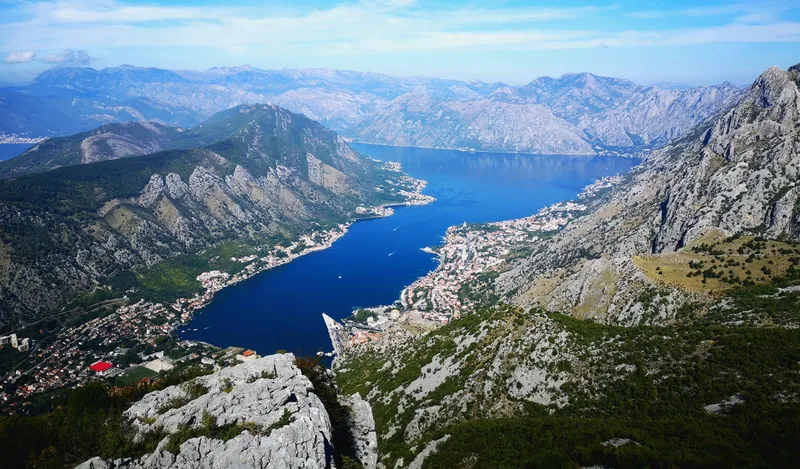
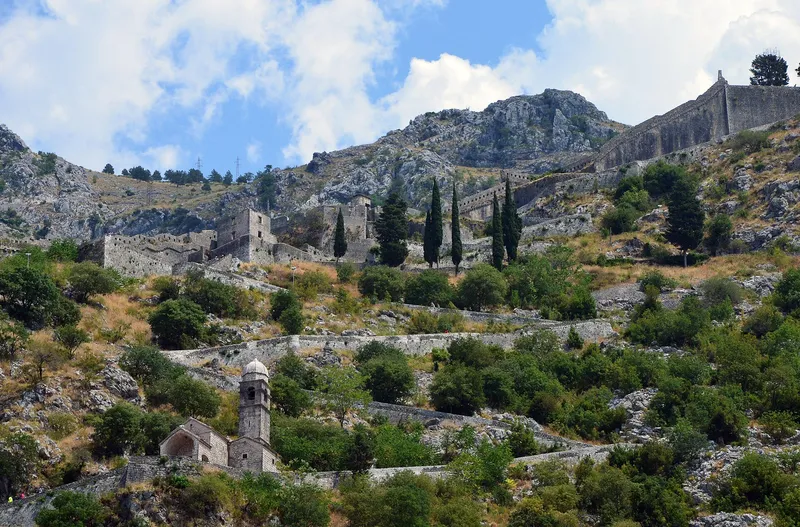
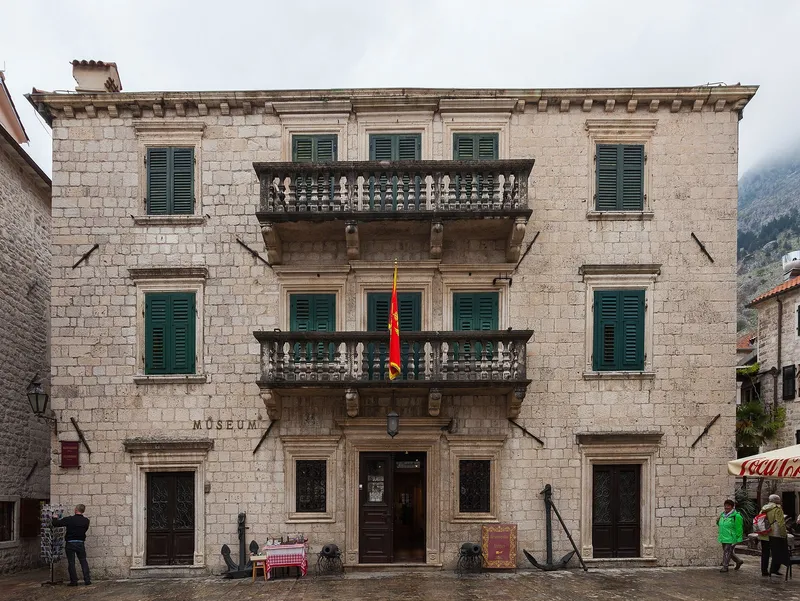
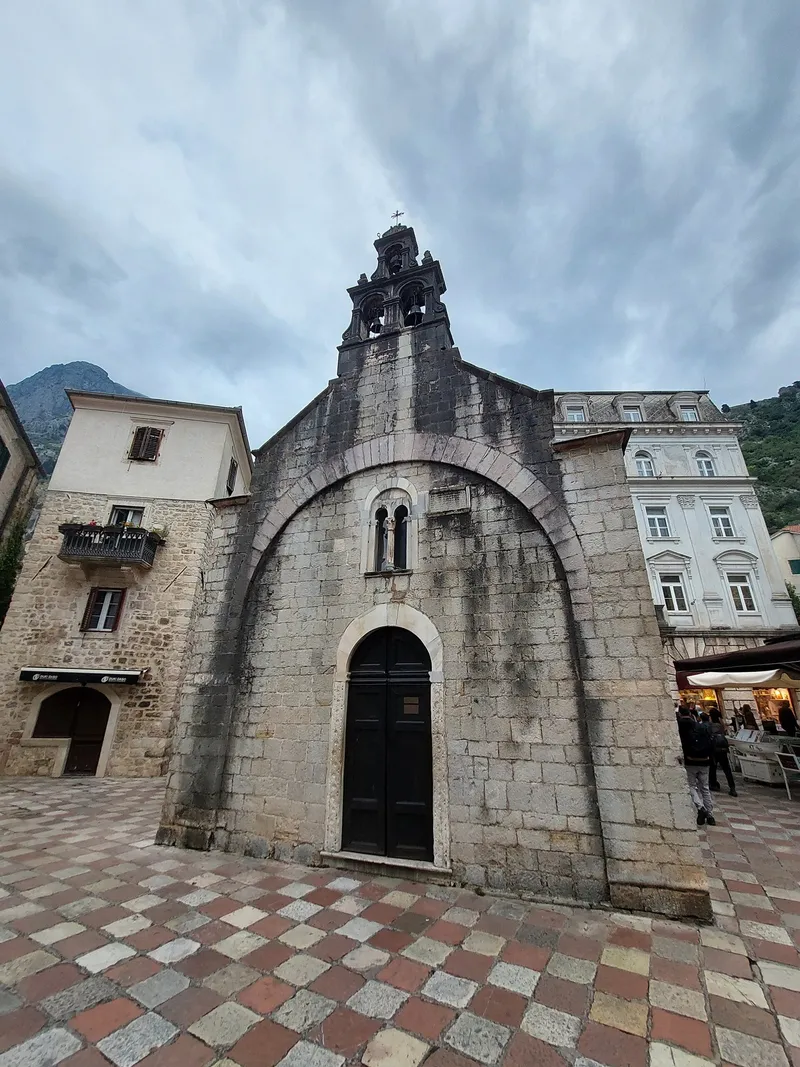
Arrive, drop the car and walk. Kotor's walled town has been on the UNESCO World Heritage list since 1979, as part of the Natural and Culturo-Historical Region of Kotor; the walls run about 4.5 km and climb around 1,400 steps to St John's Fortress, and a ticket is needed for the climb (residents of Montenegro free); where it is sold is not published. Go up early or late in summer. The Maritime Museum in the Grgurina palace opens on weekday mornings, but its own pages disagree on the hours, so check by phone and fit it in before the walls if you arrive mid-morning. St Luke's, from 1195, is the small church on the square of the same name.
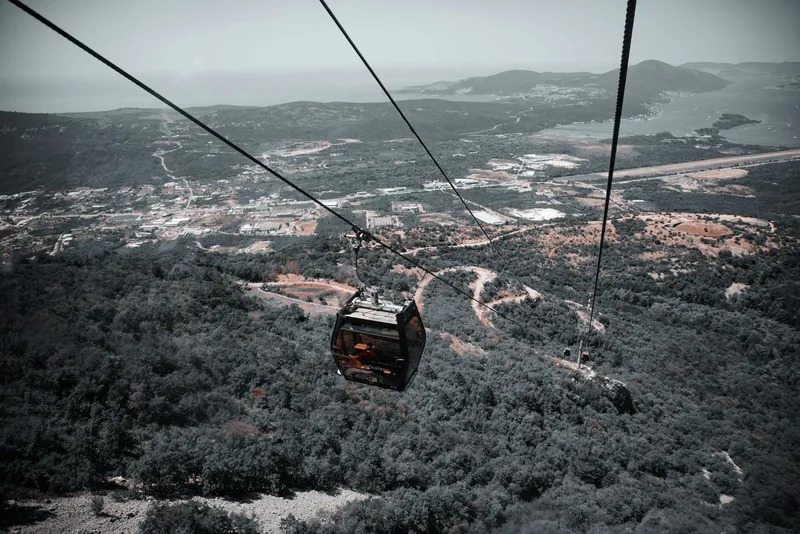
If the afternoon is clear, the cable car from Dub, off the Budva-Tivat road (by car or the operator's shuttle), to Kuk is the quick way to see the bay from above (about 11 minutes each way; adult return EUR 20). Kuk is inside Lovćen park but not at the mausoleum; the mausoleum comes on day 3 by road.
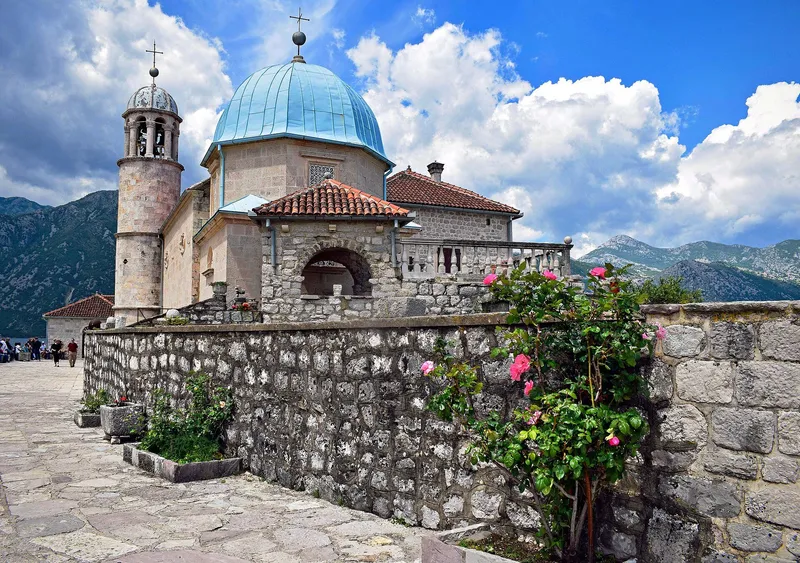
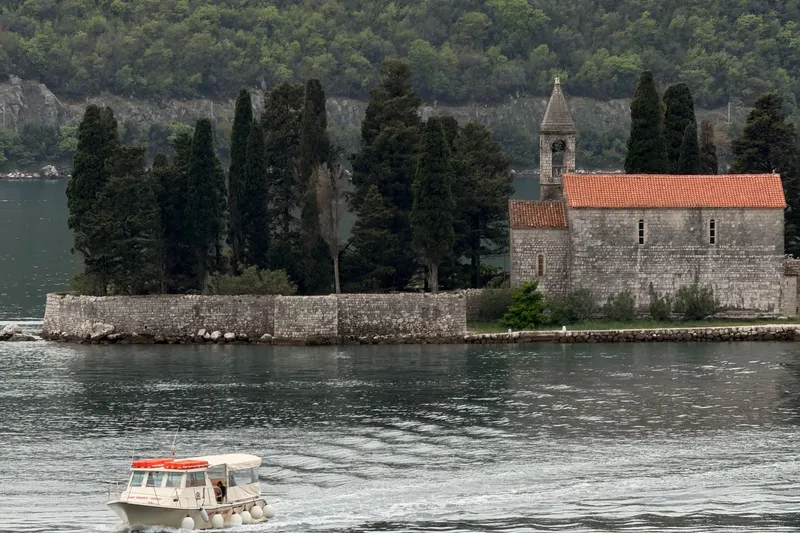
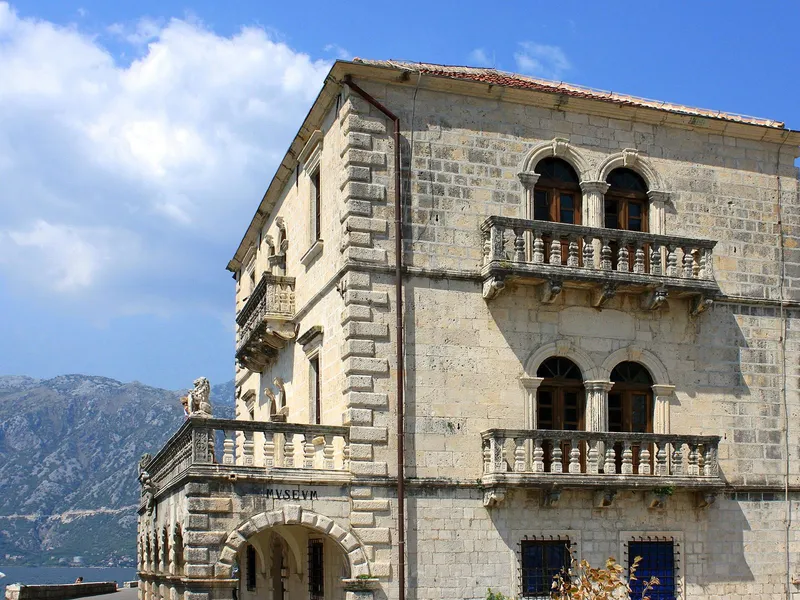
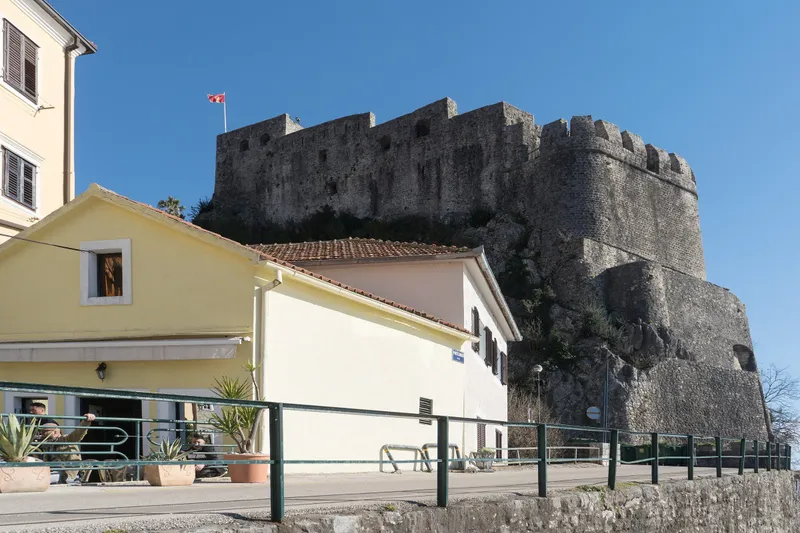
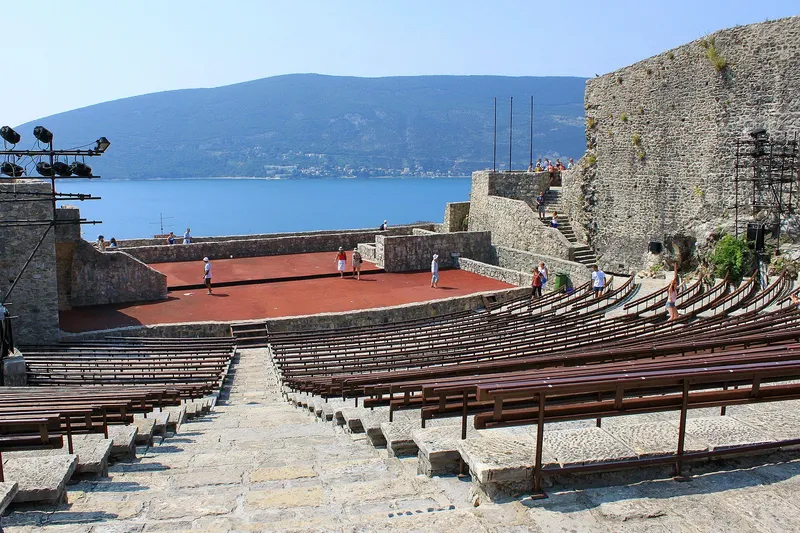
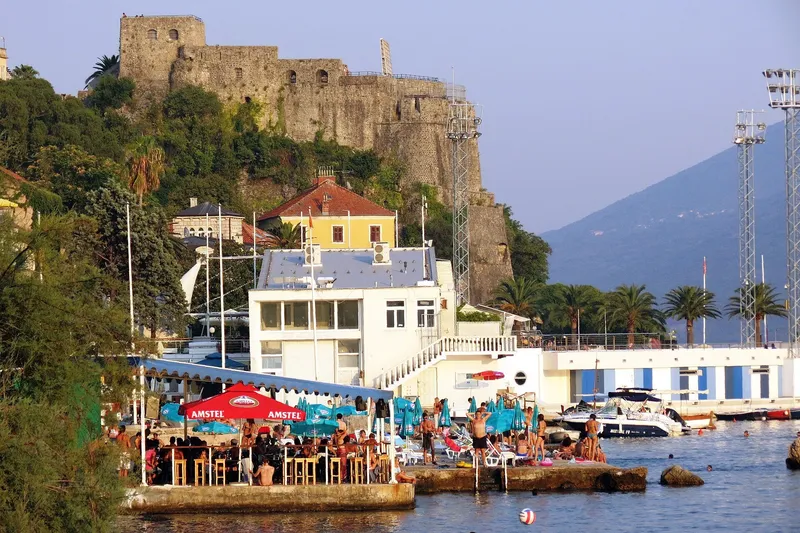
Perast first, while the islet boats are quiet. Our Lady of the Rocks is an artificial islet off the town, built up by sinking stones and old ships around a crag; the boat leaves from the Perast waterfront and the church and its museum are on the islet. St George, the natural island next to it, holds a 12th-century church and the town's old graveyard. The town museum in the Bujović palace is open 08:00-20:00 Tuesday to Sunday in season and closed on Mondays. Then on round the bay to Herceg Novi for Kanli kula at the top of the old town and Forte Mare on the shore, both open daily 09:00-19:00; check winter hours before you go.
Come back across the bay on the Kamenari-Lepetane ferry rather than round it: the crossing is about 15 minutes and the fare per car is in the fees box. The leg time shown here does not include waiting for a boat, which the operator does not publish; in July and August allow for it.
Car: Kotor to Our Lady of the Rocks · 18.4 km · 25 min
Lovćen serpentines, Njeguši, the mausoleum, Cetinje and Budva
100 km · 2 h 25 min driving
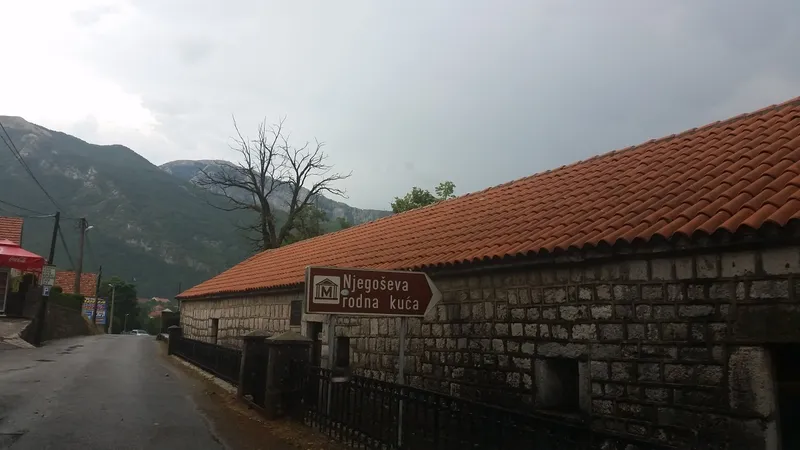
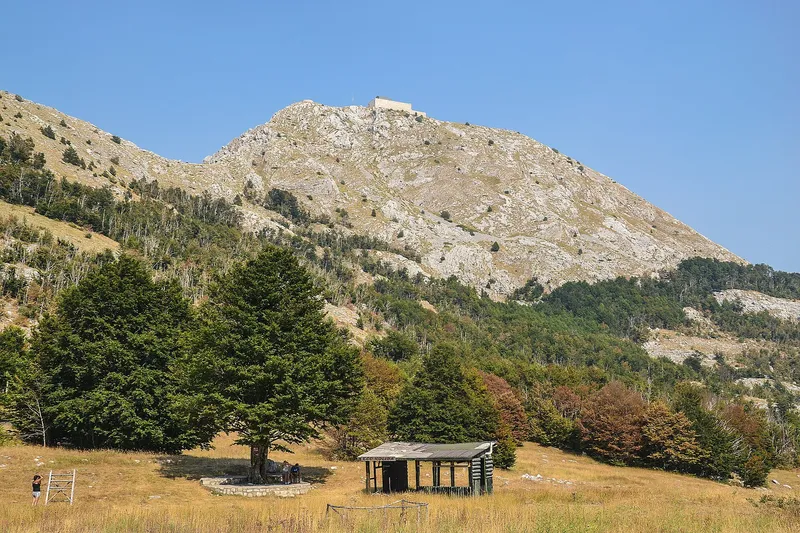
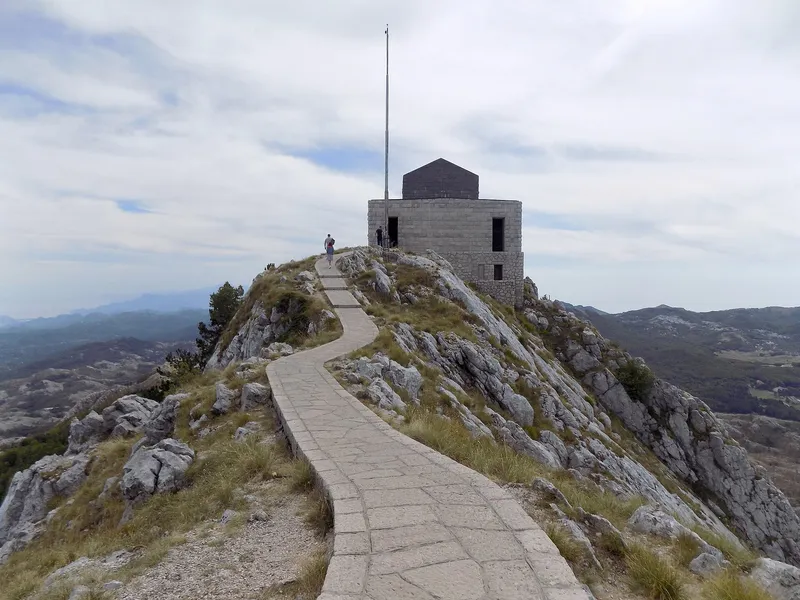
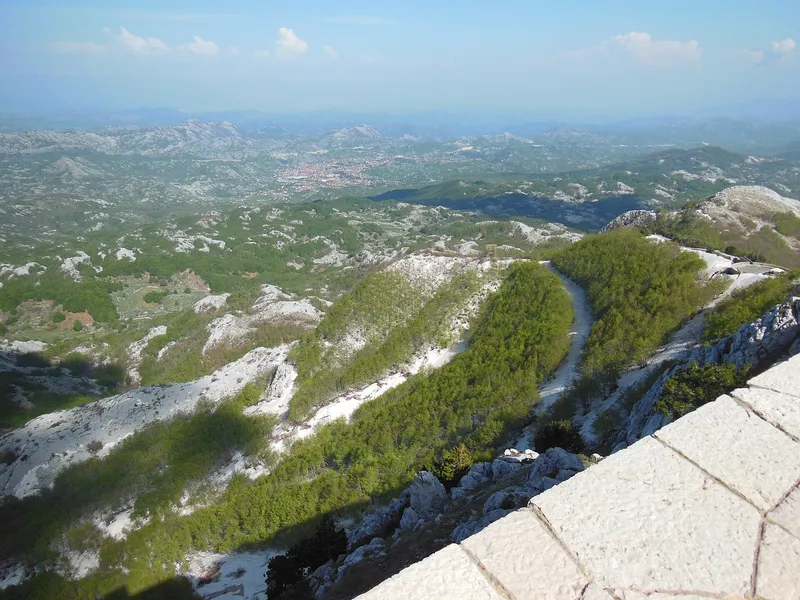
Leave Kotor on the old Austro-Hungarian road: 25 hairpins by the Kotor tourist board's count, 32 by Cetinje's, with the bay below at every turn. Njeguši is the stop for Njegoš's birth house, a memorial museum open from mid-April to 15 November and included in the mausoleum ticket. The park ticket is sold at the Krstac and Bjeloši checkpoints and online. From the car park on Jezerski vrh a tunnel of 461 steps leads up to the mausoleum, completed in 1974 to Ivan Meštrović's design, and the viewing terrace behind it. The mausoleum is open 09:00-16:00 from 11 April to 15 November; outside those dates skip the mountain and go straight to Cetinje.
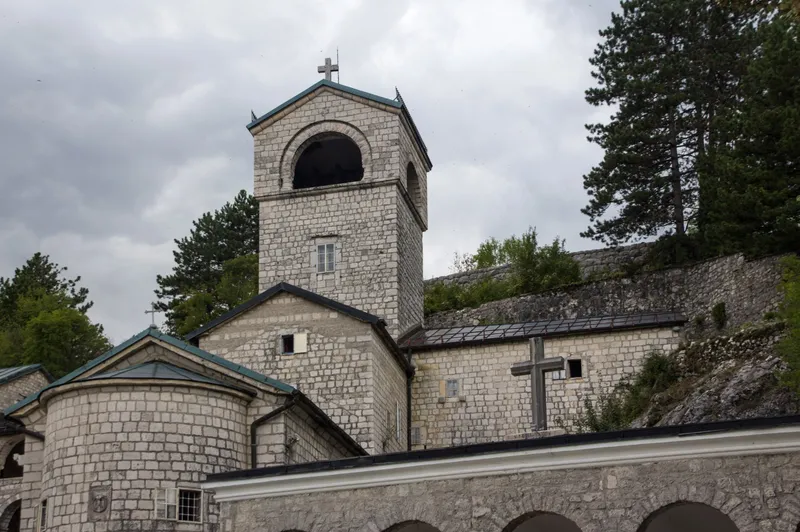
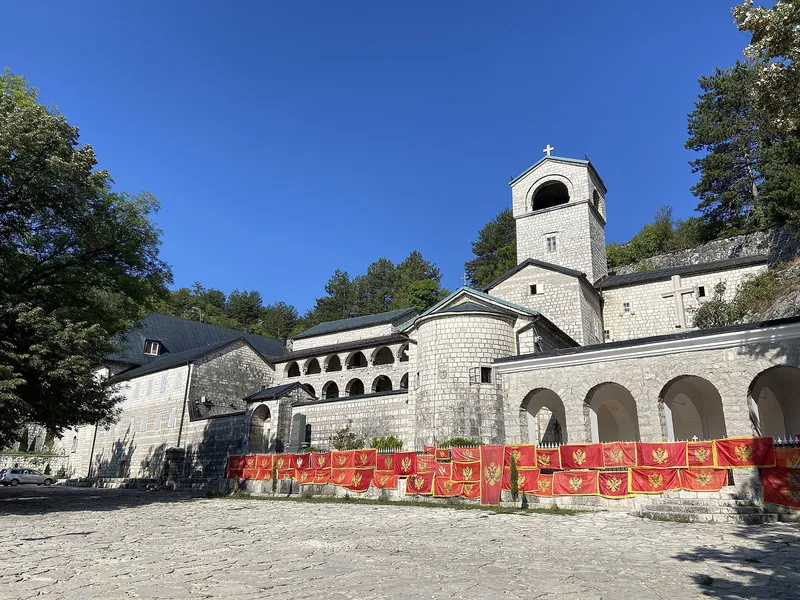
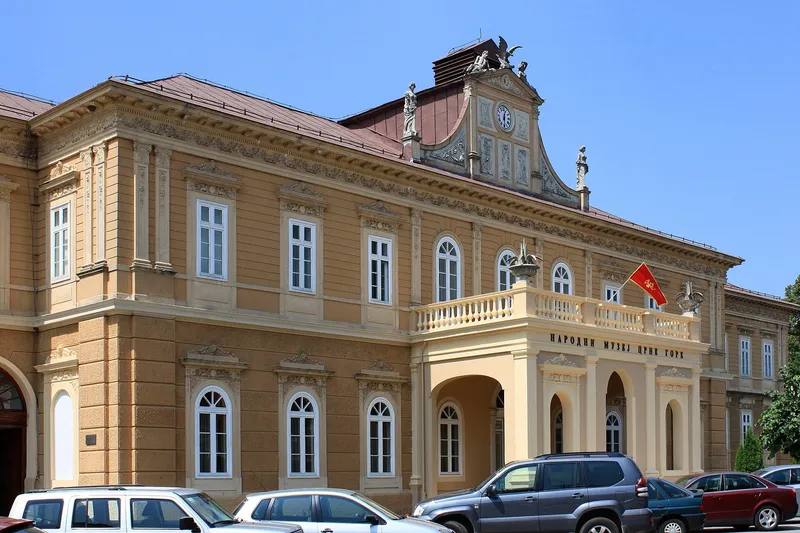
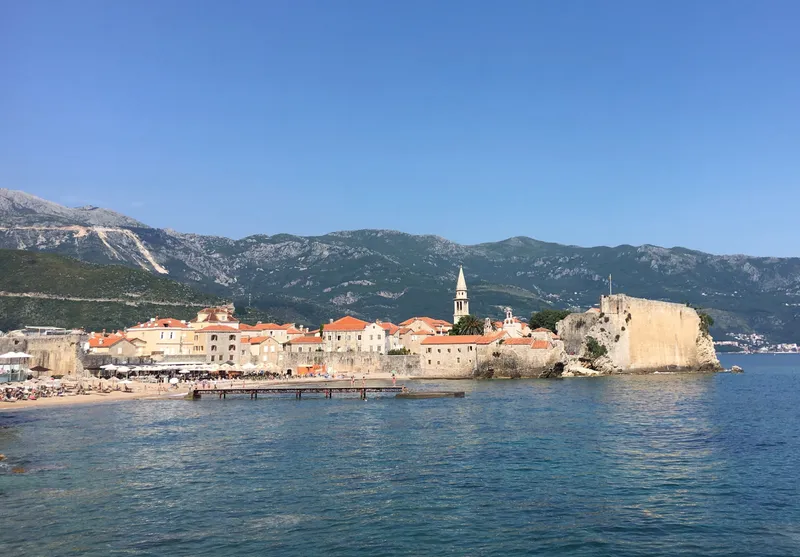
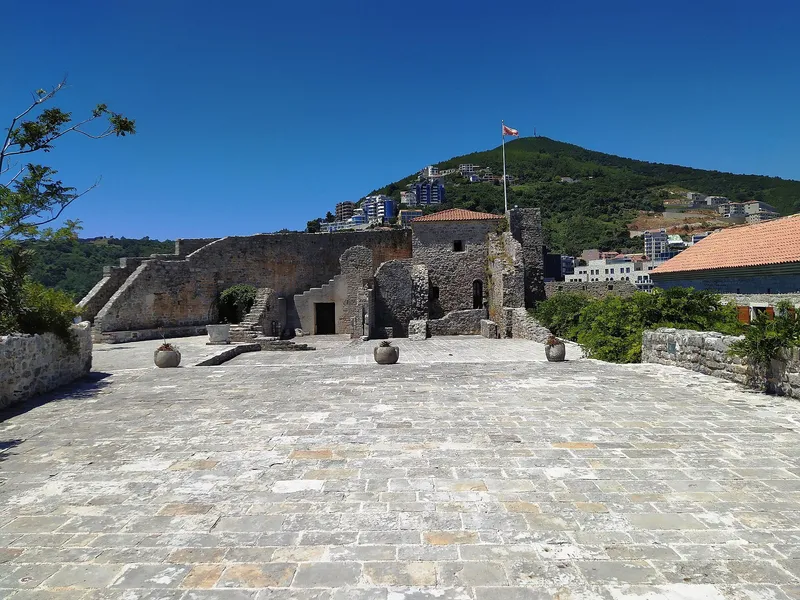
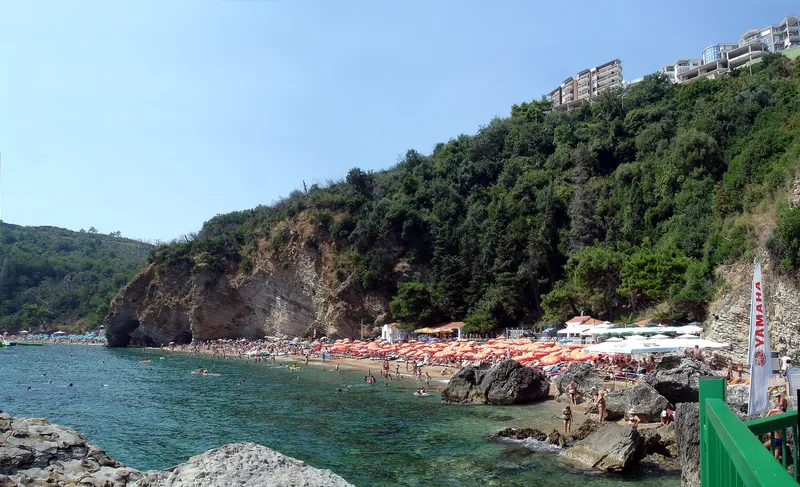
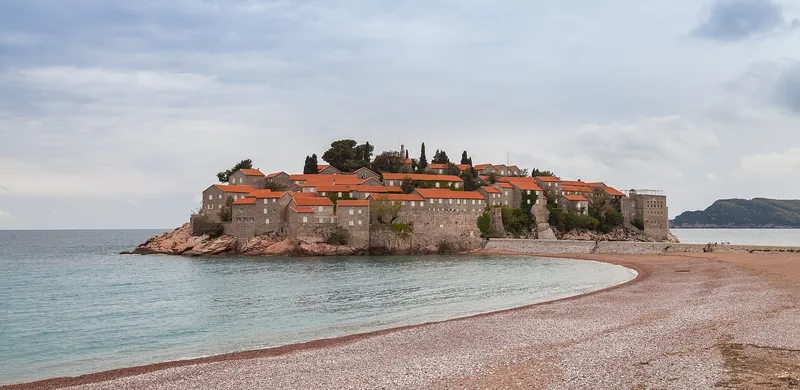
Cetinje, the old royal capital at 672 m, has the monastery (rebuilt 1701-1704) and the National Museum's units in the historic centre. Budva by late afternoon: the Citadel and the town walls (the walls open April to November, 10:00-20:00; the Citadel's hours are not published), then Mogren, two small sandy coves about 500 m on foot from the old town, joined to each other by a rock tunnel. Finish at Sveti Stefan beach on the coast road, for the islet and its two beaches. The last morning is the short drive back to Tivat airport.
Who it is for: a long weekend, a cruise-ship stopover extended by a few days, or the first three days of a longer trip (the 7-day loop and the 10-day loop both begin with these same three days). Fly into Tivat: the airport is about 4 km from Tivat town and a short transfer from Kotor. Podgorica airport works too, but it adds a transfer of well over an hour at each end.
Best months: April to October. The frame is set by two seasons. Njegoš's Mausoleum on Lovćen, the one fixed sight of day 3, is open from 11 April to 15 November and closed from 16 November to 10 April. The sea bathing season, which Morsko dobro uses for water testing and lifeguard rules, runs May to October. In between, the museums of Kotor, Perast and Cetinje are open year-round on shorter winter hours (Perast closes for January; the season box lists the dates).
With a fourth day: Skadar Lake
One extra day fits Skadar Lake without changing the bases: sleep a second night in Budva, drive to Virpazar in the morning, and come back the same way. Virpazar is one of the four places where licensed operators run boat trips on the lake (the others are Vranjina, Rijeka Crnojevića and Plavnica), and the park's second visitor centre is on the upper floor of the tourist office building there. The national park ticket is per person per day and is sold at the visitor centres and online; the boats are paid separately to the operators, and no operator price list is published by the park, so ask at the pier. From Virpazar, Rijeka Crnojevića, a 12.3 km river whose drowned valley forms one arm of the lake, has Prince Danilo's bridge of 1853 in the village and the Pavlova strana viewpoint above it. The park recommends April to June for bird variety, and the lake is at its smallest in summer.
Rather than go back to Budva, the fourth day can also run on to Podgorica and the airport there: that is exactly day 4 of the 7-day loop.
Without a car
The three days work without a car, with two substitutions. Day 1 is on foot anyway: Kotor's old town, the walls and the museums are all inside or just above the walls. For day 2, the Bay of Kotor boat tours from Kotor replace the drive: the standard stops are Our Lady of the Rocks, Perast, the Blue Cave on the outer side of the Luštica peninsula, Mamula island and the former submarine tunnels. Since 20 May 2026 a Ministry of Maritime Affairs rulebook allows only craft without a motor into the Blue Cave, so tour boats stop outside it (RTCG, 25 May 2026). Herceg Novi drops out of the no-car version; Perast and the islet are the core of the day, and the boat reaches them without a transfer. The boat-tour page lists the tours for spring and summer only.
For day 3, take a bus from Kotor to Budva and see Lovćen and Cetinje on a tour or by taxi from either town. The Kotor-Lovćen cable car is the other no-car way up the mountain: about 11 minutes from Dub, about 200 m off the Budva-Tivat road, to the Kuk station inside the park, with the operator's shuttle buses from Kotor, Budva and Tivat. It reaches Kuk, not the mausoleum, and the park publishes no shuttle or trail time between the two, so check that leg before you ride up. Ask locally or at your accommodation for Kotor-Budva bus times and fares.
Car, tolls, ferry, parking
Montenegro drives on the right, a valid foreign licence is enough, and there is no vignette. This route passes no toll point: the only two in the country are the Sozina tunnel on the Podgorica-Bar road and the motorway north of Podgorica, both off this route. The one charge on the road is the Kamenari-Lepetane ferry across the bay on the way back from Herceg Novi: it runs day and night, every 15 to 20 minutes in the summer plan and every 20 minutes from 06:00 to midnight (then hourly) in the winter plan, and the crossing itself takes about 15 minutes. Foot passengers and cyclists cross free. Queueing time is not published, and the drive times on this page do not include it.
Parking: check the tariff at the Kotor old-town car parks on arrival. Budva's street parking is zoned by colour, paid by SMS (Montenegrin numbers only), e-kiosk or sales points, and an unpaid car gets a EUR 50 daily penalty ticket (EUR 33.33 if paid within 8 days). Lovćen National Park charges for parking at its checkpoints at the park rate. Herceg Novi's zones and prices are on the driving page.
Fees: parks and museums
Two separate tickets apply on Lovćen. The park ticket is per person per day, sold at the Bjeloši and Krstac checkpoints and online, free under 15. The mausoleum ticket is sold by the National Museum of Montenegro at the monument, and it also admits you to Njegoš's birth house in Njeguši. The museum's EUR 20 collective ticket covers all its Cetinje units and the mausoleum, which is worth the sum only if you plan to spend real time in Cetinje. Whether the park fee is collected on the mausoleum road is not stated by either body. The other paid stops on the route are Kotor's walls, the Maritime Museum, the Perast town museum and Stari grad walls in Budva; their prices are on the stop cards and the fees box.
Kotor, two nights: everything on day 1 is inside or above the walls, and day 2 starts and ends here. Staying inside the old town means carrying luggage through the gates; the ring of suburbs along the bay is the alternative. Budva, one night: the old town, Mogren and the road to Sveti Stefan are all at hand, and the airport transfer on the last morning is short. For accommodation, see the town pages.
Season: what closes and when
Njegoš's Mausoleum: 11 April to 15 November, daily 09:00-16:00; closed 16 November to 10 April. In winter day 3 is Cetinje's museums only, on weekday hours.
Njegoš's birth house in Njeguši: mid-April to 15 November.
National Museum units in Cetinje: 15 April to 15 November daily 09:00-16:00; 16 November to 14 April Monday to Friday 09:00-15:00.
Perast town museum: 15 April to 15 October Tuesday to Sunday 08:00-20:00; 15 October to 15 April Tuesday to Sunday 10:00-16:00; closed Mondays and all of January.
Kamenari-Lepetane ferry: summer plan early May to mid-October, winter plan mid-October to early May.
Sources
Distances and drive times: computed by road; they are free-flow times and ignore ferry queues, traffic and stops. Park fees: JPNPCG price lists and the fee decision. Mausoleum and museum seasons: National Museum of Montenegro pages. Ferry: trajekt.me price list and timetable. Parking: Parking servis Budva. Traffic rules: Law on Road Traffic Safety, consolidated text current to 31 March 2021.
Common questions
Is 3 days in Montenegro enough?
Enough for the Bay of Kotor, the Lovćen road, Cetinje and Budva, which is this route. It is not enough to add Durmitor or Skadar Lake without turning every day into a drive; a fourth day gets you Skadar Lake, and a week gets you the north (see the 7-day loop).
Can you do this without a car?
Yes. Day 1 is on foot, day 2 becomes a boat tour from Kotor (Perast, Our Lady of the Rocks, the Blue Cave seen from outside: motor boats may not enter it since 20 May 2026), and day 3 is a Kotor-Budva bus plus a Lovćen and Cetinje tour or taxi. Check bus times and fares locally.
Tivat or Podgorica airport?
Tivat. It is about 4 km from Tivat town and a few kilometres from Kotor, where the route starts. Podgorica is a transfer of well over an hour to Kotor by road at each end, which is a large share of a three-day trip.
Is the mausoleum open?
From 11 April to 15 November, daily 09:00-16:00, run by the National Museum of Montenegro. It is closed from 16 November to 10 April. The park itself has no closing season.
How long is the Kotor-Lovćen road?
The leg table gives the road distance and free-flow time from Kotor to Njeguši and on to the mausoleum. The old road has 25 hairpins by the Kotor tourist board's count (32 by Cetinje's); the cable car from Dub to Kuk takes about 11 minutes but does not reach the mausoleum.
Where do I park in Kotor and Budva?
Check the tariff at Kotor's car parks on arrival. Budva's street parking is zoned by colour and paid at a kiosk or by SMS from a Montenegrin number; an unpaid car gets a EUR 50 penalty ticket (EUR 33.33 within 8 days). Details are on the driving page.
Google Analytics counts visits without cookies. With your consent it also sets cookies that show us how the site is used. Nothing is used for advertising. Privacy

 E Tuktuk Montenegrowaves Cable Car Transfer with SightseeingRating 4.3 (10)from €75
 Private Tour Cable car -Kotor- Perast- our Lady of the RocksRating 5 (84)from €150