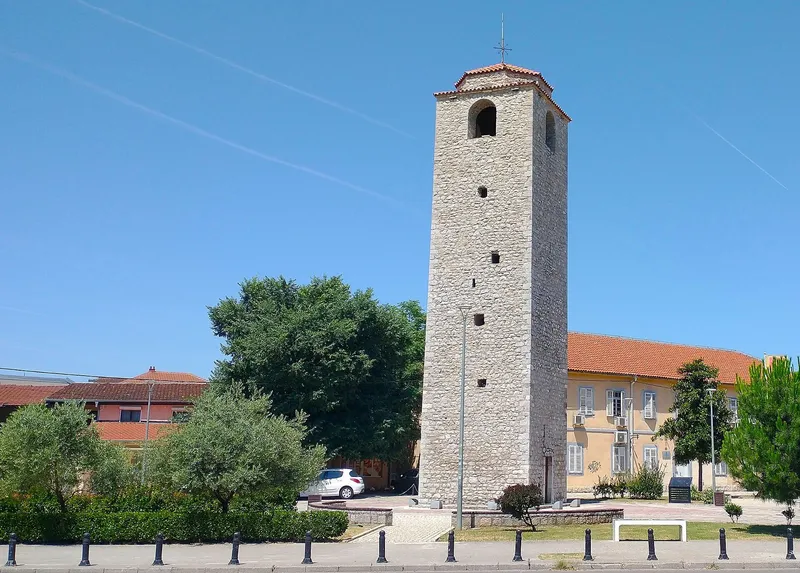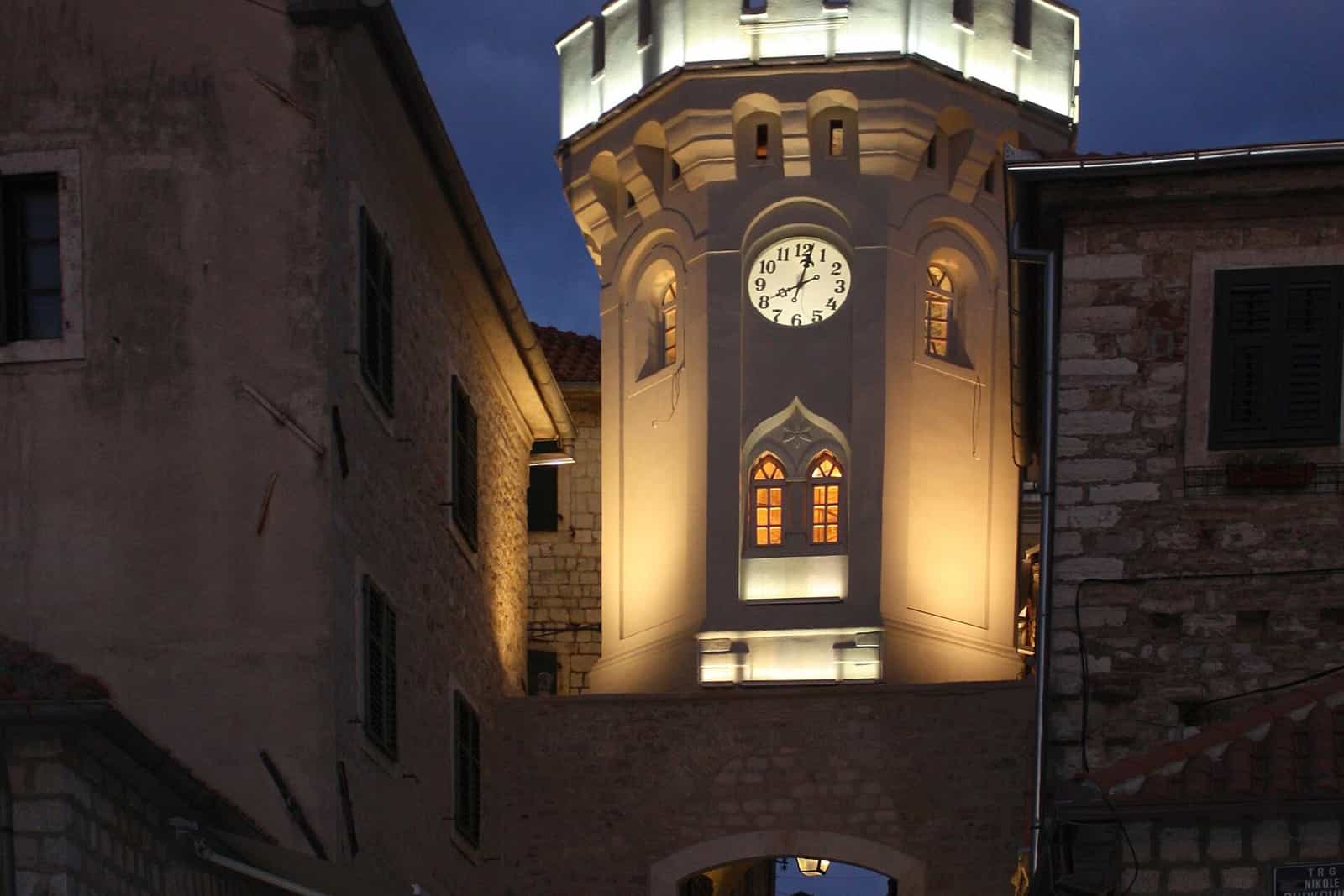
Clock tower (Sat kula), Herceg Novi
The 16 m tower of 1667 at the gate of the Old Town, with Catherine II's bell, the black Madonna and the symbol on the town's coat of arms
Clock tower and town gate · Built 1667 · Entrance to Herceg Novi Old Town
Photo: Mercy · CC BY-SA 3.0
The clock tower (Sat kula) is the gate of the Old Town of Herceg Novi: a 16 m tower built in 1667, the symbol on the town's coat of arms and flag. Under Ottoman rule it was the main town gate, a mosque stood beside it, and its clock showed the Muslim prayer times on all four sides. Today you walk through its arched passage from the square into the old streets, past a black Madonna carved from olive wood, a bell given by the Russian empress Catherine II in 1753 and a relief of the town's founder, King Tvrtko I.

Getting there
The tower stands at the entrance to the Old Town from Nikola Đurković Square. On foot it is 0.5 km (about 6 minutes) from the centre of Herceg Novi and 2.3 km (about 27 minutes) from Igalo. By car, Tivat Airport is 24.2 km and about 40 minutes away using the Kamenari-Lepetane ferry (crossing and waiting time not counted) and Kotor 31 km and about 49 minutes the same way. Parking in the town is zoned and paid.
What to see
- The black Madonna in the passage, carved from burnt olive wood. Legend links it to 1687, the year the town passed from the Ottomans to Venice; conservation in 2003 by Goran Škrobanović with the town museums confirmed the olive wood.
- Catherine II's bell of 1753, still preserved in the tower.
- The Tvrtko I bas-relief, placed in 1982 for the town's 600th anniversary, with a quotation from his charter and a text recording that he laid the town's foundations in May 1382 and named it Sveti Stefan.
- The liberation plaque thanking the 10th Herceg Novi Brigade, which freed the town on 28 October 1944.
- The town archive, kept in the tower, with documents going back to 1685.
- The clock itself: the old mechanism was replaced in 1995 by an electric clock, a gift from Zemun.
History
Herceg Novi was founded in 1382 and was held by the Ottomans for two centuries until 1687; they built the tower in 1667 on the sultan's order as the town's main gate. The mosque that stood beside it is gone. The Venetians took the town in 1687, and from their time dates the legend of the Madonna in the passage. The bell came in 1753, the liberation plaque and the Tvrtko relief in the 20th century, and in 1995 the mechanical clock gave way to an electric one. The archive inside still holds the town's papers from 1685 onwards.

Nearby
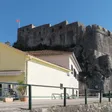
- Kanli Kula, the Ottoman fortress a few steps uphill.
- Forte Mare, the sea fortress at the bottom of the Old Town.
- Španjola, the hill fortress on Bajer above the town.
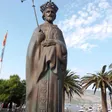
- Monument to King Tvrtko I on Škver, the harbour square below the Old Town.
- Herceg Novi town museum.
Questions
How old is the clock tower?
It was built in 1667 under Ottoman rule, as the main gate of the town. It is 16 m high.
Can you go inside?
The passage under the tower is the way into the Old Town, and the Madonna, the plaques and the relief are all in or beside it. The tower itself holds the town archive.
Why is there a bell from a Russian empress?
The Russian empress Catherine II gave it in 1753. It is still in the tower.
History
1382
Founding of the town
The 1982 bas-relief at the tower records that King Tvrtko I laid the town's foundations in May 1382 and named it Sveti Stefan.
1667
Tower built
Built under Ottoman rule on the sultan's order as the main town gate, with a mosque beside it. Its mechanical clock showed the Muslim prayer times on all sides.
1685
Town archive
The town archive in the tower holds documents from 1685.
1753
Catherine II's bell
The Russian empress Catherine II gave a bell, still preserved.
1944
Liberation plaque
A plaque thanks the 10th Herceg Novi Brigade, which liberated the town on 28 October 1944.
1982
Tvrtko relief
A bas-relief of the founder Tvrtko I was placed for the town's 600th anniversary.
1995
Electric clock
The old mechanical clock was replaced by an electric one, a gift from Zemun.
2003
Madonna conserved
Conservation of the black Madonna in the passage confirmed it is carved from olive wood.
Sources
Herceg Novi Tourist Board, Sat kula · Municipality of Herceg Novi, history (founded 1382, two centuries of Ottoman rule until 1687, Venetian rule from 1687) · Herceg Novi Tourist Board, useful information (parking zones, Old Town) · OSRM routing (car and foot, OpenStreetMap data, ODbL; times without traffic)