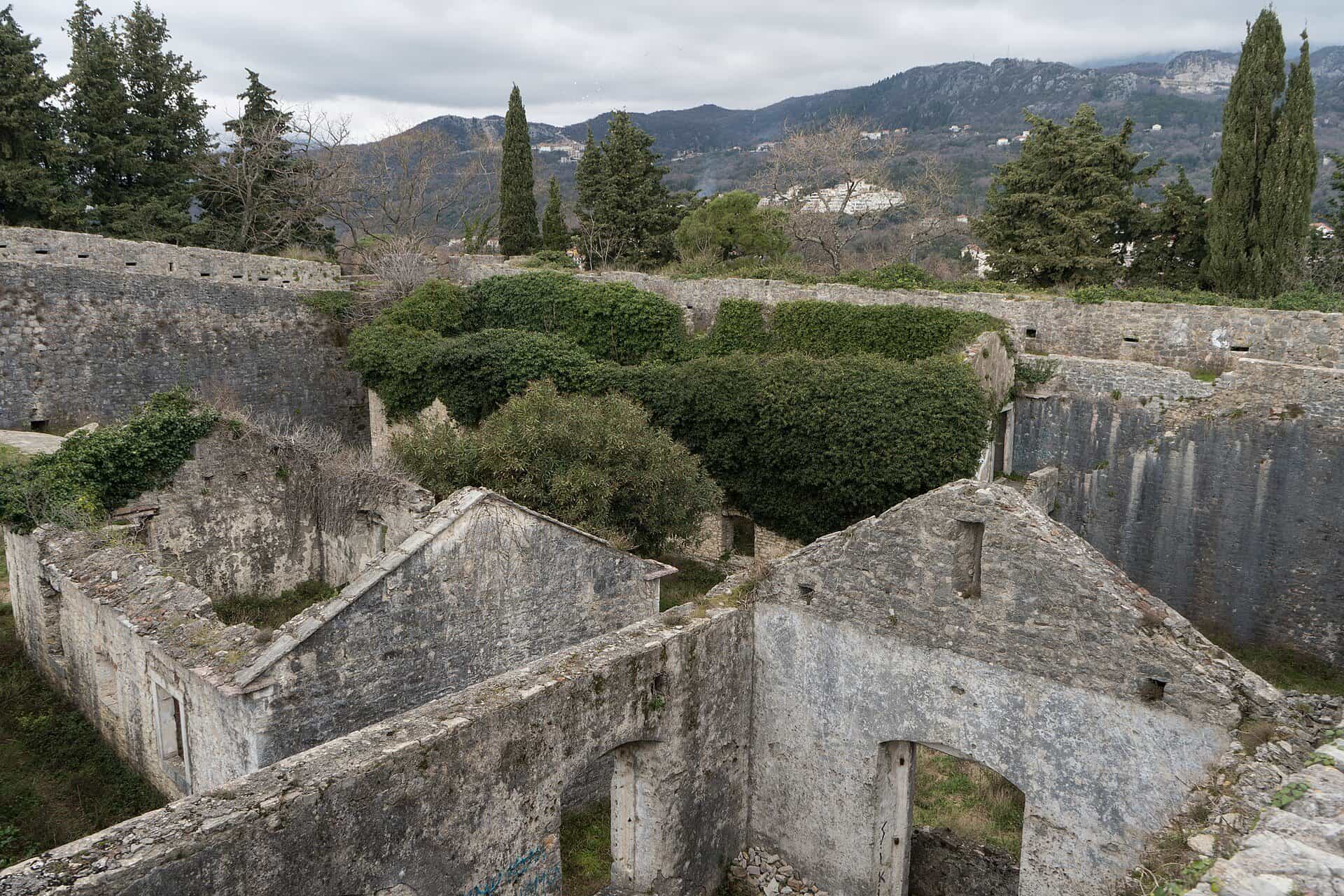
Španjola fortress
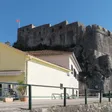
Hill fortress on Bajer at 170 m above Herceg Novi, built by the Spanish in 1538 and rebuilt by the Ottomans, a quarter of an hour's climb from the Old Town
Hill fortress with four round bastions · Bajer hill
Photo: Alexkom000 · CC BY 4.0
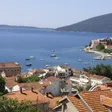
Španjola is the hill fortress of Herceg Novi, on Bajer hill north-east of the town at 170 m above the sea, commanding the entrance to the Bay of Kotor. It was built by the Spanish in 1538 and rebuilt by the Ottomans between 1539 and 1548, and of the town's three fortresses it is the highest and the hardest to reach: Kanli Kula and Forte Mare sit in the Old Town, while Španjola needs a quarter of an hour's climb. The reward is the walls themselves, with four round corner bastions, and the view over the entrance to the bay.

Getting there
On foot the fortress is about 1.2 km and 14 minutes uphill from the clock tower at the entrance to the Old Town, or 0.8 km and 10 minutes from the town centre. By car it is 1.1 km and about 3 minutes from the centre, and 31.3 km (about 50 minutes) from Kotor using the Kamenari-Lepetane ferry, without the crossing and waiting time. The 170 m is the fortress's height above the sea, not the climb.
What to see
- The walls and the four round bastions, one at each corner. Inside the walls little has survived, so the fortress is best read from its outline and its views.
- The main entrance on the east side, protected by an outer wall, with the Ottoman building inscription above it. The inscription records that the fortress was built on the sultan's order by Suleiman, son of Emir Selman Khan, whose brother Sinan-beg was the sultan's grand vizier, and ends in praise of the building itself.
- The Venetian courtyard: a large semicircular wall built between two bastions, with a second stair up to the walls. The south side facing the sea was brought up to the fortification standards of the Venetian period.
- The west side, which keeps the Ottoman work and parts of the mosque that the Venetians turned into a barracks.
- The Austro-Hungarian buildings beside the fortress.

History
In June 1538 the fleet of the admiral Andrea Doria reached Herceg Novi, and the Spanish built a fortress on Bajer where they had destroyed a smaller Ottoman settlement. They named it after the emperor Charles V; the townspeople called it Španjola, the Spanish one, and the name stuck. A year later the Ottomans under Hayreddin Barbarossa retook the town, and between 1539 and 1548 they rebuilt the fortress on the same spot. Underground passages once linked it to Kanli Kula and Forte Mare so that defenders could fall back to Španjola if the lower forts fell; they are now mostly destroyed. After Venice took the town in 1687 the fortress was adapted again, then altered by Austria-Hungary, and it remained a defensive work into the early 20th century. In the Second World War it served as a prison.
Visiting
The fortress is a ruin; little survives inside the walls. The ground is rough, so wear proper shoes, keep children away from the edges and take water in summer.

Nearby
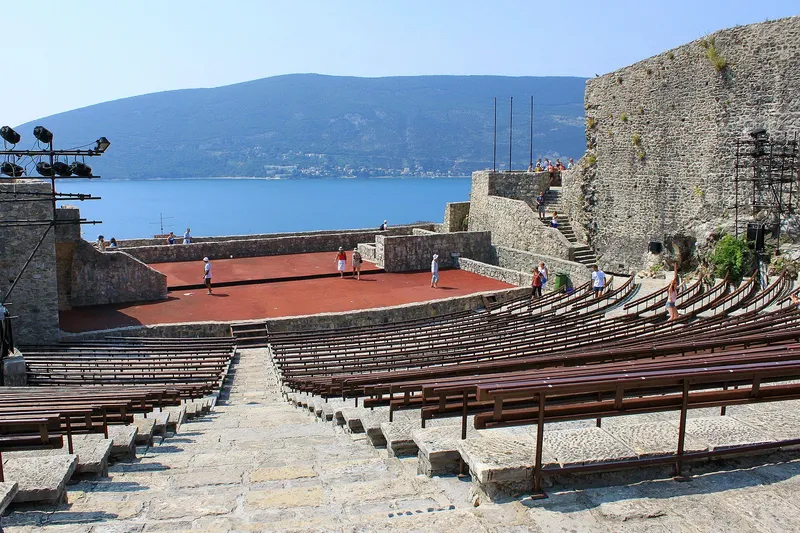
- Kanli Kula, the Ottoman fortress in the Old Town, now a summer stage.
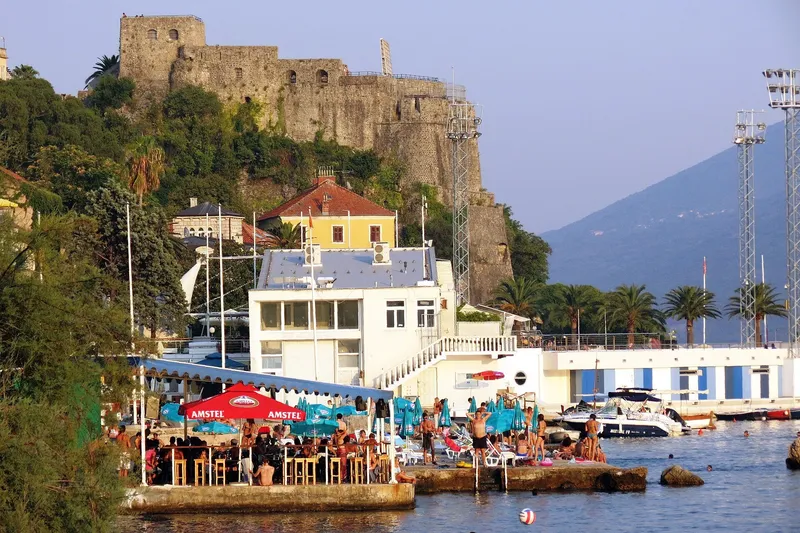
- Forte Mare, the sea fortress on the shore.
- Clock tower, the gate of the Old Town and the start of the walk up.
- Orjen, the mountain behind the town.
Questions
Why is it called Španjola?
The Spanish built it in 1538 during their brief hold on Herceg Novi. They named it after Charles V, but the people of the town called it the Spanish fort, and the name survived the Ottoman rebuilding a year later.
How long is the walk up?
About 1.2 km and a quarter of an hour uphill from the clock tower. The fortress stands at 170 m above the sea.
What is left inside?
Little. The walls and the four bastions stand; the west side keeps Ottoman work and parts of the mosque.
History
1538
Spanish fortress
Built by the Spanish after Andrea Doria's fleet reached Herceg Novi in June 1538, on the site of a smaller Ottoman settlement they had destroyed; first named after Charles V, and called Španjola by the local people.
1539-1548
Ottoman rebuilding
Hayreddin Barbarossa retook the town a year later and the Ottomans rebuilt the fortress on the same spot. The inscription over the entrance names Suleiman, son of Emir Selman Khan, as the builder on the sultan's order.
After 1687
Venetian and Austro-Hungarian additions
The Venetians built a semicircular wall between two bastions to form an inner courtyard, added a second stair, moved the entrance and turned the mosque into a barracks; Austria-Hungary added buildings beside the fortress.
1941-1945
Prison
A defensive fortress until the early 20th century, Španjola was used as a prison in the Second World War.
Sources
Herceg Novi Tourist Board, Španjola · National Tourism Organisation of Montenegro, Fortresses · Municipality of Herceg Novi, history (Venetian rule from 1687) · OSRM routing (car and foot, OpenStreetMap data, ODbL; times without traffic)