Mamula (Lastavica island)
Austro-Hungarian island fort at the mouth of the Bay of Kotor, a wartime concentration camp, now a hotel seen from the tour boats
Island fort · Islet at the entrance to the Bay of Kotor
Photo: Marcin Konsek · CC BY-SA 4.0
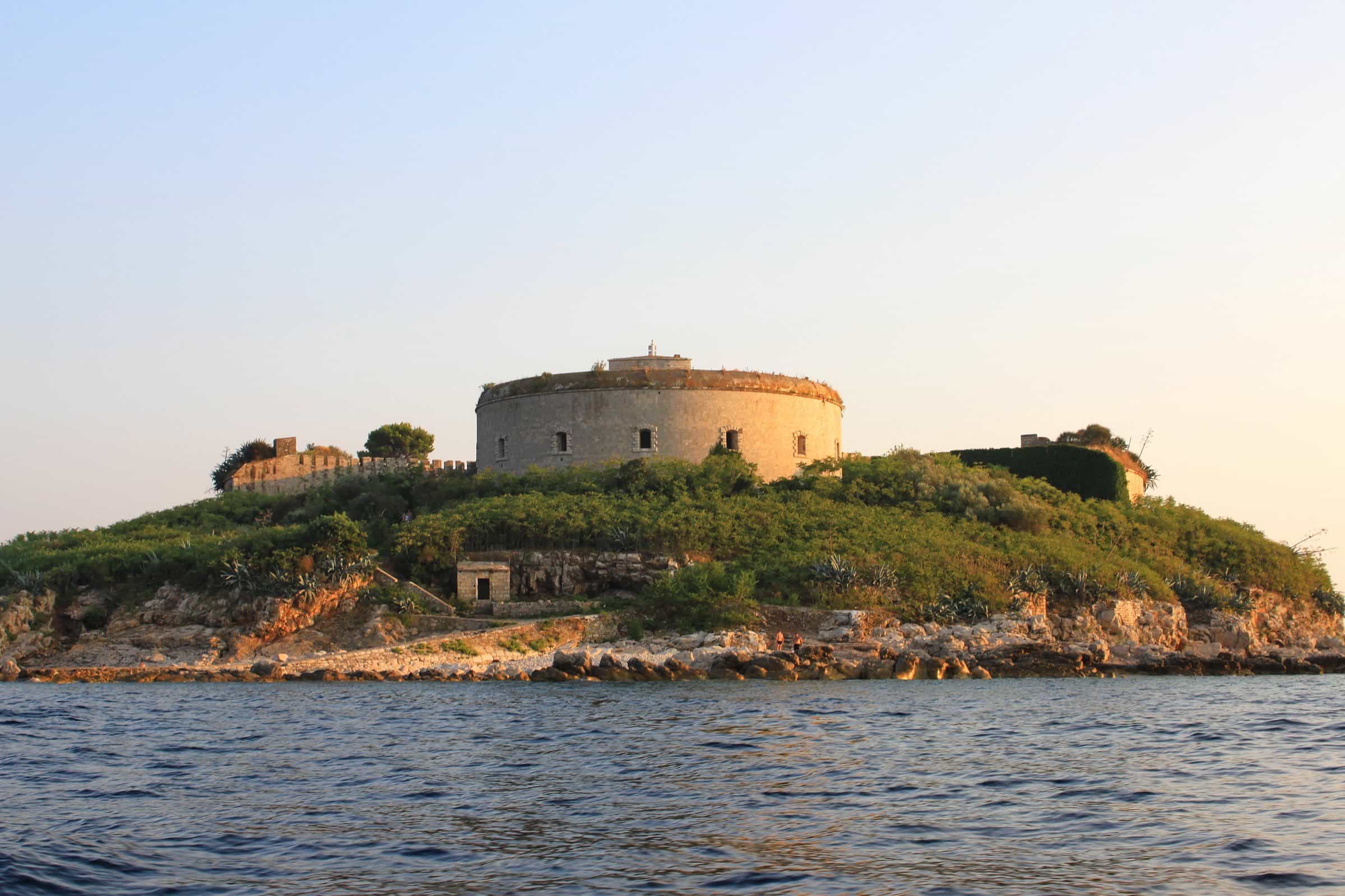
Mamula, also called Lastavica, is a round islet about 200 m across at the entrance to the Bay of Kotor, between the Luštica peninsula and Prevlaka in Croatia, in the municipality of Herceg Novi. The whole islet is a mid-19th-century Austro-Hungarian fort, built under General Lazar Mamula, whose name it carries. In the Second World War it was an Italian concentration camp; today it is a hotel, Mamula Island by Banyan Tree. There is no road to the island, so for anyone without a hotel booking the usual way to see Mamula is from the water, on a boat tour from Herceg Novi or Kotor that rounds the mouth of the bay.
Mamula (Lastavica island) tours
Sponsored Exclusive Blue Cave Kotor Swim, Mamula&Lady of the Rock 3 HourRating 4.8 (605)from €32.99
 Blue cave, Mamula island, Submarine tunnels and Our lady of the Rocks (3h)Rating 4.8 (701)from €38.97
 LUX Blue Cave, Lady of the Rocks, Mamula, Submarine Tunnel+ (3h)Rating 4.3 (333)from €38
 Kotor: Top Rated Blue Cave, Submarine Tunnels & Lady of the RocksRating 4.7 (193)from €38.08
Tours, ratings and prices: Viator.
All tours in Mamula (Lastavica island)How to see Mamula
Tour boats along the coast and into the bay pass the island; the trips from Herceg Novi to Žanjice and the Blue Cave and the Kotor speed-boat tours that pair the Blue Cave with Our Lady of the Rocks all run past it. From the shore the island is in view from Žanjice beach on Luštica. Hotel guests arrive by private boat across the bay or by helicopter from Tivat or Dubrovnik. Whether day visitors may land, eat at the restaurant or see the memorial gallery is for the hotel to say; ask it directly before planning a visit.

The fort
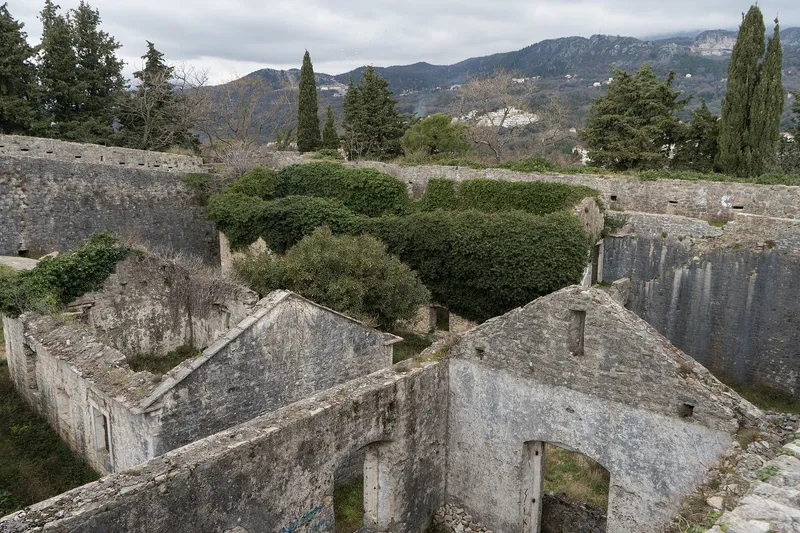
The fort was built in the mid-19th century for the Austro-Hungarian army under General Lazar Mamula. It is a ring of casemates and bastions around a central tower, filling the islet almost to the water's edge. The hotel conversion kept the fort's shell: the spa is in the original central tower, and the 32 rooms and suites, three pools and a small beach are set inside and around the old walls. A memorial gallery to the prisoners of the wartime camp is part of the hotel.

History
In the First World War the fort served as a prison. In the Second, after the uprising of 13 July 1941, fascist Italy turned it into a concentration camp as a reprisal. More than 2,000 people passed through it, most of them women and children: the first were 110 women and children from Pobori above Budva, followed by women and children from Morinj in the bay. The camp was dissolved on 14 September 1943.

The fort is a protected cultural-historical monument. In December 2013 the state opened a tender for its lease, and in 2015 it leased the island and fort, 32,000 m² including the water area, to Orascom Development for 49 years at EUR 1.5 per m² of land and EUR 0.90 per m² of water, with a commitment to invest EUR 15 million. Former prisoners and their families opposed the lease, and in May 2015 the former UN Secretary-General Boutros Boutros-Ghali and others wrote to the Montenegrin parliament against it. The hotel took its first guests in April 2023 and has carried the Banyan Tree brand since 2025.

Who was Mamula?
Lazar Mamula was the Austro-Hungarian general who had the fort built in the mid-19th century. The islet itself is called Lastavica, the swallow.
What happened on Mamula in the Second World War?
Fascist Italy used the fort as a concentration camp in reprisal for the uprising of 13 July 1941, holding more than 2,000 people, mostly women and children, until the camp was dissolved on 14 September 1943.
Nearby
- Žanjice beach and the Blue Cave, on Luštica, with Mamula in view.
- Herceg Novi and Forte Mare, on the Herceg Novi waterfront.
- Boat tour of the Bay of Kotor.
- Prevlaka, across the strait in Croatia.
- Other fortresses in Montenegro.
History
Mid-19th century
The fort
Built for the Austro-Hungarian army under General Lazar Mamula, after whom it is named.
1914-1918
First World War prison
The fort serves as a prison.
1941-1943
Italian camp
After the uprising of 13 July 1941 fascist Italy runs a concentration camp here; more than 2,000 people are held, mostly women and children, the first 110 from Pobori. The camp is dissolved on 14 September 1943.
2015
49-year lease
After a tender opened in December 2013, the state leases the island (32,000 m² with the water area) to Orascom Development for 49 years with a EUR 15 million investment commitment. Former prisoners and Boutros Boutros-Ghali object.
2023-2025
Hotel
The fort reopens as a hotel with 32 rooms and suites, three pools, a beach, a spa in the central tower and a memorial gallery; run as Mamula Island by Banyan Tree from 2025.
Sources
Radio Slobodna Evropa, 3 Jun 2022, Mamula: od logora do hotela (press, secondary) · Radio Slobodna Evropa, 23 Feb 2015, Mamula pod zakupom (press, secondary) · Banyan Group press release, 1 Jul 2025, Mamula Island by Banyan Tree (operator) · Vreme, Mamula: from torture site to five-star hotel (press, secondary; first guests April 2023, memorial gallery) · Wikipedia EN, Mamula (secondary; Boutros-Ghali letter, with RFE) · Herceg Novi Tourist Organisation, About the city · National Tourism Organisation of Montenegro, Boat tours · Kotor Tourist Organisation: Speed boat tours · OpenStreetMap, relation 3906658 (Tvrđava Mamula) and way 36337740 (islet), © OpenStreetMap contributors, ODbL