Mausoleum of Bishop Danilo
Tomb of the founder of the Petrović-Njegoš dynasty on Orlov krš above Cetinje, built in 1896 for the dynasty's bicentenary
Open-air tomb · Orlov krš
Photo: Aktron · CC BY-SA 4.0
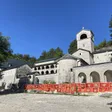
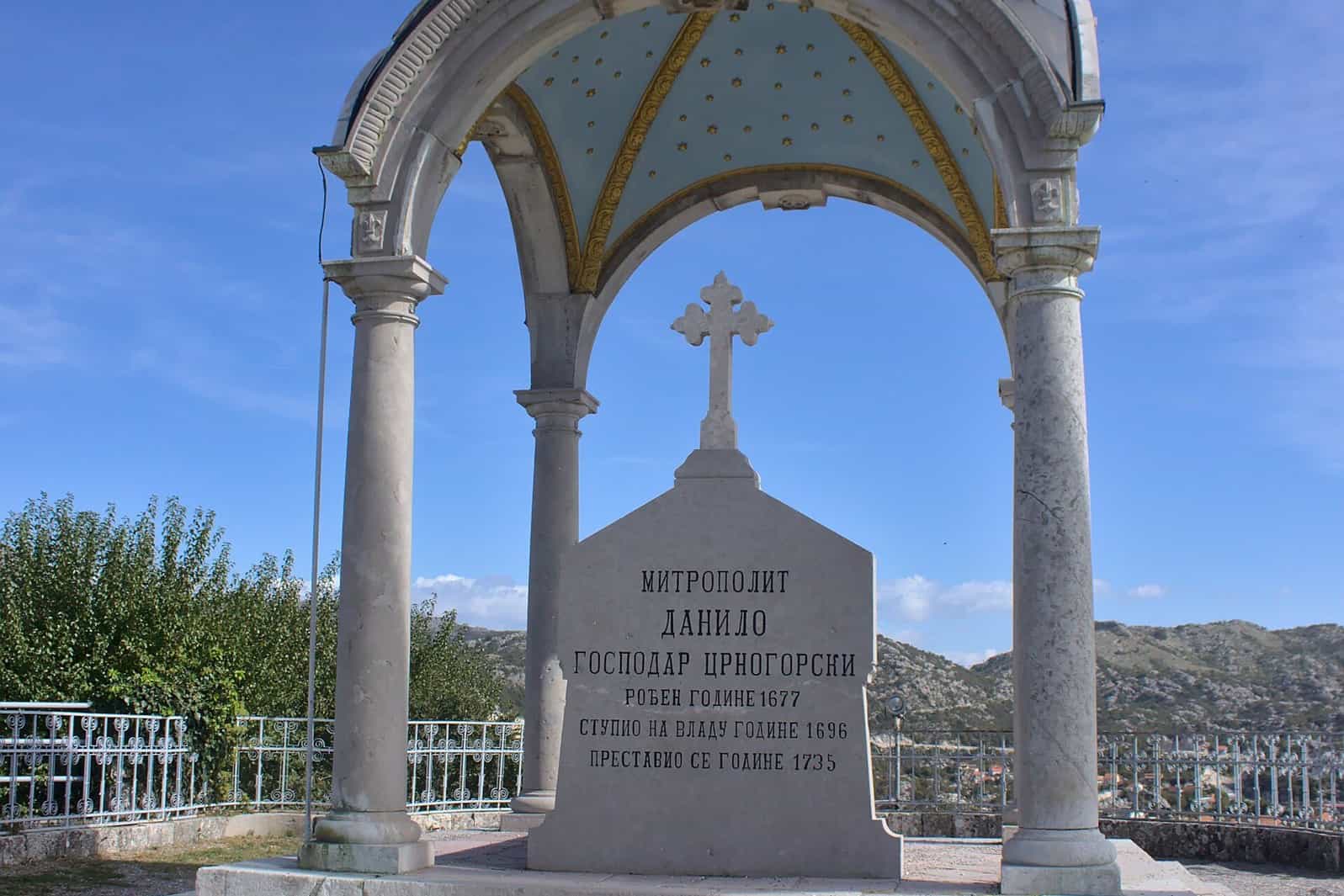
The mausoleum of Bishop (vladika) Danilo stands on Orlov krš, the rocky hill above the south-western edge of the Cetinje field, directly behind Cetinje Monastery. Danilo founded the new monastery and the Petrović-Njegoš dynasty, and his tomb was built in 1896 for the bicentenary of the dynasty's rule. It is a stone sarcophagus under an open canopy on four slender pillars, with Cetinje spread out below. Together with the Njegoš Mausoleum on Lovćen it is one of the two dynastic tombs above the old capital, and the far easier of the two to reach.

Getting there
Orlov krš rises straight behind the monastery. A surfaced road reaches the plateau from the south-west, so the mausoleum can be driven to; on foot it is about 1 km and 12 minutes uphill from the monastery, or 1.1 km and about 14 minutes from the centre of Cetinje. By car the centre is 1.7 km away (about 5 minutes). Cetinje itself is 36.7 km and about 49 minutes from Podgorica, 30.6 km and about 43 minutes from Budva and 53 km (about 1 hour 11 minutes) from Kotor. The times are free-flow driving times without traffic.

What to see
- The sarcophagus, carved in stone with a cross and relief symbols of secular and spiritual power, and a bronze relief medallion of the bishop.
- The canopy on four slender pillars, its vault painted with gold stars on a blue ground.
- The view over the Cetinje field, the monastery roofs and the town.

Visiting
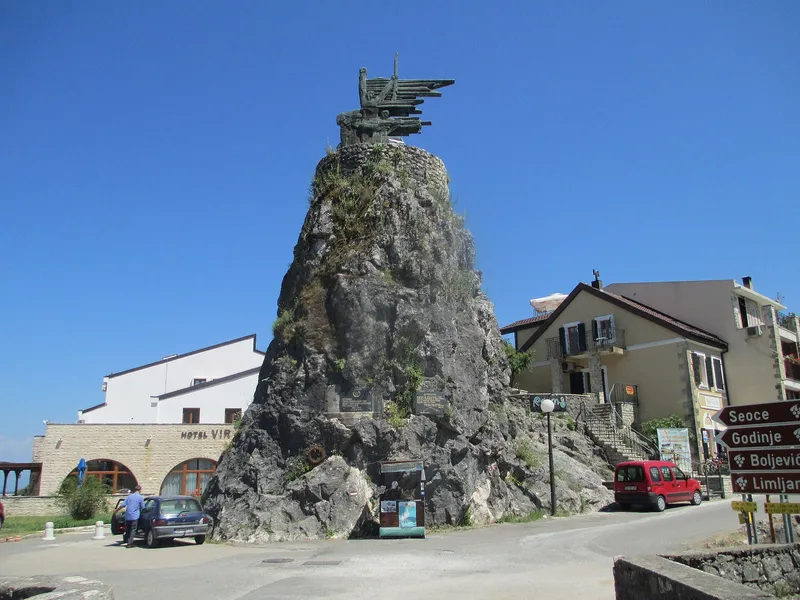
The mausoleum stands in the open on an artificial plateau at the north-eastern edge of the hill, placed there so that it would be seen from the town.
History
Danilo, the first of the Petrović-Njegoš line, built the new Cetinje Monastery between 1701 and 1704, at the foot of the hill where he now lies. He was buried at Podostrog Monastery near Budva. In 1853, under Prince Danilo, his remains were moved to Cetinje. The mausoleum followed in 1896, to mark 200 years of the dynasty's rule: the idea came from Princess Jelena, later Queen of Italy, the design from a French architect recorded locally as Fruše, and the stone from Ljubovići. The engineer Andrija Radović led the works, with craftsmen from Korčula and from Montenegro.
Nearby
- Cetinje Monastery, at the foot of the hill, with the relics of St Peter of Cetinje.
- King Nikola's Museum and Biljarda, the two palaces of the dynasty in the town below.
- Monument to Ivan Crnojević, the founder of Cetinje, in the town centre.
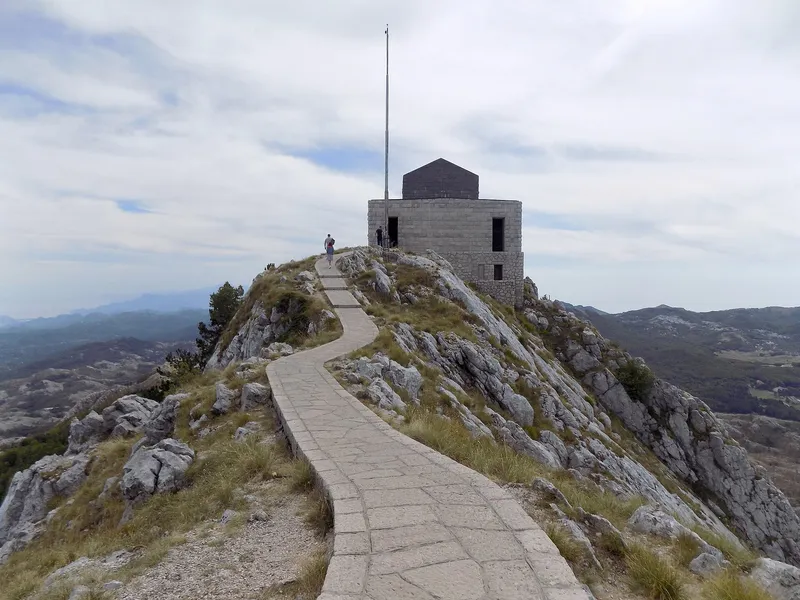
- Njegoš Mausoleum on Jezerski vrh in Lovćen National Park, the other dynastic tomb.
Questions
Who was Bishop Danilo?
The metropolitan who built the new Cetinje Monastery in 1701-1704 and founded the Petrović-Njegoš dynasty.
Why was the mausoleum built in 1896?
For the bicentenary of the dynasty's rule. His remains had already been in Cetinje since 1853.
Can you drive up?
Yes, a surfaced road reaches the plateau from the south-west. On foot it is about 1 km from the monastery.
History
1701-1704
The new monastery
Metropolitan Danilo, first of the Petrović-Njegoš dynasty, built the new Cetinje Monastery at the foot of Orlov krš.
1853
Remains moved to Cetinje
Danilo had been buried at Podostrog Monastery near Budva; under Prince Danilo his remains were brought to Cetinje.
1896
Mausoleum built
Built for the bicentenary of the Petrović dynasty's rule, on the idea of Princess Jelena (later Queen of Italy), to a design by a French architect recorded locally as Fruše, in stone from Ljubovići; engineer Andrija Radović led the works with craftsmen from Korčula and Montenegro.
Sources
Cetinje Tourist Organisation, Orlov krš · Cetinje Tourist Organisation, Landmarks · Cetinje Tourist Organisation, Cetinje Monastery (Danilo built the new monastery 1701-1704) · OSRM routing (car and foot, OpenStreetMap data, ODbL; times without traffic)