Njegoš Museum Biljarda
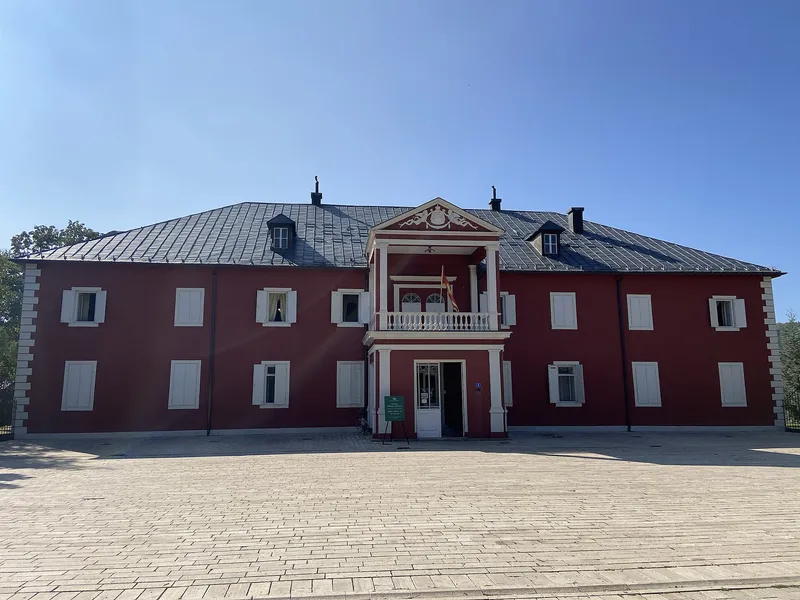
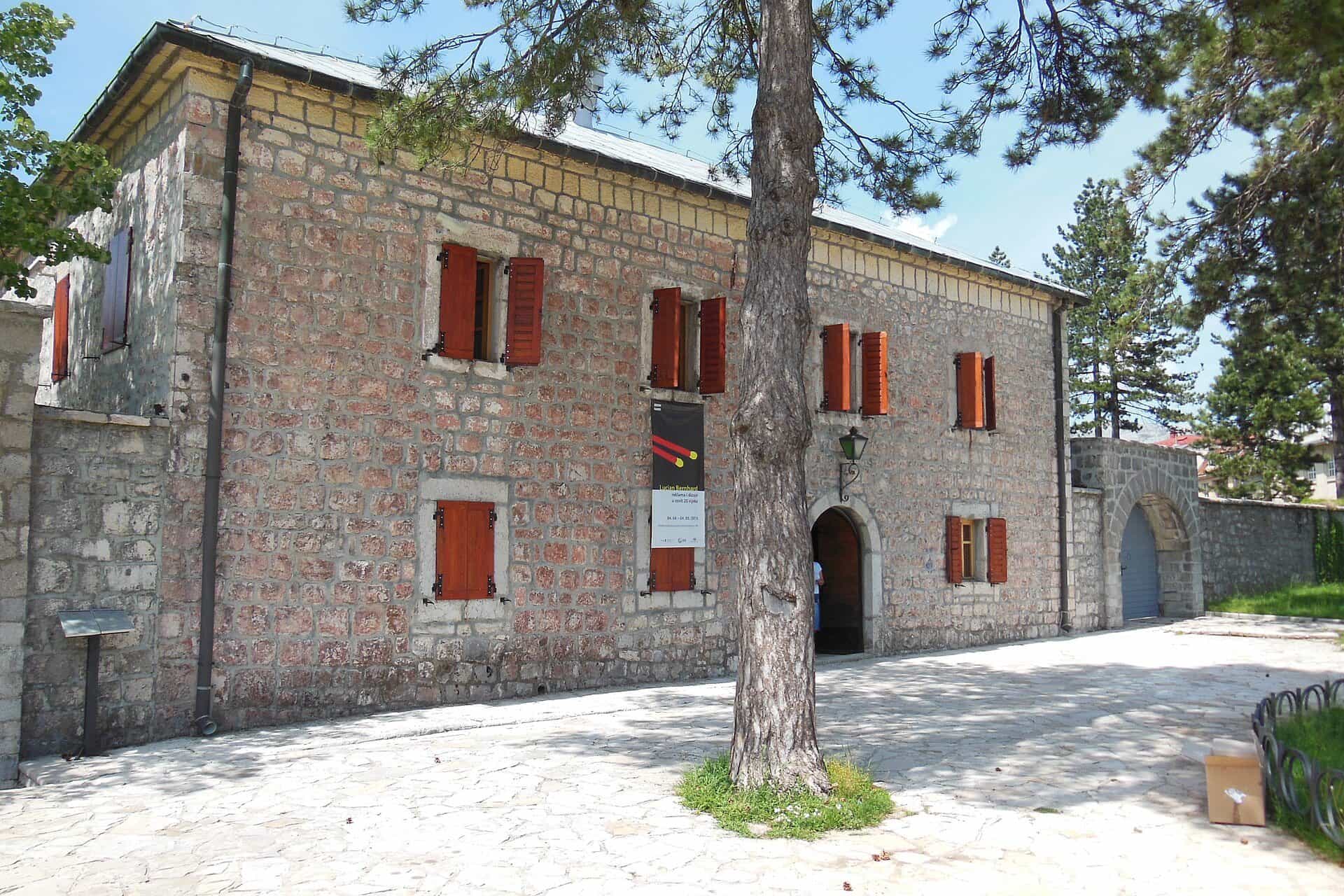
The 1838 residence of Petar II Petrović Njegoš next to the Cetinje Monastery, with his library and manuscripts, the Relief of Montenegro and the archaeological lapidarium in the courtyard.
History Museum · Cetinje
Photo: Zlatomir Bacic (Back… · CC BY-SA 3.0
The Biljarda is the residence that Petar II Petrović Njegoš built in 1838 next to the Cetinje Monastery, in the centre of Cetinje. Since 1951 it has housed the Njegoš Museum, a unit of the National Museum of Montenegro, with the original manuscript of The Mountain Wreath as its best-known exhibit. The ticket (€5) includes the Relief of Montenegro in the courtyard.
Opening hours and tickets
In the summer season (to 15 November; the unit page says from 11 April, the institution's timetable 15 April) the Biljarda, the lapidarium and the relief map open daily 09:00-16:00. In winter they open Monday to Friday 09:00-15:00. Last entry is 30 minutes before closing.
The Biljarda ticket, relief map included, costs €5 for adults and €2.50 for pupils and students; the relief map alone is €3 and €1.50. The collective ticket for all National Museum of Montenegro units and the Njegoš Mausoleum costs €20 (€10 for pupils and students). Printed and audio guides are available as PDFs in Montenegrin, English, Spanish, French, German, Italian, Russian and Turkish.
What to see
- Njegoš's life and work. The permanent exhibition shows his personal belongings, works of art, his library and manuscripts, with the original manuscript of The Mountain Wreath (Gorski vijenac) as the highlight. One space is kept for temporary exhibitions.
- The Relief of Montenegro. A concrete relief map on a stone base in the courtyard, made in 1917 under Austro-Hungarian occupation from Austrian topographic maps, at a scale of 1:10,000.
- The lapidarium. Stone pieces from sites across Montenegro collected by the Archaeological Museum, including eleven stećci from the Nikšić and Pljevlja areas.

History
Njegoš built the house in 1838 because the monastery had become too small for the institutions of the state. Its name comes from the billiard table he brought here; billiards was his favourite game. The same year a room in the building held the first displays of trophy weapons, flags and church objects, the beginning of the museum tradition in Cetinje. The ruling family later moved across the square to the palace that is now King Nikola's Museum, and the Njegoš Museum was founded in the Biljarda in 1951. The Ethnographic Museum also worked here from 1951 until the 1979 earthquake.

Getting there
The address is Dvorski trg, Cetinje; the building stands between the monastery and the former palace, with the other central museums a few minutes' walk away. The museum publishes nothing on accessibility.
Nearby
- Ethnographic Museum, Dvorski trg bb.
- Mausoleum of Bishop Danilo on Orlov krš.
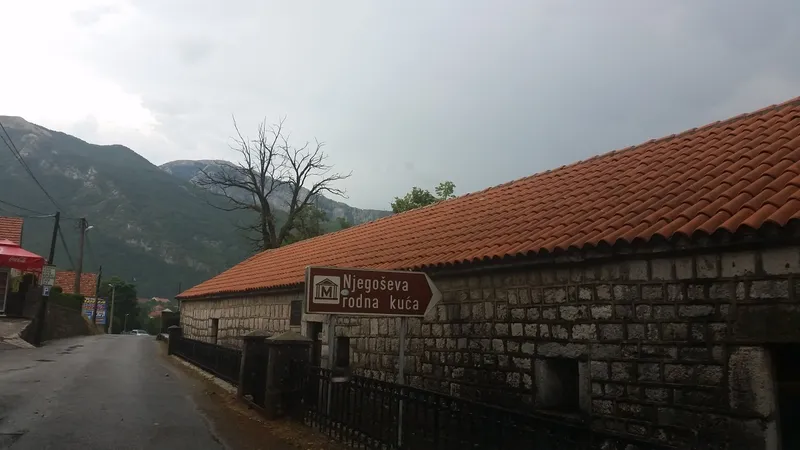
- Njegoš's birth house in Njeguši, where the poet was born in 1813.
Questions
Does the ticket include the relief map? Yes, the €5 Biljarda ticket covers the Relief of Montenegro; the map can also be visited alone for €3.
Why is it called Biljarda? After the billiard table Njegoš kept here; billiards was his favourite game.
Is the Mountain Wreath manuscript on display? The museum lists the original manuscript as the highlight of the permanent exhibition.
On these trips
Closest places
 Monument to Ivan CrnojevićMonument< 1 km · 1 min
 Ethnographic Museum of MontenegroMuseum< 1 km · 1 min
 Art Museum of MontenegroMuseum< 1 km · 1 min
 National Museum of MontenegroMuseum< 1 km · 1 min
- Monument to Princess KsenijaMonument< 1 km · 1 min
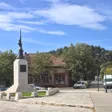 Lovćenska vila (Monument to the volunteers drowned off Medova)Monument< 1 km · 1 min