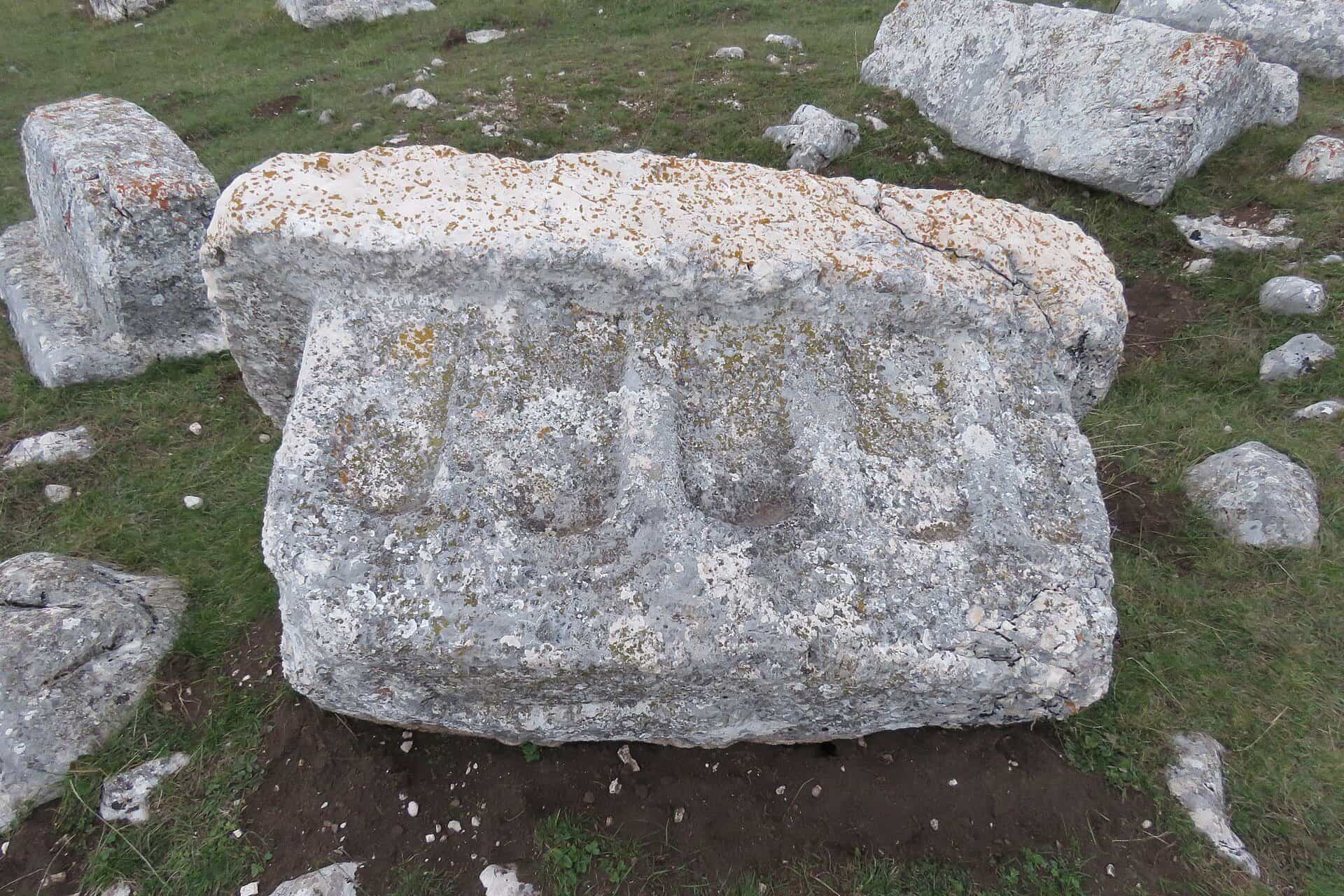
Stećci, medieval tombstone graveyards
Montenegro's three components of the UNESCO site: Grčko groblje and Bare Žugića at Novakovići near Žabljak, and Grčko groblje at Zagrađe above Šćepan Polje
Medieval graveyards with carved tombstones · Mid-12th to end of the 16th century · Novakovići near Žabljak
Photo: Calistemon · CC BY-SA 4.0
Stećci are the carved medieval tombstones of the western Balkans, made from the mid-12th to the end of the 16th century: heavy blocks, slabs and gabled stones standing in meadows, some carved with crosses, arcades, dancing figures and hunts. In 2016 UNESCO inscribed a serial World Heritage site of 28 stećci graveyards in Bosnia and Herzegovina, Croatia, Montenegro and Serbia. Montenegro's three components are Grčko groblje and Bare Žugića, both at Novakovići on the plateau near Žabljak, and Grčko groblje at Zagrađe above Šćepan Polje in Plužine municipality. All three have been cultural monuments of national importance since 2012. All three are graveyards in open country.
Getting there
The two Žabljak sites lie together at Novakovići, north of the town near Riblje jezero, on the road towards Njegovuđa; Bare Žugića is beside that road, and Grčko groblje about 200 m north-west of the lake. Žabljak is the gateway to Durmitor National Park. The Plužine site is at the other end of the canyon country: from Plužine the road down the Piva to Šćepan Polje, where the Piva meets the Tara at the Bosnian border, is 26.1 km and about 38 minutes; the graveyard is in the hamlet of Zagrađe below the ruined medieval town of Soko, reached by a poor track. Signposts and information boards are scarce at all three, so take a map.

Grčko groblje, Žabljak
About 200 m north-west of Riblje jezero in the hamlet of Novakovići: a raised ellipse of about 500 m² with 49 stećci (10 slabs, 27 chests, 12 gabled), 22 of them decorated and none inscribed. They are probably the burials of local feudal nobility from the 14th to the first half of the 15th century. UNESCO component 1504-023, core zone 0.1 ha.

Bare Žugića, Žabljak
About 2,230 m north-east of Grčko groblje, beside the Novakovići-Njegovuđa road: the largest of the three, with 300 stećci (10 slabs, 50 chests, 10 gabled and 230 rough, amorphous blocks). Twenty-three are decorated, among them a kolo (round dance) and a dog with a deer. Component 1504-024, core zone 0.42 ha.
Grčko groblje, Plužine
In the hamlet of Zagrađe below the medieval town of Soko at Šćepan Polje, on the Piva: 14 stećci, chests or slabs, mostly undecorated. The largest carries an inscription naming the Christian (kristijanin) Petko of Soko under Duke Stjepan, which dates it to 1435-1448. Component 1504-025, core zone 0.05 ha.
What are stećci?
Tombstones made from the mid-12th to the end of the 16th century across Bosnia and Herzegovina and the neighbouring parts of Croatia, Montenegro and Serbia. They come in lying forms (slabs and chests) and standing forms (gabled stones, crosses), and their carved motifs include borders, crosses, arcades, dances, fortifications and hunting scenes. Beyond the three UNESCO sites Montenegro has many more: Šavnik municipality alone counts over a hundred, at Gornja Bijela, Pošćenje and other villages, some built into the foundations of later churches.

Nearby
- Durmitor National Park and Black Lake, for the Žabljak sites.
- Zagrađe viewpoint over the meeting of the Piva and the Tara, at the Zagrađe monastery above Šćepan Polje.
- Piva Monastery at Goransko, south of Plužine.
- Šavnik, with over a hundred stećci of its own outside the UNESCO site.
Questions
Which stećci in Montenegro are UNESCO sites?
Three graveyards: Grčko groblje and Bare Žugića at Novakovići near Žabljak, and Grčko groblje at Zagrađe above Šćepan Polje in Plužine municipality. The inscription of 2016 covers 28 graveyards in four countries.
Are there stećci outside the UNESCO sites?
Yes, many. Šavnik municipality alone has 112, at Gornja Bijela, Pošćenje and other villages.
How do the three sites differ?
Bare Žugića, beside the road, is the largest, with 300 stones. Grčko groblje near Riblje jezero has 49 stones, 22 of them decorated. The Plužine site is the smallest, with 14 stones, and the only one with an inscription; it is reached by a poor road.
History
Mid-12th-16th century
The stećci tradition
Stećci were made from the mid-12th to the end of the 16th century, as lying and standing stones, with motifs including borders, crosses, arcades, round dances (kolo), fortifications and hunts.
14th-15th century
Grčko groblje, Žabljak
Probably the burials of local feudal nobility, 14th to first half of the 15th century.
1435-1448
The inscription at Zagrađe
The largest stone at Grčko groblje, Plužine, names the Christian (kristijanin) Petko of Soko under Duke Stjepan.
2012
National protection
All three sites protected as cultural monuments of national importance.
2016
UNESCO inscription
Inscribed as 'Stećci Medieval Tombstone Graveyards', a serial site of 28 graveyards in four countries.
Sources
National Tourism Organisation of Montenegro, Cultural heritage: UNESCO · Stećci World Heritage, Grčko groblje, Žabljak · Stećci World Heritage, Bare Žugića, Žabljak · Stećci World Heritage, Grčko groblje, Plužine · UNESCO World Heritage Centre, Stećci Medieval Tombstone Graveyards (1504), components · Centar za konzervaciju i arheologiju Crne Gore, aktivnosti 2018 · Tourist Organisation Šavnik, Stećci (112 in the municipality) · OSRM routing (car, OpenStreetMap data, ODbL; times without traffic): Plužine to Šćepan Polje