Husein-pasha Mosque
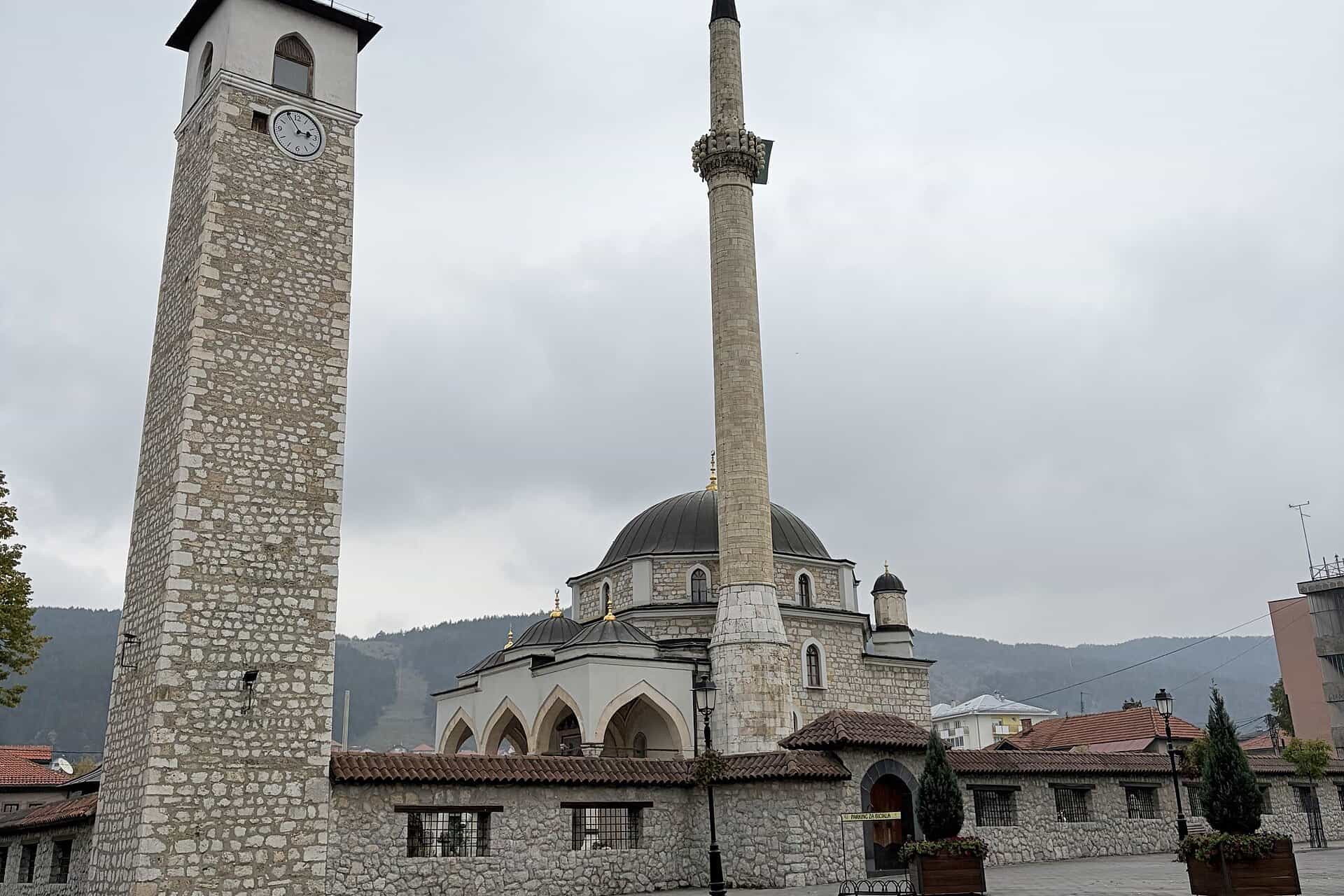
Mosque of 1569 in the centre of Pljevlja, a domed Ottoman mosque with a 42 m minaret, a Qur'an of 1579 and a 400 kg Egyptian carpet
Domed Ottoman mosque · Kralja Petra I street
The Husein-pasha Mosque (Husein-pašina džamija) stands in the centre of Pljevlja, on Kralja Petra I street. Built in 1569 as the endowment of Husein-pasha Boljanić, a native of the nearby village of Boljanići who rose to imperial vizier, it is a domed mosque of the Ottoman period with a stone minaret 42 m high, marble brought from Alexandria and an interior painted with floral ornament and verses from the Qur'an. It keeps a handwritten Qur'an of 1579 with 352 miniatures and a 400 kg carpet sent from Egypt in 1573. The mosque is in active use.
Visiting
This is a working mosque. As in any mosque, take your shoes off at the door, cover shoulders and knees (women also their hair) and avoid prayer times. Beside the mosque stand the šadrvan, the fountain for ablutions, and a 25 m clock tower. Pljevlja is far from the coast: Žabljak is 60.2 km away (about 1 hour 25 minutes by car), Bijelo Polje 68.5 km (about 1 hour 55 minutes) and Podgorica 162 km (about 3 hours 30 minutes).

What to see
- The domes. The building rests on the base of the main dome, with two smaller domes over the mihrab wall and a row of domes over the porch, all in dressed stone.
- The minaret, 42 m of stone, repaired and redecorated several times over the centuries.
- The interior: marble from Alexandria, walls painted with floral motifs and Qur'an quotations, restored by nine conservators over eight months in the works completed in 2006-2007.
- The Qur'an of 1579, commissioned by Husein-pasha: 233 leaves of about 39 by 28.5 cm, 13 lines to a page and 352 miniatures on gold ground, by an unknown calligrapher. It left the building for the first time in December 2016, for an exhibition at the Army House in Pljevlja.
- The carpet of 1573, sent from Egypt, leather-backed and weighing 400 kg.
- A hair of the Prophet's beard, shown only on the 27th night of Ramadan, and an old lunar calendar.

History
Pljevlja grew from a medieval market place into an Ottoman town (kasaba) in the second half of the 16th century and from 1576 to 1833 was the seat of the sanjak-bey of Herzegovina. Husein-pasha Boljanić, born in Boljanići near the town, served the empire as sanjak-bey of Herzegovina, governor of Baghdad and of the Bosnian eyalet, and imperial vizier. His mosque in his home town was built in 1569. The 17th-century traveller Evliya Çelebi compared it with the imperial mosques.
The mosque was classed as a cultural monument of the first category under Montenegro's older categorisation. Its restoration began in 2003, when the Pljevlja coal mine offered to pay for it, with a first donation of EUR 250,000 in 2005; the Faculty of Civil Engineering in Podgorica prepared the studies, Sarajevo firms carried out the building and interior works, and the restoration was completed in 2006-2007. An 80 m wall around the courtyard (harem) followed in 2009. The 450th anniversary was marked on 7-9 June 2019 with a postage stamp and an international conference on Husein-pasha and his endowments.

Nearby
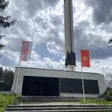
- Monument on Stražica, the memorial above the town.
- The Ćehotina river and the Ćehotina meanders viewpoint.
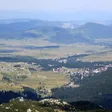
- The Tara canyon and Durmitor National Park, west and south-west of the town.
- Other churches, monasteries and mosques in Montenegro.
History
1569
Built
Endowment of Husein-pasha Boljanić of Boljanići, sanjak-bey of Herzegovina, governor of Baghdad and of the Bosnian eyalet, imperial vizier.
1573
The Egyptian carpet
A leather-backed carpet weighing 400 kg is sent from Egypt.
1579
The Qur'an
Husein-pasha commissions a handwritten Qur'an: 233 leaves, 352 miniatures on gold ground.
1576-1833
Seat of the sanjak-bey
Pljevlja is the seat of the sanjak-bey of Herzegovina.
2003-2009
Restoration
Funded by the Pljevlja coal mine from 2005, the restoration of the building and the painted interior is completed in 2006-2007; the harem wall follows in 2009.
7-9 June 2019
450th anniversary
Marked with a postage stamp and an international conference on Husein-pasha and his endowments.
On these trips
Sources
Pljevlja Tourist Organisation, Husein-pašina džamija (31 Jan 2025) · National Tourism Organisation of Montenegro, Sacral objects (carpet of c. 1573, 400 kg) · Zlatar and Pelidija, Husein-pašina džamija u Pljevljima, Prilozi za orijentalnu filologiju (1985): 1569/70, domes, minaret, Evliya Çelebi, Pljevlja 1576-1833 · Danas, Obeležavanje 450 godina Husein-pašine džamije u Pljevljima (2019): Qur'an of 1579, relic, carpet 1573, anniversary · Danas, Spomenik kulture prvog reda (2010): category, restoration 2003-2007, visitors · Danas, Za završetak oko 150.000 evra (2016): only domed mosque, harem wall 2009 · Večernje novosti (2016): the Qur'an shown outside the mosque for the first time · OpenStreetMap way 241217010, Husein-pašina džamija, ODbL · OSRM routing (car and foot, OpenStreetMap data, ODbL; times without traffic)