Piva Monastery
The monastery moved stone by stone between 1970 and 1982 to escape the Piva reservoir, with its church of 1573-1586 and about 1,260 m² of frescoes
Orthodox monastery · Goransko
Photo: Wiki surfer bcr · Public domain
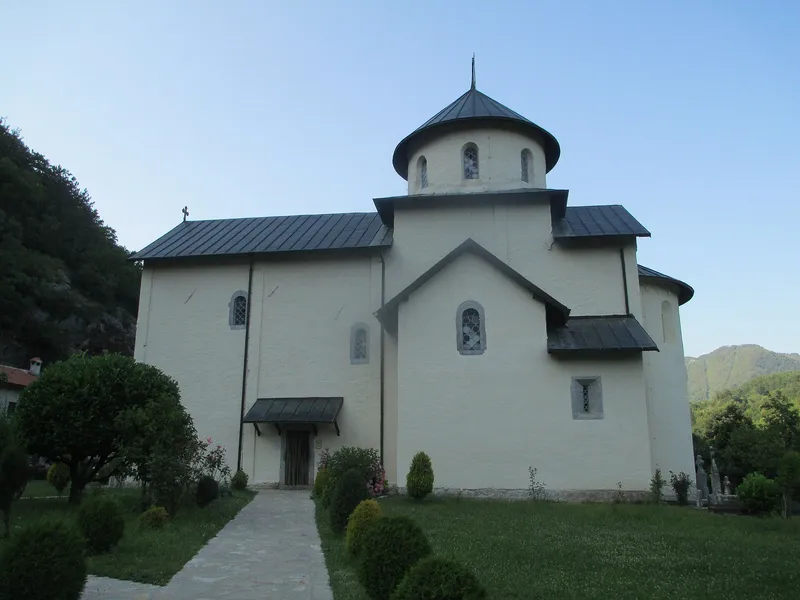
Piva Monastery, in Plužine municipality in the north-west of Montenegro, is the monastery that was moved. Its church, built between 1573 and 1586 by Savatije Sokolović, later Serbian patriarch, stood for four centuries at the source of the Piva at Sinjac. When the Mratinje dam turned the Piva canyon into Piva Lake, the whole building, with about 1,260 m² of frescoes nearly four hundred years old, was taken down stone by stone and rebuilt at Goransko, a few kilometres away and above the new waterline. The relocation began in 1970 and took thirteen years; the keys were handed over in September 1982. It is an active monastery, 8 km from Plužine on the road to Nikšić.
Visiting
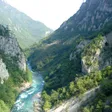
Piva is a working monastery; as in any Orthodox church, dress modestly and ask before photographing the frescoes, which run from floor to vault. The road from Plužine passes the monastery on its way to Nikšić, so it fits a drive between Durmitor and the Nikšić plain, or a day around Piva Lake with the Piva canyon viewpoint.

What to see
- The frescoes, about 1,260 m² of painting nearly four centuries old, covering the walls and vaults of the church and reassembled piece by piece at the new site.
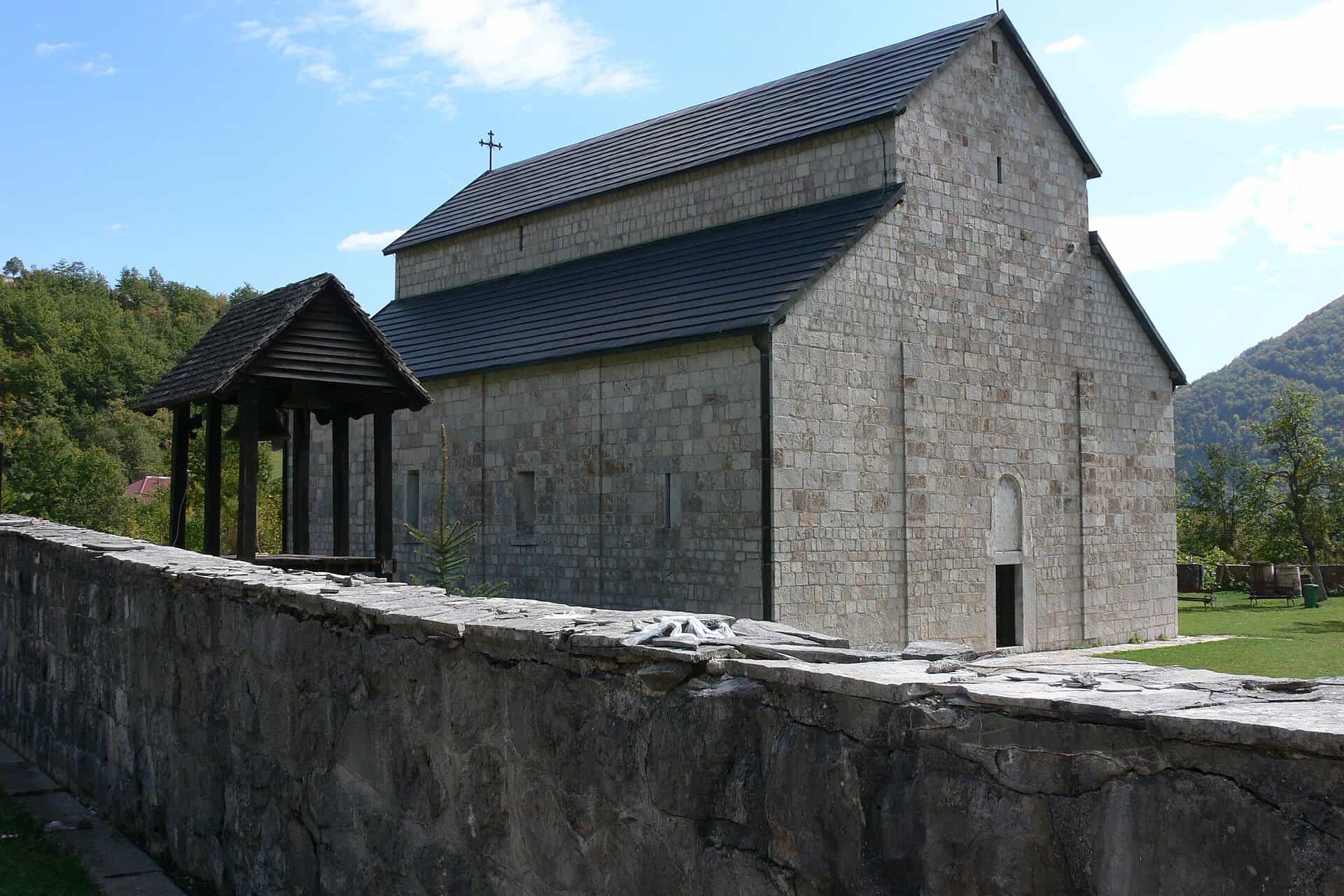
- The church itself, a plain stone building of 1573-1586, re-erected stone by stone with its original masonry.
- The iconostasis, gilded, with rows of icons and a tall carved cross above, under the painted walls.
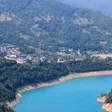
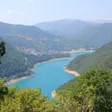
- Piva Lake below the road, the reservoir that drowned the monastery's first site at Sinjac.

How a monastery was moved
The Mratinje dam, completed in the mid-1970s for the Piva hydroelectric plant, filled the Piva canyon with a lake up to 188 m deep whose level swings by as much as 90 m, and put the monastery's site at Sinjac under the water. Rather than lose a 16th-century church and its painting, the state moved it. The work was carried out by the Republic Institute for the Protection of Cultural Monuments with consultants from across Yugoslavia, from UNESCO and from the Istituto Centrale del Restauro in Rome. The church was dismantled and its frescoes taken down, and both were rebuilt at Goransko, about 3 to 4 km from the old site, with the painting restored and returned to the walls. The relocation began in 1970 and ended in September 1982, when the keys were handed to Metropolitan Danilo Dajković; the whole operation, with the restoration, took thirteen years.

History
The church was built between 1573 and 1586 by Savatije Sokolović, who later became Serbian patriarch, at the source of the Piva at Sinjac. For almost four hundred years the monastery stood at the spring; since 1982 it has stood at Goransko, above the lake that covers the old site.
Getting there
The monastery is at Goransko, beside the Plužine-Nikšić road. Drive times without traffic: Plužine 8.3 km, about 13 minutes; Nikšić 50.6 km, about 1 hour 5 minutes; Žabljak 56.7 km, about 1 hour 10 minutes; Podgorica 100.8 km, about 2 hours 5 minutes.
Nearby
- Piva Lake and the Piva river, with the Piva canyon viewpoint.
- Plužine, the town on the lake, 8 km.
- Stećci at Zagrađe, Šćepan Polje, the Plužine component of the UNESCO site.
- Maglić and Durmitor National Park.
- The Tara, which meets the Piva at Šćepan Polje.
Why was Piva Monastery moved?
Because its original site at the source of the Piva at Sinjac was to be flooded by the reservoir behind the Mratinje dam. It was taken down and rebuilt at Goransko between 1970 and 1982.
How old are the frescoes?
Nearly four centuries. About 1,260 m² of painting was moved with the building.
History
1573-1586
Church built
Savatije Sokolović, later Serbian patriarch, builds the church at the source of the Piva at Sinjac.
Mid-1970s
Mratinje dam
The dam for the Piva hydroelectric plant is completed; the reservoir will cover the monastery's site.
1970
Relocation begins
The Republic Institute for the Protection of Cultural Monuments, with consultants from Yugoslavia, UNESCO and the Istituto Centrale del Restauro in Rome, begins to take the church and its frescoes down.
September 1982
Keys handed over
Rebuilt at Goransko with the restored frescoes, the monastery is handed to Metropolitan Danilo Dajković after thirteen years of work.
On these trips
Sources
RTCG, 1 Feb 2020, Prije pola vijeka prenesen manastir Piva (relocation 1970-1982, frescoes, institutions) · Wikipedia, Piva Monastery (church 1573-1586, Savatije Sokolović, Goransko; secondary) · RTS, Pivski manastir 13 godina seljen kamen po kamen (secondary) · Government of Montenegro, Registar voda od značaja (2024), p. 102 Pivsko jezero (water level swing up to 90 m) · TO Žabljak, Panoramski putevi (Mratinje dam, mid-1970s) · OpenStreetMap node 709020553, Pivski manastir, ODbL · OSRM routing (car and foot, OpenStreetMap data, ODbL; times without traffic)