Morača Monastery
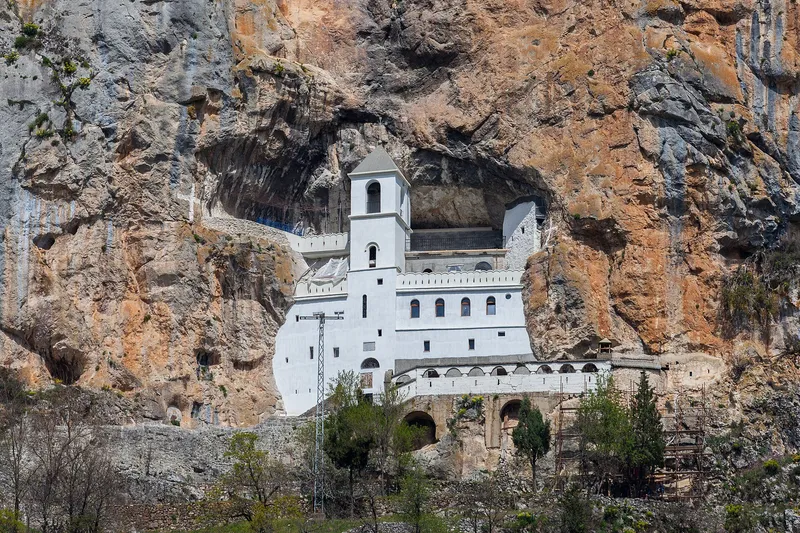
Monastery of 1252 above the Morača river, 25 km from Kolašin, with the 13th-century fresco of the raven feeding Elijah and painting of 1577-1639
Orthodox monastery · Above the Morača river on the Podgorica-Kolašin road
Photo: Avi1111 dr. avishai teicher · CC BY-SA 4.0
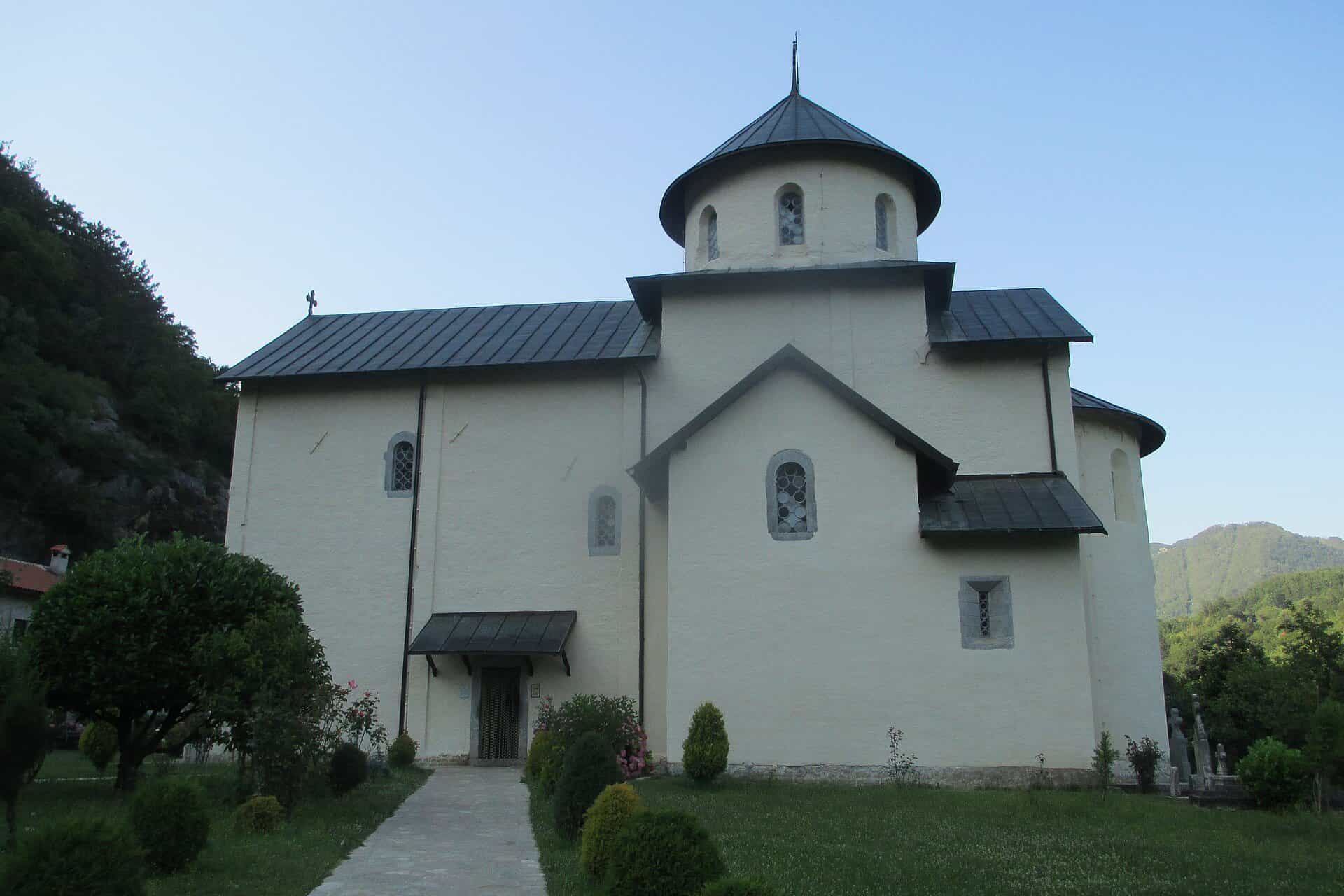
Morača Monastery stands on the bank of the Morača river, beside the main Podgorica-Kolašin road 25 km south of Kolašin. The grand knez Stefan Vukanović Nemanjić, grandson of Stefan Nemanja, built this monastery in 1252 as his burial church. Its 13th-century fresco of the raven feeding the prophet Elijah is its oldest and best-known painting, and the church, the small Church of St Nicholas and the monks' lodgings stand around a walled garden on the road between Podgorica and the north. It is an active monastery.
Visiting
Morača is a working monastery. Visitors walk in through the gate in the wall and cross the garden to the churches. As in any Orthodox church, cover shoulders and knees and ask before photographing the frescoes.

What to see
- The Church of the Dormition of the Virgin, the main church, in the Raška style, with a Romanesque main portal and the founding inscription above the west door.
- The frescoes of the 13th century, of which the raven feeding the prophet Elijah in the desert is the oldest and best known. It belongs to a cycle of eleven scenes from Elijah's life.
- The 16th and 17th-century painting: two Last Judgement scenes of 1577-1578, the west facade painted in 1616 by Georgije Mitrofanović, and the Church of St Nicholas painted by Kozma in 1639.
- The Church of St Nicholas, the small second church in the courtyard.
- The konak, the monks' lodgings, and the garden inside the walls, laid out with lawns, clipped shrubs and stone paths.

History
Stefan Vukanović, son of Vukan and grandson of Stefan Nemanja, founded Morača in 1252 as the church in which he meant to be buried. He later withdrew from political life and took monastic vows, and the monastery kept his memory as its founder.
The Ottomans burned the monastery in 1505, and it stood abandoned for about seventy years. The monks Tomo and Mojsije rebuilt it between 1574 and 1580 with the support of the local people, above all the knez Vukić Vučetić, and new frescoes followed: the Last Judgement scenes of 1577-1578, the west facade by Georgije Mitrofanović in 1616 and Kozma's painting of the Church of St Nicholas in 1639. One of its frescoes won a prize at an international exhibition of fresco painting in Paris. The monastery is the subject of a scholarly monograph published by the Serbian Academy of Sciences and Arts in 2006.

Getting there
The monastery is beside the main road through the Morača valley, a short walk from the road to the gate. Drive times without traffic: Kolašin 25.3 km, about 37 minutes; Podgorica 45.8 km, about 1 hour 5 minutes; Mojkovac 46 km, about 1 hour 10 minutes. Intercity buses between Podgorica and Kolašin run along the road past the monastery.

Nearby
- The Morača river and its canyon, which the road follows south of the monastery.
- Mrtvica, a tributary canyon of the Morača.
- Kolašin and Biogradska Gora National Park, 25 km and more to the north.
- Kolašin's monument to the victims of fascism.
- Podgorica, 46 km south.
When was Morača Monastery built?
In 1252, by Stefan Vukanović Nemanjić, grandson of Stefan Nemanja, as his burial church.
Which fresco is the famous one?
The raven feeding the prophet Elijah, painted in the 13th century, the oldest fresco in the monastery and part of an eleven-scene cycle of Elijah's life.
History
1252
Founded by Stefan Vukanović
The grand knez Stefan Vukanović Nemanjić, grandson of Stefan Nemanja, builds the monastery as his burial church, in the Raška style with a Romanesque portal; he later takes monastic vows.
13th century
The Elijah frescoes
The cycle of eleven scenes from the life of Elijah, with the raven feeding the prophet, is painted in the founding century.
1505
Burned by the Ottomans
The monastery is burned and stands abandoned for about seventy years.
1574-1580
Rebuilt
The monks Tomo and Mojsije rebuild it with the support of the local people, above all the knez Vukić Vučetić; two Last Judgement scenes are painted in 1577-1578.
1616 and 1639
Later painting
Georgije Mitrofanović paints the west facade in 1616; Kozma paints the Church of St Nicholas in 1639.
On these trips
- Kolašin in 3 days: Biogradska gora, BjelasicaSummer · Day 3 · Morača monastery, the Platije canyon and the Mrtvica trail
- Kolašin in 3 days: Biogradska gora, BjelasicaWinter · Day 3 · Morača monastery and the Platije canyon road
- 7 days in Montenegro: coast to Durmitor loopDay 7 · Tara canyon road, Morača monastery, Podgorica
- Day trips from Podgorica by car or trainTrip 5 · Morača monastery, the Platije canyon and Mrtvica
Sources
Kolašin Tourist Organisation, Churches and monasteries · National Tourism Organisation of Montenegro, Sacral objects (Paris fresco prize) · Istraživanja (University of Novi Sad, 2022): Stefan Vukanović, founder of Morača, burial church, monastic vows; SANU monograph 2006 · Wikipedia, Morača (monastery): founding inscription, Elijah cycle, 1505, rebuilding 1574-1580, Last Judgement 1577-78 (secondary) · Discover Montenegro, Morača Monastery: west facade 1616 by Georgije Mitrofanović, Kozma 1639 (secondary) · OSRM routing (car and foot, OpenStreetMap data, ODbL; times without traffic)