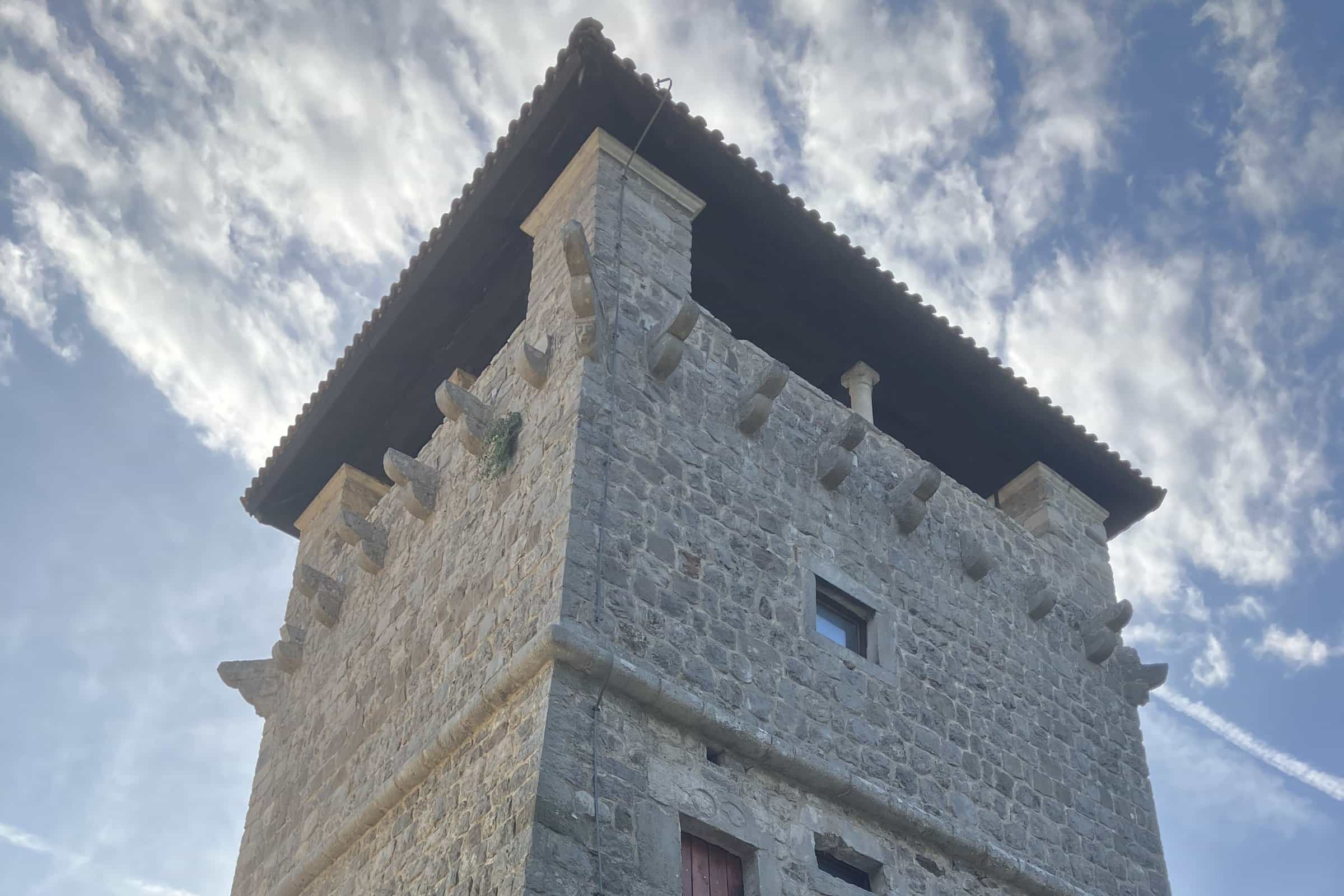
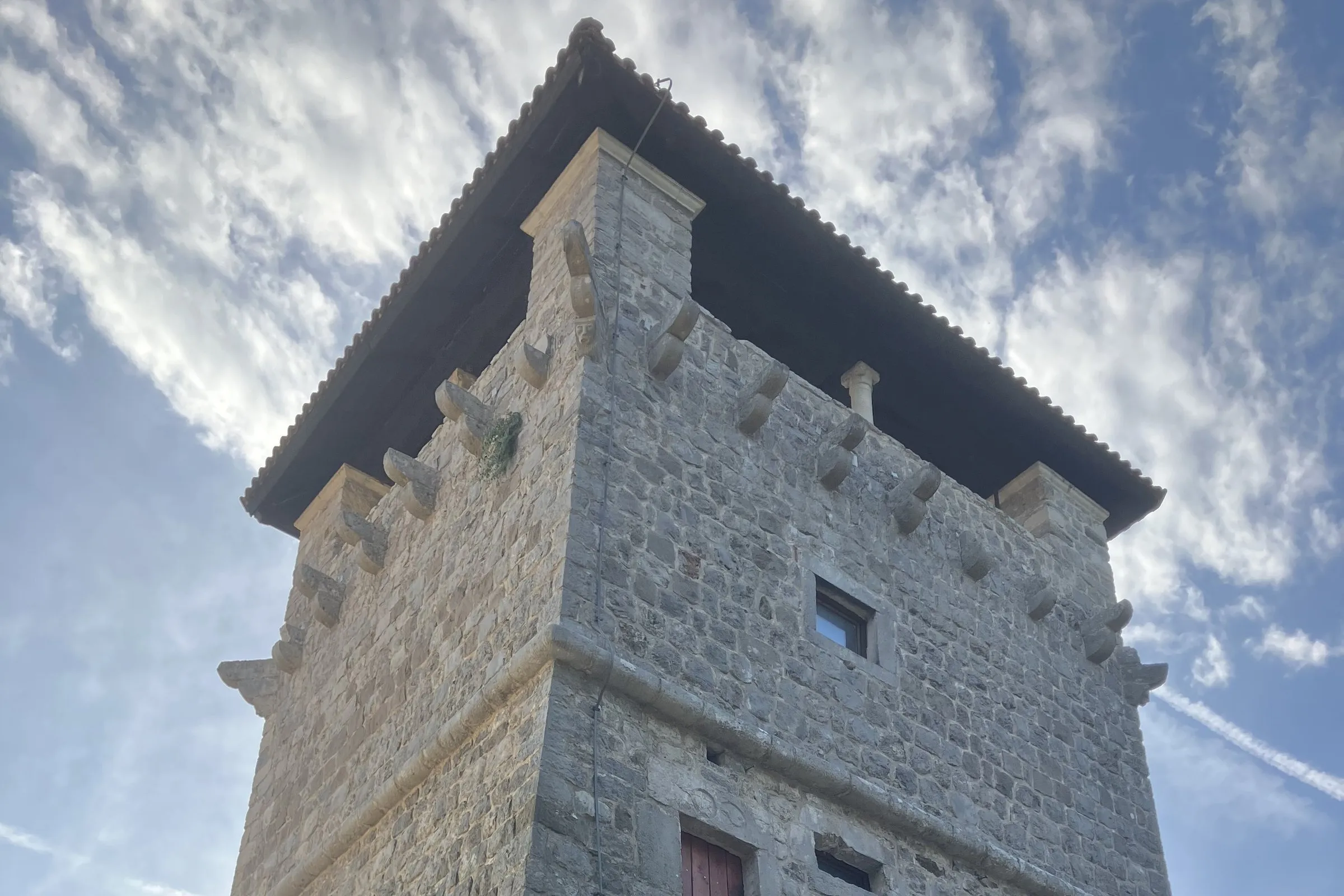
Buća-Luković summer residence, Tivat
The fortified medieval summer house of the Buća family in the centre of Tivat, with a 15 m tower of 1548, St Michael's chapel and a garden, now the Museum and Gallery Tivat with the town's ethnographic collection
Fortified summer residence with a tower · Centre of Tivat
Photo: Schokifaktor · CC BY-SA 4.0
The Buća-Luković summer residence (Ljetnjikovac Buća-Luković) is the most monumental and best-preserved of the summer houses that Kotor's noble families built in Tivat: a fortified medieval complex in the centre of town, near the city park, with a 15 m defensive tower of 1548, the small chapel of St Michael, a gate, a well and a large garden. It belonged to the Buća family of Kotor and later passed to the Luković family of Prčanj. Today it is the home of the Museum and Gallery Tivat: the tower is an art gallery and the farm building holds the ethnographic collection Etnografsko nasljeđe Tivta. It is 330 m from Tivat City Park and 940 m from the Naval Heritage Collection at Porto Montenegro. Opening hours and fees are not published.
- What A fortified medieval summer house of the Buća family, now the Museum and Gallery Tivat
- Dates Built in phases, dated to the 14th and the 15th century; tower 1548; Luković ownership from the 18th or 19th century; part of the estate given for the naval arsenal in 1888
- See The 15 m tower (art gallery), St Michael's chapel, the gate and well, the garden; the ethnographic collection in the farm building
- Where Centre of Tivat, 330 m from Tivat City Park, 940 m from the Naval Heritage Collection
- Visiting Hours and fees of the museum and gallery are not published: check locally
History
The Buća were a noble family of Kotor who in the 14th and 15th centuries gave the town merchants, financiers, diplomats and theologians, and they held this estate for centuries. The residence was built in several phases, which shows in the mix of styles: a Renaissance whole with some late Gothic details. Its age is given both as the 14th century and as the 15th, when the Kotor nobleman Mihailo Petrov Buća built the fortified summer house; the defensive tower is dated 1548. In the 15th century the entrance was from the sea, by boat, and the gate into the yard still stands where the path from the shore began.
The estate later passed to the Luković family, sea captains from Prčanj; the change is dated to 1812, to Tripo Luković, and also to the early 18th century, to Count Marko Luković. In 1888 the Luković heirs gave part of the estate to the municipality so that the Austro-Hungarian navy could build its arsenal there, the origin of the site that is now Porto Montenegro. In the mid-20th century a summer stage was built in the central part of the garden, where the stone path to the sea used to run.
What you see
The estate had a residential house, a farm building, the small chapel of St Michael (sv. Mihovil), a tower with a monumental entrance gate, a vineyard and a large garden, and a stone path lined with decorative stone pillars, more than 100 of them (about 130), led down to the sea. The tower is 15 m high, dates from 1548 and is now used as an art gallery. The chapel is a small rectangular building without an apse. The tower and the chapel in the atrium are the most valuable parts of the complex, which is a protected cultural property. Today the complex has the tower, the chapel, the farm building with the ethnographic display, the residential building and the atrium; the garden was turned into an open-air theatre, and the whole stands beside the Tivat Cultural Centre with its cinema hall.
Good to know: The garden, the gate and the tower can be seen from outside; the galleries and the ethnographic display are indoors and depend on the museum's hours, which are not published.
The ethnographic collection
The museum collection Etnografsko nasljeđe Tivta (Ethnographic Heritage of Tivat) is shown in the museum and gallery spaces of the complex. It covers the traditional dress of the area, crafts, notable people of Tivat and its intangible heritage, alongside exhibitions of fine art, ethnology, archaeology and documents. The complex is the home of the public institution Museum and Gallery Tivat. Hours, fees and photography rules are not published: check locally before you plan a visit around the inside.
Getting there
The complex is in the centre of Tivat, 330 m (4 minutes on foot) from Tivat City Park and 940 m (11 minutes) from the Naval Heritage Collection in Porto Montenegro. From Kotor Old Town it is 10.8 km and 15 minutes by car. Getting to the town is covered on the Tivat page.
Nearby
- Tivat City Park, 330 m, 4 minutes on foot.
- Naval Heritage Collection, Porto Montenegro, 940 m, 11 minutes.
- Porto Montenegro, the marina on the former arsenal land.
- Island of Flowers and St Michael's Monastery, in the bay of Tivat.
- Kotor Old Town, 10.8 km, 15 minutes by car.
- More museums on the museums page.
Questions
What is the Buća-Luković residence in Tivat?
The Buća-Luković residence in Tivat is the fortified medieval summer house of the Buća family of Kotor, with a 15 m tower of 1548 and the chapel of St Michael, and it now houses the Museum and Gallery Tivat.
Is the Buća-Luković residence in Tivat open to visitors?
The Buća-Luković residence publishes no opening hours or fees: the garden, gate and tower can be seen from outside, and for the galleries check locally.
Where is the ethnographic collection of Tivat?
The ethnographic collection Etnografsko nasljeđe Tivta is in the farm building of the Buća-Luković complex in the centre of Tivat, near the city park.
Timeline
14th-15th century
The Buća summer house
The Buća family of Kotor builds its fortified summer house in Tivat in several phases; the date is given as the 14th century and as the 15th, under Mihailo Petrov Buća. The entrance is from the sea, by boat.
1548
The tower
The 15 m defensive tower is built.
18th-19th century
The Luković family
The estate passes to the Luković family of Prčanj; the change is dated to 1812 (Tripo Luković) and also to the early 18th century (Count Marko Luković).
1888
Land for the arsenal
The Luković heirs give part of the estate to the municipality for the Austro-Hungarian naval arsenal, the origin of today's Porto Montenegro site.
Mid-20th century
Summer stage
A summer stage is built in the central part of the garden, where the stone path to the sea used to run.




More monuments
Nearest by road first

Sources
Tourist Organisation Tivat, Palata Buća Luković (best-preserved residence, Buća family, 14th century, 1812 Tripo Luković, 1888 arsenal land, estate parts, 130 pillars, 15 m tower of 1548, summer stage) · Tourist Organisation Tivat, Summer residence Buća Luković (English page) · Tourist Organisation Tivat, Mansion Buća (Renaissance whole with late Gothic details, gallery, open-air theatre, Cultural Centre with cinema hall, centre of town) · Tourist Organisation Tivat, Kultura (15th century, Mihailo Petrov Buća, Count Marko Luković of Prčanj, chapel without apse, museum collection Etnografsko nasljeđe Tivta) · European Heritage Days, Along the paths of the medieval summer house (PI Museum and Gallery Tivat: entrance from the sea, gate, path and well, protected property, buildings today, more than 100 pillars) · Primorske novine, 26 February 2025 (JU Muzej i galerija Tivat keeps its displays in the Buća-Luković summer house) · OpenStreetMap way 246698198, ODbL · OSRM routing (OpenStreetMap data, ODbL)