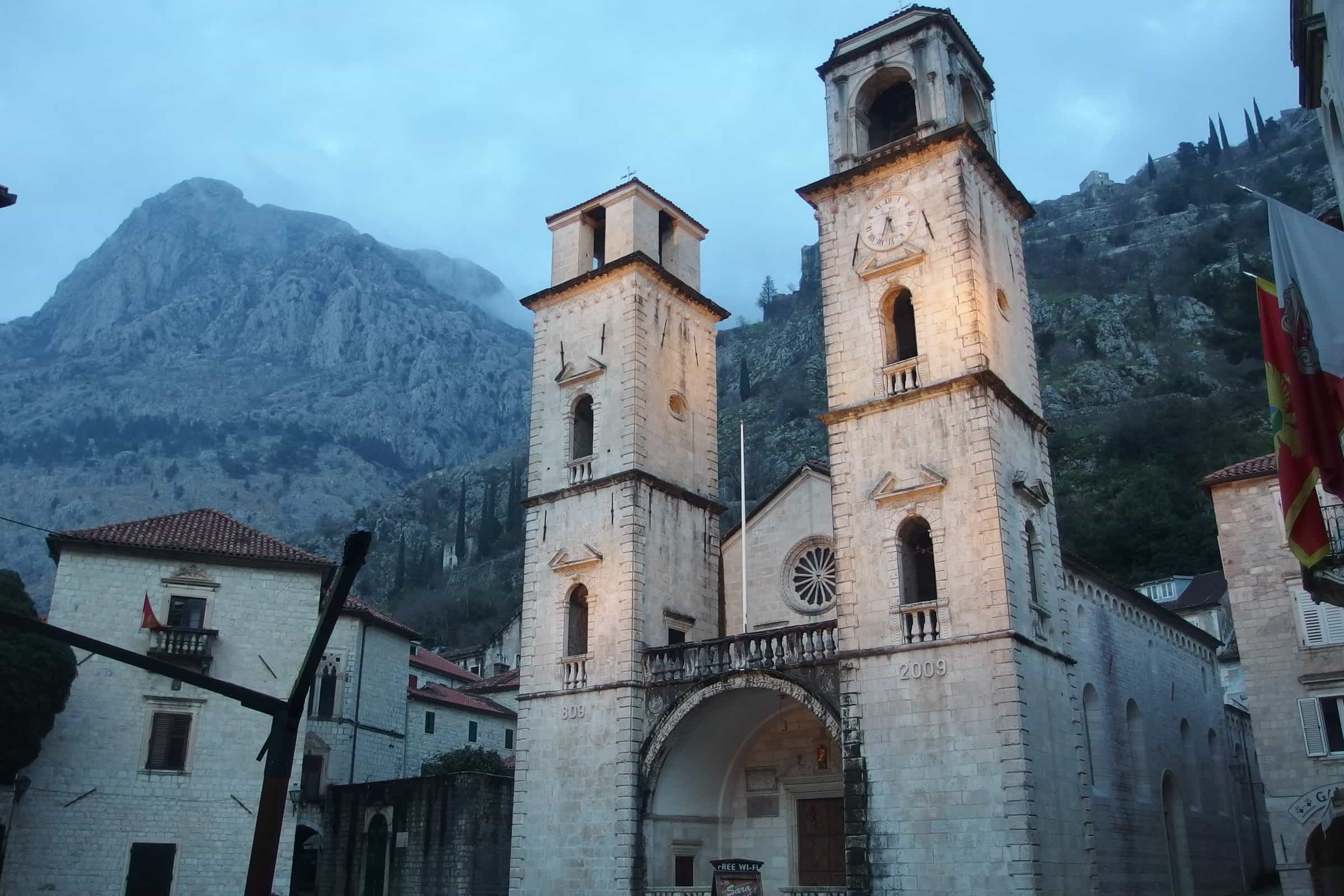
Cathedral of St Tryphon, Kotor
Romanesque cathedral of 1166 on its own square in Kotor Old Town, with the ciborium of 1362, the silver altarpiece and the treasury
Three-nave Romanesque basilica · Trg Sv. Tripuna
Photo: Mhare · CC BY-SA 4.0
The Cathedral of St Tryphon is the Catholic cathedral of Kotor, consecrated on 19 June 1166 and still the main church of the Kotor diocese. It stands on its own square inside Kotor Old Town, two minutes on foot from the Sea Gate. Go for the Romanesque interior, the 14th-century ciborium over the altar, the silver-gilt altarpiece, the fresco fragments of 1331 and the treasury of goldsmiths' work in the galleries above the aisles. Opening hours and the ticket for the treasury are not published; ask at the door or at the tourist information office.
What you see
The church is a three-nave basilica in the Lombard Romanesque style with Byzantine elements that reached Kotor through Apulia. It is 35.21 m long and 17.47 m wide, and the central bay rises 13.54 m. The two Baroque bell towers on the west front are 33 m and 35 m high; the north tower was never finished. Five bells hang in them, the oldest from 1670, a votive gift after the earthquake of 1667.
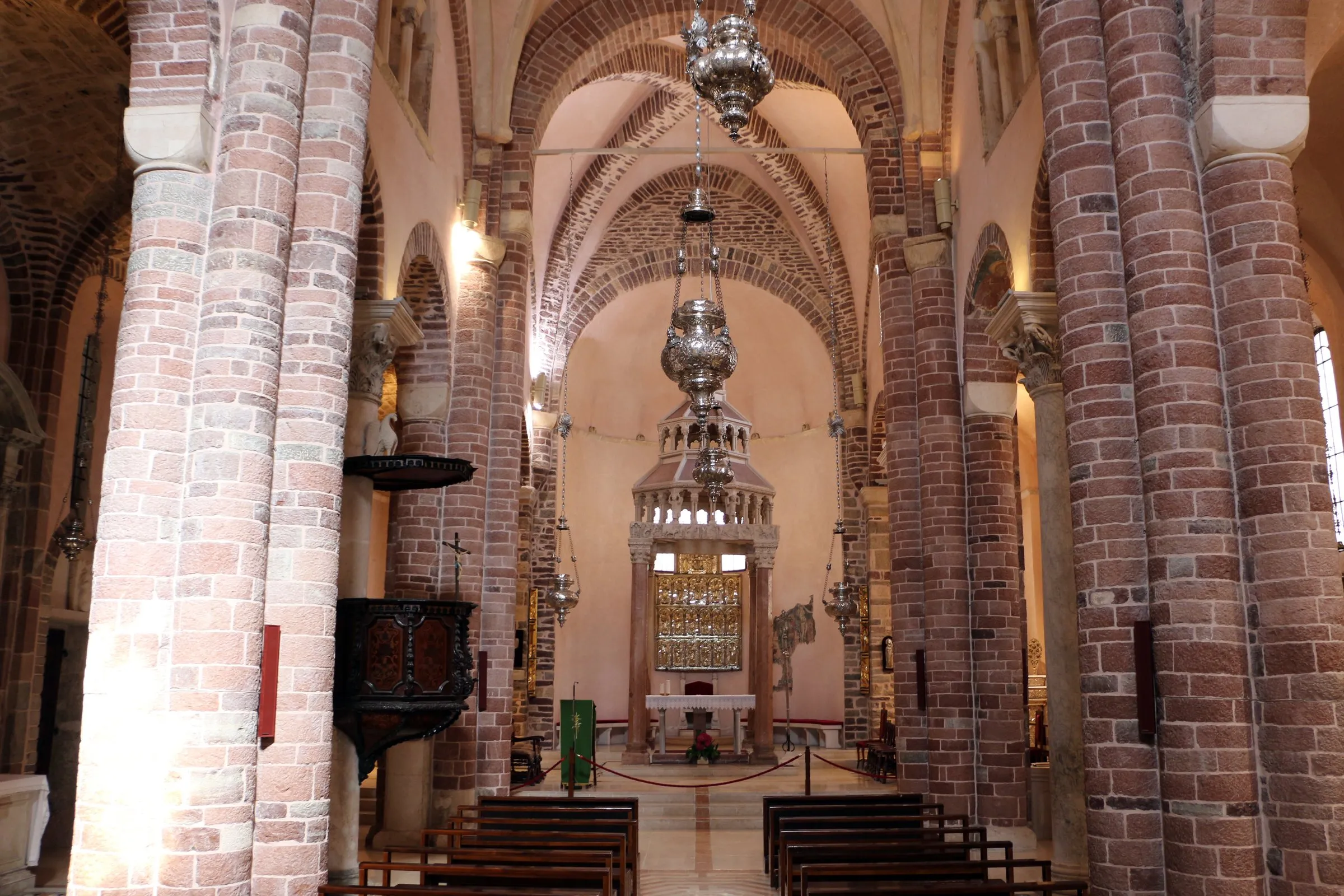
- The ciborium over the main altar, consecrated in 1362: four octagonal columns of local red stone carry a three-tier octagonal canopy that ends in an angel, with scenes from the life of St Tryphon carved on the architraves.
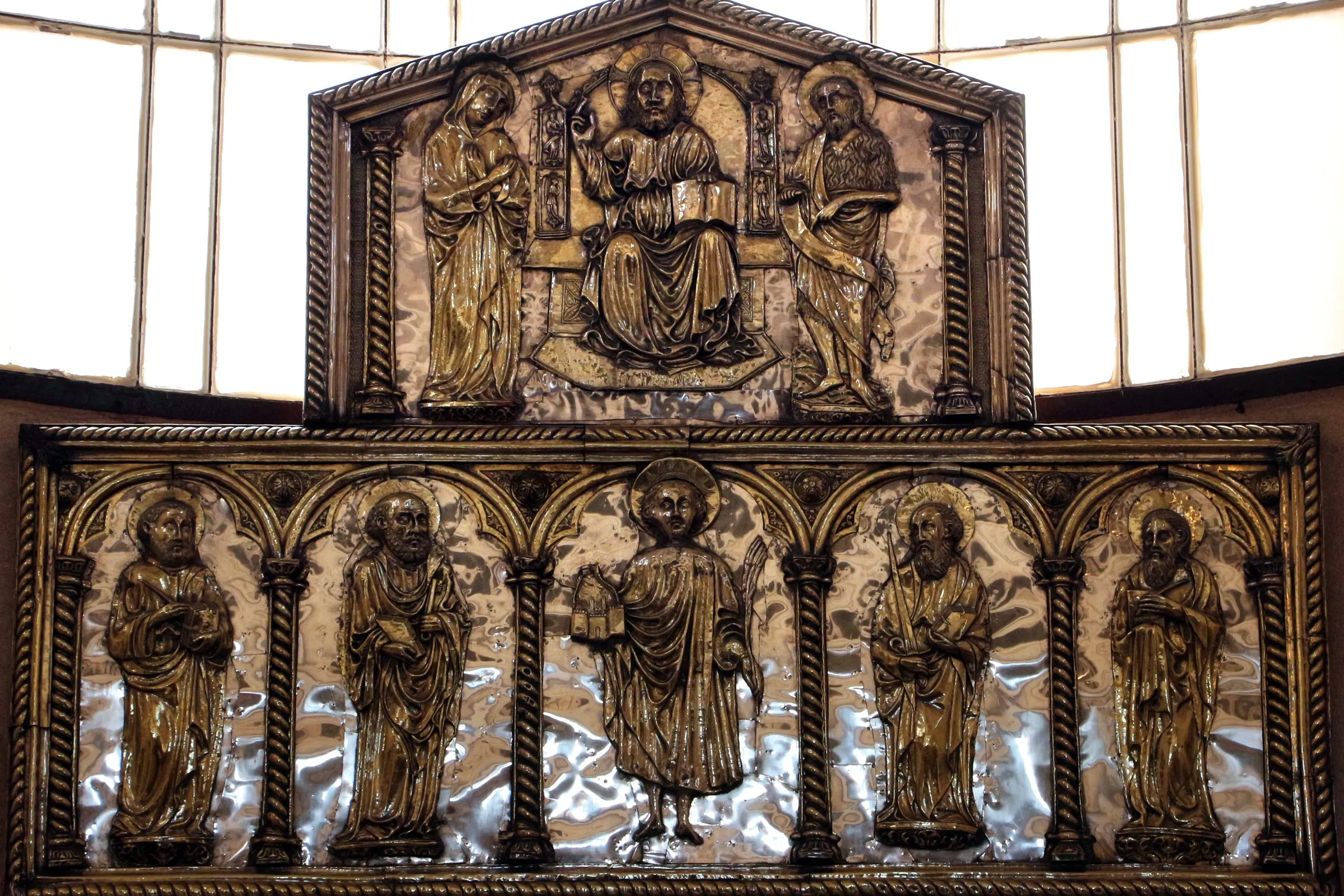
- The silver-gilt altarpiece (pala) from the first half of the 15th century, the work of several Kotor goldsmiths, Marin Adamov among them, with 20 saints in relief; the top group is by Johann of Basel, and St Tryphon holds a model of the town.
- Frescoes painted by Greek masters under a contract of 1331, in a Byzantine-Gothic manner: fragments in the main apse and on the nave arches, named female saints in the south aisle and four saints in the north aisle.
- Paintings and sculpture: a Crucifixion by Jacopo Bassano, St Ursula by Pieter de Coster, the Virgin with St Dominic by Tripo Kokolja, a panel by Girolamo da Santa Croce, a 15th-century stone Pietà and a wooden St Martin by Lovro Dobričević.
- The reliquary chapel, reached by a monumental stair along the north wall built after 1667, with a collection of icons from the 15th to the 18th century on its south wall. Kotor has kept the relics of St Tryphon since 13 January 809.
- The treasury, shown as a museum in the galleries above the side aisles: two large 15th-century silver crosses (one by the Kotor goldsmith Tripun Palma), chalices and monstrances from the 15th to the 19th century, and an Augsburg monstrance given by Emperor Franz Joseph in 1875.
- The sarcophagus of Andrea Saracenis and his wife Maria, the founders of the first church, with a 9th-century inscription; found by the north wall in 1840, it now stands to the right of the main entrance. A well from the older church, with finds from the 11th to the 16th century, is shown in the south aisle.
History in short
The Kotor citizen Andrea Saracenis built the first church of St Tryphon in the early 9th century; Constantine VII Porphyrogenitus mentions it in De Administrando Imperio. Its remains, a central-plan martyrium about 13.75 by 10.5 m, were found in 1987, partly under the sacristy and partly in the lane between the sacristy and the bishop's house.
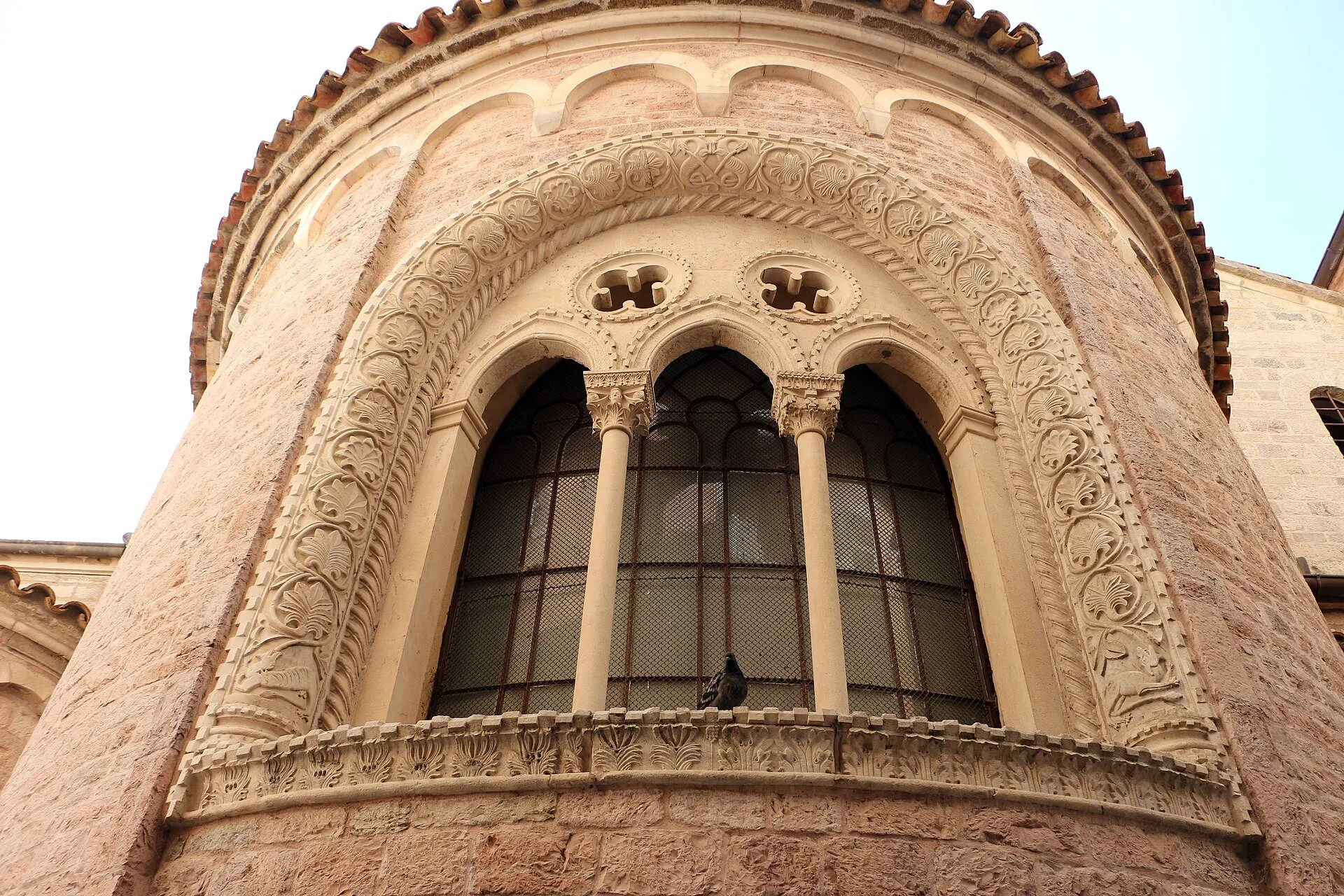
Work on the present cathedral began in 1124, financed by the Prevlaka estate with its Benedictine monastery of St Michael, which Bishop Ursacije and the commune gave for the purpose. Bishop Malon consecrated the church on 19 June 1166. Until 1361 the town's general assembly met on the cathedral square, and in 1387-1388 the Great Council sometimes sat inside the church.
Earthquakes in 1537, 1563 and 1667 damaged the building. The restoration of 1584-1613 removed the dome, remodelled the interior in Renaissance taste and faced the piers with Korčula stone. After the 1667 quake brought down the west front and the Romanesque bell towers, the works of 1671-1683 gave the church its Baroque towers, west front and portico with a terrace. Further restorations followed in 1892-1908 and, after the earthquake of 1979, in 1987-2001 to a design by the architect Milka Čanak-Medić. The church was raised to the rank of minor basilica by a decree of 12 January 2009.
The treasury has lost much over the centuries: in 1378 the Venetian admiral Vettor Pisani carried off a large part of the reliquary (one piece with a relic of St Tryphon is in Venice), and in 1813 the French general Gauthier minted the Kotor siege franc from church silver, including 33 reliquaries.
Getting there
The cathedral is on Trg Sv. Tripuna inside the Old Town, which is pedestrian; from the Sea Gate it is about 150 m, two minutes on foot. For parking see the Kotor Old Town page.
Visiting
Neither the diocese nor the tourist organisation publishes opening hours or a ticket price for the church and the treasury; check at the entrance or with the Kotor tourist information office. The cathedral is a working church with Sunday Mass, and the diocese keeps the current Mass schedule on its website. The feast of St Tryphon, the patron of Kotor, is on 3 February, with festivities running into mid-February; in January the Little Admiral of the Boka Navy recites the praises to the saint at noon in front of the church. The cathedral stands inside the UNESCO World Heritage site of the Natural and Culturo-Historical Region of Kotor, inscribed in 1979.
Nearby
- Kotor Old Town, the walled town around the cathedral.
- Church of St Luke, a few streets away.
- Maritime Museum of Montenegro in the Grgurina palace.
- Kotor walls and St John's Fortress above the town.
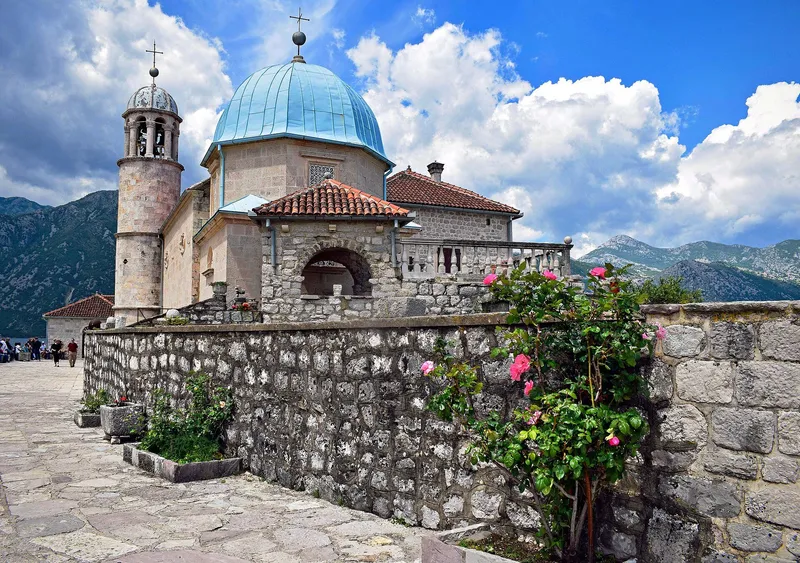
- Our Lady of the Rocks off Perast, also reached on a boat tour of the Bay of Kotor.
Questions
How old is the Cathedral of St Tryphon? The Cathedral of St Tryphon was consecrated in 1166, after building began in 1124, and it replaced a church of the early 9th century on the same spot.
Is there an entrance fee for Kotor cathedral? The Cathedral of St Tryphon does not publish a ticket price or opening hours; ask at the door or at the tourist information office in the Old Town.
What is in the treasury of St Tryphon? The treasury of the Cathedral of St Tryphon, in the galleries above the aisles, holds two large 15th-century silver crosses, chalices and monstrances from five centuries and the Augsburg monstrance given by Emperor Franz Joseph in 1875.
When is the feast of St Tryphon in Kotor? The feast of St Tryphon is on 3 February, and Kotor's festivities for its patron run into the middle of the month.
History
Early 9th century
The first church
The Kotor citizen Andrea Saracenis builds the first church of St Tryphon; Kotor keeps the saint's relics from 13 January 809.
1124-1166
The Romanesque cathedral
Building of the present cathedral begins, financed by the Prevlaka estate; Bishop Malon consecrates it on 19 June 1166.
1331-1362
Frescoes and ciborium
Greek painters fresco the church under a contract of 1331; the ciborium over the main altar is consecrated in 1362.
1537-1683
Earthquakes and Baroque rebuilding
Earthquakes damage the church; the 1667 quake fells the west front and the Romanesque towers. The Baroque towers, west front and portico are built in 1671-1683.
1987-2009
Restoration and basilica status
Restoration after the 1979 earthquake, to a design by Milka Čanak-Medić; the church becomes a minor basilica in 2009.
On these trips

More churches & monasteries
Nearest by road first


Sources
Kotor Diocese, Kotor: katedrala bazilika Sv. Tripuna mučenika · Kotor Tourist Organisation, Churches of Kotor Old Town · Kotor Tourist Organisation, Savindan and St. Tryphon Festivities · Municipality of Kotor, Meet Kotor · National Tourism Organisation, Old towns of Montenegro (UNESCO 1979) · GCatholic, Katedrala sv. Tripuna (minor basilica decree of 12 January 2009) · OpenStreetMap way 165389709, ODbL · OSRM routing (OpenStreetMap data, ODbL)