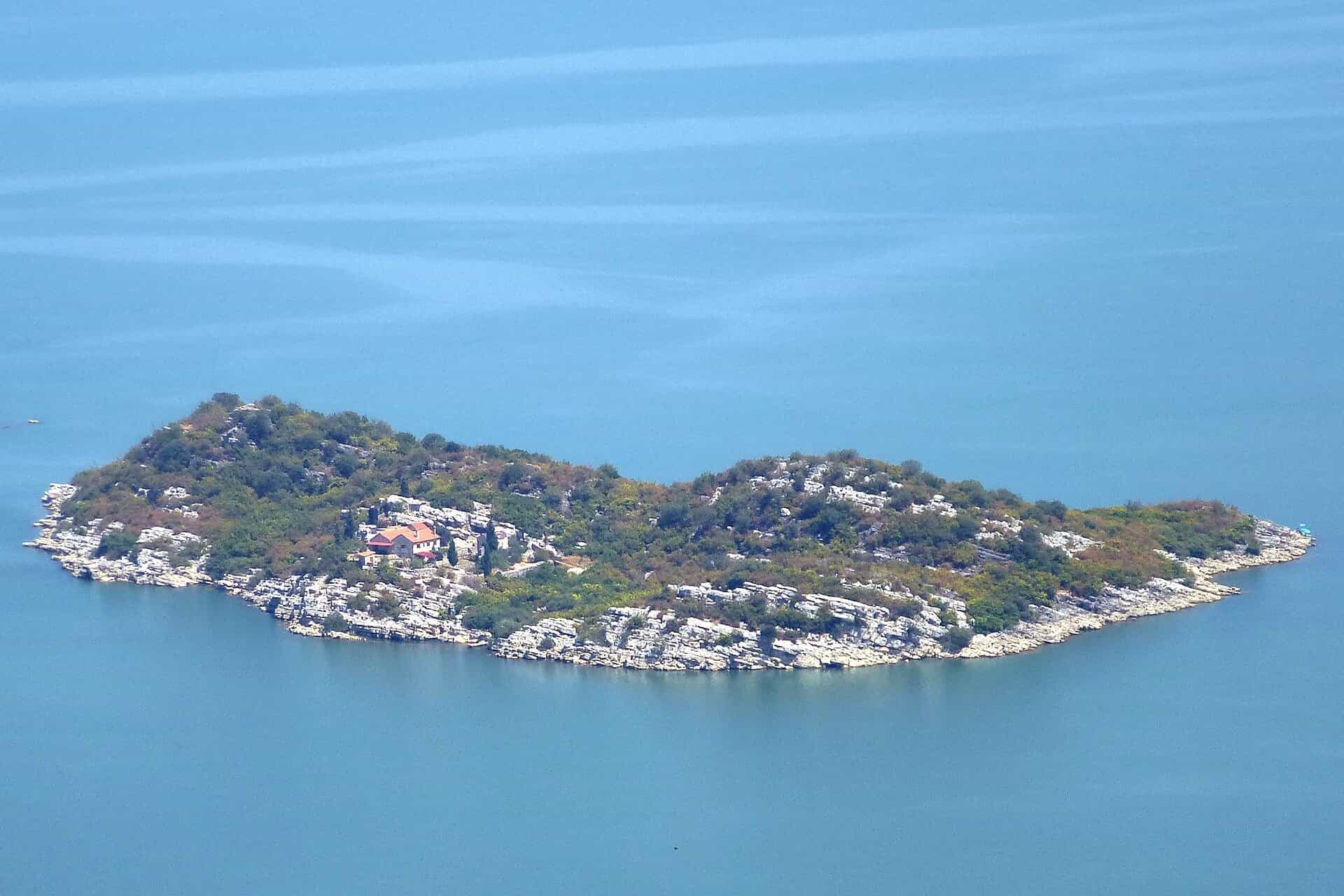
Starčevo Monastery
Balšić-era island monastery of the 1370s on Skadar Lake, once a manuscript workshop, with the grave of the printer Božidar Vuković, reached by boat
Orthodox monastery · Founded in the 1370s · Island of Starčevo
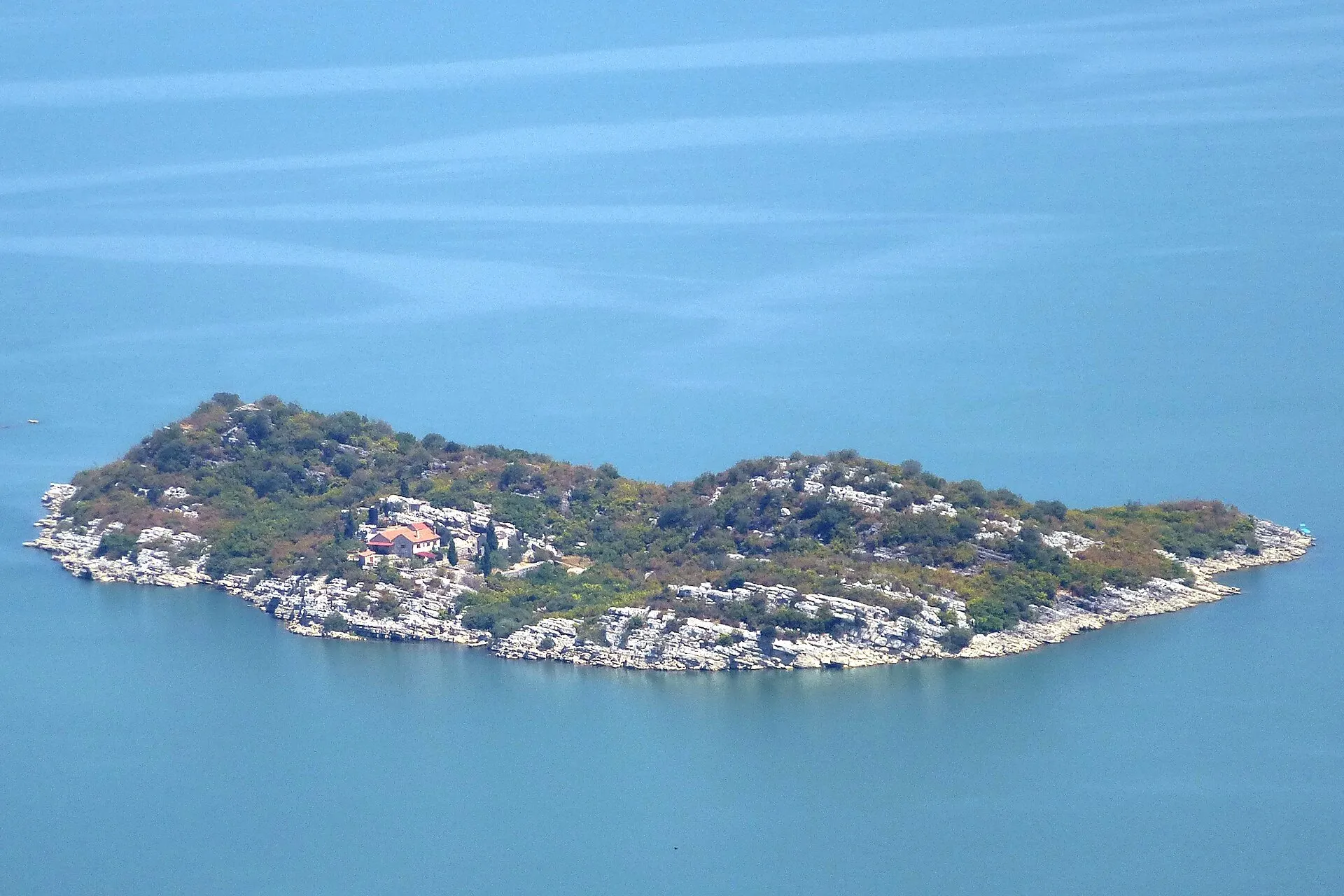
Starčevo Monastery (Manastir Starčevo, also Starčeva gorica) is a 14th-century monastery on a small island off the south-western shore of Skadar Lake, in Bar municipality. The hermit-elder Makarije founded it in the 1370s, in the time of Đurađ I Balšić; it became one of the lake's main manuscript workshops and holds the grave of the printer Božidar Vuković, buried here in 1540. Monks have lived here again since 1993. No road leads to it: the island is reached by boat and seen from the Murići viewpoint, 18.5 km from Virpazar by car. Whether visitors may land is not published.
- Founded In the 1370s by the elder Makarije, under Đurađ I Balšić (1377 is the year usually given)
- Church Dormition of the Mother of God, triconch, about 6.5 by 3.5 m
- Grave Božidar Vuković Podgoričanin, printer, buried in the south chapel in 1540
- Protected Since 1957
- Feast The Life-giving Spring, the Friday after Easter
- Access By boat only, inside Skadar Lake National Park
The island
Starčevo is one of the islets strung along the steep south-western shore of the lake, between Grmožur to the north-west and Beška to the south-east. The park counts the monastery among the lake's most representative cultural property, with the other Balšić and Crnojević foundations: Moračnik, Beška, Kom and Obod. A small harbour on the south side of the island has a walled path and steps up to the main gate.
History
The island takes its name from Makarije, a hermit (starac, elder) who settled here, and the monastery was recorded from the start as the Gorica of the holy elder Makarije. It was founded in the time of Đurađ I Balšić, most likely in 1376-1378; 1377 is the year usually given, and Đurađ died on 13 January 1378. For a time it was a metochion, a dependency, of Hilandar.
In the late 14th and 15th centuries Starčevo was a leading copying and illumination workshop of the lake, where manuscripts were copied, bound and decorated. A Prologue copied here in the 1370s, with a note naming the Gorica of the holy elder Makarije and the Balšić lords, is now in the State Library in Berlin; a Four Gospels in the Marciana Library in Venice carries a note naming Starčeva gorica. The printer Božidar Vuković Podgoričanin asked in his will to be buried on the island; his son Vincenzo brought his body from Venice, and he was laid in the south chapel in 1540.
The monastery appears in Ottoman tax registers of the late 15th and 16th centuries, then fell empty after the Ottoman conquest of this part of Zeta. In 1893 the Russian scholar Pavel Rovinski found local herders wintering their flocks in it. It has been a protected cultural property since 1957; the church was conserved in 1963 and 1980, and archaeological research followed in 1984. Monastic life restarted in 1993 under the hieromonk Grigorije Milenković, after the residence had been rebuilt to a heritage-office design (that work is dated to 1992). New frescoes in the church were finished in 2009. Since 2000 the monastery has kept the feast of the Life-giving Spring, the Friday after Easter, because the original dedication feast had been forgotten.
The church
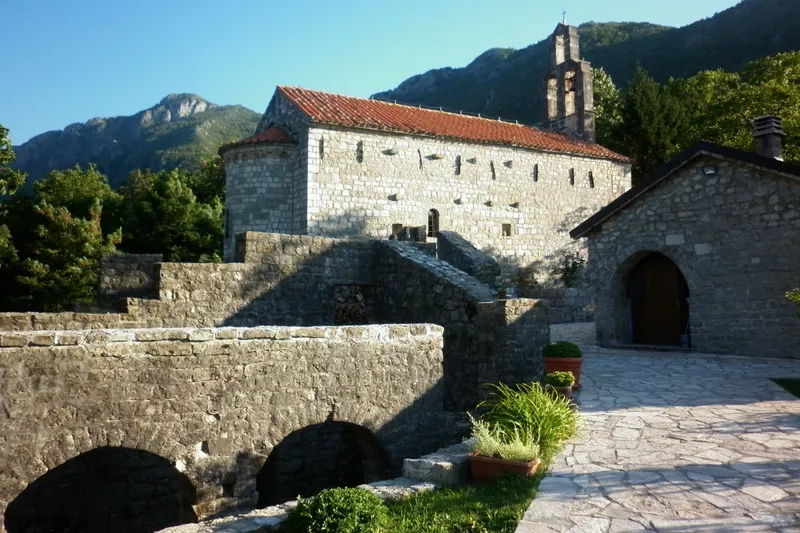
The church of the Dormition of the Mother of God has a triconch plan: a rectangular nave with three semicircular apses and a dome on a round base. It is small, about 3.5 m wide inside and 6.5 m long with the apse, and the simplest and cleanest in design of the lake's triconch churches. Many niches in the walls once held books and church objects, and sound jars are set in the dome and apses. A narthex with two side chapels was added soon after the church was built; Božidar Vuković lies in the larger south chapel. His original gravestone, carved with a hand holding a purse, the printer's sign, was handed to the museums of Titograd (Podgorica) during the 1980s works; whether it is on show in the Podgorica City Museum, which holds Vuković items, is not published.
Good to know: The medieval frescoes did not survive; traces show the church was once painted, and the paintings you see today were finished in 2009. The residence is also a rebuild of the 1990s.
The complex
The monastery is a walled enclosure with a gate and built terraces, holding the church, the residence (konak) and service buildings. The harbour below the south wall, the walled path and the steps to the gate make up the whole approach from the water.
Getting there and visiting
Starčevo is reached by boat. Boat tours on the lake pass the island monasteries, but no departure point or landing is published for Starčevo, so agree any stop with the operator. From the shore, the Murići viewpoint on the Virpazar-Murići road looks over the islets with their 14th-century monasteries: 18.5 km and about 20 minutes by car from Virpazar, 41.2 km and about 49 minutes from Bar (see the Skadar Lake viewpoints). A kayak trip is the other way to get close.
Tip: Starčevo is a working men's monastery with no published hours or dress code. Ask the boat operator or the park visitor centre whether the church can be visited on the day you go.
Nearby
- Beška Monastery, the next island to the south-east, with Jelena Balšić's church.
- Grmožur fortress, the island fort off Godinje to the north-west.
- Kom Monastery, the Crnojević monastery on the north-west shore.
- Virpazar, the boat base, with Besac fortress.
- Podgorica City Museum, which holds items connected with Božidar Vuković.
- Other monasteries on the churches and monasteries hub.
Questions
Who is buried at Starčevo Monastery?
Starčevo Monastery holds the grave of the printer Božidar Vuković Podgoričanin, buried in the south chapel of its church in 1540 after his son brought his body from Venice.
When was Starčevo Monastery founded?
Starčevo Monastery was founded in the 1370s by the elder Makarije, in the time of Đurađ I Balšić; 1377 is the year usually given.
How do you get to Starčevo Monastery?
Starčevo Monastery is on an island reached only by boat; from the shore it is seen from the Murići viewpoint, 18.5 km by car from Virpazar.
Timeline
1370s
Foundation
The elder Makarije founds the monastery in the time of Đurađ I Balšić; it becomes a copying and illumination workshop.
1540
Vuković's grave
The printer Božidar Vuković Podgoričanin is buried in the south chapel, as his will asked.
16th-19th century
Empty
Abandoned after the Ottoman conquest of the area; in 1893 Pavel Rovinski finds herders wintering flocks in it.
1957-1984
Protection
Protected in 1957; the church is conserved in 1963 and 1980 and researched in 1984.
1993-2009
Revival
Monastic life restarts in 1993 after the residence is rebuilt; new frescoes are finished in 2009.

More churches & monasteries
Nearest by road first

Sources
Tourist Organisation Bar, Starčevo Monastery (1377, Makarije, manuscript workshop, Vuković's tomb, living monastery, boat tour) · Mitropolija crnogorsko-primorska, Manastir Starčeva gorica, 21 April 2023 (founding 1376-1378, Hilandar, manuscripts in Berlin and Venice, Vuković 1540, Ottoman registers, Rovinski 1893, church plan and size, niches, sound jars, gravestone, harbour, restart 1993, frescoes 2009, feast since 2000) · Mitropolija crnogorsko-primorska, men's monasteries (Starčeva gorica entry) · JPNPCG, Management Plan NP Skadarsko jezero 2026-2030, section 2.3.1 and Table 6 (protected 1957, Bar, in the park, representative monasteries) · CDT, Devastacija kulturne baštine u Crnoj Gori, I: Skadarsko jezero, 2022 (church 6.5 x 3.5 m, conservation 1963 and 1980, research 1984, Đurađ I died 13 January 1378) · OpenStreetMap way 740017380 and islet way 10228158, ODbL · OSRM routing (OpenStreetMap data, ODbL)