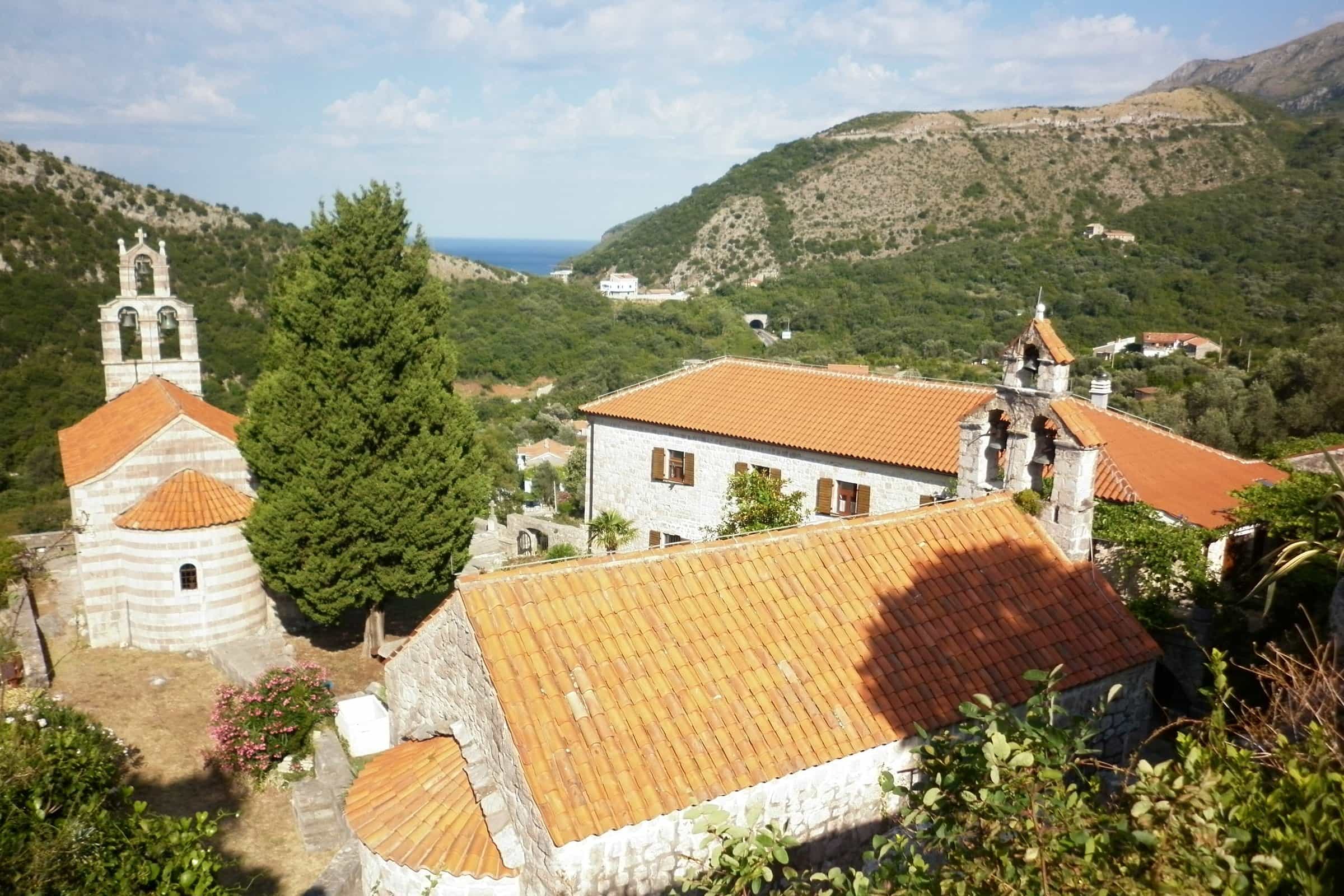
Gradište Monastery
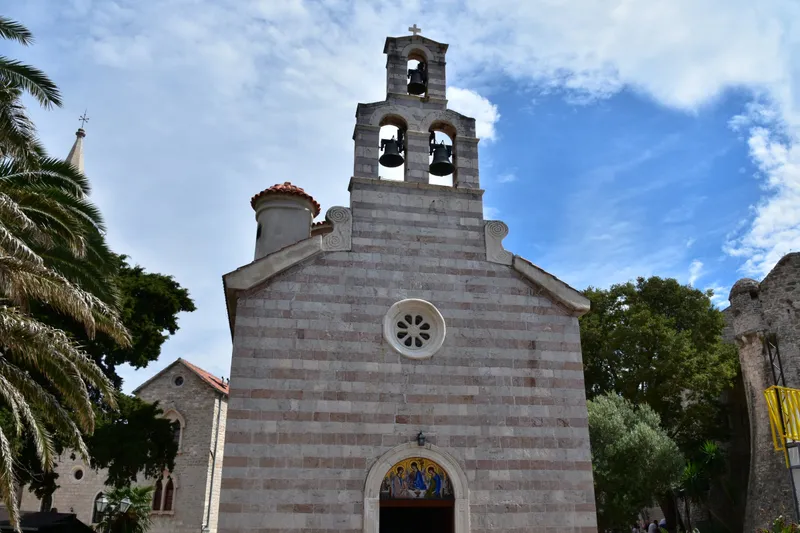
Paštrovići monastery of three churches above Buljarica, dated to 1116 by tradition, where the first Serbian primer was written and the priest Strahinja painted the St Nicholas church in 1620
Orthodox monastery with three churches · Above Buljarica
Photo: Andrija12345678 · CC BY-SA 4.0
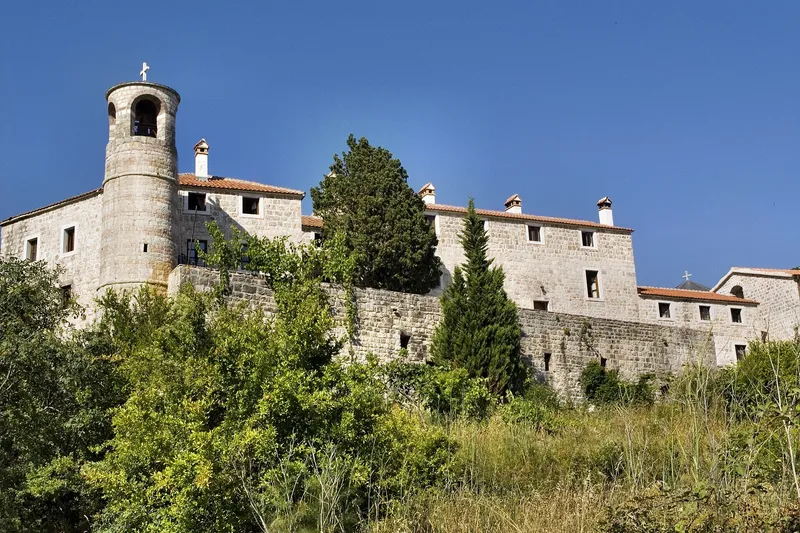
Gradište Monastery (Manastir Gradište) is an active Orthodox monastery of the Metropolitanate of Montenegro and the Littoral on a rise above Buljarica, by the road from Petrovac to Bar, 2.6 km from Petrovac, with a wide view of the sea. Its three churches hold frescoes of 1620 by the priest Strahinja of Budimlje and an iconostasis of 1796 with a rare icon of St Christopher with a dog's head. Tradition dates the founding to 1116; the first written record is a charter of King Milutin of 1305. Buljarica beach is 1.2 km on foot. No visiting hours or fee are published.
- Churches St Nicholas (frescoes 1620, iconostasis 1796), St Sava (1863), Dormition (frescoes by the same painter, nine Nemanjić rulers)
- Founded 1116 by tradition; first named 1305; a dependency of Visoki Dečani until the First World War
- Known for The first Serbian primer (bukvar), written here and printed in Venice in 1597
- Visiting Active men's monastery; no published hours or fee
- Where Above Buljarica, 2.6 km by road from Petrovac (6 minutes), 1.2 km on foot from Buljarica beach
History
The name is tied to gradina, the remains of a settlement or fort that may have stood on the rise before the monastery. Excavations in the yard found an older, probably ancient building and graves of the Roman period, and there are traces of an old basilica. Tradition dates the founding of the monastery to 1116, and the 900th anniversary of the St Nicholas church was marked in 2016. The first written record is a charter of King Milutin of 1305; Milutin's charters of the early 14th century also granted the monastery villages and land, one of them issued together with his mother Jelena for Praskvica and Gradište, another written in Kotor in 1310.
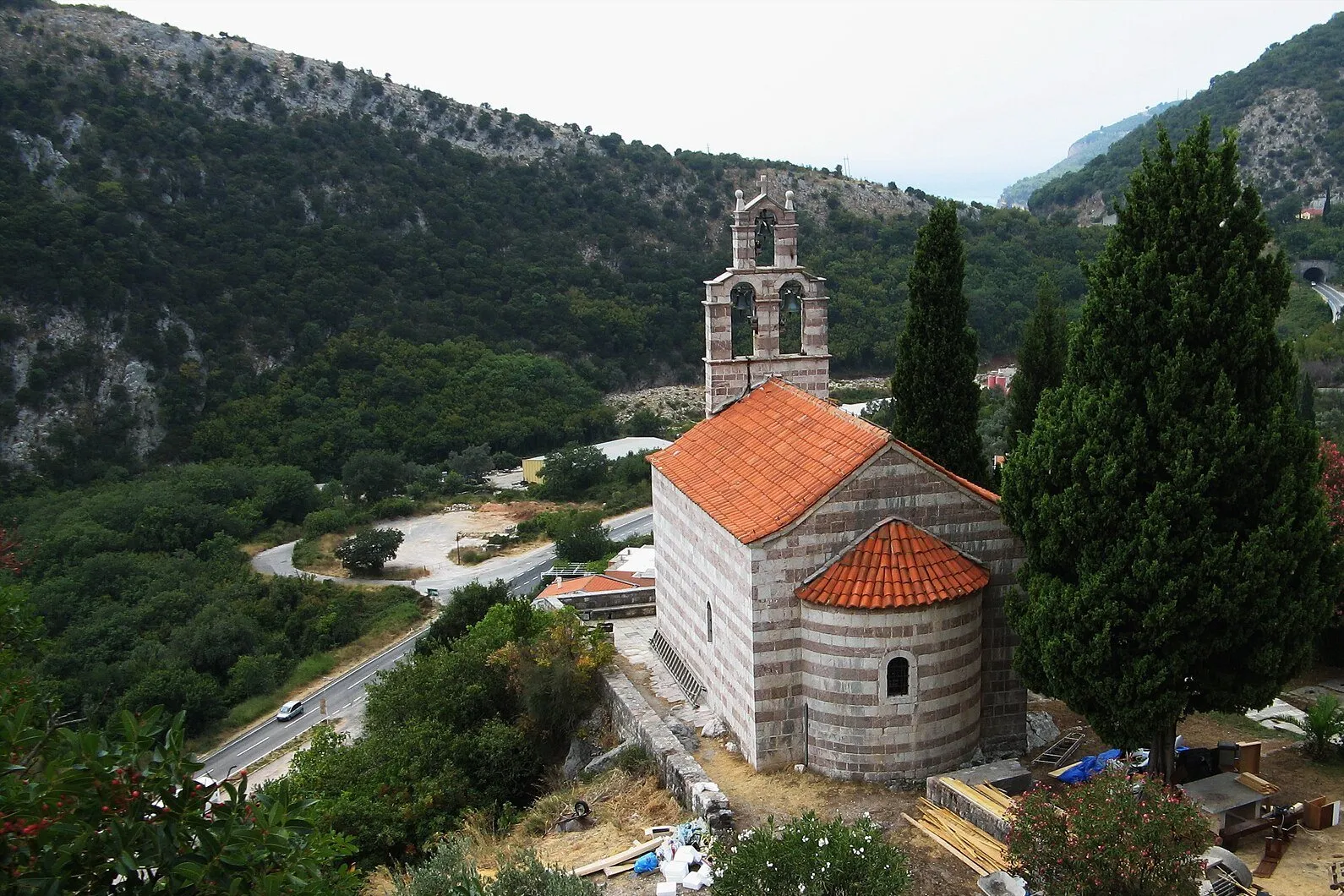
For centuries, until the First World War, Gradište was a dependency (metochion) of Visoki Dečani. Monks of Ratac monastery near Bar stayed here, and when Venetian guns destroyed Ratac its community moved to Gradište. The monastery's best-known contribution is the first Serbian primer (bukvar) of the monks Stefan of Paštrovići and Sava, a Dečani monk also from Paštrovići, written here and printed in Venice in 1597.
Of the Paštrovići monasteries Gradište suffered most from the reprisal of Mahmud Pasha Bushati in 1785. As the monastery closest to the old Ottoman border it had a strong wall with a tall tower and loopholes, whose foundations are still visible. A school worked here, first in the tower and later in a wing of the monastery, as a lay primary school until the Second World War. Austria took all the bells in the First World War; in the Second, Italian shells hit St Sava's church and the buildings were burned to the ground. Because it was destroyed so often, the monastery has no significant movable treasury.
It was rebuilt in 1972 through Father Boris Kažanegra, including the road that links it to the main road. The earthquake of 1979 brought down the vault of St Nicholas with its frescoes; the surviving parts were reconstructed and put back. From 1979 the monastery was led by archimandrite Pavle Kalanj, an icon painter. A scholarly monograph, Manastir Gradište (2019, published by the monastery), and the 764-page conference proceedings Gradište: manastir u Paštrovićima (2020) were edited by Katarina Mitrović and Dušan Medin.
The three churches
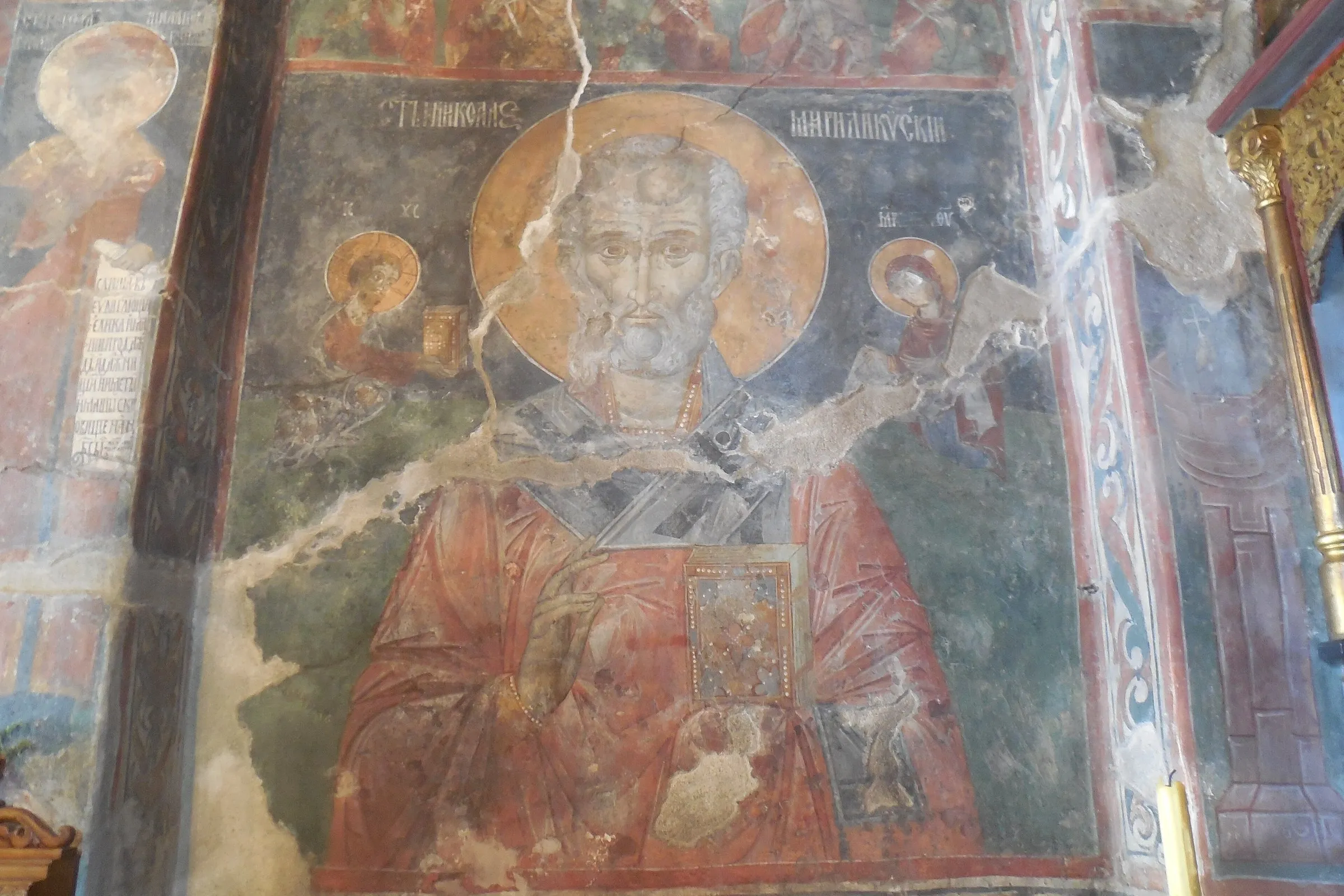
St Nicholas, the main church, is a single-nave building of 12 by 6 m with a three-part bell gable on the front, a barrel vault on two transverse arches and a raised altar area; a fresco portrait of St Nicholas sits in a niche over the door. It was rebuilt at the end of the 16th century on the ruins of the old church and fully painted inside in 1620 by the priest Strahinja of Budimlje, in the time of Bishop Ruvim; a long inscription over the door names the donors Dionisije and Stefan Davidović. Its iconostasis was carved and painted in 1796 by Vasilije, painter of Risan, one of the last of the Rafailović family of painters of the Boka school. On it is the rare icon of St Christopher with a dog's head.
St Sava was built in 1863 on the ruins of an older church of the same name mentioned in 1500: red and white dressed stone in courses, a three-opening bell gable, 11 by 6.3 m. Its iconostasis is by Nikola Aspioti of Corfu, 1864, and a plaque records that Rade Markov Papan of Spič built the bell gable.
The Dormition church, the smallest at 6 by 4 m, stands on a higher terrace among the village cemetery, which is still in use. Its frescoes are by the same priest Strahinja: busts of nine Nemanjić rulers from Nemanja to Uroš and Queen Jelena, with six Gospel scenes of Easter above them. The lodgings stand on the central terrace beside St Nicholas, in their present form since the mid-19th century.
Visiting
Gradište is a working monastery. Opening hours, entry and rules for visitors are not published: dress as in any church and check with the tourist office in Budva or Petrovac if you want to be sure of getting inside. The main church is dedicated to St Nicholas; which of his feast days the monastery keeps is not published.
Tip: Pair the monastery with Buljarica, the long beach 1.2 km below it (15 minutes on foot), or with Lučice on the Petrovac side.
Getting there
A paved monastery road, built in 1972, leaves the main Petrovac-Bar road. By car the monastery is 2.6 km from Petrovac (6 minutes), 5.5 km from Reževići Monastery (9 minutes), 12.2 km from Praskvica Monastery (20 minutes), 20.5 km from Budva Old Town (36 minutes) and 41.9 km from Kotor (59 minutes). On foot it is 1.2 km from Buljarica Beach (15 minutes), 1.7 km from Lučice (20 minutes) and 2.2 km from Petrovac (26 minutes); the walk from Petrovac follows roads. Parking at the monastery is not documented.
Nearby
- Buljarica Beach, 1.2 km on foot, 15 minutes.
- Lučice Beach, 1.7 km on foot, 20 minutes.
- Petrovac and Petrovac Beach, 2.6 km by road.
- Reževići Monastery, 5.5 km, and Praskvica Monastery, 12.2 km: the other Paštrovići monasteries, Praskvica named with Gradište in Milutin's charter.
- More in the churches and monasteries guide.
Questions
When was Gradište Monastery founded?
Gradište Monastery is dated to 1116 by tradition and first named in a charter of King Milutin of 1305; its St Nicholas church was rebuilt at the end of the 16th century and painted in 1620.
What is Gradište Monastery known for?
Gradište Monastery is known for the first Serbian primer (bukvar), written by its monks and printed in Venice in 1597, for the 1620 frescoes of the priest Strahinja and for the icon of St Christopher with a dog's head on its 1796 iconostasis.
How do you get to Gradište Monastery?
Gradište Monastery is 2.6 km by car from Petrovac on the road to Bar, or 1.2 km on foot from Buljarica beach, up a paved monastery road.
Timeline
1116
Tradition
Tradition dates the founding of the monastery to this year; 900 years of the St Nicholas church were marked in 2016.
1305
First named
First written record, a charter of King Milutin; further Milutin charters of the early 14th century grant villages and land.
1597
The primer
The first Serbian primer (bukvar), written at Gradište by the monks Stefan and Sava of Paštrovići, is printed in Venice.
1620
Frescoes
The priest Strahinja of Budimlje paints the St Nicholas church, rebuilt at the end of the 16th century, in the time of Bishop Ruvim.
1785-1796
Reprisal and iconostasis
Mahmud Pasha Bushati's reprisal hits Gradište hardest of the Paštrovići monasteries. In 1796 Vasilije of Risan carves and paints the St Nicholas iconostasis.
1863
St Sava
St Sava's church is built on the ruins of an older one; its iconostasis by Nikola Aspioti follows in 1864.
1914-1945
Two wars
Austria takes the bells in the First World War; in the Second, Italian shells hit St Sava and the buildings burn to the ground.
1972-1979
Rebuilding and earthquake
Rebuilt through Father Boris Kažanegra, with the road to the main road; the 1979 earthquake brings down the vault of St Nicholas, later reconstructed.
2019-2020
Monograph
A monograph on the monastery (2019) and 764-page conference proceedings (2020) are published, edited by Katarina Mitrović and Dušan Medin.




More churches & monasteries
Nearest by road first


Sources
Metropolitanate of Montenegro and the Littoral, men's monasteries: Gradište (location, basilica traces, 1116, 1305 and 1310 charters, Dečani, Ratac, 1785 and the wall, school, wars, 1972, 1979, abbot, three churches with sizes, painters and iconostases, village churches) · Metropolitanate of Montenegro and the Littoral, 4 September 2024: the monograph Manastir Gradište at the Ćirilicom festival (gradina, excavations, 1116, Dečani, the 1597 primer of the monk Sava) · Metropolitanate of Montenegro and the Littoral, 18 May 2016: announcement of 900 years of the St Nicholas church at Gradište · Tourist Organisation Budva, Manastir Gradište (2.5 km from Petrovac, ancient remains, 1116, 1305, Dečani, the primer of 1597, St Christopher icon, cemetery, iconostasis dates, 1979 renewal) · JU Muzeji i galerije Budve, Manastir Gradište (1305, Strahinja of Budimlje 1620, Vasilije of Risan 1796, St Christopher icon) · JU Muzeji i galerije Budve, 3 March 2022: presentation of the monograph (2019) and proceedings (2020), editors Katarina Mitrović and Dušan Medin · Metropolitanate of Montenegro and the Littoral, 27 November 2013: monograph Manastir Praskvica (the 1307 charter of Milutin and Jelena for Praskvica and Gradište) · OpenStreetMap way 750428161, ODbL · OSRM routing (OpenStreetMap data, ODbL)