Driving to Skadar Lake National Park?
Compare rental cars and pick-up points before you set off.
on Localrent
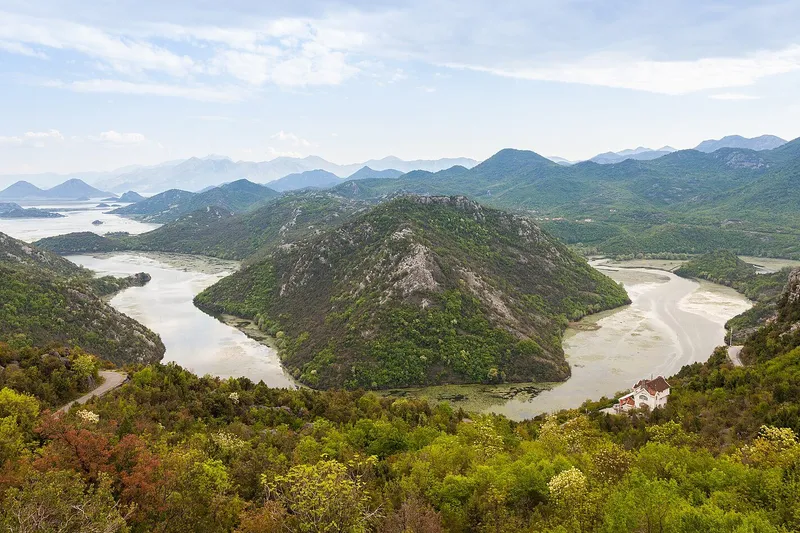
Photo: Diego Delso · CC BY-SA 3.0
National park since 1983 over 40,000 ha of the largest lake in the Balkans and its shore, a Ramsar wetland since 1995 with 281 bird species. Entrance €5 a day; boats from Vranjina, Virpazar, Rijeka Crnojevića and Plavnica.
Vranjina / Virpazar
Photo: Diego Delso · CC BY-SA 3.0
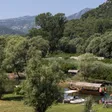
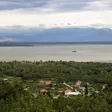
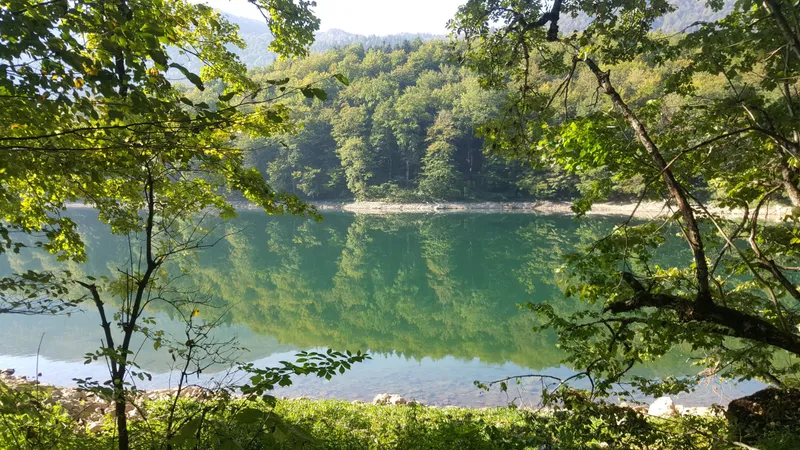
Skadar Lake National Park covers 40,000 ha of the Montenegrin side of Lake Skadar, the largest lake in the Balkans, with its reed beds, islands and the drowned valley of Rijeka Crnojevića. Declared on 27 November 1983, it has been a Ramsar wetland since 1995 and an Important Bird Area since 1989, and it holds Montenegro's main Dalmatian pelican colony. For a visitor the park means a €5 day ticket, two visitor centres (Vranjina and Virpazar), licensed boats from four piers, the park's own kayaks, nine marked trails and a set of rules for fishing, boats and camping. Vranjina, with the park administration, is 24.5 km from Podgorica, about 30 minutes by car.
 Skadar Lake National Park Guided Boat Tour with Wooden BoatRating 4.8 (148)from €22.15
 Virpazar Skadar Lake Boat Tour with Wildlife & NatureRating 5 (35)from €22
 Skadar Lake National Park: Guided Boat Tour to Kom MonasteryRating 4.7 (64)from €32.15
 Private Skadar Lake National Park Tour with Wooden Boat and WineRating 4.9 (15)from €67.86
Tours, ratings and prices: Viator.
All tours in Skadar Lake National ParkTwo thirds of the lake lie in Montenegro and one third in Albania; the park takes in the Montenegrin water and shore, which the 2014 law places in the municipalities of Podgorica, Cetinje and Bar, and the 2026 management plan, after the split of Podgorica's territory, in Bar, Tuzi, Zeta and Cetinje. It is an IUCN category II park run by the Public Enterprise for National Parks of Montenegro from Vranjina. Inside it are two ornithological reserves, Pančeva oka and Manastirska tapija, guarded from a ranger post at Podhum; the Ramsar site covers 20,000 ha of the park, the Important Bird Area all 40,000 ha, and the Emerald network candidate site (since 2005) 37,800 ha. The lake is not a UNESCO site. The water itself, which swells from about 370 km² in summer to 540 km² in winter, is 44 km long and reaches 44 m at its deepest surveyed point and about 60 m in the Raduš spring; its fish, its springs and its named bays are described on the Lake Skadar page.
The day ticket covers both visitor centres: the main one with a souvenir shop in the park administration building at Vranjina, and a second with an exhibition on the upper floor of the tourist office building in Virpazar, where the trail maps are available. Tickets are sold at both and online at ulaznice.nparkovi.me; an online ticket is valid for 30 days. Boat trips are sold by the operators, not with the ticket.
| Ticket | Price |
|---|---|
| Entrance, per person per day (both visitor centres included) | €5 |
| Children under 15 | free |
| Organised groups of 20 or more | 50% off |
| Annual ticket for all five national parks (sold at park points only; valid to 31 December) | €13.50 |
| Park kayak, single / double, per hour (€20 a day) | €3 / €5 |
| Guided visit to the Pančeva oka reserve, 4 h, up to 4 people / 5-12 people | €160 / €240 |
| Guide, 4 h / 8 h | €40 / €80 |
| Fishing permit, 1 day / 7 days / 1 year | €5 / €20 / €100 |
| Tent pitch, per day (serviced camp space €20, fire €5) | €3 |
| Parking, per hour: motorbike / car / off-road / van / bus | €0.50 / €1 / €2 / €3 / €5 |
Entry is free for everyone on 22 April, 21, 22 and 24 May, the second Sunday of June, 13 July and 31 July.
281 bird species have been recorded in the park, over 100 of them breeding. The Dalmatian pelican nests here in at least 50 pairs, its main breeding site in Montenegro; the pygmy cormorant colony of over 2,920 pairs is the largest in the country; whiskered terns breed in about 1,000 pairs; and more than 20,000 waterbirds winter on the lake. Bird-watching with the park's rangers is booked a day ahead and uses five stations, Manastirska tapija, Grmožur, Omerova gorica, Crni žar and Pančevo oko, and a watch tower at Stanaj; a guided visit to the Pančeva oka reserve with transport takes 4 hours and costs €160 for up to four people or €240 for five to twelve. April to June brings the widest range of species, winter the largest flocks. The park also holds about 48 fish species, six of them endemic to the basin, 49 mammal species with the otter as the only semi-aquatic one, and large beds of water chestnut (kasoronja) along the north shore, a legally protected plant.

Licensed operators run cruises from Vranjina, Virpazar, Rijeka Crnojevića and Plavnica, with a swimming stop as part of the tour; the boat tours hub lists them. The park rents its own kayaks at the Vranjina visitor centre, €3 an hour for a single, €5 for a double and €20 a day, and electric bikes at the same place; routes are on the Skadar Lake kayaking page. A private kayak on the lake pays the park €20 a year and a private recreational boat €100 to 200 a year by size; boats over 10 hp need the park's approval, anchoring is allowed only at designated places, and underwater activity needs approval. Three beaches have facilities: Pješačac, Pelinovo and Murići, on the Krajina shore below Rumija. Off Karuč bay lies the wreck of the steamship Skenderbeg, built in Trieste in 1916 and sunk in 1942, a dive site.
 SponsoredKayaking on Skadar Lakeon Viator

Nine marked walking trails are in the national register, with maps at the visitor centres. Lengths are the park's:

Five cycling routes and two mountain-bike routes (Dodoši to Žabljak Crnojevića; Virpazar to Orahovštica) complete the network. The hiking hub covers the wider region.
By car, without traffic: Podgorica to Vranjina 24.5 km (about 30 minutes) and to Virpazar 30.7 km (about 35 minutes); Bar to Virpazar 26.2 km (about 30 minutes); Budva to Virpazar 41.6 km (about 55 minutes); Ulcinj to Virpazar 50.1 km (about 65 minutes). For Rijeka Crnojevića the short way is from Cetinje, 16.4 km (about 25 minutes); from Podgorica it is 27.6 km (about 35 minutes) and from Budva 43.2 km (about 55 minutes); Cetinje to Virpazar is 37.9 km (about 55 minutes). Parking at park rates is €1 an hour for a car. The Bar-Belgrade railway has stations at Bar and Sutomore; the piers are reached by road.
April to June gives the most bird species, winter the largest flocks, and autumn and winter are the birding seasons; the lake is at its largest in winter and smallest in summer. Virpazar's festivals fall in September (grapes) and December (wine and bleak).
Cetinje municipality holds the Pavlova strana viewpoint, the villages of the upper lake and Lovćen National Park. Bar municipality stretches from the lake over Rumija to the Adriatic, with Stari Bar as its old town. The Bojana carries the lake's water to the Adriatic. The other parks are on the national parks hub.
€5 per person per day, free under 15, half price for groups of 20 or more. An annual ticket for all five parks is €13.50. Boat trips are sold by the operators.
Vranjina, Virpazar, Rijeka Crnojevića and Plavnica, all with licensed operators. The park's own kayaks are at Vranjina.
At Vranjina, in the park administration building, and in Virpazar, on the upper floor of the tourist office building. Both are included in the ticket and have the trail maps.
Yes: €5 a day, €20 a week or €100 a year (€50 for pensioners and students), from Vranjina or the ranger on duty, outside the closed seasons and away from the bird reserves.
No. Its international statuses are the Ramsar wetland (1995), the Important Bird Area (1989) and the Emerald network candidate site (2005).
Compare rental cars and pick-up points before you set off.
JPNPCG, Management Plan NP Skadarsko jezero 2026-2030 (PDF) · JPNPCG, Skadarsko jezero price list · JPNPCG, Skadarsko jezero active holidays (trails, boats, fishing) · JPNPCG, Skadarsko jezero fauna and flora · Law on National Parks (Sl. list CG 28/2014, 39/16) · Decision on fees for the use of national park goods, consolidated text · JPNPCG, online tickets and exemptions · JPNPCG, rules on filming, photography and drones (1 Jul 2026) · National Tourism Organisation, Skadar Lake National Park · Ramsar Sites Information Service, site 784 Skadarsko Jezero · MONSTAT, Statistical Yearbook 2025 (natural lakes) · TO Podgorica, how to get there (distance to the lake) · TO Bar, events and festivals (Virpazar) · TO Bar, transport (railway) · Rijeka Crnojevića heritage site, Danilo's bridge · Wikipedia, Rijeka Crnojevića (river) (secondary, length) · Nacionalni parkovi Crne Gore, annual ticket 2026 (prestopay) · Nacionalni parkovi Crne Gore, online ticket NP Skadarsko jezero (prestopay) · Naredba o zabrani lova ribe (Sl. list CG 75/2026, in force 11 June 2026): closed seasons, sizes, banned zones · OSRM routing (car, OpenStreetMap data, ODbL; times without traffic)
Google Analytics counts visits without cookies. With your consent it also sets cookies that show us how the site is used. Nothing is used for advertising. Privacy