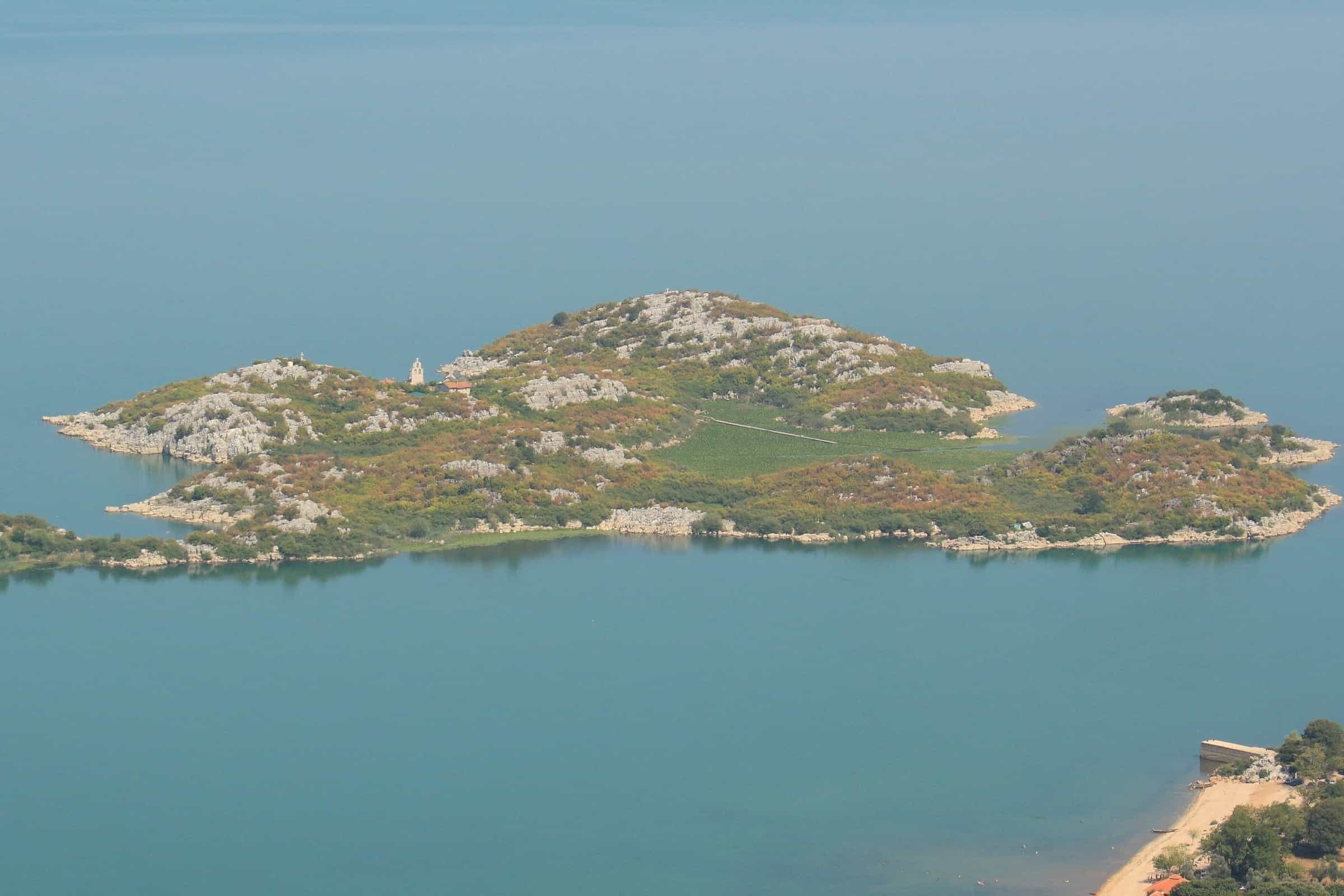
Beška Monastery
Island monastery on Skadar Lake with two medieval churches, St George of the late 14th century and Jelena Balšić's church of about 1439-1440, her grave and a scriptorium; a nunnery reached by boat
Orthodox monastery with two churches · Late 14th century and about 1439-1440 · Island of Beška
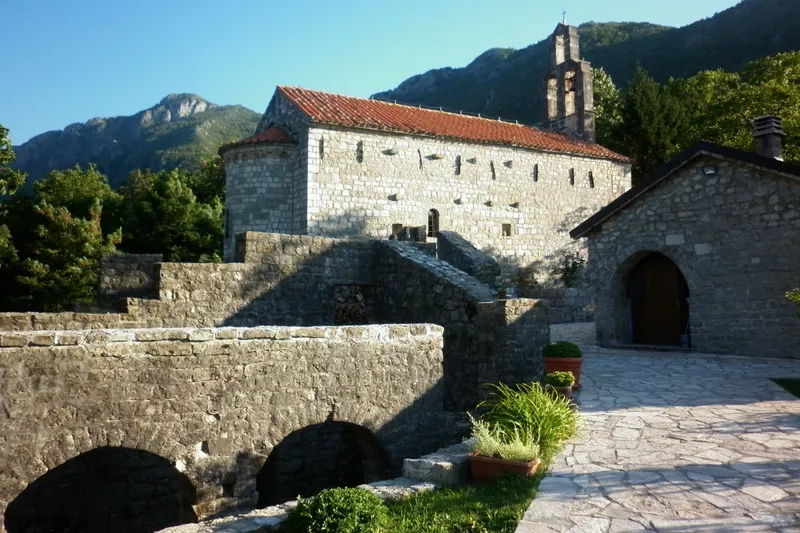
Photo: FrDr · CC BY-SA 4.0
Beška Monastery (Manastir Beška) is one of the largest monasteries on Skadar Lake, on the island of the same name off the south-western shore, in Bar municipality, midway between Starčevo and Moračnik. It has two medieval churches: St George, a foundation of Đurađ II Stracimirović Balšić from the late 14th century, and the small church of the Mother of God, built in about 1439-1440 by his widow Jelena Balšić, daughter of Prince Lazar, who is buried beside it. Nuns live here today. No road leads to it: the island is reached by boat and seen from the Murići viewpoint, 18.5 km from Virpazar by car. Whether visitors may land is not published.
- St George Late 14th century, built by Đurađ II Stracimirović Balšić
- Mother of God (Annunciation) About 1439-1440, built by Jelena Balšić; her grave by its south wall
- Books The Gorički zbornik was written for Jelena here in 1441/42
- Protected Since 1950
- Feast The Annunciation (Blagovijesti), 7 April
- Access By boat only, inside Skadar Lake National Park
The island
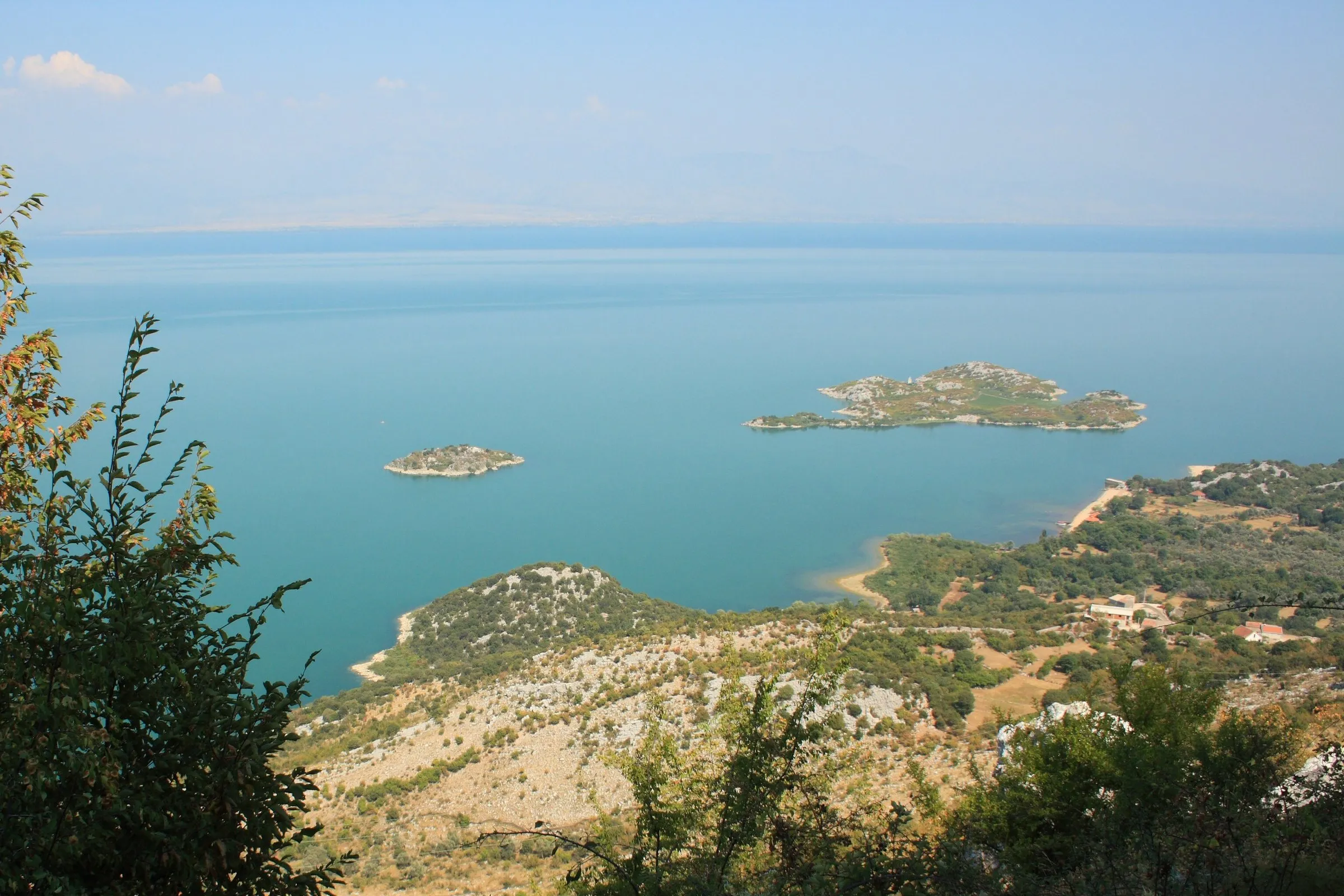
Beška lies at an equal distance from Starčevo to the north-west and Moračnik to the south-east, in the line of islets along the steep south-western shore. The monastery spreads over a wide flat on the north-east shore of the island: the residence under the rock, the church of St George, the service building above the landing, and the church of the Mother of God. The park counts Beška among the lake's most representative cultural property, with Starčevo, Moračnik, Kom and Obod.
History
Monastic life on the island is assumed to have begun in the 14th century, possibly with monks from Sinai. Đurađ II Stracimirović Balšić built the church of St George, probably in the last quarter of the 14th century and in any case before his death in 1403. His widow Jelena, daughter of Prince Lazar, built the small church of the Mother of God in about 1439-1440; the founder's inscription over the door names her as Lazar's daughter, and its year is read as 1438 or 1439. Her grave lies by the south wall of her church. A grave by the south wall of St George is thought to be the founder's.
Beška was a copying centre. The elder Nikon of Jerusalem, Jelena's spiritual father, wrote the Šestodnev (Hexaemeron) in its scriptorium in 1439/40, and in 1441/42 composed for her the book of spiritual guidance known as the Gorički zbornik (Gorica Miscellany). The monastery was long thought to have been abandoned early, but it appears in Ottoman registers of 1570-1571 and 1582, and in 1614 Marino Bolizza counted it among the active monasteries of the lake. Early in the 20th century King Nikola restored the Mother of God church for the health of Queen Milena and dedicated it then to the Deposition of the Robe.
Beška has been a protected cultural property since 1950. The Mother of God church was conserved in 1970; St George saw works and research in 1966, 1969/70 and 1986. Services were held again from 1997 and rebuilding began early in 2002: the new residence was consecrated on 7 April 2003, the Annunciation, and the restored church, now the church of the Annunciation, on 7 April 2006, when Jelena Balšić's relics were placed in a stone reliquary. New frescoes in St George were finished in 2015. Since 2006 the eparchy has awarded the Jelena Balšić literary prize every second year on the monastery's feast.
The two churches
St George has a triconch plan after the Morava school, built by a master of the coastal school, with a wide narthex under a ribbed cross vault and a three-part bell gable. The church of the Mother of God is a small single-nave building of slightly elongated Gothic form, with two side chapels (St Gregory Palamas and St Mary of Egypt) and an open porch on two massive stone columns. It stands on the foundations of a larger three-aisled basilica, probably of the 12th century judging from its Romanesque stone carving; the basilica's side aisles became the burial chapels. On the west facade three niches once held a Deesis, and Christ's monogram is carved in small medallions.
The monastery keeps the relics of Jelena Balšić and particles of several saints, and icons that include an 18th-century St Nicholas copied from a 13th-century Novgorod icon.
Good to know: Not everything is medieval. The residence dates from 2002-2003 and the frescoes in St George from 2015; the churches themselves are the 14th- and 15th-century buildings.
Life today
Beška is a women's monastery. The nuns paint icons, make herbal balms and drinks, and grow vegetables on the island.
Getting there and visiting
Beška is reached by boat. The monastery has a landing below the service building, but no published source says which boats sail there or whether visitors may go ashore, so agree any stop with the operator of your boat tour. From the shore, the Murići viewpoint on the Virpazar-Murići road looks over the islets with their monasteries: 18.5 km and about 20 minutes by car from Virpazar, 41.2 km and about 49 minutes from Bar (see the Skadar Lake viewpoints). A kayak trip is the other way to get close.
Tip: Beška is a working nunnery with no published hours or dress code. Ask the boat operator or the park visitor centre whether the churches can be visited on the day you go; the Annunciation, 7 April, is its feast.
Nearby
- Starčevo Monastery, the next island to the north-west, with the grave of the printer Božidar Vuković.
- Grmožur fortress, the island fort off Godinje.
- Kom Monastery, the Crnojević monastery on the north-west shore.
- Virpazar, the boat base, with Besac fortress.
- Skadar Lake viewpoints along the Virpazar-Murići road.
- Other monasteries on the churches and monasteries hub.
Questions
Who built Beška Monastery?
Beška Monastery has two founders: Đurađ II Stracimirović Balšić built St George in the late 14th century, and his widow Jelena Balšić built the church of the Mother of God in about 1439-1440.
Where is Jelena Balšić buried?
Jelena Balšić is buried at Beška Monastery on Skadar Lake, by the south wall of the church she built; her relics were placed in a stone reliquary in 2006.
How do you get to Beška Monastery?
Beška Monastery is on an island reached only by boat; from the shore it is seen from the Murići viewpoint, 18.5 km by car from Virpazar.
Timeline
Late 14th century
St George
Đurađ II Stracimirović Balšić builds the church of St George, before his death in 1403.
1439-1442
Jelena's church and books
Jelena Balšić, daughter of Prince Lazar, builds the small church of the Mother of God; Nikon of Jerusalem writes the Šestodnev (1439/40) and the Gorički zbornik (1441/42) here.
16th-17th century
Under the Ottomans
Still active in Ottoman registers of 1570-1571 and 1582 and in Marino Bolizza's count of 1614.
Early 20th century
King Nikola's restoration
King Nikola restores the Mother of God church for the health of Queen Milena.
1950-1986
Protection
Protected in 1950; conservation and research in 1966, 1969/70, 1970 and 1986.
1997-2015
Revival
Services from 1997; new residence consecrated on 7 April 2003 and the restored church on 7 April 2006; new frescoes in St George finished in 2015.
More churches & monasteries
Nearest by road first


Sources
Tourist Organisation Bar, Beška Monastery (island, 14th-century St George, Mother of God 1440, Gorički zbornik, Nikon) · Mitropolija crnogorsko-primorska, Manastir Beška na Skadarskom jezeru, 7 April 2021 (position between Starčevo and Moračnik, layout, Sinai monks, Đurađ II, Jelena 1439-1440, inscription, graves, Nikon's books, registers 1570-1582, Bolizza 1614, King Nikola, 1997-2006, frescoes 2015, prize, churches, relics, icons, nuns' work) · Mitropolija crnogorsko-primorska, women's monasteries (Beška entry) · JPNPCG, Management Plan NP Skadarsko jezero 2026-2030, section 2.3.1 and Table 6 (protected 1950, Bar, in the park, representative monasteries) · CDT, Devastacija kulturne baštine u Crnoj Gori, I: Skadarsko jezero, 2022 (before 1403, inscription 1439, conservation 1966, 1969/70, 1970 and 1986, ribbed vault, west facade niches and monograms) · OpenStreetMap ways 475992267 and 475992268 (the two churches) and islet relation 14105768, ODbL · OSRM routing (OpenStreetMap data, ODbL)