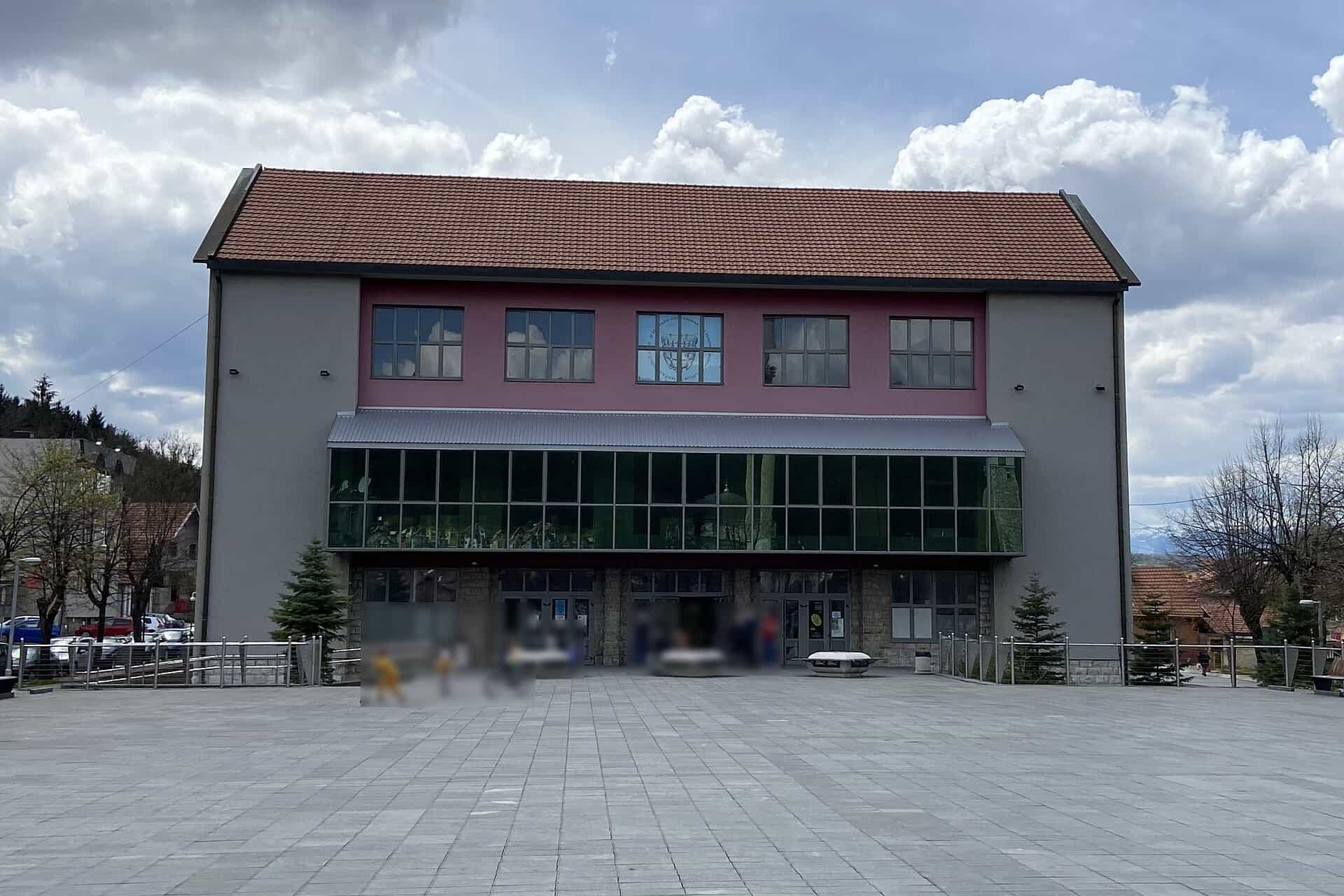
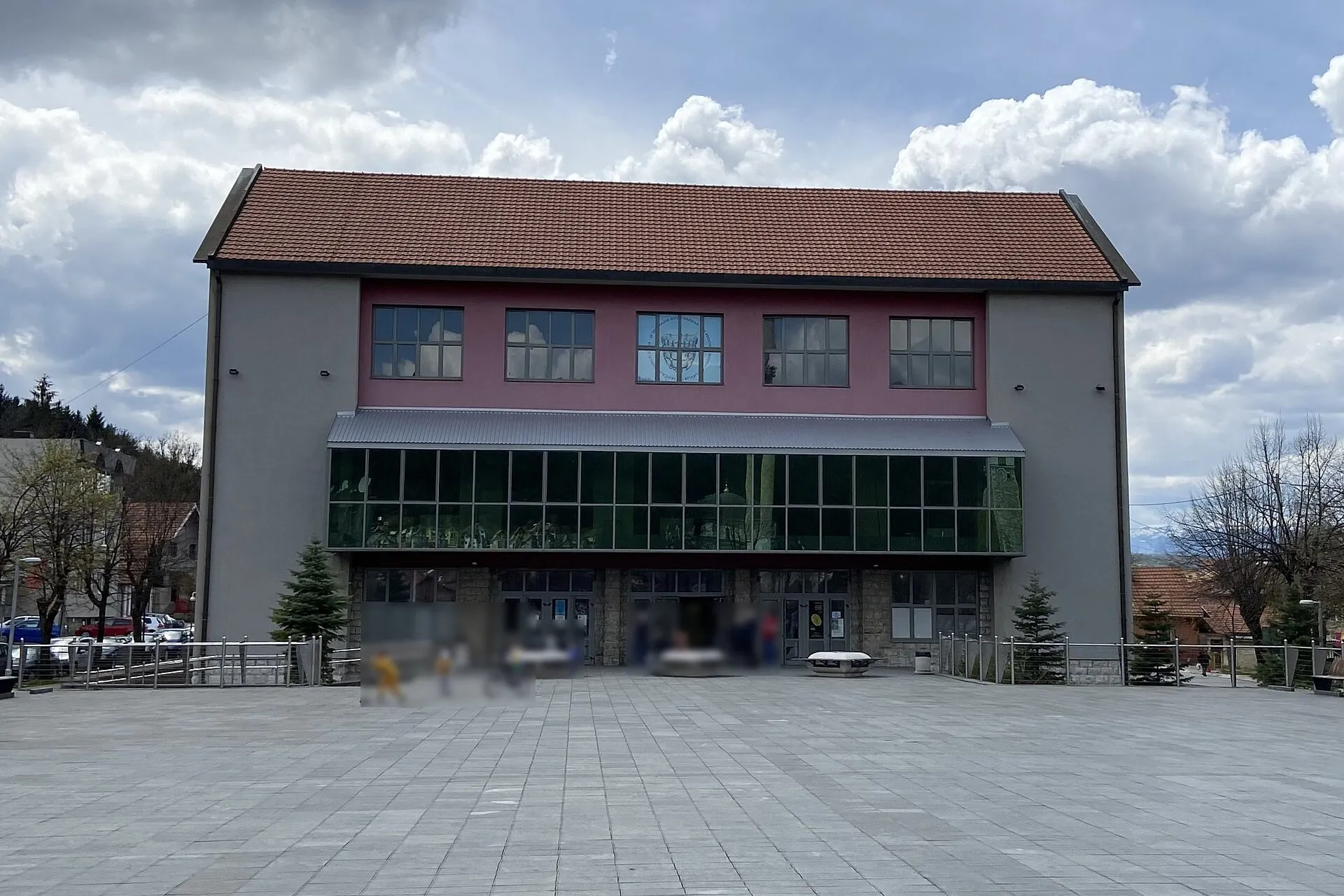
Pljevlja Local Museum
The town museum of Pljevlja at Trg 13. jul, founded in 1952, with close to 5,000 objects and an award-winning archaeology exhibition from the first human traces to the Roman period.
Archaeology · Pljevlja
Photo: Desemeus · CC BY-SA 4.0
The Pljevlja Local Museum (Zavičajni muzej Pljevlja) is the town museum of Pljevlja, at Trg 13. jul in the centre, 0.2 km and about 3 minutes on foot from the town centre. Founded in 1952, it holds close to 5,000 objects, and its permanent archaeology exhibition, named best exhibition in Montenegro for 2021, follows life around Pljevlja from the first human traces to the end of the Roman period. Its most famous object, the late-Roman glass cage cup (diatreta) from Komini, is shown as a hologram; the original is kept out of sight for security. Tickets cost EUR 1-3 per person, EUR 3-5 for a family and EUR 10 for an organised school group; visitor hours are not published, so arrange a visit in advance.
- What Town museum of five departments: archaeology, ethnology, history, cultural history and documentation
- Founded 1952; close to 5,000 objects
- Highlight "Putevima Homo sapiensa", the archaeology exhibition of 2021, with the Komini diatreta as a hologram
- Tickets Adults EUR 2 (residents of Montenegro) or EUR 3 (foreign visitors); children over 10 EUR 1; family EUR 3 or EUR 5; organised school groups EUR 10
- Hours Not published; the museum takes bookings on weekdays
- Where Trg 13. jul, 0.2 km and 3 minutes on foot from the centre of Pljevlja
Hours and tickets
The museum publishes no visitor hours; it answers bookings and questions on weekdays, so arrange your visit in advance rather than counting on an open door. Tickets: children over 10 EUR 1; adults EUR 2 for residents of Montenegro and EUR 3 for foreign visitors; a family ticket EUR 3 for residents and EUR 5 for foreign visitors; organised school groups EUR 10. Entry is free for vulnerable groups, for organised school visits from Pljevlja municipality and at exhibition openings. The exhibition texts are also in English.
Tip: Book ahead by phone on a weekday.
On the trail of Homo sapiens
The permanent exhibition "Putevima Homo sapiensa" (On the trail of Homo sapiens) opened on 19 November 2021 and follows life around Pljevlja in five stories, from the first human traces, tens of thousands of years ago, to the end of the Roman period and the start of the Middle Ages. The Museum Society of Montenegro named it the best exhibition in Montenegro for 2021; the award was handed over in Kotor on 28 February 2022.
The prehistory room shows fossils from the Trlica cave near Pljevlja, a sediment cave at 925 m about 1.8 million years old: bones of the southern mammoth, a sabre-toothed cat's fang, and teeth of cave bear, hyena, Etruscan wolf, rhino, bison and giant deer. The Palaeolithic story has stone tools from three cave sites in the upper canyon of the Ćehotina: Pećina pod Gospića vrhom, Mališina pećina and Medena stijena. The Neolithic brings pottery, stone axes, loom weights and an early figurine of a fertility goddess from Doganje; the metal ages, weapons and tools and grave goods from burial mounds at Doganje, Otilovići and Gotovuša. The Roman story, 1st to 4th century, draws on more than 1,200 finds from almost 700 graves at the Komini necropolises: jewellery, fibulae, coins, glass and weapons.
The displays use lit illustrations, screens and tablets, 360-degree views of the sites, a maze quiz and a virtual-walk video game, which makes the museum an easy stop with children.
The Komini diatreta
The diatreta is a late-Roman cage cup of colourless glass with a cobalt-blue net in three rows of rings, 14.9 cm high with a rim of 13.3 cm, made in the 4th century AD, most likely in a Cologne workshop. Its inscription VIVAS PANELLENI BONA, a wish for long life to one Panellenius, names its owner. It was found in 1975 in tomb X of necropolis II at Komini: the grave had been robbed long before, but the glass by the dead man's shoulder was missed. Only five whole diatretae are known in the world, besides about twenty fragmentary ones, and it counts among Montenegro's most valuable movable cultural property.
Good to know: For security the original diatreta is not on display. A life-size hologram of it is shown in a room of its own.
Komini, the Roman town
Komini is a village right by Pljevlja on the site of an unexcavated Roman town lived in from the 1st to the 4th century; its full name is not known, so it is called Municipium S…. Excavations in 1964-1967 and 1970-1975 by the Belgrade Faculty of Philosophy, the Montenegrin heritage institute and the museum opened two necropolises, with 390 cremation graves in necropolis I and 295 graves in necropolis II. Work on the town itself began in 2007 and has uncovered walls, a horseshoe-shaped kiln and a building of 18.75 by 14.75 m with altars, one apparently to Silvanus.
The museum's work
The museum is of the "complex" type, with five departments: archaeology, ethnology, history, a cultural-history department of five collections (art, coins, archive, the Pejatović family collection and immovable heritage) and a documentation and education department. Its field research covers almost every period from the Palaeolithic to modern history. Since 1999 it has led the rebuilding of Dovolja Monastery on the Tara, a protected medieval monument in ruins since 1896, and since the same year it has held a yearly conference on the history of the Pljevlja area, published in its journal Glasnik Zavičajnog muzeja. It published a facsimile of Tipar, the hand-written satirical paper made in Belgrade in 1893-1895 by Pljevlja schoolboys, the brothers Tanasije and Risto Pejatović and Stevan Samardžić, whose originals it keeps, and Sreten Petković's monograph on the Holy Trinity Monastery.
Getting there
The museum is at Trg 13. jul in the centre of Pljevlja, 0.2 km and about 3 minutes on foot from the town centre. The Husein-pasha Mosque is 0.2 km away on foot, about 2 minutes; Milet bašta and Vodice park 0.6 km, about 7 minutes; the Stražica memorial 0.7 km, about 9 minutes; and the Holy Trinity Monastery 1.9 km, about 23 minutes.
Nearby
- Husein-pasha Mosque, 0.2 km on foot, about 2 minutes.
- Vodice park and Milet bašta, 0.6 km on foot, about 7 minutes.
- Stražica memorial, 0.7 km on foot, about 9 minutes.
- Holy Trinity Monastery, 1.9 km on foot, about 23 minutes.
- The Ćehotina, with the Palaeolithic caves of its upper canyon, and the Ćehotina meanders viewpoint.
- The Kolašin Museum, another local museum of the north; more on the museums page.
Questions
When is the Pljevlja Local Museum open?
The Pljevlja Local Museum publishes no visitor hours; it takes bookings on weekdays, so arrange a visit in advance.
How much is a ticket for the Pljevlja Local Museum?
The Pljevlja Local Museum charges EUR 2 for adults resident in Montenegro and EUR 3 for foreign adults, EUR 1 for children over 10, and EUR 3 or EUR 5 for a family ticket.
Can you see the Komini diatreta in the Pljevlja Local Museum?
The Pljevlja Local Museum shows the Komini diatreta as a life-size hologram in its own room; the original is kept out of sight for security.
Where is the Pljevlja Local Museum?
The Pljevlja Local Museum is at Trg 13. jul in the centre of Pljevlja, 0.2 km and about 3 minutes on foot from the town centre.

More museums
Nearest by road first

Sources
Zavičajni muzej Pljevlja, O nama (founded 1952; complex type, close to 5,000 objects; five departments; field research from the Palaeolithic; Dovolja rebuilding since 1999; yearly conference since 1999 and Glasnik; Tipar facsimile; Petković monograph on Holy Trinity) · Zavičajni muzej Pljevlja, Kontakt (address Trg 13. jul bb; weekday hours given for the phone line only) · Zavičajni muzej Pljevlja, Rezervacije (ticket prices: children over 10 EUR 1; adults EUR 2 residents, EUR 3 foreign; family EUR 3 residents, EUR 5 foreign; school groups EUR 10) · Zavičajni muzej Pljevlja, Cjenovnik usluga (free entry for vulnerable groups, organised school visits from Pljevlja municipality and exhibition openings) · Zavičajni muzej Pljevlja, Putevima Homo sapiensa (opened 19 November 2021; five stories; Trlica, Palaeolithic caves, Neolithic, metal ages, Komini finds; interactive displays; best exhibition 2021; diatreta hologram) · Zavičajni muzej Pljevlja, Nagrada za izložbu godine (award handed over in Kotor, 28 February 2022) · Zavičajni muzej Pljevlja, Dijatreta (cage cup: colourless glass, cobalt-blue net, 14.9 cm, rim 13.3 cm, 4th century, Cologne workshop; inscription; found 1975 in tomb X of necropolis II) · Zavičajni muzej Pljevlja, Komini, Municipium S… (Roman town 1st-4th century; excavations 1964-1967 and 1970-1975; 390 and 295 graves; town digs from 2007; kiln, building with altars) · Tourist Organisation Pljevlja, Zavičajni muzej Pljevlja (founded 1952; conference and journal) · OpenStreetMap node 14344756959, ODbL · OSRM routing (OpenStreetMap data, ODbL)