Montenegro in January: weather, snow and what's on
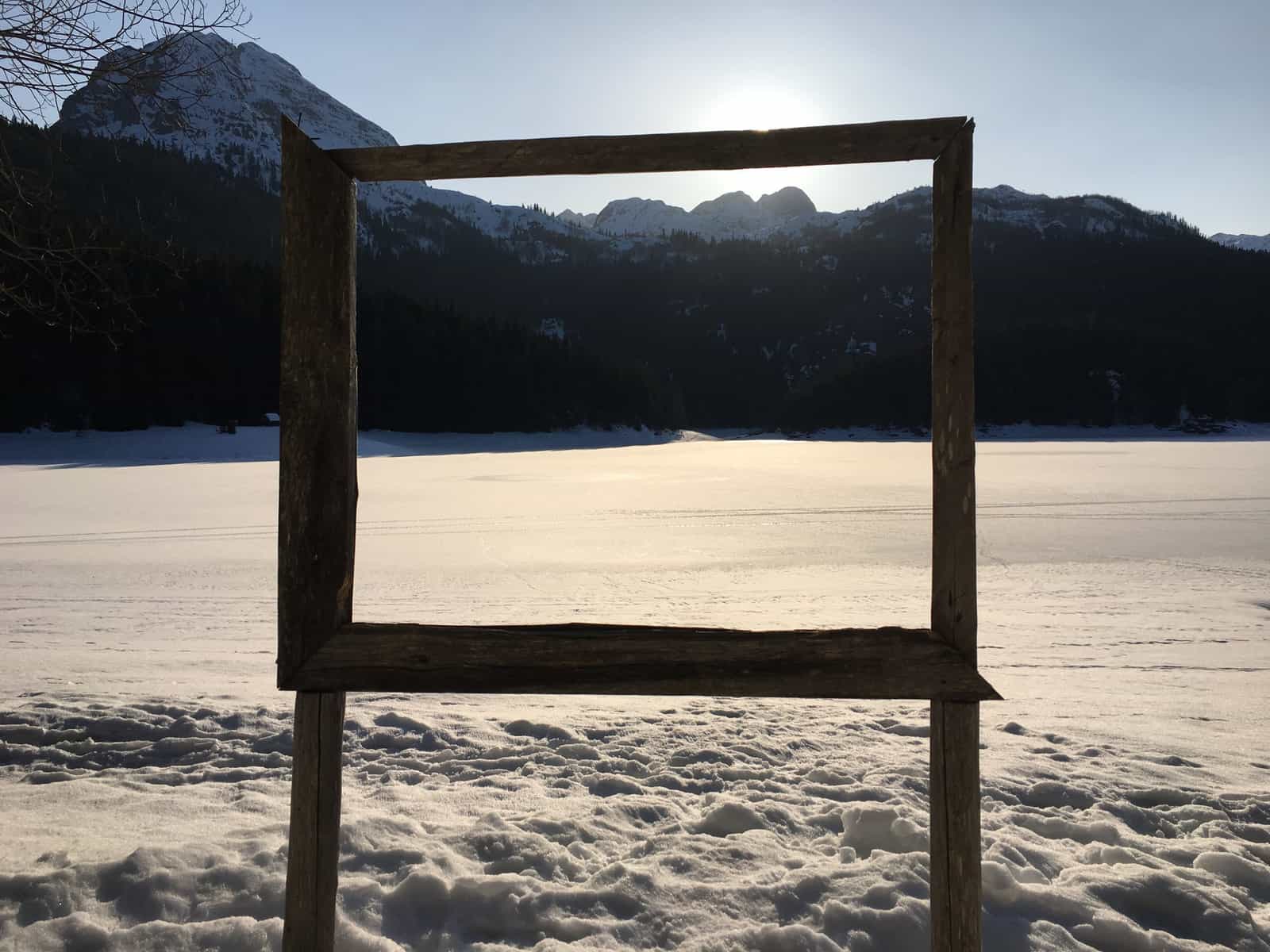
Photo: Jackmaldow · CC BY-SA 4.0

January is the coldest month at all five ZHMS stations and the quietest for hotels: 34,770 arrivals in collective accommodation in 2025, fewer than in any other month. On the coast, Bar and Herceg Novi still reach about 12 °C by day in the 1961-1990 normals; Žabljak averages a high of 0.3 °C and frost on 29 days. The New Year programmes on the town squares run into the first half of the month, and in 2025/26 skiing began on 10 January at Kolašin 1600 and on 12 January at Savin kuk.
Weather in January
The table gives the ZHMS climate normals for 1961-1990, the only normals the institute publishes. There is no ZHMS station in Kotor or Budva; Herceg Novi and Bar are the nearest coastal stations.
| Station (elevation) | Average high | Average low | Precipitation | Days with precipitation | Sunshine |
|---|---|---|---|---|---|
| Podgorica (49 m) | 9.5 °C | 1.4 °C | 191.6 mm | 12 | 122.7 h |
| Bar (6 m) | 12.3 °C | 4.3 °C | 155.6 mm | 13 | 120.9 h |
| Herceg Novi (10 m) | 12.2 °C | 4.8 °C | 231.3 mm | 14 | 110.5 h |
| Kolašin (944 m) | 2.6 °C | -6.1 °C | 234.7 mm | 16 | 78.8 h |
| Žabljak (1,450 m) | 0.3 °C | -8.8 °C | 118.4 mm | 16 | 91.1 h |
Read the coast as mild and wet: 13 to 14 days of rain or snow, frost on only 2 to 3 days. Podgorica has frost on 12 days. The north is in full winter. Kolašin has a monthly mean of -2.1 °C and frost on 26 days, Žabljak a mean of -4.5 °C, and the snow on the ground averages 17 cm in Kolašin and 49 cm in Žabljak, with recorded maximums of 145 and 209 cm. These are town stations, not ski slopes; current depths are on snow today.
Today's forecast: Podgorica, Bar, Herceg Novi, Kolašin, Žabljak, or the weather page for the whole country.
What's on in January
- New Year programmes: The square programmes that open in December finish in January. In 2025/26 Bar and Herceg Novi closed on 2 January, Budva on 4 January, Cetinje and Ulcinj's Sweet December on 7 January, and Tivat on 13 January. Podgorica's Pazar, postponed by bad weather, resumed on 8 January with concerts scheduled up to 13 January. For 2026/27: the Nikšić bazaar to 15 January 2027, ice skating at Portonovi to 24 January 2027 and the Portonovi New Year's Run on 2 January 2027. Programmes and venues are on New Year in Montenegro.
- Kotor Winter Fest, Kotor: The winter programme and the New Year bazaar on the town waterfront run to the end of January.
- St Sava's Day (Savindan), Kotor, 27 January: Orthodox and Catholic residents gather in front of St Nicholas' church for hymns, the town band and a performance by the Boka Navy, according to the Kotor tourist organisation. St Tryphon's feast follows on 3 February.
- Bar Chronicle winter scene (Zimska scena Barskog ljetopisa), Bar: The winter programme of the Bar Chronicle runs from January to April, according to the Bar tourist organisation.


Each winter's programmes are announced by the town tourist organisations in November and December; the New Year guide collects them, and Kotor's winter programme is published by the Kotor tourist organisation.

Seasons: what opens and closes
January has been the main ski month of the last two winters, but the start depends on snow, not on a date. In 2025/26 Kolašin 1600 opened on 10 January. Savin kuk near Žabljak had started its lifts on 19 December 2025; after a fatal accident on the Savin kuk 2 chairlift on 20 December, the chairlifts were taken out of service for inspection, the season ran on the surface lifts from 12 January, and the Savin kuk 1 chairlift reopened on 31 January 2026. The winter before was short: Kolašin 1600 opened on 21 December 2024, skiers were happy with the conditions from about 27 December to 15 January, and the centre had counted only 15 ski days by 9 February. When rain closed its slopes in February 2025, the private Kolašin 1450 was still open with the help of snow cannons, according to Standard; Kolašin 1600 had no snowmaking. The resorts announce each winter's opening once the snow is there; the resort pages and snow today show the current state.
- Snowshoeing: the national tourist organisation gives December to March as the season for snowshoeing and ski touring on Bjelasica and Sinjajevina.
- Closed: the Njegoš Mausoleum on Lovćen, from 16 November to mid-April (the museum's pages give 10 and 14 April as the last closed day).
- Ferry: the Kamenari-Lepetane ferry runs on its winter timetable (mid-October to early May): every 20 minutes from 06:00 to 24:00 and hourly through the night.
- Winter tyres: January falls inside the traffic law's winter period (15 November to 1 April), when a car driven in winter conditions must have winter tyres on all wheels. More on driving.
Public holidays
New Year's Day, 1 January, is kept for two days: 1 and 2 January are non-working (if 1 January falls on a Sunday, the next two days are off). The trade law bans shop trading on public holidays, so most shops close; pharmacies, bakeries, petrol stations and markets are among the exceptions. Religious holidays, Orthodox Christmas included, are paid leave for believers rather than general days off. All dates are on the public holidays page.
Where to go
- Kolašin and Žabljak for skiing: January has been the main ski month in the last two winters, and Žabljak averages 49 cm of snow in town. Kolašin 1600 and Savin kuk need natural snow; Kolašin 1450 has snow cannons.
- Kotor for the Winter Fest bazaar on the waterfront, which runs to the end of January, and for Savindan on 27 January in front of St Nicholas' church.
- Tivat, Podgorica, Nikšić and Portonovi for the last days of the New Year programmes: in 2025/26 Tivat's ran to 13 January and Podgorica's Pazar to 13 January; for 2026/27 the Nikšić bazaar was announced to 15 January and the Portonovi ice rink to 24 January.
- Bar and Herceg Novi for mild days out of season: about 12 °C by day and frost on only 2 to 3 days, with the Bar Chronicle winter scene starting its January to April run. The Njegoš Mausoleum on Lovćen is closed, so leave Lovćen for spring.
What to pack
Two climates in one bag. For the coast and Podgorica: a waterproof jacket (13 to 14 wet days a month, 191 mm in Podgorica and 231 mm in Herceg Novi), a warm layer for evenings at 1 to 5 °C, and shoes for wet stone streets. For the north: full winter clothing for average lows of -6.1 °C in Kolašin and -8.8 °C in Žabljak, frost on 26 to 29 days, and snow on the ground. Drivers need winter tyres on all wheels in winter conditions (the law's winter period runs to 1 April); more on driving. Shops are closed on 1 and 2 January, so buy food and fuel for those days ahead.
A sample week in January
- Days 1-2, a New Year town: arrive for the last concerts of a town programme (Tivat and Podgorica ran to 13 January in 2025/26; Nikšić to 15 January in 2026/27). Remember that 1 and 2 January are non-working days.
- Day 3, Kotor: the Winter Fest bazaar on the waterfront and the Old Town; the Kamenari-Lepetane ferry runs every 20 minutes by day on its winter timetable.
- Days 4-6, Kolašin or Žabljak: skiing if the season has opened (10 and 12 January in 2025/26); if the snow has not come, the national tourist organisation lists snowshoeing and ski touring on Bjelasica and Sinjajevina from December to March. Check snow today before driving up.
- Day 7, Podgorica: the warmest inland station by day (9.5 °C) for the drive back or the flight home.
Dates shift every year; the New Year guide and the resort pages carry the current ones.
Common questions
Is Montenegro warm in January?
Mild on the coast, not in the mountains. In the ZHMS 1961-1990 normals Bar and Herceg Novi average highs of about 12 °C and lows of 4 to 5 °C, with 13 to 14 days of precipitation. Podgorica averages 9.5 °C by day. Žabljak's average high is 0.3 °C, with frost on 29 days.
Can you ski in Montenegro in January?
In the last two winters, yes. In 2025/26 Kolašin 1600 opened on 10 January and Savin kuk on 12 January; in 2024/25 Kolašin 1600 had opened on 21 December, with its best conditions from about 27 December to 15 January. Both Kolašin 1600 and Savin kuk depend on natural snow; the resorts announce each winter's opening once the snow is there.
Related
- Practical
- WeatherKamenari-Lepetane ferry
- Ski resorts
- Kolašin 1600Kolašin 1450Savin kuk
- Monuments
- Njegoš Mausoleum
Sources
- Zavod za hidrometeorologiju i seizmologiju (ZHMS), Klimatske normale 1961-1990
- ZHMS, snow cover: average and maximum snow depth by month (Žabljak since 1958, Kolašin since 1949)
- MONSTAT, Turizam - kolektivni smještaj, januar 2025
- Kurir, Novogodišnji program u Budvi za doček 2026 (20.11.2025; 29 December-4 January) (press, secondary)
- TO Herceg Novi, Doček 2026. godine u Herceg Novom: tri dana (17.12.2025)
- Portal Analitika, Crna Gora spremna za doček 2026: gdje ko nastupa (28.12.2025; Tivat, Cetinje, Bar programmes) (press, secondary)
- Primorske novine, Večeras u Ulcinju Assa Voce i Adi Sose na manifestaciji Sweet December (press, secondary)
- TO Podgorica, Program Podgoričkog pazara se nastavlja (concerts 8, 9, 11, 12 and 13 January)
- RTNK, Opština Nikšić objavila poziv za učešće u programu prazničnog bazara (15.10.2026) (press, secondary)
- Portonovi, Annual calendar (operator)
- Opština Kotor, Program manifestacija za 2025. godinu (PDF; Kotor Winter Fest 1 December-1 February)
- Boka News, Kotor Winter Fest od 29. novembra (26.11.2025; to 31 January) (press, secondary)
- Kotor Tourist Organisation, events (St Sava's Day and the St Tryphon festivities)
- Primorske novine, Kotor 1217. put proslavio svog zaštitnika sv. Tripuna (press, secondary)
- TO Bar, Events and festivals
- RTNK (MINA Business), Vještačko osnježavanje ključno za crnogorska skijališta (15.03.2026; Kolašin 1600 opened 10 January) (press, secondary)
- Standard, Odbor o nesreći na Savinom kuku (28.01.2026; lifts started 19 December, accident 20 December) (press, secondary)
- Portal Analitika, Savin kuk: žičara pod provjerom (18.01.2026) (press, secondary)
- RTCG, Žičara Savin kuk 1 otvorena nakon tehničkog pregleda (31.01.2026)
- Borba, Skijaška sezona na Žabljaku nastavljena i u aprilu (05.04.2026; season from 12 January) (press, secondary)
- Standard, Dok region ulaze u osnježavanje, Crna Gora gleda u nebo (09.02.2025; 2024/25 season) (press, secondary)
- Montenegro.travel (NTO), Hiking and trekking (snowshoeing and ski touring December-March)
- National Museum of Montenegro, Visit: Njegoš Mausoleum (closed 16 November-10 April)
- Narodni muzej Crne Gore, Radno vrijeme (winter 16 November-14 April)
- Trajekt Kamenari-Lepetane, timetable (winter 12.10.2026-02.05.2027)
- Zakon o bezbjednosti saobraćaja na putevima, Art. 132 (winter period 15 Nov to 1 Apr; Paragraf.me consolidated text, current to 31.3.2021)
- Zakon o državnim i drugim praznicima, consolidated (027/07, 036/13, 145/21), data.gov.me
- Zakon o izmjenama i dopuni Zakona o unutrašnjoj trgovini, Sl. list CG 21/2026 (19.02.2026), Art. 35b
- Unija poslodavaca CG, Slobodni dani za vrijeme praznika (29.04.2024), citing Zakon o svetkovanju vjerskih praznika