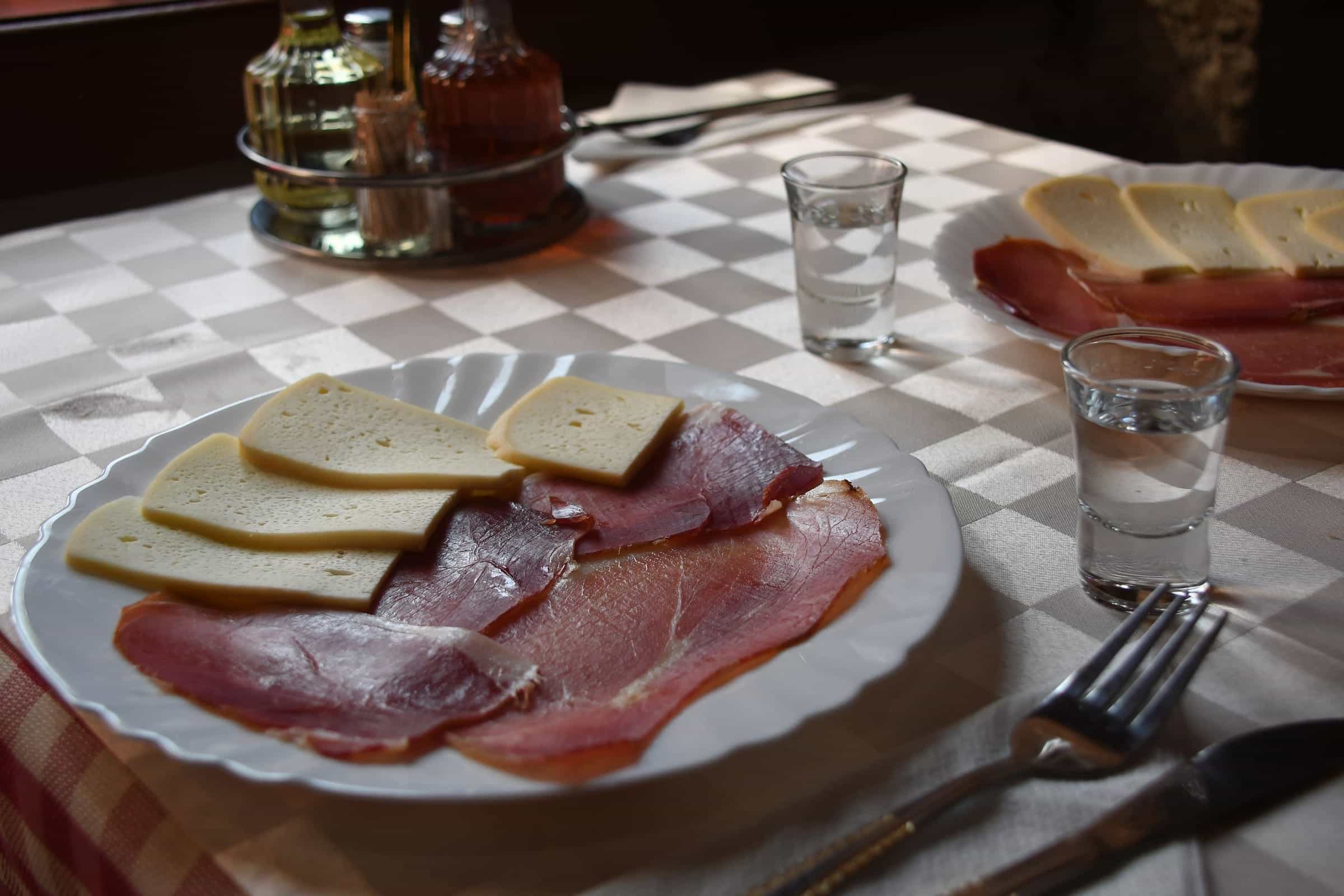
Local food and produce
Dishes, protected cheeses and pršut, markets and food festivals across Montenegro
24 dishes · 22 places to eat · 8 protected names · 8 markets
Photo: Herbert Frank · CC BY 2.0

Montenegro cooks in three kitchens. On the coast it is fish, mussels from the Bay of Kotor, olive oil and bevanda, wine cut with water. In Old Montenegro around Cetinje it is smoked pršut from Njeguši, sheep's cheese, raštan and Crmnica wine, with carp and dried bleak from Skadar Lake. In the north it is kajmak and skorup, layered cheese from Kolašin, lamb cooked in milk or under the sač, and kačamak, potatoes beaten with flour into a heavy paste.
What to eat
Dish names are written the way a menu writes them, so you can order from the list. Dishes grouped under a protected name (the pršuts, the three cheeses, stelja) link to the label section further down the page.
Coastal Region
7 dishes

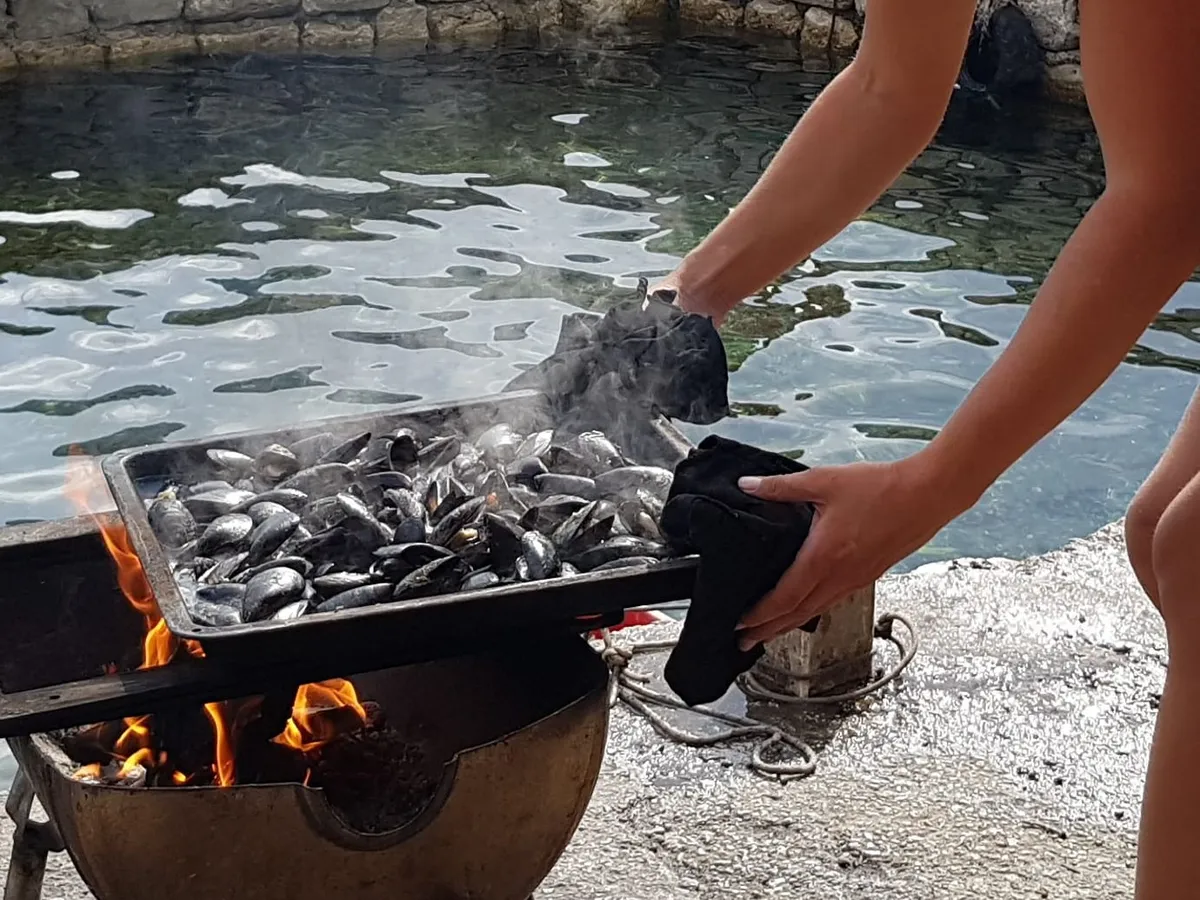
Dagnje
Bay of Kotor mussels, wild and farmed
Try it in Kotor
Photo: Etan J. Tal · CC BY-SA 4.0

More to try
Brodet · Fish stew with polenta; in Boka, of one small oily fish
Try it in Kotor
Pašticada s makarulima · Braised larded beef with hand-rolled Paštrovići pasta
Try it in Budva
Crni rižot · Risotto made black with cuttlefish ink
Peraška torta · Almond cake with a lattice top; Perast adds pine nuts
Try it in Kotor
Maslinovo ulje (žutica) · From žutica, the main native olive on the coast
Try it in Bar · Ulcinj
Tarhana · Sun-dried dough of flour, yeast and yoghurt, fried in olive oil
Try it in Ulcinj
Central Region
7 dishes

More to try
Njeguški pršut · Dry-cured, beech-smoked pork leg from Njeguši
Try it in Cetinje · Protected name
Njeguški sir · Semi-hard sheep's-milk cheese, salted with sea salt
Try it in Cetinje
Priganice · Fried dough balls with honey, jam, cheese or kajmak
Krap sa Skadarskog jezera · Lake carp, smoked, or baked with prunes, apples and quinces
Try it in Bar · Cetinje
Ukljeva · Small Skadar Lake fish, salted and dried over a low fire
Try it in Bar · Cetinje
Crnogorski pršut · Dry-cured ham made above 500 m, sold after 12 months at the earliest
Northern Region
10 dishes
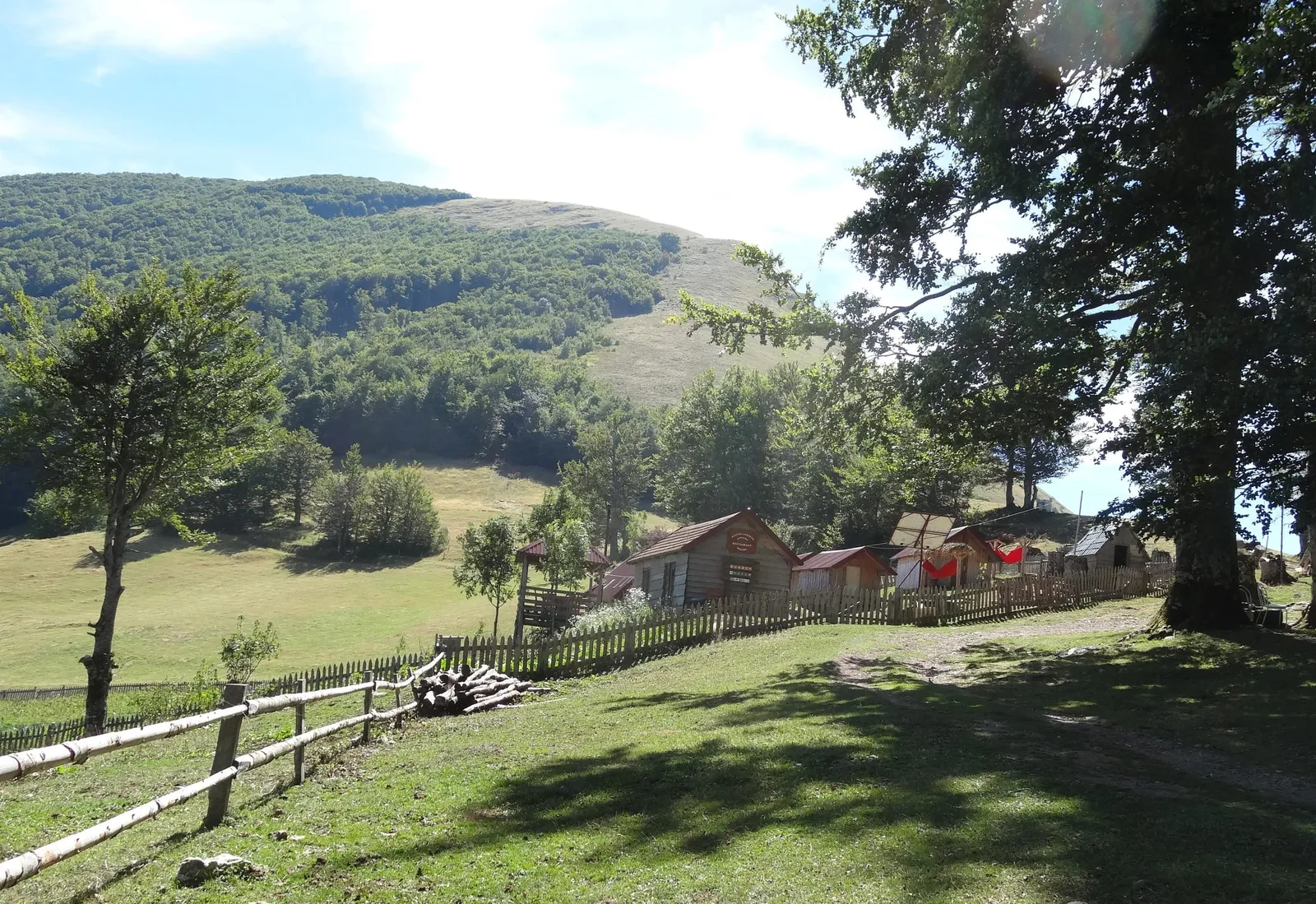

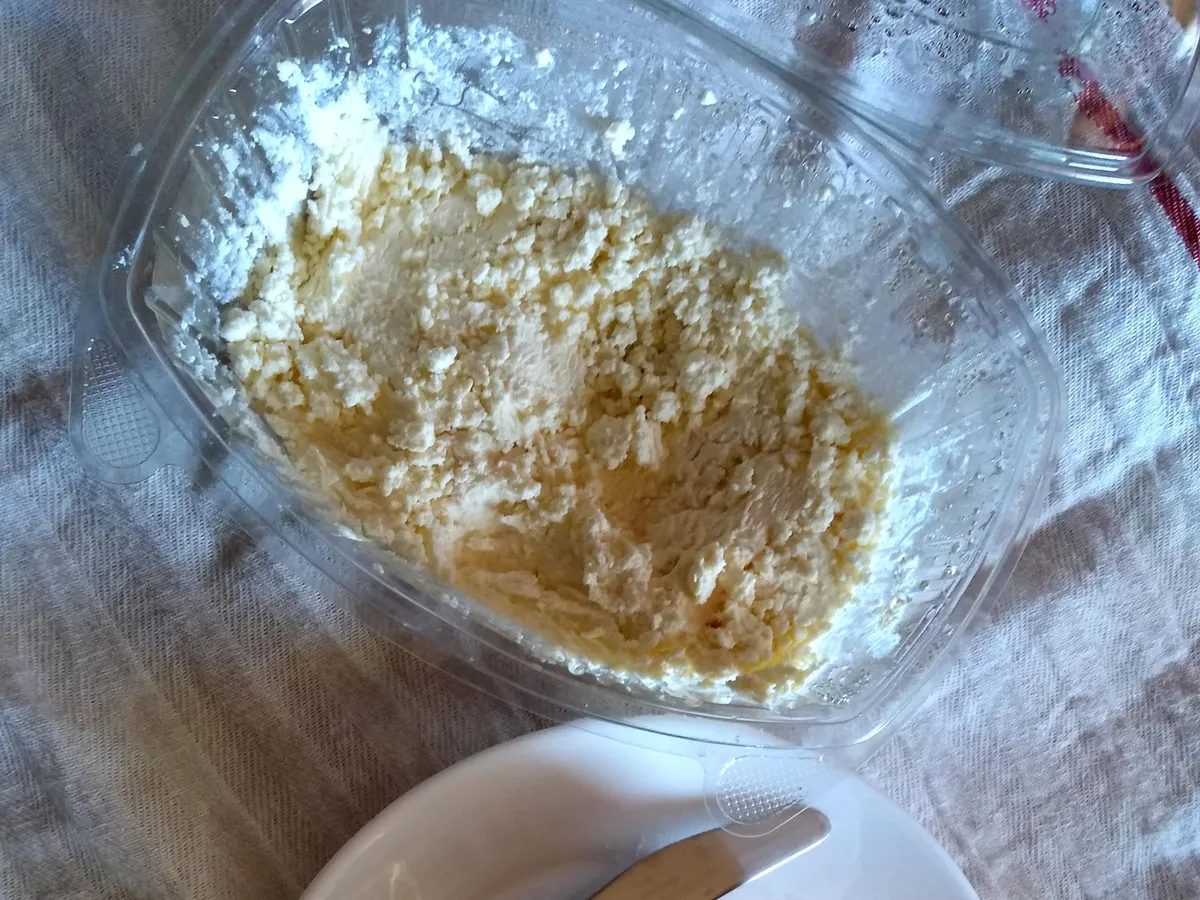
Kajmak i skorup
Cream from boiled milk; skorup is salted and matured
Try it in Nikšić · Plužine · Protected name
Photo: Milica Buha · CC BY-SA 4.0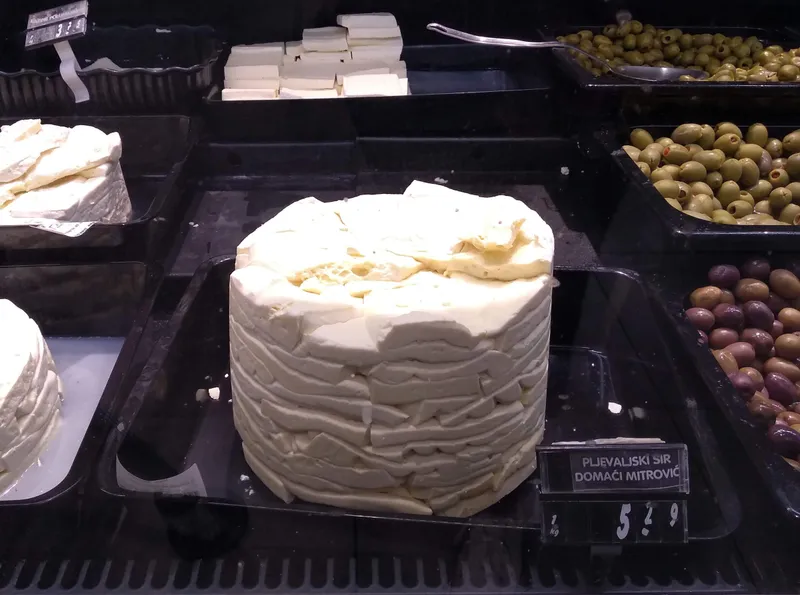
Pljevaljski sir
White brined cheese from raw cow's milk, ripened 15 days or more
Try it in Pljevlja · Protected name
Photo: Milica Buha · CC BY-SA 4.0


More to try
Kačamak · Potatoes beaten with flour, finished with kajmak and cheese
Try it in Kolašin · Žabljak
Cicvara · Kajmak cooked until the fat separates, thickened with cornmeal
Try it in Kolašin · Žabljak
Kolašinski lisnati sir · Cow's-milk cheese folded 20-30 times into thin leaves
Try it in Kolašin · Protected name
Prljo · Lean, hard, crumbly cheese matured in a lamb or sheep skin
Jagnjetina u mlijeku · Lamb shoulder simmered in milk with bay leaf, served with potatoes
Jagnjetina ispod sača · Lamb and potatoes slow-roasted under an iron bell covered in embers
Try it in Kolašin · Žabljak · Šavnik
Crnogorski goveđi pršut · Beef from 3- to 7-year-old cattle, smoked over beech and hornbeam
Crnogorska stelja · Dried mutton, cooked in winter with sauerkraut or raštan
Most meals open with the same plate, which restaurants call crnogorski pjat: homemade bread, Njeguški cheese and pršut, olives on the coast, kajmak in the north. In the north-east, in Bijelo Polje, Berane, Plav, Rožaje and Petnjica, beef pršuta takes the place of Njeguški pršut on it. Priganice, fried balls of yeast dough eaten with honey, cheese or kajmak, are the welcome food: an official guest is met with bread and salt, then priganice with honey. The Zeta version is thin and made without yeast; the coast adds raisins.


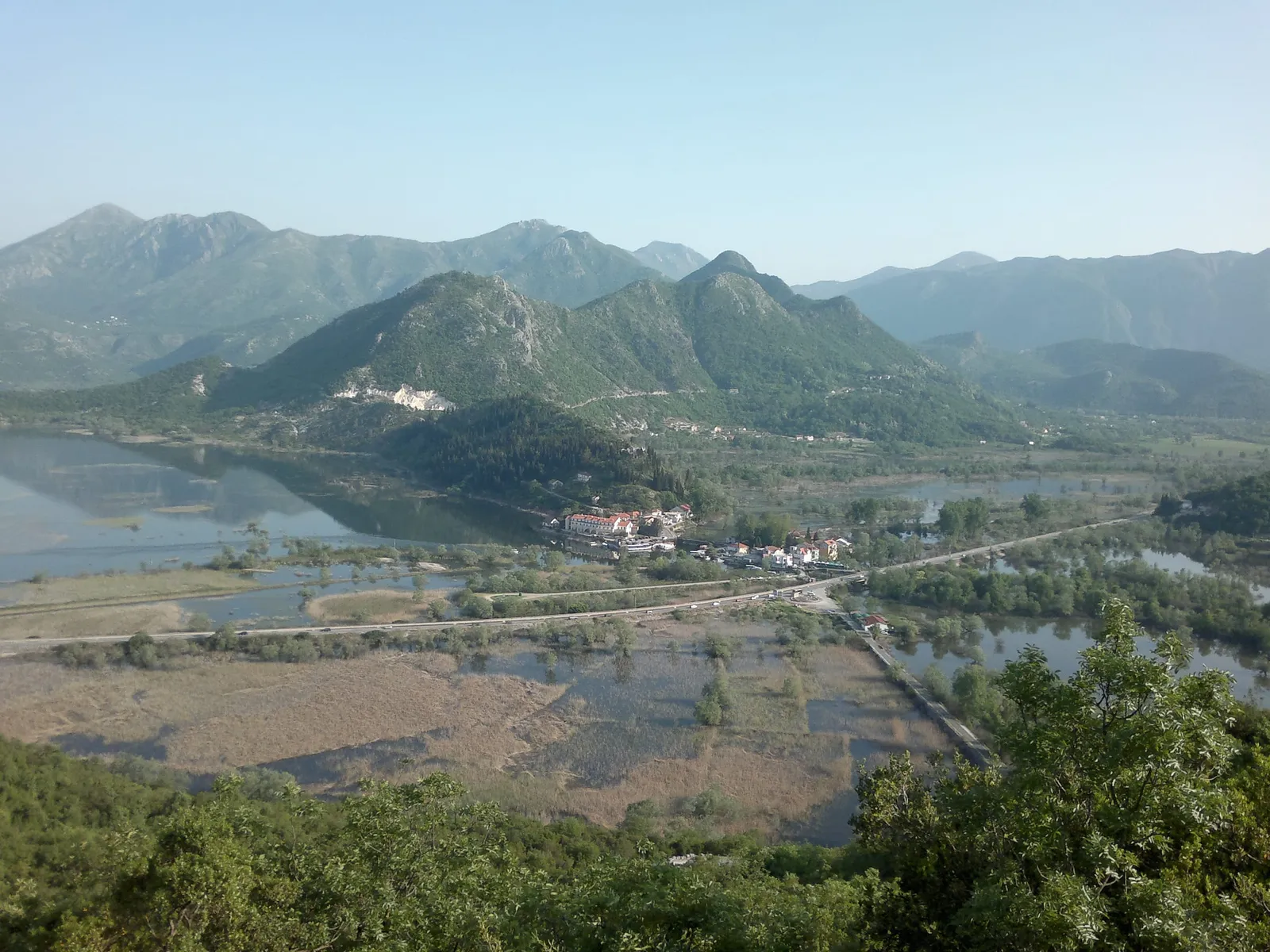
Skadar Lake has a table of its own. Carp over 2 kg is kept in sea salt for three days, smoked for three days and then laid over beech or willow wood for at least a day; it is also baked in a pan on onions with prunes, apples and quinces. Ukljeva, the bleak that locals call the freshwater sardine, is salted at about 1 kg of salt to 19 or 20 kg of fish for 17 to 18 hours, dried over a low fire for 48 hours and finished over willow for its golden colour. Ships carried dried ukljeva to Italy as early as the 13th century, and in the 19th it was prized at the Austrian court. Eel is baked with rice and prunes; Podgorica fries trout and covers it, layer by layer, with salted sour milk and garlic, once a way of keeping fish through summer heat.
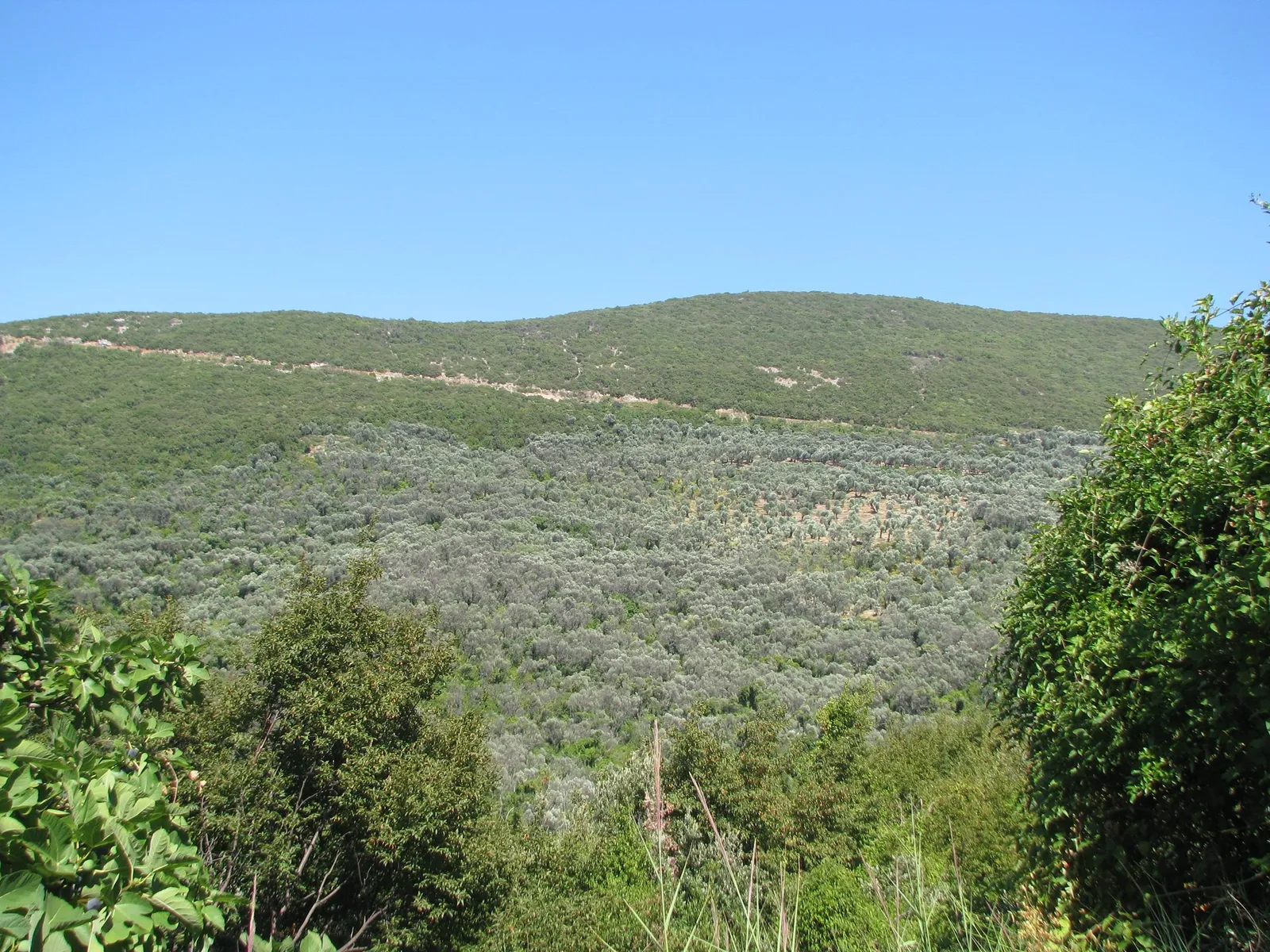
On the coast, the Bay of Kotor brodet is not the mixed-fish stew of the rest of the shore. It uses one kind of small oily fish, sprat, anchovy or sardine, cooks for at least two hours, and comes from the fishing village of Muo, which holds its own Fishermen's Nights. Mussels from the bay, wild and farmed, are named for Gurdići. Pašticada, beef larded with garlic and smoked bacon and braised in wine, comes with makaruli, wholewheat pasta rolled by hand on needles in the Paštrovići villages and in Risan, where Risan Macaruli is held every June. For dessert, Peraška torta is an almond cake under a lattice of pastry; the Dobrota cake is the same recipe without the pine nuts, and Budva's Dragon cake is almost identical.
Njeguški pršut
Njeguški pršut is a bone-in pork hind leg, salted with sea salt, smoked over beech and dried in the village of Njeguši on the slopes of Lovćen above Cetinje. It was the first Montenegrin product protected under national law, registered as a geographical indication in October 2016, and it may be made only in Njeguši.
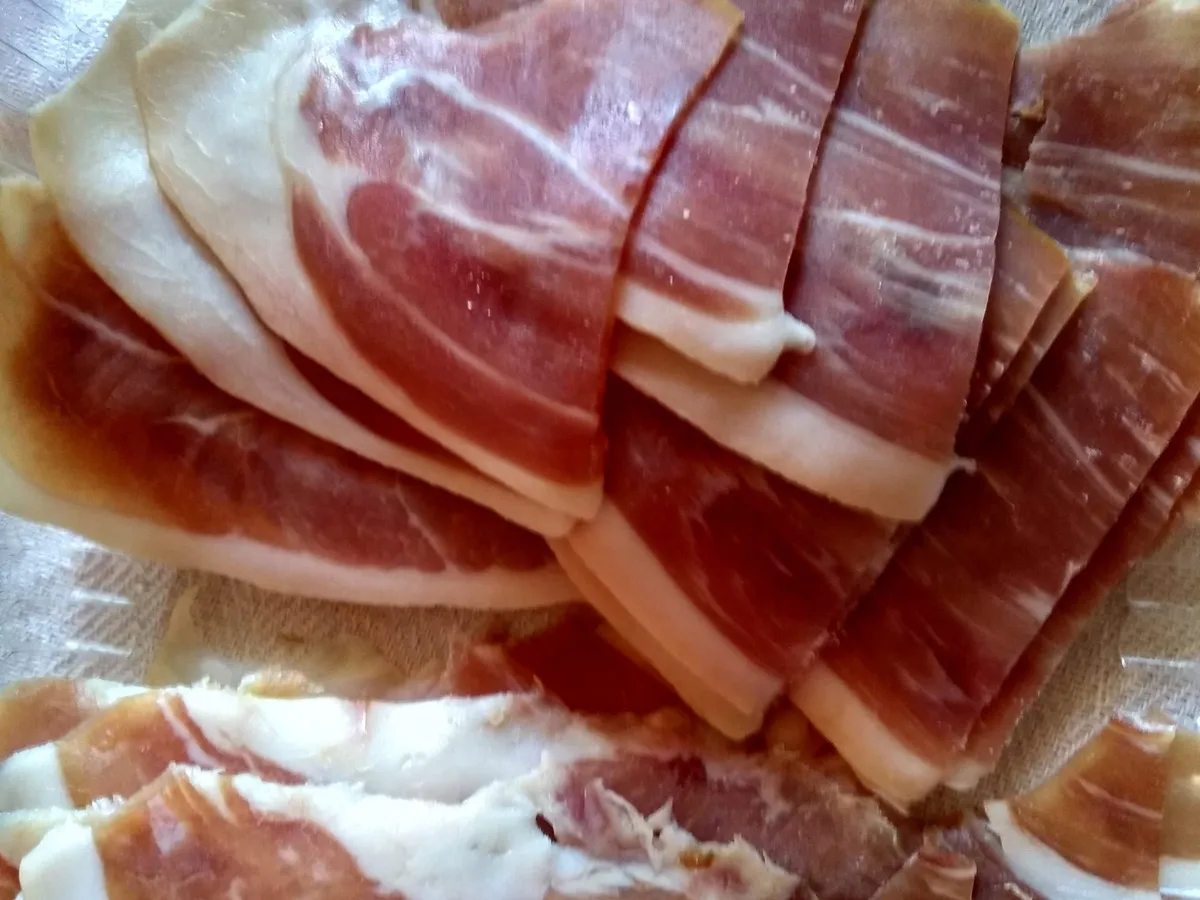

Njeguški pršut
- Made in
- Njeguši only
- Protected name
- Geographical indication
- Smoked over
- beech wood, 35-56 days
- Eaten with
- Njeguški sir, bread, olives
The leg weighs about 12 kg. It is salted with sea salt at 4 to 8 percent and left for 12 to 20 days, smoked over beech for 35 to 56 days and then matured for 8 to 10 months. The drying rooms stand at 800 to 1,200 m with strong natural airflow, and the air runs from −10 to 20 °C over the year; the village itself sits at about 900 m, where cold mountain air and warm air off the sea meet. The drying depends on that overlap of Mediterranean and continental climate.
Local lore puts the start in the 15th century; reliable records begin in the 19th. One of the oldest is from 1838, when the Saxon king Friedrich August II was in Cetinje and a journalist described the market and its pršut. Through the 19th and 20th centuries it was traded in Kotor, Dubrovnik, Venice, Malta and Bordeaux, and the number of producers has grown over the last five decades.


In season thousands of visitors eat and buy pršut in the village's national restaurants. The old road climbs from Kotor by the serpentine to the Krstac pass and on to Njeguši and Cetinje. On and near it are Kod Pera na Bukovicu, counted among the oldest restaurants on the Kotor route, Konoba Krstac at the pass, and in the village Njeguška sijela, Konoba kod Radonjića and Etno selo Kadmi; the rows are in the directory below. Njegoš's birth house at Erakovići, a unit of the National Museum, is in the same village. One rule of the geographical indication surprises people: the pigs need not be raised in Montenegro. The salting, smoking and drying must happen in Njeguši.
Two other Njeguši products share the plate. Njeguški sir is a semi-hard sheep's-milk cheese with a few holes and a thin golden rind, salted with sea salt and best matured on wooden shelves in a stone cellar called a volat; a few days of smoke, or 90 to 150 days in olive oil or wheat, sharpen it. It is not a protected name. Njeguška kobasica is pork and fat in a 2:1 ratio, smoked for 2 to 3 hours over beech and matured for about 25 days. Pršut made elsewhere in Old Montenegro, in Cetinje outside Njeguši, Nikšić, Danilovgrad, Podgorica, Bar and Budva, above 500 m, carries the separate protected name Crnogorski pršut and may not be sold before 12 months from the day the meat comes in.
Kačamak in Kolašin
Kačamak is boiled potatoes beaten with flour, wheat or corn or both, into a smooth, heavy paste, finished with kajmak or skorup and white cheese and served on a wooden plate with thick sour milk. It is not polenta: the body of the dish is potato, and the flour binds it. The name comes from the Turkish kaçamak. Kolašin is the town to eat it in. Its layered cheese goes into the dish, almost every national restaurant in and around the town lists it, and some restaurants in the north are visited for their kačamak alone.
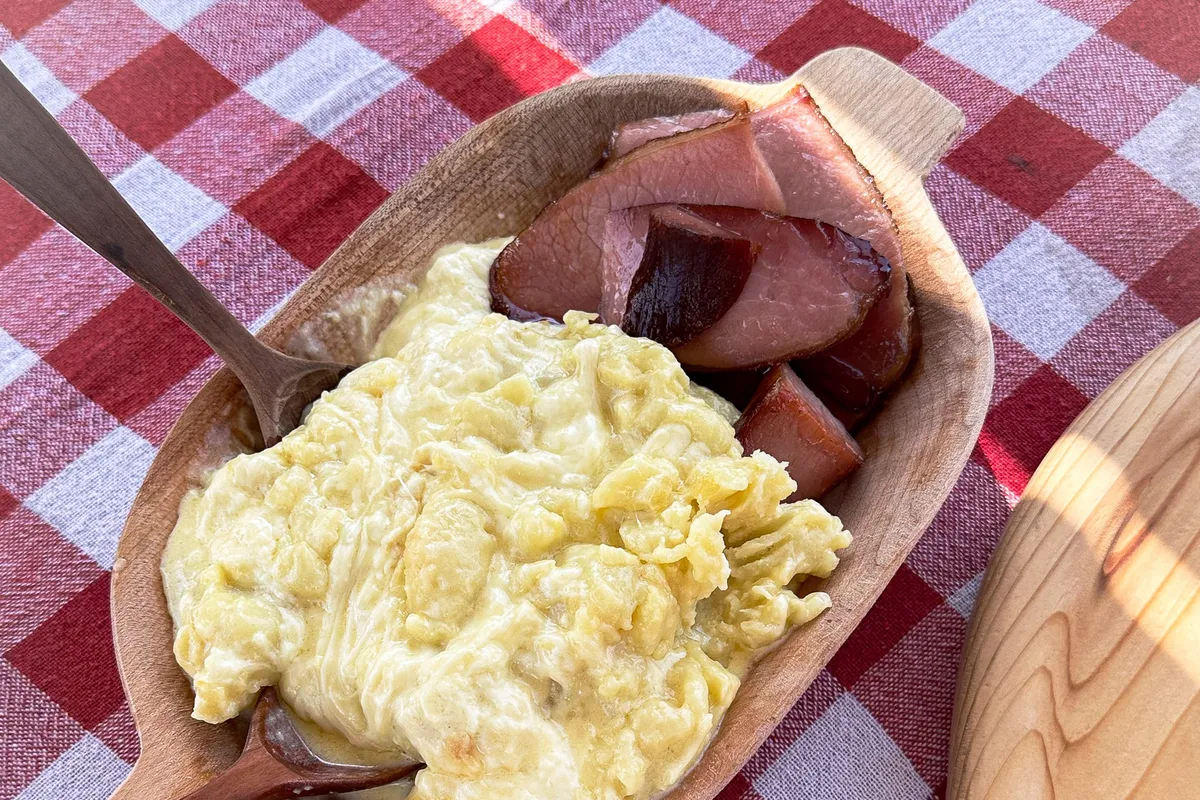

Kačamak
- Made from
- potatoes and wheat or corn flour
- Served with
- kajmak or skorup, cheese, sour milk
- Where to eat it
- 11 places in Kolašin
Flour goes on top of the almost-cooked potatoes, a hole is made through it with a wooden pestle, the tucanj or kačamaš, and the pot cooks for about half an hour more. The water is drained and the mass is beaten until no lump is left. The whole job takes about an hour and a strong arm. It tastes best with potatoes grown at altitude, stone-ground flour from local corn, white cheese and skorup.
Kačamak vs cicvara
The two share a region and usually a menu, and visitors mix them up. Kačamak starts from potatoes, with flour as the binder, and the dairy goes in at the end. Cicvara starts from kajmak and full-fat cheese, cooked down until the fat separates, then thickened with corn flour and stirred until it comes away from the pan; there are no potatoes in it. One takes strength, the other takes skill. In the north cicvara is eaten with honey. Popara, the third dish built on Kolašin layered cheese, is a breakfast dish.
Where to eat it in Kolašin
Kačamak is on the menu of almost every national restaurant in Kolašin. Konoba Nišavić on Trg Vukmana Kruščića has been open since 1967 and cooks kačamak, cicvara, trout and dishes under the sač. Vodenica stands by a fast river at the entrance to town, with two millstones and old household items inside; its menu runs to cicvara, popara, priganice, apple pie in hand-rolled filo and a vegetarian menu, and a marked hiking trail starts at its door. Savardak, about 3 km out on the road to the ski centre, has served kačamak and cicvara for more than two decades. Dobre Vode at Sjerogoste, on the Tara 10 km along the road to Biogradska gora, has 25 years behind it and kačamak as its house speciality. Restoran Tara in Skrbuša, 5.5 km out on the Mateševo road, makes its own layered cheese and kajmak and grows some of its own vegetables. Troglava at the Kolašin 1600 ski centre seats 400 and holds a halal-friendly certificate. Konoba Amanet at Mateševo, 7 km towards the motorway, is wood and stone with a fireplace and a garden of linden trees.
Where to eat traditional food
The directory lists restaurants, konobas and katuns documented as serving traditional food. Filter by town.
22 places
Kolašin
Konak
Restaurant · Kolašin
Known for: kačamak, cicvara, river fish
Trebaljevo, put Kolašin-Mojkovac
Konoba Amanet
Konoba (tavern) · Kolašin
Mateševo bb
Konoba Nišavić
MapKonoba (tavern) · Kolašin
Known for: kačamak, cicvara, trout, dishes under the sač
Trg Vukmana Kruščića
Restoran Dobre Vode
MapRestaurant · Kolašin
Known for: kačamak (the house speciality), veal under the sač
Sjerogoste bb
Restoran Hermes
MapRestaurant · Kolašin
Known for: kačamak and cicvara
Gornji Pažanj I 33
Restoran Planinar
MapRestaurant · Kolašin
Known for: kačamak, cicvara, dishes under the sač
Centar
Restoran Tara
Restaurant · Kolašin
Known for: its own Kolašin layered cheese and kajmak, kačamak, cicvara
Skrbuša, put Kolašin-Mateševo
Restoran Troglava
MapRestaurant · Kolašin
Known for: Kolašin layered cheese, cicvara, kačamak, roast lamb
Ski centar Kolašin 1600
Savardak
MapRestaurant · Kolašin
Known for: kačamak and cicvara
Put prema ski centru, oko 3 km od centra
Staro ognjište
Restaurant · Kolašin
Known for: kačamak, cicvara, lamb under the sač
Gorska 5
Vodenica
MapRestaurant · Kolašin
Known for: kačamak, cicvara, homemade bread, pršut and cheese
Ulica Breza bb
Cetinje
Etno selo Kadmi
MapRestaurant · Cetinje
Njeguši
Kafana Kod Pera na Bukovicu
MapRestaurant · Cetinje
Bukovica, put Cetinje-Kotor
Konak
Restaurant · Cetinje
Known for: homemade cheese, pršut, košet, lamb and kid under the sač
Zabrđe bb, put Cetinje-Budva
Konoba kod Radonjića
MapKonoba (tavern) · Cetinje
Njeguši
Konoba Krstac
MapKonoba (tavern) · Cetinje
Krstac, put Njeguši-Kotor
Konoba Lesendro
MapKonoba (tavern) · Cetinje
Rijeka Crnojevića
Konoba Njeguška sijela
MapKonoba (tavern) · Cetinje
Njeguši
Stari Most
MapRestaurant · Cetinje
Known for: smoked and marinated carp, dried ukljeva, fish broth
Rijeka Crnojevića
Kotor
Podgorica
Stara kuća
MapRestaurant · Podgorica
Iva Andrića 5
Mon-Sun 12:00-20:00
Sources
kolasin.me: TO Kolašin, Kolašin on a plate: where to eat in the city under Bjelasica (11 Aug 2025) · TO Kolašin (8)
openstreetmap.org: OpenStreetMap (17)
cetinje.travel: TO Cetinje, restaurants
restorankonak.me: Restoran Konak (own site)
catovica-mlini.com: Ćatovića Mlini (own site)
starimlini.com: Stari Mlini (own site)
starakuca.me: Stara kuća (own site)
Outside Kolašin a few places carry facts worth knowing before you drive. Stari Mlini at Ljuta near Kotor is set in an old mill where a fast underground river reaches the sea, run by two generations of one family for more than 40 years. Ćatovića Mlini at Morinj sits on a family estate with a small river running through it, open 12:00 to 21:00. Jadran kod Krsta on Budva's Slovenska obala opened in 1976, the oldest restaurant in the town. Kaldrma in Stari Bar cooks the local dishes, okra, japraci, aubergine in tomato, cheese-stuffed peppers, and serves no alcohol. Stari Most at Rijeka Crnojevića is one of the oldest restaurants on the river and buys only from local suppliers: smoked, marinated or 'drunken' carp, dried bleak and Crmnica wine. Konak at Zabrđe on the Cetinje-Budva road bakes bread from wheat, corn and rye and roasts lamb and kid under the sač. Stara kuća in Podgorica, built as a replica of an old fort and old town houses at Iva Andrića 5, serves dishes from the whole country, 12:00 to 20:00.
Before a long drive, call the place; the rows above carry the published phone numbers.


Protected names and labels
Eight food names are registered as geographical indications or designations of origin: Njeguški pršut, Crnogorski pršut, Crnogorski goveđi pršut, Crnogorska stelja, Pljevaljski sir, Durmitorski skorup, Kolašinski lisnati sir and Institutova lozova rakija. Only producers entered in the register may use a name. Peraška torta is protected under a different scheme, as a traditional speciality guaranteed, which ties the name to a recipe rather than a place.
| Name | Product | Area | Protection |
|---|---|---|---|
| Njeguški pršut | Dry-cured ham | Njeguši | Geographical indication |
| Crnogorski pršut | Dry-cured ham | Cetinje (without Njeguši), Nikšić, Danilovgrad, Podgorica, Bar, Budva | Geographical indication |
| Pljevaljski sir | White brined cheese | Pljevlja | Designation of origin |
| Crnogorski goveđi pršut | Dried beef | Designation of origin | |
| Crnogorska stelja | Dried mutton | Designation of origin | |
| Durmitorski skorup | Matured kajmak (skorup) | Žabljak, Plužine, Šavnik | Designation of origin |
| Kolašinski lisnati sir | Layered cheese | Kolašin, Mojkovac | Designation of origin |
| Institutova lozova rakija | Grape rakija |
Dry-cured ham · Njeguši · Geographical indication
Dry-cured ham · Cetinje (without Njeguši), Nikšić, Danilovgrad, Podgorica, Bar, Budva · Geographical indication
White brined cheese · Pljevlja · Designation of origin
Dried beef · Designation of origin
Dried mutton · Designation of origin
Matured kajmak (skorup) · Žabljak, Plužine, Šavnik · Designation of origin
Layered cheese · Kolašin, Mojkovac · Designation of origin
Institutova lozova rakija
Grape rakija
Wine has 9 protected names, from Crmnica to Boka kotorska: see Wineries.
Sources
Ministarstvo poljoprivrede, šumarstva i vodoprivrede, Zaštićene oznake kvaliteta · RTNK (Pobjeda/MINA, citing the Ministry of Agriculture), Registrovano osam proizvoda sa geografskom indikacijom, 21.09.2026 · Pravilnik o označavanju i nacionalnom znaku organskih proizvoda (Službeni list CG, 2.6.2026) · MPŠV, Strateški plan razvoja organske proizvodnje (gov.me, 28.1.2025) · MPŠV, Registar oznaka geografskog porijekla vina (gov.me, 29.12.2021)
How to read the label
- Organic wording
- organski proizvod Crne Gore
- Control number
- ME-ORG-XXX
- In conversion
- proizvod iz prelaznog perioda
- Control body
- Monteorganica (not recognised by the EU)
- Official logo
- Rulebook, Službeni list
Three of the names are cheeses, each tied to a process. Kolašinski lisnati sir is cow's-milk cheese folded 20 to 30 times at 15-minute intervals into thin leaves; locals call it listana and sell it in thick rolls. It is made in 17 local communities of Kolašin and Mojkovac, by about 100 farms with about 2,000 t a year when the name was registered in 2019. Pljevaljski sir is a soft white brined cheese from raw full-fat cow's milk, animal rennet and salt and nothing else, cut in slices 1.5 to 3 cm thick, layered with salt in tubs, ripened under whey or brine for at least 15 days and kept at most 60. At least 80 percent of the cows' yearly feed must come from the Pljevlja area, where they graze from mid-May to the end of October; Dubrovnik documents from 1348 record trade in cheese from Breznica, the old name of the town. Durmitorski skorup is the cream of boiled milk, dry-salted and layered to mature in a sheepskin (mješina) or a wooden vat in Žabljak, Plužine and Šavnik; skorup from a skin is fattier and dearer than kajmak from a vat.
Two names are northern dried meats. Crnogorski goveđi pršut is beef from cattle aged 3 to 7 years, made from November to February, smoked with beech and hornbeam for 3 to 4 weeks and ripened for about 2 months. Crnogorska stelja is dried mutton, cooked in winter with sauerkraut or raštan.
On a shelf, look for the registered name written exactly as above; it is never translated. Since November 2025 the quality-schemes law also provides two further marks, planinski proizvod (mountain product) and sa moje farme (from my farm). The organic logo is a separate thing: a green leaf outline ending in a red arrow, the words organski proizvod Crne Gore and a control code ME-ORG- followed by three digits. Wine has nine protected names of its own, from Crmnica to Boka kotorska; they are on the wineries page.
Organic, plainly
Source: Ministry of Agriculture, strategic plan for organic production (2025)
Certified organic production is small and northern. In 2023 Montenegro had 514 registered organic producers on 4,823 ha, 1.6 percent of farmland, most of it meadow and pasture. Nearly 92 percent of the producers are in the north, in Bijelo Polje, Berane, Pljevlja, Andrijevica and Plužine, and beekeepers are the largest group, with 6,583 organic hives. Certified produce is sold mainly in specialised shops, not at the green markets.
The only control body accredited in Montenegro is Monteorganica, and the EU does not recognise it, so a Montenegrin organic certificate is not an EU one. The word organic on a farm-stay listing or a menu is usually the host's own word for home-grown. The national logo and the ME-ORG code are the only sign of a certificate.
Katuns and farm stays
A katun is a summer settlement of shepherds' huts on the high pastures, in use from about June to September, and it is where the cheese and kajmak on the plate are made. On Bjelasica and Sinjajevina visitors can watch layered cheese being made and join in the work. Goleš borders Biogradska gora and takes overnight guests; at Dolovi Lalevića, 1,685 m up and 7 km of gravel road from Biogradsko jezero, families sell milk, cheese, kajmak and meat; Lipovo is about 20 minutes from Kolašin and has parking. Eko Katun Komovi at the Trešnjevik pass on the Andrijevica-Kolašin road runs a restaurant and cabins in summer. The cheese road runs through Trebaljevo, Gornji Pažanj, Blatina, Lipovo, Drijenak, Šljivovice, Štitarica, Podbišće and Tomaševo, and honey tastings are offered in Kolašin, Mojkovac and Bijelo Polje.
The central tourism register holds 474 rural households, 34 of them katuns. Those that take guests are listed by municipality and activity on Montenegro Village Explorer, the agriculture ministry's portal; the Njeguši household there serves mainly its own meat, dairy, fruit and vegetables and lets guests help prepare the food.
Green markets
Bar
Zelena pijaca Bar
Market
Mon-Sun 07:00-15:00
Zelena pijaca Ostros
Market
Mon-Sun 07:00-15:00
Zelena pijaca Stari Bar
Market
Mon-Sun 07:00-15:00
Zelena pijaca Sutomore
Market
Mon-Sun 07:00-15:00
Zelena pijaca Virpazar
Market
Mon-Sun 07:00-15:00
Budva
Zelena pijaca Budva
Market
Mon-Sat 07:00-15:00
Kotor
Gradska pijaca ispod zidina
Market
Ispod zidina Starog grada
Podgorica
Zelena pijaca Bazar
Market
Blaža Jovanovića 10, Blok V
Mon-Sat 06:00-16:00; Sun 06:00-15:00
Sources
bar.me: Opština Bar, Odluka o radnom vremenu (Sl. list CG, opštinski propisi 028/24), čl. 8 · Program rada DOO Komunalne djelatnosti Bar za 2021.
rtvbudva.me: RTV Budva, Budvanska Zelena pijaca zasijala novim sjajem (17.03.2026)
kotor.me: Opština Kotor, Odluka o radnom vremenu (Sl. list CG, opštinski propisi 058/25), čl. 8
pijacepg.me: Tržnice i pijace Podgorica, Zelena pijaca Bazar · Tržnice i pijace, Odluka o radnom vremenu pijaca u ljetnjoj sezoni (br. 335-2329, 07.04.2026) · Tržnice i pijace, Odluka o radnom vremenu pijaca u zimskoj sezoni (br. 335-7077, 29.10.2025)
Kotor's weekly market has been held on Saturday for six centuries, since Bishop Marin Kontareno moved it from Sunday. In Stari Bar, stallholders in traditional dress sell citrus, olives, olive oil and cheese along the lane to the main gate. Rijeka Crnojevića's weekly market once drew 800 or more people, with buyers from Dubrovnik, Italy and Albania. Market hours are in the rows above.
| When | What | Where |
|---|---|---|
| May | Wild garlic (sremuš); Dani sremuša, 5th edition on 24 May 2026 | Andrijevica |
| July to early August | Blueberries; Blueberry Days 12 Jul to 4 Aug 2026 | Plav |
| From September | Olive picking begins | Bar, Ulcinj, Budva |
| Autumn | Grape rakija distilled from Vranac and Kratošija pomace | Crmnica, Podgorica |
| November to February | Beef pršuta made; raštan cooked with kastradina as the winter lunch | North; Cetinje, Podgorica |
| December | New olive oil; Maslinijada, 23rd edition, 13 Dec 2025 | Stari Bar |


Food festivals
The Wine and Bleak Festival in Virpazar ran on 28 February and 1 March 2026 for its 28th edition. Risan Macaruli is every June, Kolašin's Market Day is a day in August, Blueberry Days in Plav ran from 12 July to 4 August 2026, and Maslinijada in Stari Bar fell on 13 December 2025.
- Nov
Koštanijada (chestnut festival)
Ostros, BarLast held 15-16 Nov 2025 · 17th edition
- Dec
Maslinijada (olive festival)
Stari Bar, BarLast held 13 Dec 2025 · 23rd edition
- Feb
Wine and Bleak Festival
Virpazar, BarLast held 28 Feb-1 Mar 2026 · 28th edition
- Jun
Risan Macaruli
Risan, KotorLast held 10 Jun 2025
- Jul
Blueberry Days
PlavLast held 12 Jul-4 Aug 2026
- Jul
Fish and wine fešta
Lepetane, TivatLast held 25 Jul 2026
- Aug
Petrovac Night
Petrovac, BudvaLast held 21 Aug 2026
- Sept
Street Food Festival
PodgoricaLast held 17-20 Sept 2026
- Oct
Dan širuna
BudvaLast held 18 Oct 2026 · 59th edition
- Oct
Squid Day
Petrovac, BudvaLast held 19 Oct 2025 · 3rd edition
Sources
TO Bar, Events and festivals · Primorske novine, U toku pripreme za Koštanijadu · Primorske novine, Opština Bar: 23. Maslinijada · Primorske novine, Počeo 28. Festival vina i ukljeve u Virpazaru · TO Kotor, articles (Risan Macaruli, Muo) · RTNK, Dani borovnice okupljaju hiljade gostiju · TO Tivat, Kalendar događaja 2026 · TO Budva, Petrovačka noć · TO Podgorica, Street Food Festival is returning to Podgorica · TO Budva, Dan širuna · Primorske novine, Budva sjutra slavi 59. Dan širuna · TO Budva, Petrovačka lignjada
Taking food home
- Meat and milk products (pršut, cheese, kajmak) into the EU
- Not allowed
- Fish into the EU
- Up to 20 kg, or one fish
- Honey and other animal products into the EU
- Up to 2 kg
Source: European Commission, personal imports of animal products (Delegated Regulation (EU) 2019/2122)
Travellers may not bring meat or milk products into the EU from Montenegro, so pršut, cheese and kajmak cannot go in luggage. Fish is allowed up to 20 kg, honey and other animal products up to 2 kg. Only products from Andorra, Iceland, Liechtenstein, Norway, San Marino and Switzerland are exempt; Montenegro is not. The legal basis is Delegated Regulation (EU) 2019/2122. For alcohol the allowance is 4 l of still wine and 16 l of beer, plus either 1 l of spirits over 22 percent or 2 l of fortified or sparkling wine. Honey within the 2 kg, olive oil and wine within the allowance are the produce that travels.
Common questions
What should I eat in Montenegro?
Start with the crnogorski pjat: bread, Njeguški cheese and pršut, with olives on the coast or kajmak in the north. Then eat by region: brodet, mussels and pašticada with makaruli on the coast; smoked carp and dried ukljeva at Skadar Lake; kačamak, cicvara, layered cheese and lamb cooked in milk or under the sač in the north. Priganice with honey go with any of them.
What is the difference between kačamak and cicvara?
Kačamak is boiled potatoes beaten with wheat or corn flour, finished with kajmak and cheese and eaten with sour milk. Cicvara has no potatoes: kajmak and full-fat cheese are cooked until the fat separates, then thickened with corn flour. One needs strength to beat, the other skill at the pan.
Can I take Njeguški pršut or cheese home to the EU?
No. Meat and milk products from Montenegro may not enter the EU in personal luggage (Delegated Regulation (EU) 2019/2122). Fish is allowed up to 20 kg and honey up to 2 kg; wine falls under the 4 l allowance. Rules for other home countries differ.
Where do I eat kačamak in Kolašin?
Almost every national restaurant in Kolašin lists it. Konoba Nišavić has been open since 1967, Dobre Vode at Sjerogoste names kačamak as its house speciality, Vodenica at the town entrance also has a vegetarian menu, and Restoran Tara makes its own layered cheese and kajmak. The directory on this page has addresses and phones.
Is there vegetarian food in Montenegro?
Yes, especially in the north: kačamak, cicvara, popara, priganice, pies with cheese, spinach or nettle, the cheeses and kajmak, and nettle soup with kajmak. Raštan is cooked with dried meat, so ask. Vodenica in Kolašin publishes a vegetarian menu.
Why is pršut from Njeguši and not elsewhere?
The protected name allows production only in Njeguši, at 800 to 1,200 m on Lovćen above Cetinje, where the leg is salted with sea salt, smoked over beech for 35 to 56 days and matured for 8 to 10 months in air that mixes mountain cold with warmth off the sea. Ham made elsewhere in Old Montenegro is sold as Crnogorski pršut.
Is food in Montenegro organic?
Rarely in the certified sense: 514 registered organic producers in 2023, 1.6 percent of farmland, mostly beekeepers and meadows in the north. The national logo with the ME-ORG code is the only proof of a certificate, and the Montenegrin control body is not recognised by the EU. 'Organic' on a menu usually means home-grown.
Related
- National parks
- Biogradska gora
- Lakes
- Skadar Lake
- Travel information
- Shopping in Montenegro
Sources
- FAO (2019), Atlas tipične hrane iz Crne Gore / Atlas of typical food from Montenegro
- National Tourism Organisation, The Flavours of Montenegro (ISBN 978-9940-20-014-5, undated)
- National Tourism Organisation, Food routes (honey and cheese roads)
- National Tourism Organisation, Eko Katun Komovi
- gov.me, Zaštićene oznake kvaliteta
- Specifikacija proizvoda Pljevaljski sir (oznaka porijekla), gov.me, 31 May 2017
- Ministry of Agriculture, Kolašinski lisnati sir sedmi po redu zaštićeni proizvod, 7 May 2019
- Ministry of Agriculture, Durmitorski skorup šesti zaštićeni proizvod, 20 Mar 2019
- Ministry of Agriculture, register of protected wine names (29 Dec 2021)
- RTNK (Pobjeda/MINA, citing the Ministry of Agriculture), Registrovano osam proizvoda sa geografskom indikacijom, 21 Sep 2026
- Paragraf (eKapija, 19 Dec 2016): Njeguški pršut the first protected Montenegrin product
- Paragraf (RTCG, 9 Aug 2018): Crnogorski pršut cluster; Ministry on geographical indication rules
- Žurnal (2023), 11 protected products including Peraška torta
- seljak.me, Peraška torta registered as a traditional speciality guaranteed
- Službeni list CG, Law amending the Law on quality schemes for agricultural and food products, 25 Nov 2025
- Službeni list CG, Rulebook on labelling and the national organic logo, 2 Jun 2026
- Ministry of Agriculture, Forestry and Water Management, Strategic plan for organic production (published 28 Jan 2025)
- TO Kolašin, Kolašin on a plate: where to eat in the city under Bjelasica, 11 Aug 2025
- TO Kolašin, Restaurants (directory)
- TO Kolašin, Market day (Pazarni dan)
- TO Kolašin, Biciklizam (Goleš katun)
- TO Kolašin, What to do in Kolašin this spring (Sinjajevina katuns, Lipovo)
- TO Kolašin, Dolovi Lalevića
- TO Cetinje, Restaurants
- TO Kotor, article API (the Kotor-Njeguši serpentine, Muo Fishermen's Nights, Risan Macaruli)
- TO Budva brochure (2020), gastronomy section
- TO Bar, Tourist places (Stari Bar stalls)
- Montenegro Village Explorer (MPŠV), The Taste of Memory, Njeguši
- Central tourism register counts (docs/research/directory-expansion.md §1)
- Stari Mlini, Ljuta (own site)
- Ćatovića Mlini, Morinj (own site)
- Restoran Konak, Zabrđe (own site)
- Stara kuća, Podgorica (own site)
- Primorski portal, 28th Wine and Bleak Festival in Virpazar, 28 Feb 2026
- RTNK, Dani borovnice (Blueberry Days, Plav, 2026)
- RTNK, Dani sremuša u Andrijevici, 5th edition, 24 May 2026
- Primorski portal, 23rd Maslinijada in Stari Bar, 13 Dec 2025
- European Commission, Personal imports of animal products (Delegated Regulation (EU) 2019/2122)
- Your Europe, Alcohol, tobacco and cash allowances when entering the EU