Old Bar (Stari Bar)
The medieval walled town on the rock 4 km above Bar: hundreds of ruined buildings, an Ottoman aqueduct, mosques and churches, empty since the end of the 19th century
Walled medieval town · On a rock massif 4 km from the sea
Photo: FrDr · CC BY-SA 4.0
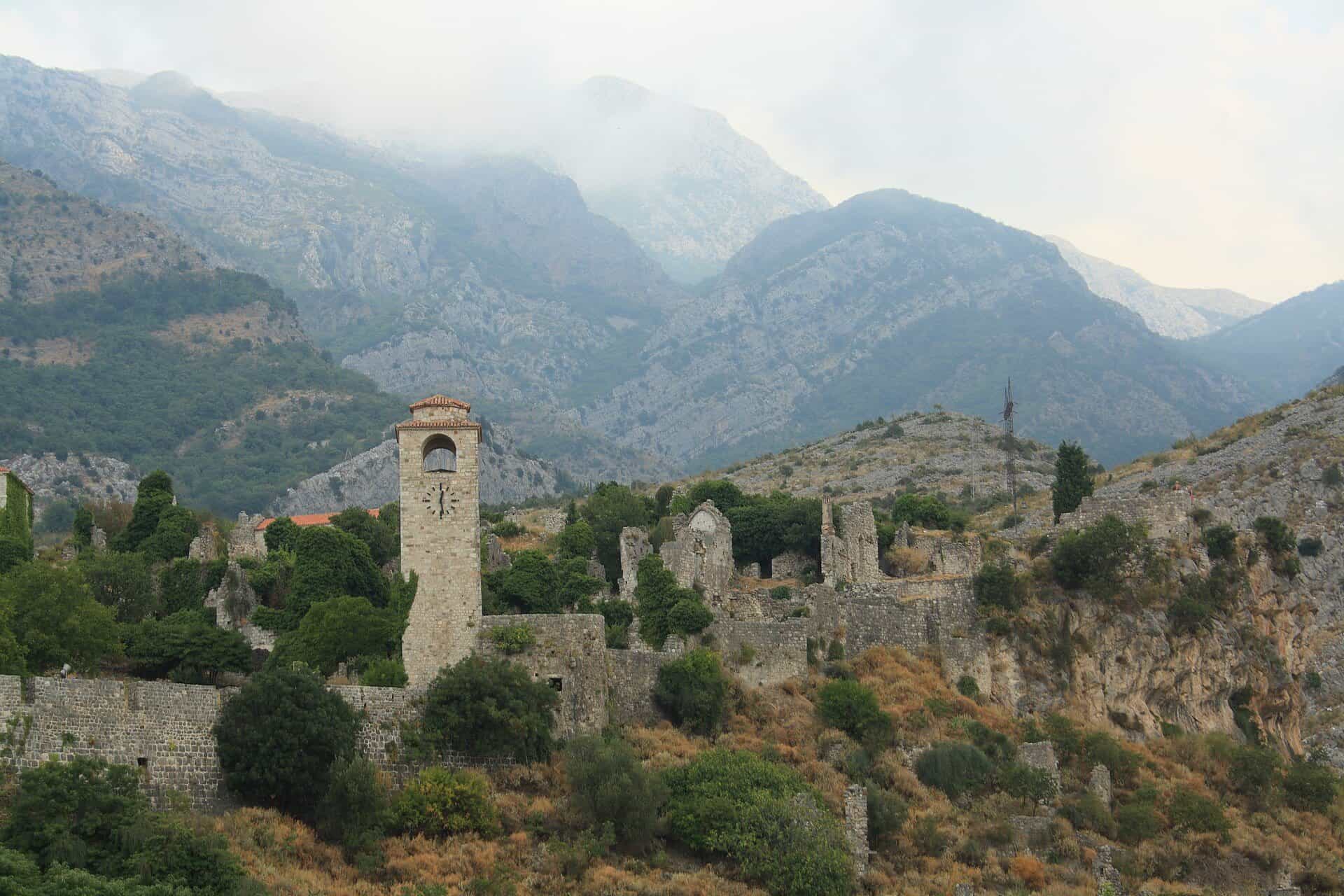
Stari Bar is the medieval walled town of Bar, built on a large rock 4 km from the sea under the slopes of Rumija. Inside the walls lie the ruins of hundreds of buildings: churches and the palace of the medieval town, and the mosques, baths, aqueduct and clock tower of its Ottoman centuries. The town has been empty since the end of the 19th century, when its people moved down to the coast, and since the 1979 earthquake its upper part has been excavated, conserved and opened as an archaeological site. It is on Montenegro's UNESCO Tentative List as the Old Town of Bar.
Old Bar (Stari Bar) tours
Sponsored RikavacRating 4.9 (28)from €145
 Bar Port:Budva, Sveti Stefan, Petrovac and Bar Shore Excursionfrom €167
 Family-Friendly Canyoning in Bar with Flexible Start TimeRating 5 (4)from €119
 Private Sightseeing Tour in the Coastal Towns of Adriatic SeaRating 5 (2)from €290
Tours, ratings and prices: Viator.
All tours in Old Bar (Stari Bar)
Opening hours and tickets
| Hours, in season | 08:00-21:00 |
| Hours, out of season | 08:00-17:00 |
| Adults | €3 |
| Children up to 12 | €1 |
The site is run by the local museum unit of JU Kulturni centar Bar, which also runs King Nikola's palace on the seafront (today the Bar heritage museum) and the Old Olive Tree.

Getting there
Stari Bar lies above the modern town on the road inland towards Rumija. From the centre of Bar it is 8.2 km and about 10 minutes by car, or 5.8 km on foot; from Sutomore 11.9 km and about 19 minutes, from Ulcinj 26.3 km and about 36 minutes, from Virpazar on Lake Skadar 26.9 km and about 35 minutes over the Sozina road, from Podgorica Airport 49.4 km (about 1 hour 3 minutes), from Podgorica 56.7 km (about 1 hour 11 minutes) and from Budva 41.8 km (about 1 hour 4 minutes). The times are free-flow driving times.
What to see
- The ruined town: over 260 buildings inside the walls by one count, around 600 public and private buildings by another, in the upper town roofless houses, lanes and squares.
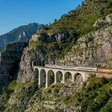
- The aqueduct on the north side, 17 arches on 17 pillars, which carried water from a spring about 3 km away. Ottoman, from the 17th or the 18th century (the dates given differ).
- The clock tower, built before the Ottoman conquest and rebuilt in 1753, and the Omerbašić mosque of 1662 with the hammam beside it, the Ottoman core of the town. The market and the suburb below the gate are protected with the town as one cultural ensemble.
- The churches of the medieval town, and the houses whose details mix Late Gothic, Renaissance and Baroque forms.
- The olive groves all round: Bar is known for its olives, and there were once up to 100,000 trees around the old town. The Maslinijada, the olive festival, is held in Stari Bar in November.
History
Stari Bar is first mentioned in written sources of the 10th century, and it probably existed by the 6th century as a restored Roman fort (castrum). Its houses mix Late Gothic, Renaissance and Baroque forms. The town has been uninhabited since the end of the 19th century, when life moved out of the walls and down towards the sea. After the 1979 earthquake, plans were drawn up to research, protect and present it, and the main buildings of the upper town were explored and conserved; the lower, southern part is still overgrown.

The Old Olive Tree
The Old Olive Tree (Stara maslina) is not at Stari Bar: it stands at Mirovica, at the 5th kilometre of the Bar-Ulcinj road, protected as a natural monument since 1963, with a crown 10 m across. Entry is €1 (children €0.50). It is estimated to be more than 2,000 years old.

Is Stari Bar a UNESCO site?
Not yet. It has been on Montenegro's Tentative List since 2010, which is the first step towards a nomination, not an inscription.
Nearby
- King Nikola's palace on the Bar seafront, the heritage museum.
- Haj-Nehaj fortress above Sutomore, the other great ruin of the municipality.
- Rumija, the mountain behind the town.
- Virpazar and Lake Skadar, over the Sozina road.
- Ulcinj and its Old Town, further south; other old towns in Montenegro.
Questions
How much does Stari Bar cost?
€3 for adults and €1 for children up to 12. Hours are 08:00-21:00 in season and 08:00-17:00 out of season.
When is the olive festival?
The Maslinijada, Bar's olive festival, is held in Stari Bar in November.
Why is the town empty?
Its people moved down towards the sea at the end of the 19th century, and the town has been uninhabited since. The 1979 earthquake was followed by excavation and conservation, not by resettlement.
History
6th-10th century
Fort and town
Probably a restored Roman fort (castrum) by the 6th century; first mentioned in written sources in the 10th.
Middle Ages
Walled town on the rock
A fortified town grew on the rock massif 4 km from the sea, its houses mixing Late Gothic, Renaissance and later Baroque forms.
Ottoman period
Mosques, baths and the aqueduct
The Ottoman town added mosques, baths and a clock tower; the aqueduct of 17 arches brought water from a spring about 3 km away; it dates from the 17th or the 18th century (the dates given differ).
End of the 19th century
The town empties
Life moved out of the walls and down towards the sea; the town has been uninhabited since.
1979
Earthquake and conservation
After the earthquake, plans were drawn up to research, protect and present the town; the main buildings of the upper town were explored and conserved.
2010
UNESCO Tentative List
Submitted as 'Old Town of Bar' to Montenegro's Tentative List.
On these trips
Sources
Bar Tourist Organisation, Stari Bar · Bar Tourist Organisation, Stari Bar (location listing: clock tower built before the Ottoman conquest, rebuilt 1753, Omerbašić mosque 1662, hammam, protected ensemble) · Bar Tourist Organisation, Akvadukt · Bar Tourist Organisation, Stara maslina · Bar Tourist Organisation, events and festivals (Maslinijada, November) · National Tourism Organisation of Montenegro, Fortresses · Wikipedia, List of World Heritage Sites in Montenegro (secondary; Tentative List 2010) · JP Kulturni centar Bar, annual report 2020 · UNESCO World Heritage Centre, Tentative List: Old Town of Bar (submitted by Montenegro, 2010): first mentioned 10th century, around 600 edifices, aqueduct 18th century, deserted since the end of the 19th century, conservation after the 1979 earthquake, lower southern part overgrown; read via the Wayback Machine · OSRM routing (car and foot, OpenStreetMap data, ODbL; times without traffic)