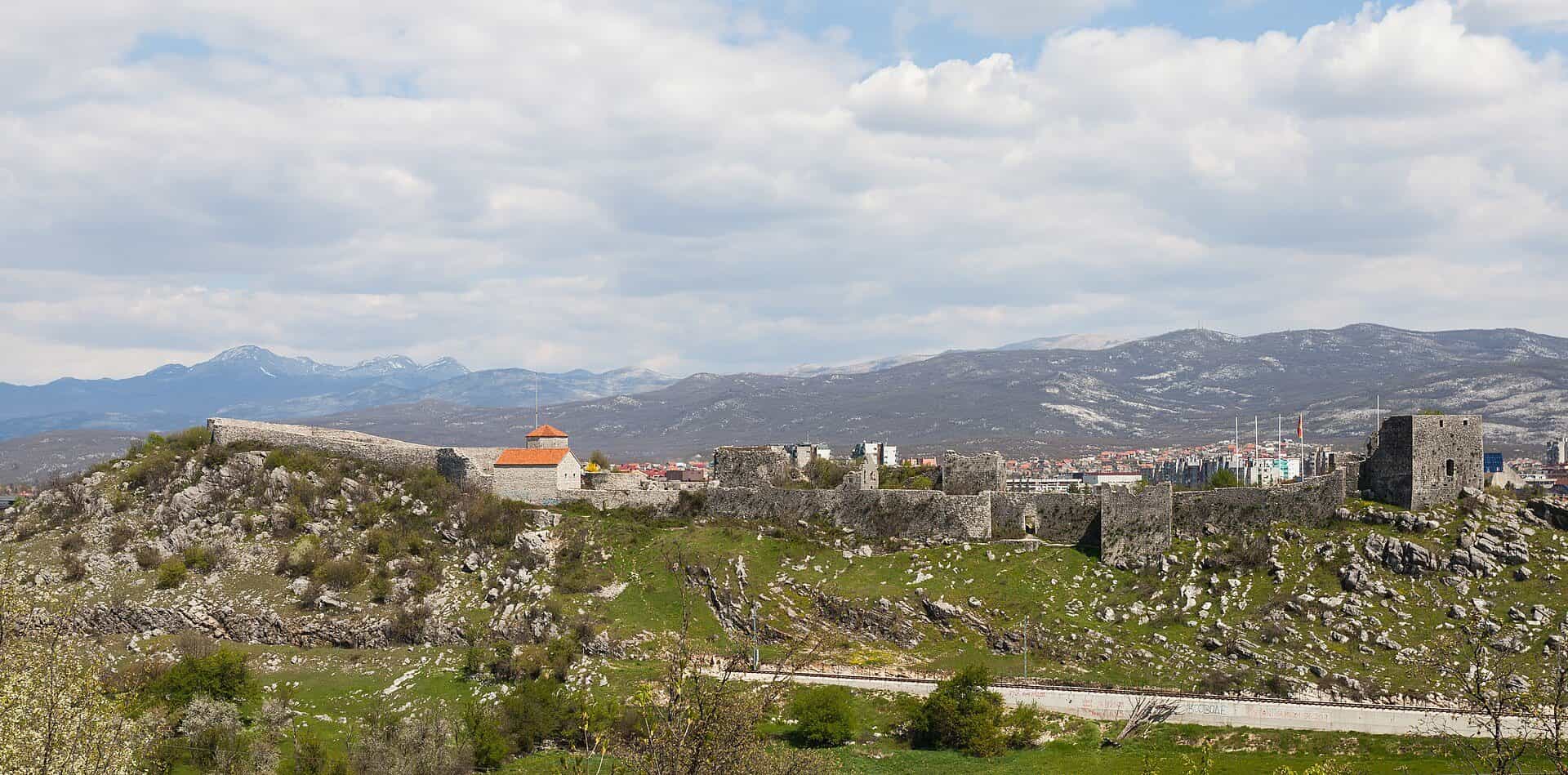
Bedem (Onogošt fortress)
The fortress of Onogošt on its hill in Nikšić: Ottoman stronghold from the late 17th century, Montenegrin since 1877, stage of Bedem Fest
Fortress · Stara Varoš
Photo: Diego Delso · CC BY-SA 3.0
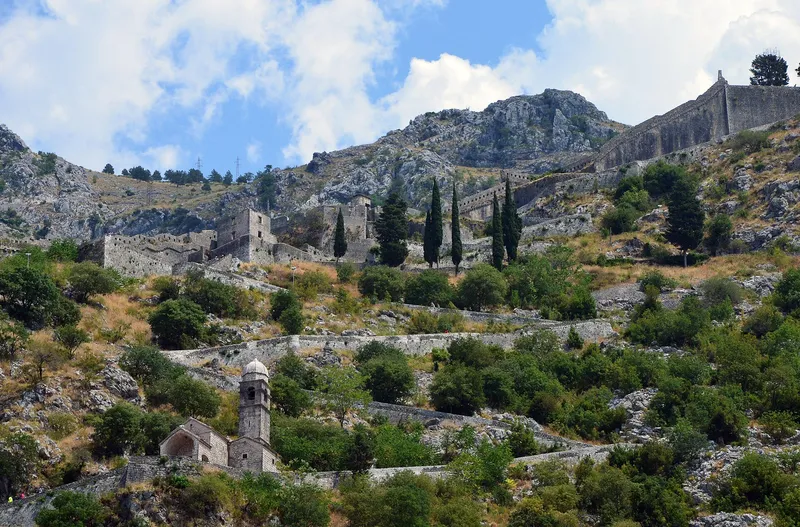
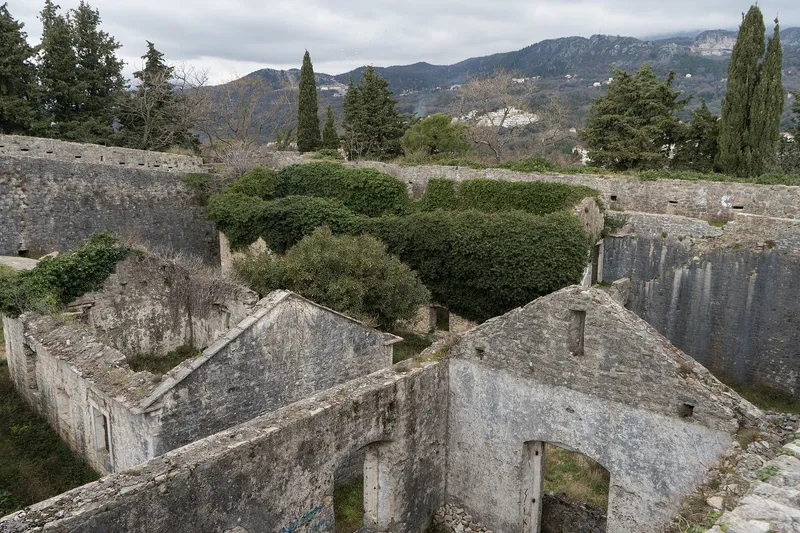
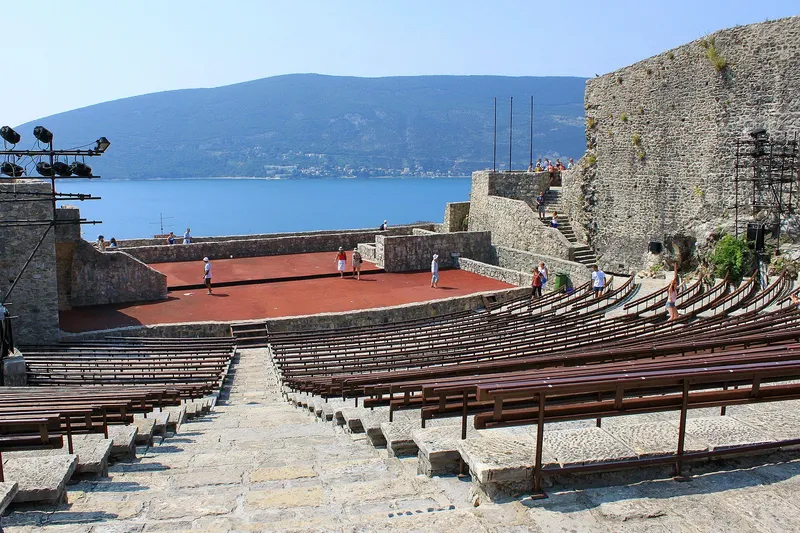
Bedem is the fortress of Onogošt, the old name of Nikšić, on a rocky hill in the south-east of the Nikšić field, 20 to 25 m above the plain. The town grew up below its walls: the settlement that became modern Nikšić began as houses under the fortress. What stands today is mainly Ottoman work from the end of the 17th century, when Onogošt was the main Ottoman stronghold in Herzegovina; the Montenegrin army took it in 1877. The fortress is a few minutes' walk from the town centre, and every August it is the stage of Bedem Fest.
Visiting
The fortress stands in Stara Varoš, about 400 m from the centre of Nikšić, a five-minute walk. The ground inside the walls is uneven, with steps and loose stone, so wear proper shoes. The best time is late August, when Bedem Fest fills the walls with concerts; the festival, organised by Pro Futuro Nikšić, held its fifteenth edition on 22-24 August 2024. Plays and exhibitions are also staged inside. Drive times without traffic: Podgorica 51.4 km, about 1 hour 5 minutes; Danilovgrad 31.6 km, about 36 minutes; Plužine 58.2 km, about 1 hour 20 minutes.

The walls and towers
The fortress has two parts. The upper fortress follows the ridge: 214 m long and about 30 m wide at its widest, with a west wall 1.6 m thick and an east wall 1.1 m thick. At its south end stood a three-storey pentagonal tower, at the north a lower octagonal one, and in the middle the Kastel, the oldest building, with two gun platforms, quarters for the dizdar (commander) and the guard, and a vaulted powder magazine. The lower town below the hill was a quadrilateral with walls 4 m high and 1.45 to 1.5 m thick, towers at the corners and midpoints, and the Great Gate in its 104 m east wall; the south wall was 66 m long and the north 86 m. The lower town had five towers, the upper six.
History
The site has carried several names: Anderba, Sanderva, Anagastum and Onogošt. The name Onogošt first appears in the Chronicle of the Priest of Duklja in the second half of the 12th century and derives from the Gothic commander Anagastos. A Roman origin is possible: Arthur Evans, who visited in 1877, argued from the quadrilateral plan with towers that the walls were Roman work of the 3rd or 4th century, but this remains a hypothesis.
The Ottomans took the town in 1465. They began building the fortress in its present form at the end of the 17th century, and Onogošt became their main stronghold in Herzegovina. The Montenegrin army captured it in 1877, in the war that brought Nikšić into Montenegro. In 2018 the state Centre for Conservation and Archaeology surveyed the site, found the walls and the Nebojša tower in poor condition and prepared a repair and restoration project for the tower.
Nearby
- Memorial on Trebjesa and the 1987 monument on Trebjesa, on the hill above the town.
- Ostrog Monastery, on the road towards Danilovgrad.
- Grahovo memorial park, west of Nikšić.
- The Zeta river, which rises near Nikšić.
- Other fortresses in Montenegro.
History
3rd-4th century
Possible Roman origin
Arthur Evans (1877) argued from the quadrilateral wall plan with towers that the walls were Roman; the origin remains a hypothesis.
12th century
Name recorded
Onogošt is first recorded in the Chronicle of the Priest of Duklja; the name derives from the Gothic commander Anagastos.
1465
Ottoman conquest
The Ottomans take the town.
End of the 17th century
Fortress built
The Ottomans build the fortress in its present form; Onogošt becomes their main stronghold in Herzegovina.
1877
Montenegrin army
The Montenegrin army takes the fortress and Nikšić becomes part of Montenegro.
2018
Conservation survey
The state conservation centre finds the walls and Nebojša tower in poor condition and prepares a repair project for the tower.
On these trips
Sources
Centar za konzervaciju i arheologiju Crne Gore, aktivnosti 2018 (Onogošt name, Nebojša tower survey) · Montenegrina, Nikšić: Bedem, stara tvrđava (names, dimensions, towers) · Portal Onogošt, Nikšić kroz istoriju: Tvrđava Onogošt (Evans, 1465, 17th century, 1877) · Pro Futuro Nikšić, Bedem Fest 2024 press release (15th edition, 22-24 August 2024) · OpenStreetMap / Nominatim, Bedem, Nikšić (coordinates), ODbL · OSRM routing (car and foot, OpenStreetMap data, ODbL; times without traffic)