Kotor walls and St John's Fortress
About 4.5 km of walls and around 1,400 steps above Kotor Old Town
City walls and hilltop fortress · Walls built between the 6th and 19th centuries · Above Kotor Old Town
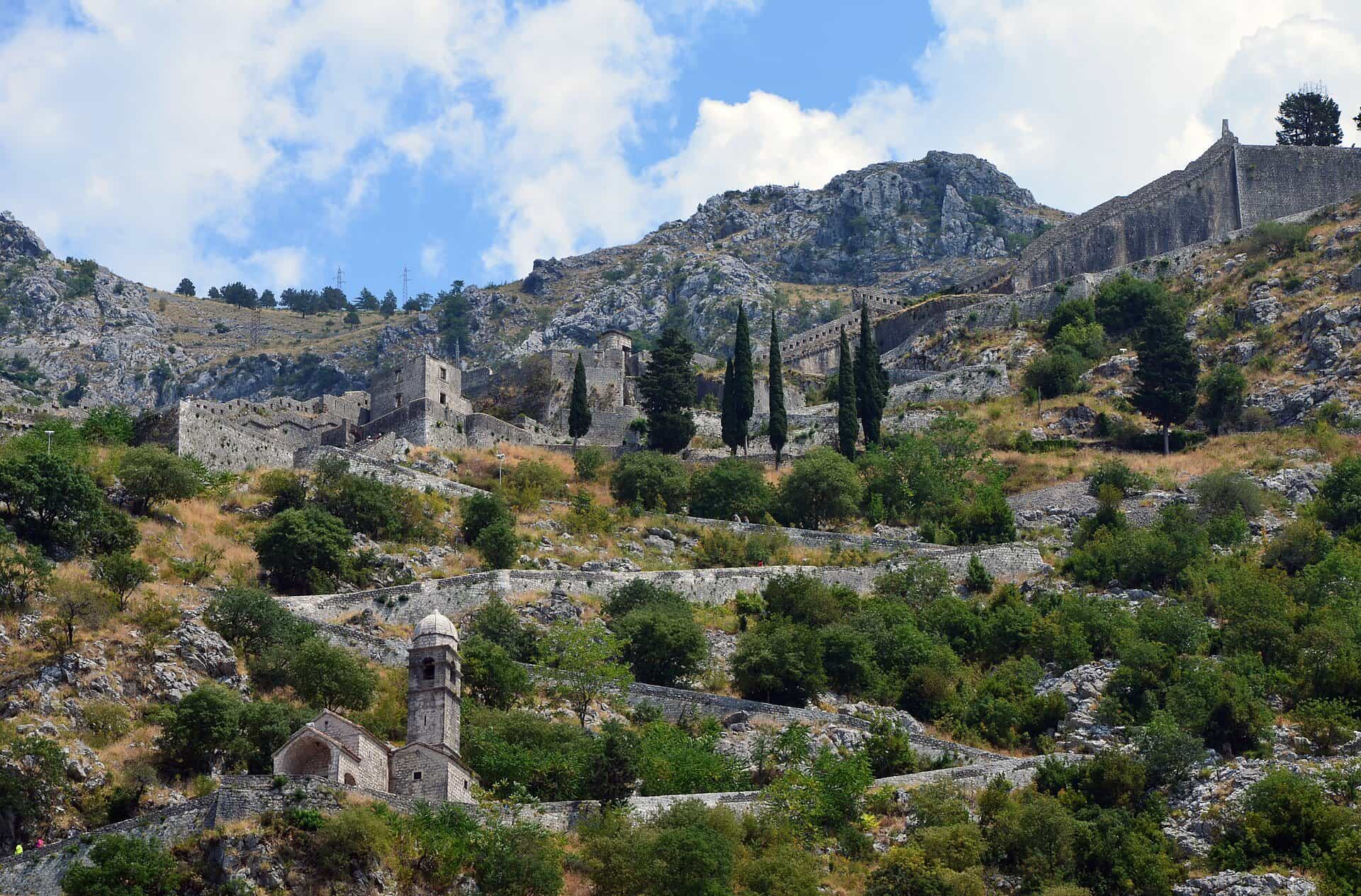
Photo: Gzzz · CC BY-SA 4.0
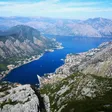
The walls of Kotor rise from the sea, zigzag up the bare hill behind the Old Town to St John's Fortress (San Giovanni in Italian, San Đovani locally) and come back down the other side: about 4.5 km of wall, up to 20 m high in places. The climb to the fortress is around 1,400 steps and takes about an hour; the top stands roughly 260-300 m above the bay. A ticket costs €15 and residents of Montenegro climb free. The whole system lies inside the Natural and Culturo-Historical Region of Kotor, a UNESCO World Heritage site since 1979, and the fortress is also a component of the Venetian Works of Defence serial site inscribed in 2017. The other fortresses of Montenegro have their own pages.

Opening hours and tickets
| Ticket | Price |
|---|---|
| Adults | €15 |
| Residents of Montenegro | Free |
The fee for the walls and St John's Fortress rose from €8 to €15 by a decision of the Kotor Municipal Assembly in October 2023; people with residence in Montenegro do not pay.
Hours differ by season and by listing: travel sites quote anything from 08:00-16:00 to 07:00-20:00 in season, and the children's rate is not fixed in the 2023 decision. Check both at the ticket point on the day.
What to see
- The walls themselves. Over 4 km long and up to 20 m high in places, they run along the sea on the west, past the Gurdić spring on the south and up the cliffs of St John's hill.
- North Gate. Built after the attack of Hayreddin Barbarossa was repelled.
- South Gate. A triple-gate system ending in an 18th-century bridge over the Gurdić spring.
- Our Lady of Remedy (Gospa od Zdravlja). A votive church built after a plague, halfway up the climb; five votive chapels stand along the stair.
- St John's Fortress. The command centre of Kotor's defence at the top, with artillery positions, armouries and living quarters.

History
The walls grew over thirteen centuries, from the 6th to the 19th. The April 1979 earthquake damaged the town walls along with other monuments; the Kotor region was inscribed on the World Heritage List that year and at the same time placed on the List of World Heritage in Danger at the request of the state. It came off the Danger List in 2003.
In 2017 Kotor's fortifications gained a second listing as a component of the transnational serial site Venetian Works of Defence between the 16th and 17th Centuries, alongside sites in Italy and Croatia. This is a separate inscription, not an extension of the 1979 one. Kotor is Montenegro's only component of that site; Forte Mare in Herceg Novi, often described online as part of it, is not.
Getting there
The climb starts inside the Old Town of Kotor on a steep, ticketed stair of about 1,400 steps (counts of 1,200 and 1,350 also circulate). Allow about an hour up; the way down is quicker but hard on the knees, and the steps are uneven, so wear proper shoes. For the view without the stair, the lower station of the Kotor-Lovćen cable car at Dub is 4.2 km from Kotor by road, about 7 minutes.
How high and how many steps?
The fortress stands at roughly 260-300 m above sea level, depending on which point of St John's hill is measured, and the stair has about 1,400 steps. Treat both figures as approximate.
Is it a UNESCO site?
Yes, twice over: the walls lie inside the Natural and Culturo-Historical Region of Kotor (1979), and the fortress is part of the Venetian Works of Defence serial site (2017).
Nearby
- Church of St Luke, 1195, in the Old Town below the walls.
- Maritime Museum of Montenegro, in the Old Town.
- Kotor-Lovćen cable car, lower station at Dub, 4.2 km by road.
- Our Lady of the Rocks, the islet off Perast, in the same municipality.
- Kotor serpentine viewpoint on the old road to Cetinje.
History
6th-19th century
Walls built over thirteen centuries
The roughly 4.5 km of walls were built over thirteen centuries, from the 6th to the 19th.
1979
Earthquake and UNESCO inscription
The April 1979 earthquake damaged the town walls among other monuments. The Kotor region was inscribed on the World Heritage List the same year and placed on the List of World Heritage in Danger at the state's request.
2003
Off the Danger List
UNESCO removed the Kotor region from the List of World Heritage in Danger.
2017
Venetian Works of Defence
Kotor Fortress becomes a component of the transnational serial site Venetian Works of Defence between the 16th and 17th Centuries, with sites in Italy and Croatia. This is a separate inscription, not an extension of the 1979 one.
2023
Ticket raised to €15
The Kotor Municipal Assembly raised the fee for the walls and St John's Fortress from €8 to €15; people with residence in Montenegro are exempt.
On these trips
- 3 days in Montenegro: Kotor, Lovćen, BudvaDay 1 · Kotor: old town, the walls and the bay
- Day trips from Budva: Kotor, Cetinje, SkadarTrip 1 · Kotor, the fortress walk and Perast
- 7 days in Montenegro: coast to Durmitor loopDay 1 · Kotor: old town, the walls and the bay
- 10 days in Montenegro: the full loop by carDay 1 · Kotor: old town, the walls and the bay
Sources
National Tourism Organisation of Montenegro, Fortresses · National Tourism Organisation of Montenegro, Cultural heritage: UNESCO · UNESCO World Heritage Centre, state of conservation of the Kotor region, 2003 · Boka News, 18 Oct 2023, SO Kotor: ulaznica za obilazak bedema 15 eura · Kurir, Kotor naplaćuje obilazak bedema (secondary) · Kotor Tourist Organisation, Discover the Majestic Walls of Kotor · Municipality of Kotor, Meet Kotor (St John's hill 260 m) · Routes computed with OSRM on OpenStreetMap data (ODbL) · Wikipedia, Fortifications of Kotor (castle of St John, San Giovanni)