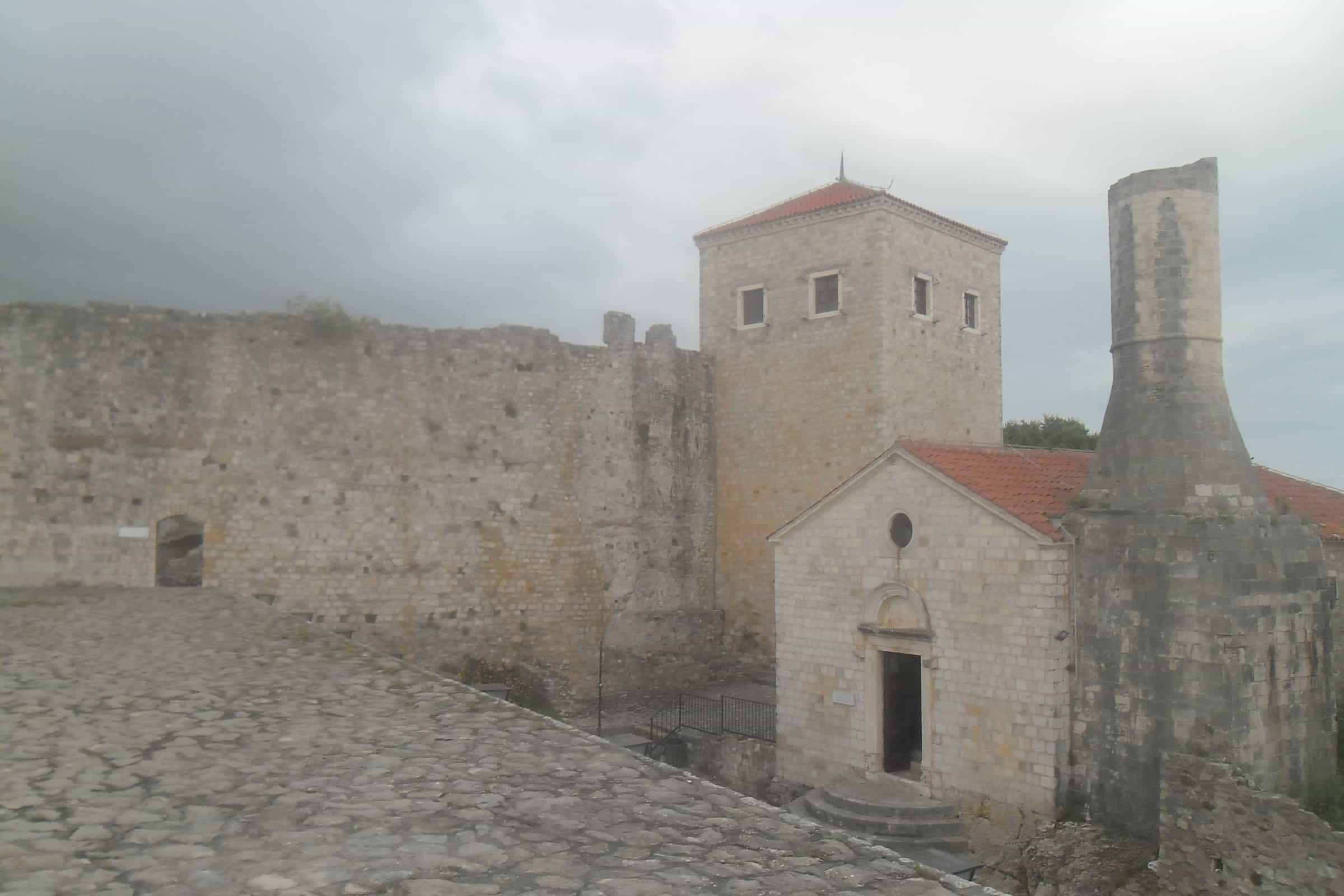
Church-Mosque and Ulcinj Museum
Venetian church of 1510, Ottoman mosque after 1571, and since the later 20th century the home of the Ulcinj Museum, by the old slave square
Venetian church turned Ottoman mosque · Ulcinj Old Town
Photo: August Dominus · CC BY-SA 4.0
The Church-Mosque (Crkva-džamija) in Ulcinj's Old Town was built in 1510 under Venetian rule as the church of St Mary, turned into a mosque after the Ottomans took Ulcinj in 1571, given a minaret in 1693, and used since the later 20th century as the Ulcinj Museum (Zavičajni muzej Ulcinj), the town's museum of local history. It stands beside the small square that was once the slave market, 25 m from the centre of the Old Town and Balšić Tower. The museum's opening hours and tickets are not published: check with the tourist office in Ulcinj before you come for it.
- Built 1510, as the Venetian church of St Mary
- Mosque Of Sultan Selim II, after the conquest of 1571; minaret added 1693
- Today Part of the Ulcinj Museum: archaeological, ethnographic and art collections, and a lapidarium
- Highlights A Greek dedication to Artemis Elaphebolos, a cameo of Athena, two Bronze Age axes
- Where In the Old Town, by the former slave square, 454 m from Mala plaža
The museum
The Church-Mosque is part of the Ulcinj Museum, which holds archaeological, ethnographic and art collections: finds from the prehistoric, Hellenistic, Roman, medieval and Ottoman periods. Three pieces stand out: an ancient pedestal with a Greek dedication to Artemis Elaphebolos by the community of stonecutters, an ancient cameo of Athena wearing a helmet, and two Bronze Age axes of the Shkodra-Dalmatian type. The lapidarium shows an Ionic capital, parts of a ciborium from the 9th-century Small Church (Mala crkva) and objects from the Ottoman period.
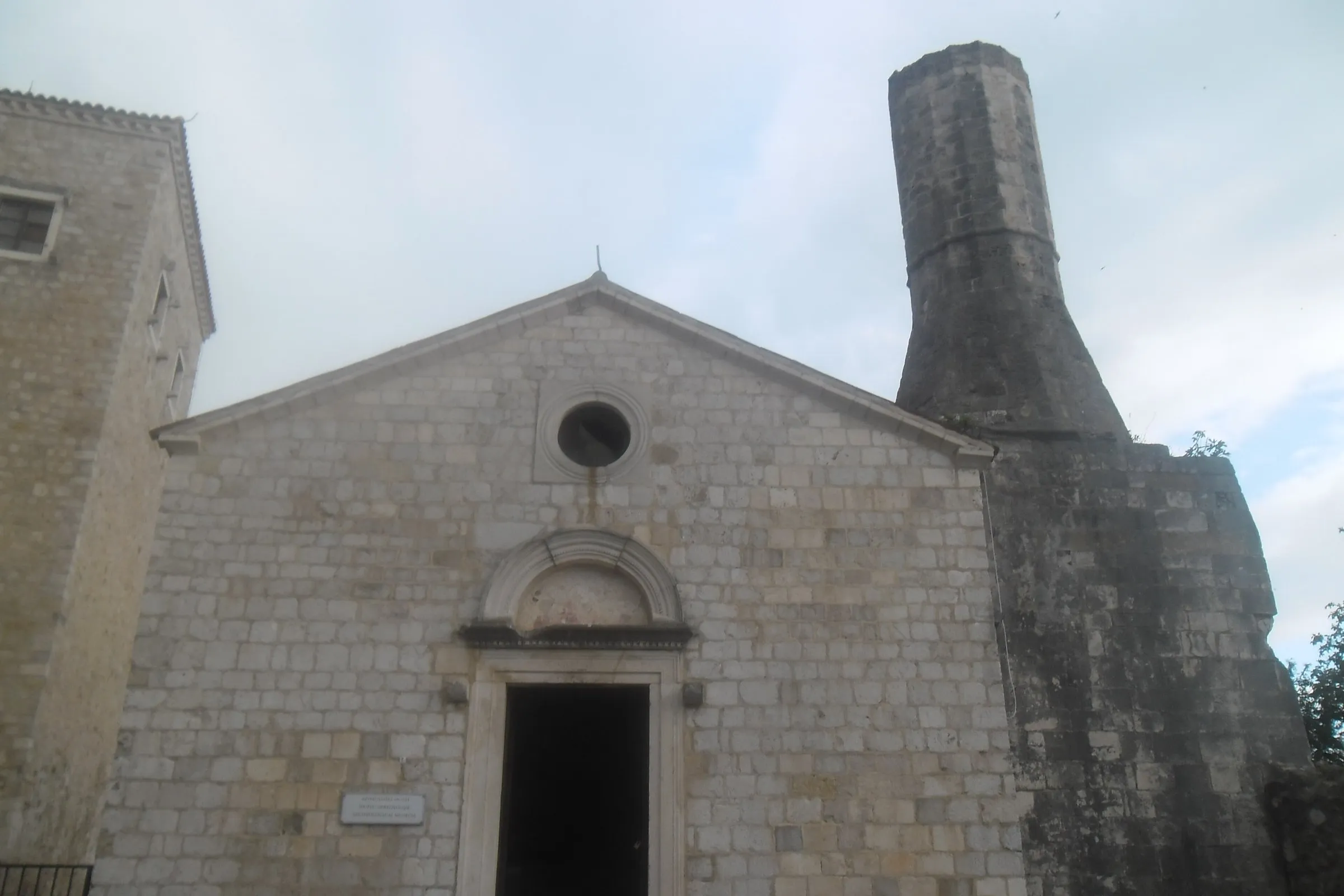
The municipality proposed making the building a town museum in 1966. Renovation of the museum began around 2022, with about EUR 80,000, the first money spent on it in some 40 years.
Good to know: No opening hours or ticket prices are published for the museum, so ask before you plan a visit around it. The building and the square can be seen from outside at any time.
The building
The church of St Mary (Sveta Marija) was built in 1510, while Ulcinj was Venetian. After the Ottoman conquest of 1571 it became a mosque of Sultan Selim II; the conversion is also dated to 1693, the year the minaret was added. It was an imperial mosque: it had no endowments of its own, and its staff were paid from the state budget. A mekteb, a Qur'an school, was attached to it, and the town's sea captains (reisi) met here when important decisions had to be taken.
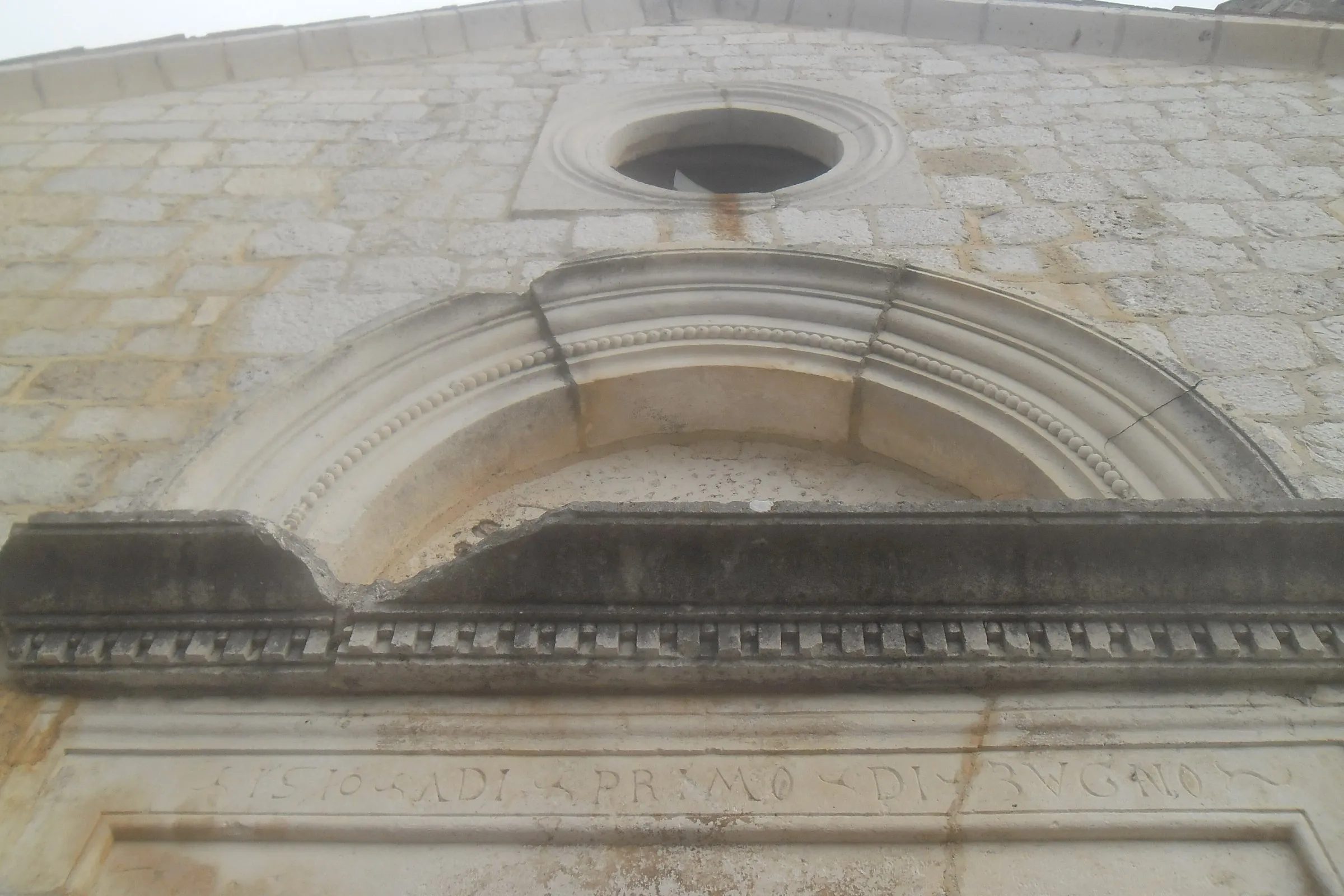
In 1693 Hadži Halil Skura added the minaret, of fine cut stone on a square base narrowing towards the top. The minaret is thought to have fallen in the earthquake of 1979; no exact record and no earlier photograph of it are known. The building's time as a mosque is given as ending in 1878, when Montenegrin forces first entered Ulcinj, while local accounts hold that prayers were still said here in the 1960s. It brings the West and the East together in one building, as nowhere else in Ulcinj.
The slave square
In front of the Church-Mosque is a small square ringed by vaults, once the slave square. From the mid-17th century Ulcinj was a market for captives taken by its corsairs, who were held for ransom rather than for labour.
Getting there
The Church-Mosque is inside the walled, still lived-in Old Town: 25 m from the centre of the Old Town, 201 m from the Cervantes monument (2 minutes on foot), 454 m from Mala plaža (5 minutes), 917 m from the Freedom Monument (11 minutes) and 1.2 km from the clock tower (15 minutes). Parking is covered on the Ulcinj page.
Nearby
- Ulcinj Old Town and Balšić Tower, 25 m.
- Cervantes monument, 201 m, 2 minutes.
- Pasha's Mosque and the hammam, 349 m, 5 minutes.
- Mala plaža, 454 m, 5 minutes.
- Freedom Monument, 917 m, 11 minutes.
- Clock tower (Sahat kula), 1.2 km, 15 minutes.
- Zavičajni muzej Bar in King Nikola's Palace, Bar.
Questions
Is the Church-Mosque in Ulcinj a church or a mosque?
The Church-Mosque in Ulcinj was built in 1510 as the Venetian church of St Mary, became a mosque after the Ottoman conquest of 1571 and now houses the Ulcinj Museum.
What is in the Ulcinj Museum?
The Ulcinj Museum in the Church-Mosque holds archaeological, ethnographic and art collections, with an ancient pedestal dedicated to Artemis Elaphebolos, a cameo of Athena and two Bronze Age axes among its highlights.
When is the Ulcinj Museum open?
The Ulcinj Museum publishes no opening hours or ticket prices; ask locally before you plan a visit.
History
1510
Church of St Mary
The church of St Mary is built under Venetian rule.
1571
Mosque
After the Ottoman conquest the church becomes a mosque of Sultan Selim II; the conversion is also dated to 1693.
1693
Minaret
Hadži Halil Skura adds the minaret of cut stone.
1878
Montenegrin forces enter Ulcinj
Its use as a mosque is given as ending when Montenegrin forces first enter Ulcinj; local accounts say prayers continued into the 1960s.
1966
Museum proposed
The municipality proposes making the building a town museum.
1979
Earthquake
The minaret is thought to have fallen in the earthquake.
From about 2022
Renovation begins
Renovation of the museum begins, with about EUR 80,000, the first money spent on it in some 40 years.

More monuments
Nearest by road first


Sources
Tourist Organisation Ulcinj, Crkva-džamija u Starom gradu (1510, St Mary, Selim II, imperial mosque, minaret 1693, 1878, mekteb, reisi, museum) · Tourist Organisation Ulcinj, The Church-Mosque (English page) · Tourist Organisation Ulcinj, Stari grad (museum highlights, lapidarium, slave square) · Radio Slobodna Evropa, Crkva-džamija Ulcinj (2 Jan 2024: 1966 proposal, collections, 1693 archive date, 1960s prayers, minaret and 1979 earthquake, renovation) · OpenStreetMap way 753528252, ODbL · OSRM routing (OpenStreetMap data, ODbL)