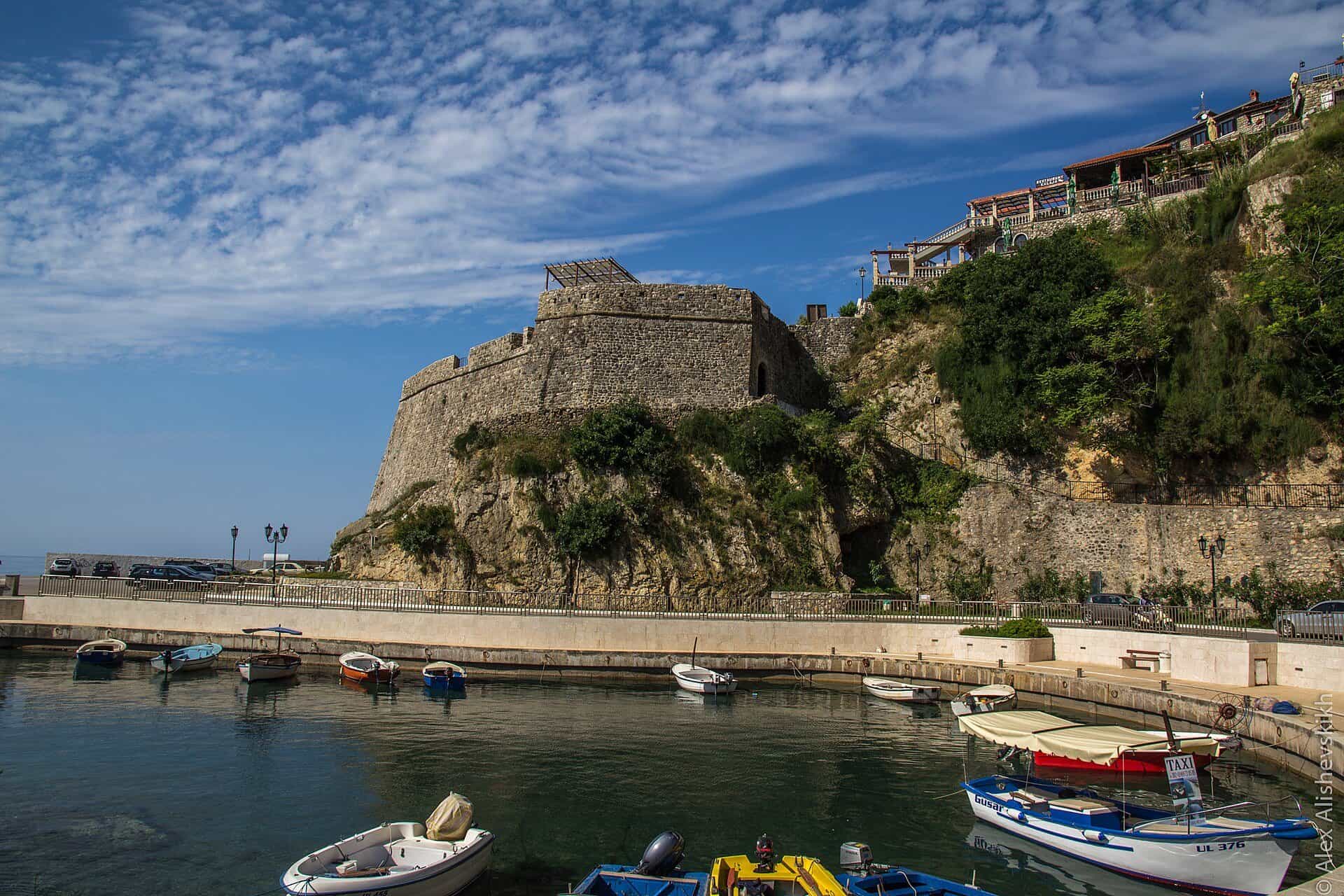
Ulcinj Old Town and Balšić Tower
Walled town above the sea with Illyrian wall remains, 6th-century gates and the tower of the Balšićs
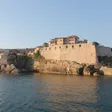
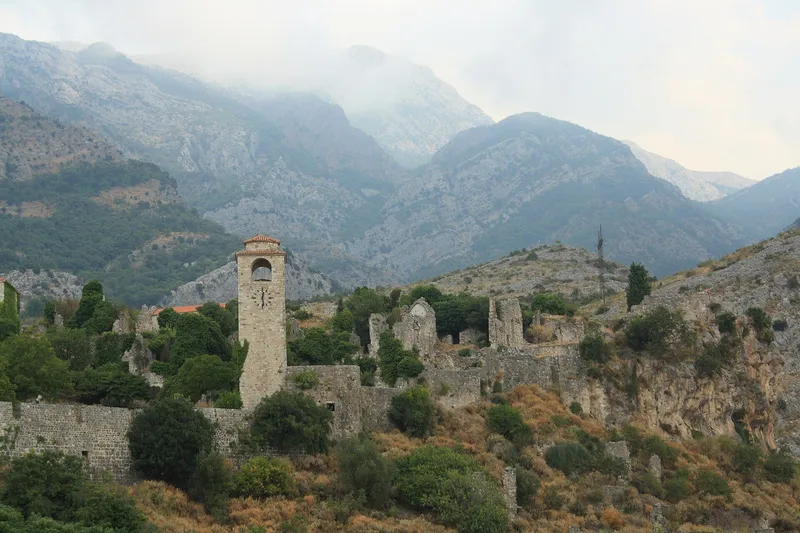
Walled old town with citadel and tower · Old Town of Ulcinj
Photo: Alex Alishevskikh · CC BY-SA 2.0
The Old Town of Ulcinj sits on a rock above the sea at the southern end of the Montenegrin coast. The tourist organisation calls it one of the oldest urban ensembles on the Adriatic, with about 25 centuries of continuous life: Illyrian wall remains, two gates from the 6th century, a citadel with a tower attributed to the Balšić lords of around 1400, and Ottoman additions from three centuries of rule. It has been on Montenegro's UNESCO Tentative List since 2018 and is one of the three walled old towns of the coast with Kotor and Budva.
Opening hours and tickets
The Old Town itself is a living quarter, open at all times. Ask at the Balšić Tower gallery and the town museum for opening hours and fees.
What to see
- The two gates. The lower gate on the east faces the sea, the upper on the west faces the land; both date from the 6th century.
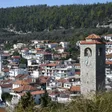
- Balšić Tower. On the highest plateau of the citadel. Tradition gives it to the last Balšićs; the Ottomans added the third floor and a vaulted ground floor. It now serves mainly as a gallery and a venue for poetry evenings.
- The town museum. Holds a base with a Greek inscription to Artemis, a cameo of Athena and Bronze Age axes; the lapidarium has pieces of a 9th-century ciborium.
- The former Slave Square in front of the church-mosque. Ulcinj was a slave market from the mid-17th century, where captives were held for ransom.
History
The sources differ on the first builders: the Ulcinj Tourist Organisation says the oldest walls are Illyrian, while the National Tourism Organisation says they were built by the ancient Greeks. The town fell to the Nemanjićs in 1183, was ruled by the Balšić family from 1360 to 1421, when it became their capital, and then spent about 150 years under Venice. The Ottomans took it in 1571, shortly before the Battle of Lepanto, and held it until 1878/80; it was annexed to Montenegro in 1880.
The legend that Miguel de Cervantes was held captive in Ulcinj is presented by the tourist organisation as legend. Its own account has him captured in 1575; see the page on the Cervantes monument.
Getting there
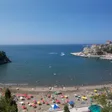
The Old Town rises at the south-western end of the town of Ulcinj, above Mala plaža.
Nearby
- Ulcinj clock tower, 1754.
- Freedom Monument above the waterfront.
- Mala plaža, directly below the Old Town, and Velika plaža to the south-east.
- Stari Bar, the other ruined walled town of the south coast.
History
Antiquity
Illyrian walls
The oldest wall remains are Illyrian, per the Ulcinj Tourist Organisation (the NTO says 'built by the ancient Greeks').
6th century
Two gates
The town got its lower gate (east, from the sea) and upper gate (west, from the land).
1183
Nemanjić rule
Ulcinj fell to the Nemanjićs.
1360-1421
The Balšićs
The Balšić family ruled Ulcinj; tradition attributes the citadel tower to the last Balšićs, whose capital it was around 1400.
1421-1571
Venice
About 150 years of Venetian rule.
1571-1880
Ottoman Ulcinj
Taken just before the Battle of Lepanto; a slave market from the mid-17th century; annexed to Montenegro in 1880 after the end of Ottoman rule in 1878/80.