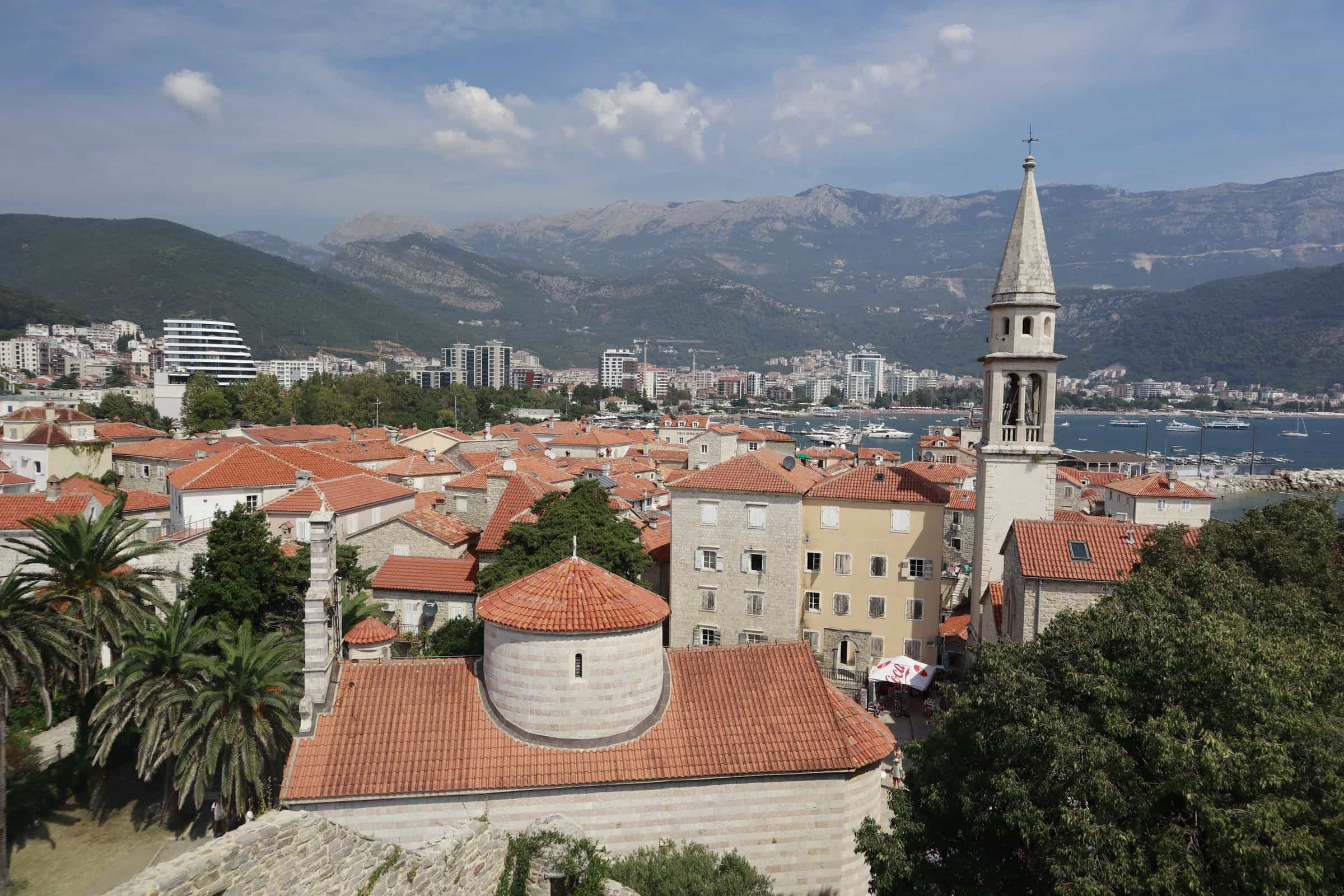
Budva Old Town
The walled peninsula town of Budva: Venetian walls with three towers, the Citadel, four churches and lanes where 217 people live
Walled town · Seaward end of Budva
Photo: Wistula · CC BY-SA 4.0
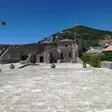
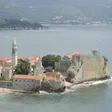
Budva Old Town (Stari grad) is the walled town on the peninsula at the seaward end of Budva, settled for more than 2,500 years and still lived in: 217 people had their home inside the walls at the 2023 census. The lanes, squares and gates are open and free at all hours. The two paid visits are the walk along the Venetian walls, €2 from April to November, and the Citadel at the tip, €5. Inside are three towers, four churches, the town museum and the squares that a theatre festival has used as its stage every summer since 1987.
Tickets and hours
| Visit | Ticket |
|---|---|
| Lanes, squares and gates | free, open at all hours |
| Town walls (JU Muzeji i galerije Budve, the municipal museums) | €2, brochure included |
| Citadel (private operator) | €5; free for Budva residents with a Budva ID card |
The walls walk is open daily 10:00-20:00 from April to November. The walls and the Citadel are two separate visits with separate tickets from two operators; the Citadel's hours are on its own page.
The walls and towers
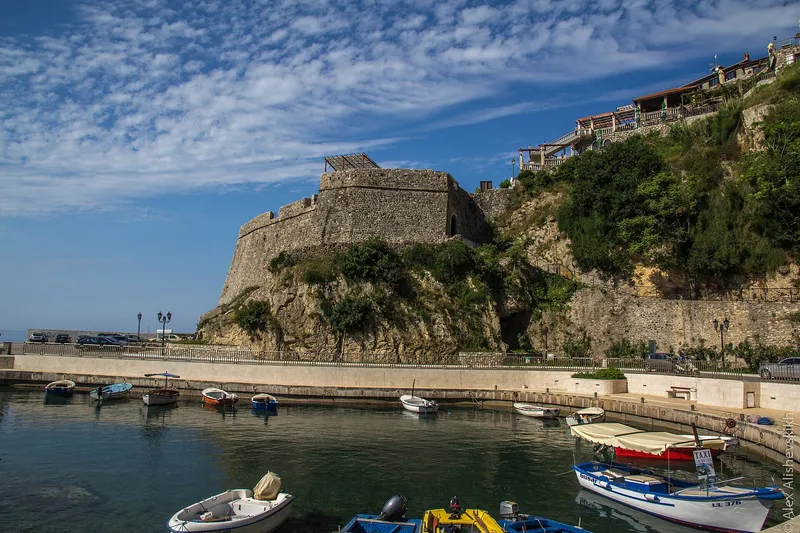
The earliest walls were probably early Byzantine, 6th to 9th century, and a wall of the Benedictine monastery founded in 840, today the church of Santa Maria in Punta, served as the sea wall. The present line is Venetian: the circuit was completed in 1459 under the rector Nikola Memo, the Gradenigo bastion followed in 1498, and a 16th-century drawing shows six towers. The earthquake of 1667 brought the walls and towers down; they were rebuilt on the old foundations, so what stands today is largely Venetian work of the 15th to 18th centuries. Three towers carry names: Gradenigo in the north-west, the main one, Repeno in the north-east and Murava on the south. The main land gate is the Porta di Terra Ferma. The walls walk, run by the municipal museums, starts and ends at the Citadel.

The Citadel
The Citadel, or Kaštel, is the fortress on the highest point of the south side. First mentioned in 1425, it took its present shape in the 19th century under Austria-Hungary as a separate fortification inside the town, with a well, barracks and ammunition stores; the small church of Santa Maria de Castello was demolished in that rebuilding and its remains, a single nave with a semicircular apse from the 12th-14th century, are still inside. It is now privately run with a small museum and a library; the view, the church remains and the ticket are on its own page.

The lanes
Within the walls the town is one architectural whole of stone houses along narrow pedestrian lanes and small squares, with residents still living above the shops and restaurants. The earthquake of 1979 damaged it heavily and the repair took the following decade. Every summer since 1987 the Grad teatar festival has staged its programme on the squares of the Old Town.

The churches
Four churches stand inside the walls. Santa Maria in Punta is the oldest, on the site of the monastery of 840 at the seaward point. St John (Sv. Ivan) was the cathedral until 1828; the remains of an early Christian basilica lie beside it. Holy Trinity was built after 1797, and St Sava the Sanctified is the fourth.

Museums and galleries
- The Museum of the City of Budva, with archaeological and ethnographic collections.
- The Modern Gallery, founded in 1972.
- The memorial house of the writer Stefan Mitrov Ljubiša.
History in brief
Budva was a "city of Illyria" more than 2,500 years ago; legend ties its founding to Kadmos and its name to the Greek word bous, an ox. Earlier names were Butua, Buthos, Butoba and Civitas Antiqua. The Benedictine monastery was founded in 840, and a Saracen raid destroyed the town in 841. The Citadel enters the record in 1425; Venice held Budva from 1442 to 1797 and gave the walls their form, and an Ottoman attack came in 1571. The earthquakes of 1667 and 1979 each brought a rebuilding. The Old Town is protected as a cultural-historical monument; it is on neither the UNESCO World Heritage List nor Montenegro's tentative list.
Getting there
The Old Town is pedestrian and reached on foot from the town centre, the marina and the western end of Slovenska plaža; Mogren beach is reached by the cliff path west of the walls. Driving times to the land gate by car:
| From | Distance | Time |
|---|---|---|
| Kotor | 23 km | 32 min |
| Tivat | 25 km | 34 min |
| Cetinje | 32 km | 45 min |
| Bar | 44 km | 70 min |
| Podgorica | 65 km | 85 min |
Parking and buses are on the Budva city page.
Questions
Is Budva Old Town free?
Yes: the lanes, squares and gates have no gate and no ticket. The walls walk costs €2 (April to November) and the Citadel €5.
How old is Budva Old Town?
The town has been settled for more than 2,500 years. The first dated building is the Benedictine monastery of 840, today Santa Maria in Punta; the Citadel is first mentioned in 1425 and the walls are largely Venetian, 15th to 18th century.
Is Budva Old Town a UNESCO site?
No. It is on neither the World Heritage List nor Montenegro's tentative list. Kotor Old Town, 23 km away, is the UNESCO old town.
Nearby
- Budva Citadel, at the tip of the Old Town.
- Museum of the City of Budva, inside the walls.
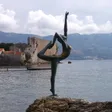
- The Dancer (Balerina), on the rocks west of the Old Town.
- Mogren beach and Mogren fortress.
- Kotor Old Town, 23 km, and the other old towns of Montenegro.
History
Over 2,500 years ago
City of Illyria
Recorded as a "city of Illyria"; legend ties the founding to Kadmos and the name to the Greek bous (ox). Earlier names Butua, Buthos, Butoba and Civitas Antiqua.
840-841
Monastery and Saracen raid
The Benedictine monastery (today Santa Maria in Punta) was founded in 840; one of its walls served as the sea wall. A Saracen raid destroyed the town in 841.
1442-1797
Venetian walls
Venice held Budva from 1442 to 1797; the circuit of walls was completed in 1459 and the Gradenigo bastion in 1498. The Citadel is first mentioned in 1425 and an Ottoman attack came in 1571.
1667
Earthquake and rebuilding
The earthquake destroyed the walls and towers, which were rebuilt on the old foundations.
1979
Earthquake
Heavy earthquake damage, repaired over the following decade.
1987
Grad teatar
Grad teatar has used the Old Town as its festival stage every summer since 1987.
Sources
Budva Tourist Organisation, Stari grad (attraction 1) · Budva Tourist Organisation, Gradske zidine (attraction 13) · Budva Tourist Organisation, Citadela (attraction 20) · Budva Tourist Organisation, History of Budva · Budva Tourist Organisation, Razgledanje (sightseeing list) · JU Muzeji i galerije Budve, Bedemi grada Budve (undated) · JU Muzeji i galerije Budve, Bedemi grada Budve otvoreni za posjetu (2020) · RTV Budva, 17 Mar 2025, Sa budvanskom ličnom kartom besplatan obilazak Citadele (local broadcaster, secondary) · National Tourism Organisation of Montenegro, Old towns of Montenegro · Government of Montenegro, tentative list article (Budva not on it) · MONSTAT, 2023 census by settlement · OpenStreetMap, relation 18944652 (Stari Grad) and node 428600762 (Porta di Terra Ferma), © OpenStreetMap contributors, ODbL · Routes computed with OSRM on OpenStreetMap data (ODbL)