Podmaine Monastery (Podostrog)
The Dormition monastery under Ostrog hill above Budva, where Bishop Danilo died in 1735 and Njegoš wrote part of The Mountain Wreath
Orthodox monastery with two churches · Mainski put
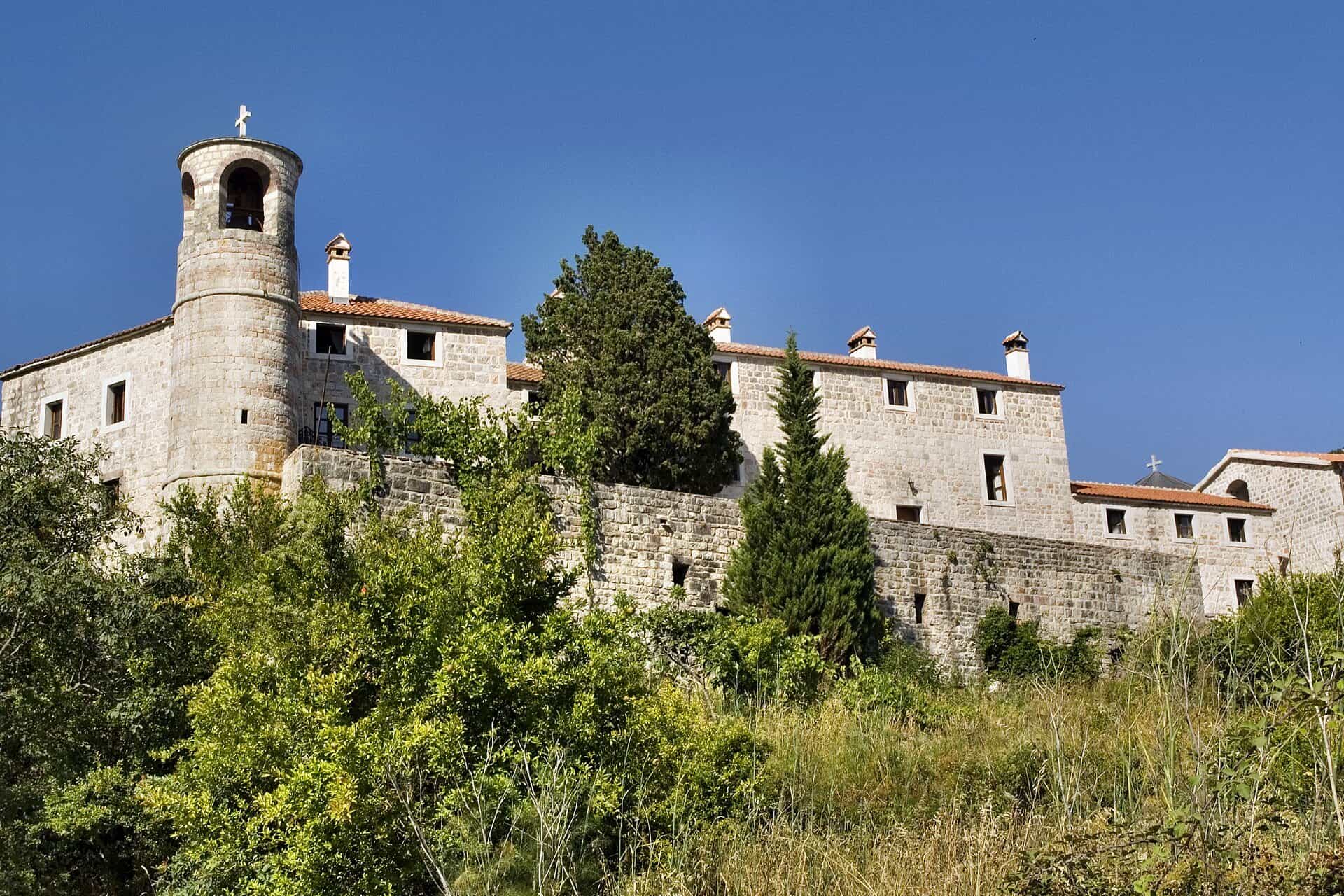
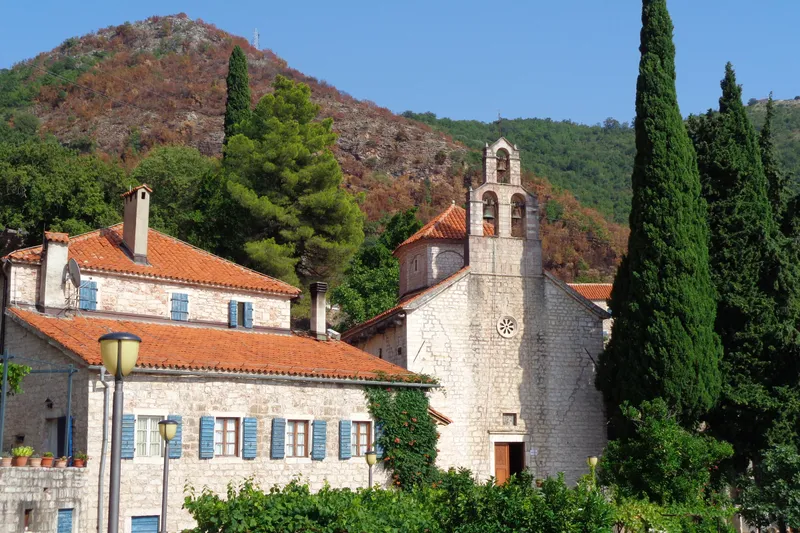
Podmaine Monastery (Manastir Podmaine), also called Podostrog, is an active Orthodox monastery of the Metropolitanate of Montenegro and the Littoral about 2 km north of Budva Old Town, on a rise above the Budva field under Ostrog hill. It has two churches: a small 15th-century church with frescoes renewed in 1630, and the large church of the Dormition built in 1747. Bishop Danilo, founder of the Petrović dynasty, died here in 1735, and Njegoš wintered here and wrote part of The Mountain Wreath. It is 2.8 km by road from Budva Old Town (8 minutes), or a 31-minute walk.
- Churches A small church of the 15th century with frescoes of 1630, and the Dormition church of 1747
- People Bishop Danilo died here in 1735; Njegoš wrote Svobodijada here and part of The Mountain Wreath
- Feast Dormition of the Mother of God, 28 August, with a liturgy and a procession around the church
- Visiting Active men's monastery; no published hours or fee
- Where Mainski put, above Budva: 2.8 km by car from the Old Town, 1.9 km on foot from Slovenska plaža
Two names, two places
Good to know: Two places near Budva carry the name Podmaine. This page is about the Dormition monastery on the slope under Ostrog hill, the one with the Njegoš and Bishop Danilo history, which is also called Podostrog. The name Podmaine comes from a former monastery in the Maine field below, of which only the church of St Petka survives; the name Podmaine is also used for that church alone, and this monastery is then called Podostrog. The St Petka church is described in its own section below.
History
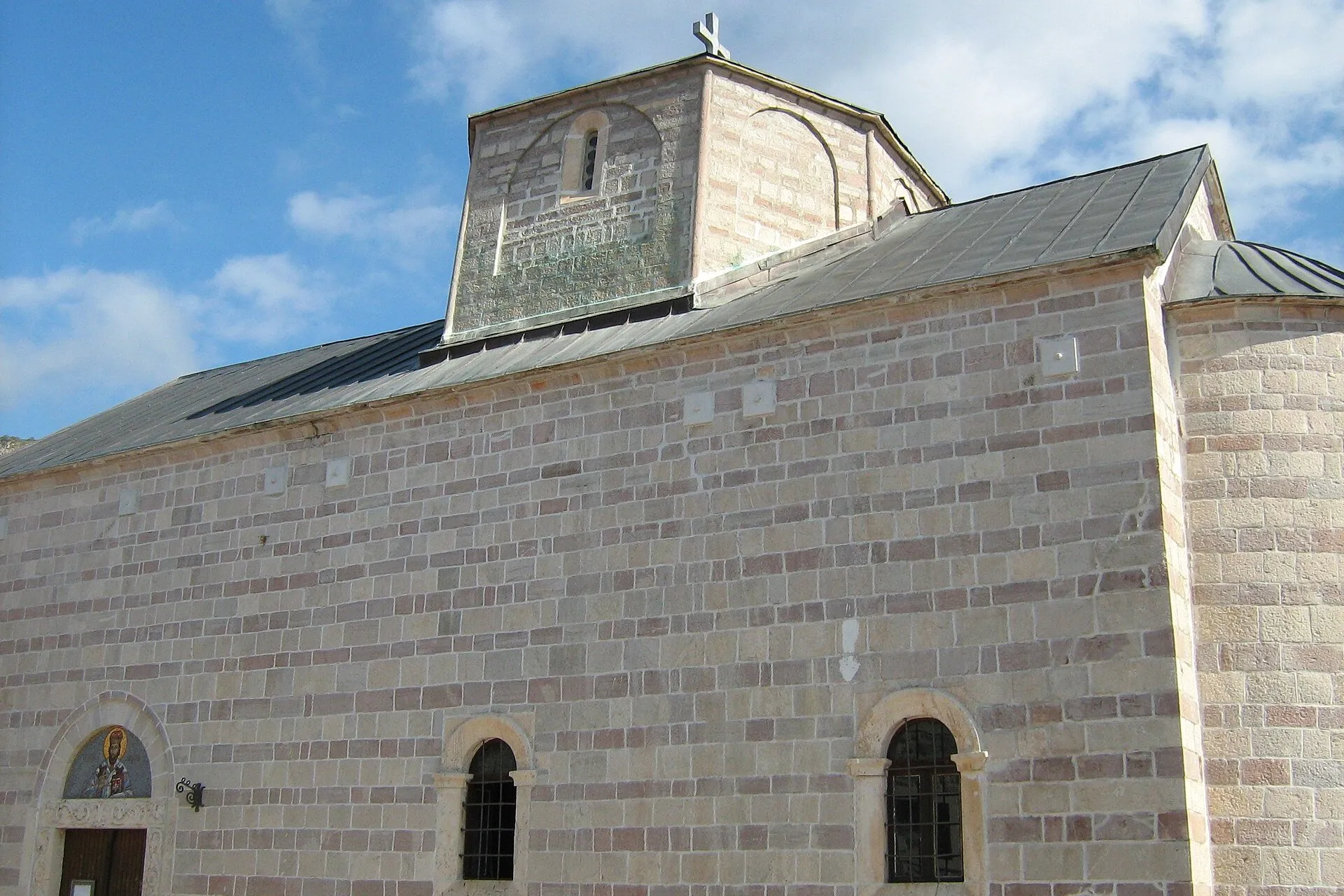
By tradition the monastery goes back to the time of the Crnojević lords. The small church is dated to the 15th century from its architecture, as a Crnojević endowment raised on the ruins of an older church. The first written record is from 1630, when its frescoes were renewed by the hieromonk Visarion of the Cetinje monastery, in the time of Bishop Ruvim. For a time the monastery served as a residence of the Metropolitans of Cetinje.
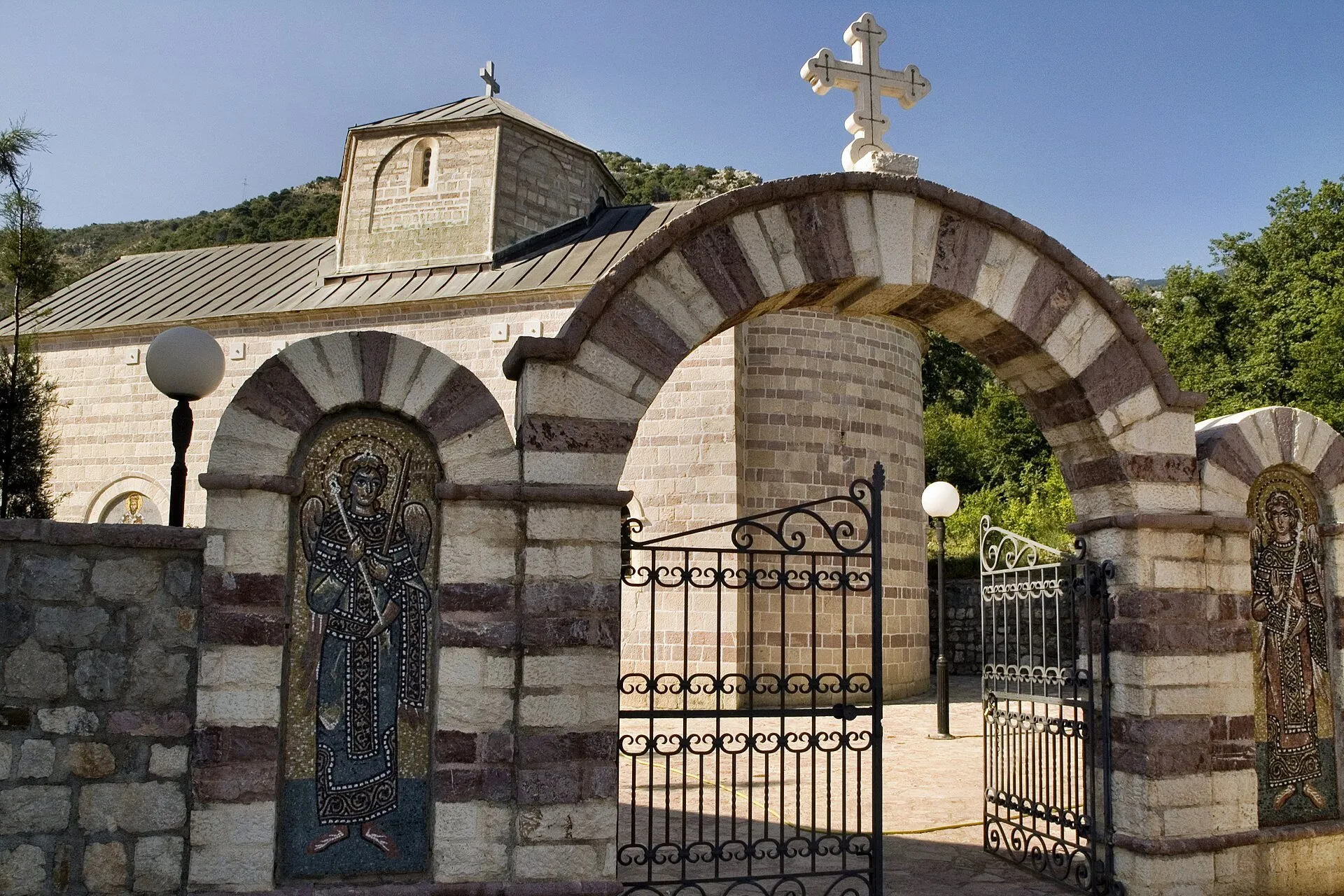
Bishop Danilo I, founder of the Petrović dynasty, died here in 1735 and was buried here; his remains stayed until the 1850s, when Prince Danilo had them moved to Cetinje, where they now lie in Bishop Danilo's Mausoleum on Orlov krš. Bishop Sava Petrović built the large church of the Dormition in 1747; other accounts put the building at 1747-1756 and credit bishops Sava and Vasilije together. In the second half of the 18th century Venice twice tried to take the monastery, and later the French general Marmont asked Petar I to garrison it and was refused.
Petar II Petrović Njegoš liked to spend his winters here. He wrote Svobodijada at Podmaine in 1835 and part of The Mountain Wreath (Gorski vijenac). In 1837 he had to cede Podmaine and the monastery of Stanjevići to Austria, and with the money built his new residence at Cetinje, Biljarda, finished in 1839. The monastery then declined: it was an Austrian military post, then the property of the priest Filip Tanović; both churches were burned in the Boka uprising of 1869; in the First World War it held an Austrian garrison and prison. The lodgings stayed in the Tanović family until nationalisation in 1953. The earthquake of 15 April 1979 damaged it heavily.
Restoration began in March 1995 on the initiative of Metropolitan Amfilohije. The church and the lodgings were consecrated in 2000 and the new wall paintings in 2002. A watercolour by Theodor Karaczay of 1848 shows the monastery with its tower and an eastern entrance building that no longer exists.
What you see
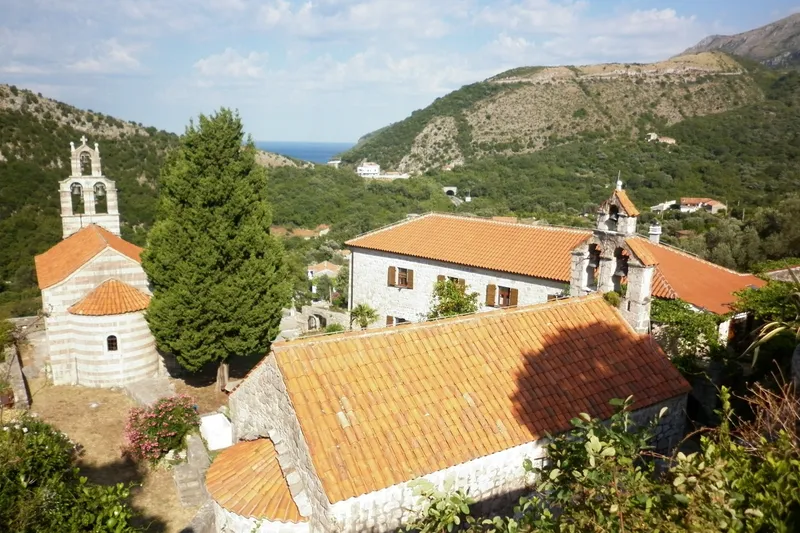
The small church stands at the centre of the complex, at the north-west end, joined by the old and new wings of the lodgings. It is dedicated to the Presentation of the Mother of God (Vavedenje); some descriptions give the Dormition for both churches. Its mid-17th-century frescoes, by an unknown master, are close to the painting done for the Peć Patriarchate under Ottoman rule, with many scenes packed into a very small space. Whether this church is open to visitors outside services is not published.
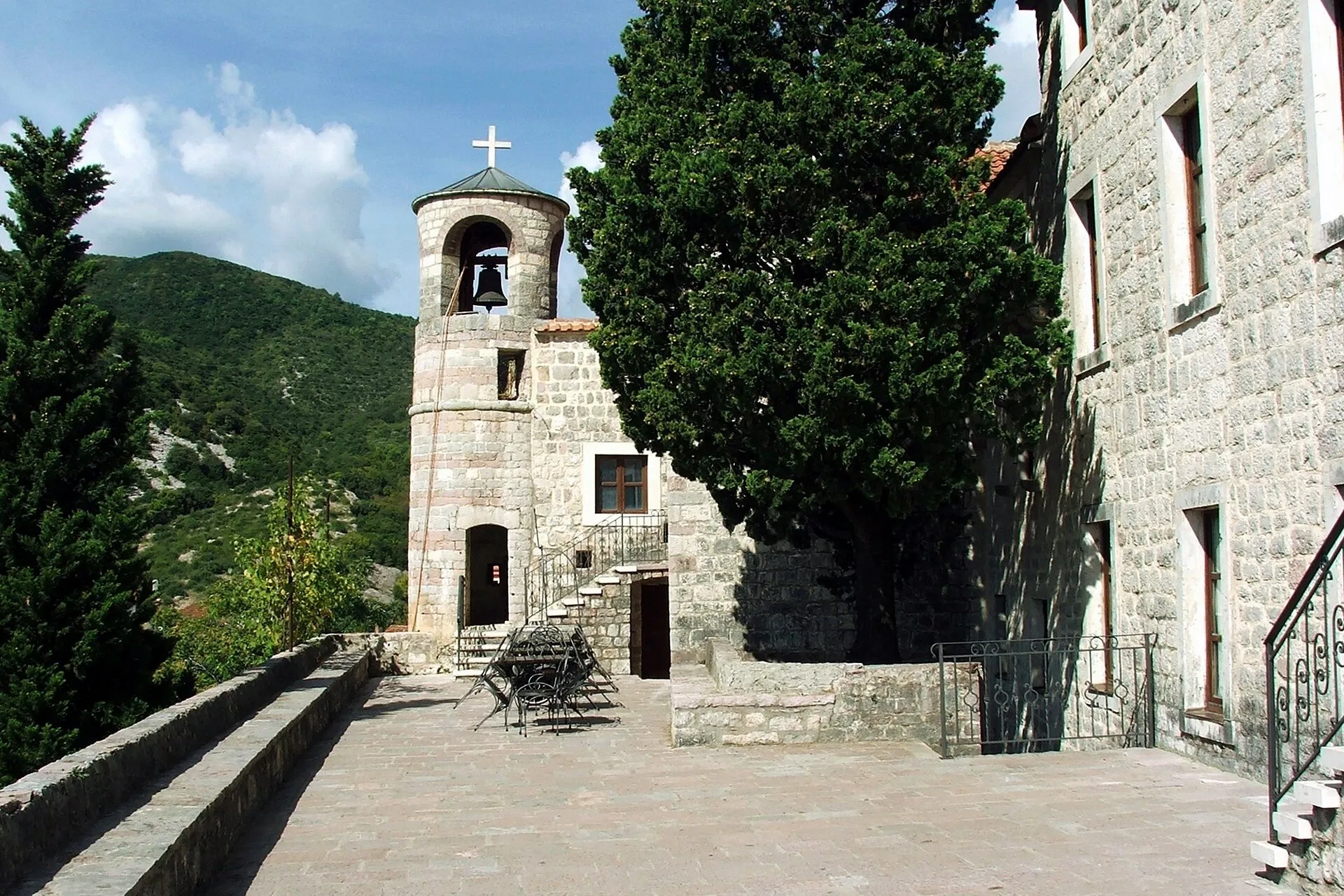
The large Dormition church (Velika Gospa) of 1747 stands beside it. In front is a broad stone terrace with a decorated square cistern (bistijerna): Bishop Sava built the terrace and Njegoš renewed and decorated it, and the cistern is credited to him. From the terrace the view runs over the Bay of Budva, St Nicholas island and the open sea. The complex also has a bell tower, an old mill and the renewed lodgings. It is an active men's monastery with an abbot and a brotherhood, and it hosts gatherings of the eparchy's clergy and monks.
Visiting
Podmaine is a working monastery. Opening hours, entry and rules for visitors are not published: dress as in any church and check with the tourist office in Budva if you want to be sure of getting inside. The monastery's feast is the Dormition of the Mother of God on 28 August, kept with a liturgy and a procession around the church.
The St Petka church in the Maine field
Of the former Podmaine monastery in the north-east of the Budva field, on the road up to Podostrog, only the church of St Petka survives, and it is in use. It is a simple building with a bell gable of three openings. Written sources record an earlier iconostasis of 1747 by Rafailo Dimitrijević of Risan, a painter of the Boka school; the present one is from the mid-19th century, painted by Nikola Aspioti of Corfu. Written sources place a monastery church of St Mark nearby. The church was the gathering place of the Maine tribe, and its feast still draws a gathering; which day it falls on is given differently in different accounts.
Getting there
By car the monastery is 2.8 km from Budva Old Town (8 minutes) and 3.1 km from Mogren Beach (6 minutes); the address is Mainski put. On foot it is 1.9 km from Slovenska plaža (23 minutes) and 2.6 km from the Old Town (31 minutes), uphill. Further afield: Praskvica Monastery 8.3 km (15 minutes), Kotor 22.3 km (30 minutes), Cetinje and Bishop Danilo's Mausoleum 31.0 km (45 minutes). Parking at the monastery is not documented.
Nearby
- Budva Old Town, 2.8 km by road, 2.6 km on foot.
- Slovenska plaža, 1.9 km on foot.
- Praskvica Monastery above Miločer, 8.3 km by road.
- Bishop Danilo's Mausoleum in Cetinje, where his remains were taken, 31.0 km.
- Biljarda in Cetinje, built with the money Austria paid for Podmaine and Stanjevići; Njegoš's Mausoleum on Lovćen.
- More in the churches and monasteries guide.
Questions
Is Podmaine the same as Podostrog?
Podmaine Monastery and Podostrog are two names for the same Dormition monastery under Ostrog hill above Budva; the name Podmaine also attaches to the St Petka church in the Maine field, the remnant of an older monastery.
Who is connected with Podmaine Monastery?
Podmaine Monastery is where Bishop Danilo, founder of the Petrović dynasty, died in 1735, and where Njegoš wintered and wrote Svobodijada and part of The Mountain Wreath.
Can you visit Podmaine Monastery?
Podmaine Monastery is an active monastery without published visiting hours or fee; its feast with a procession is on 28 August.
Timeline
15th century
Crnojević church
The small church is raised as a Crnojević endowment on the ruins of an older church; the monastery's beginnings are placed in this period by tradition.
1630
First record
Hieromonk Visarion of Cetinje renews the frescoes of the small church in the time of Bishop Ruvim: the first written record of the monastery.
1735
Bishop Danilo
Bishop Danilo I, founder of the Petrović dynasty, dies at the monastery and is buried here; his remains are moved to Cetinje in the 1850s.
1747
Dormition church
Bishop Sava Petrović builds the large church of the Dormition (other accounts: 1747-1756, with Bishop Vasilije).
1835-1837
Njegoš and the cession
Njegoš, who winters at Podmaine and writes Svobodijada and part of The Mountain Wreath here, has to cede the monastery to Austria; the money builds Biljarda in Cetinje (1839).
1869
Fire
Both churches are burned in the Boka uprising; the monastery later serves as an Austrian garrison and prison in the First World War.
1979
Earthquake
The earthquake of 15 April damages the monastery heavily.
1995-2002
Restoration
Restoration begins on the initiative of Metropolitan Amfilohije; church and lodgings consecrated in 2000, new wall paintings in 2002.

More churches & monasteries
Nearest by road first


Sources
Metropolitanate of Montenegro and the Littoral, men's monasteries: Podmaine (history, churches, Danilo, Njegoš, 1837 cession, 1869 fire, Tanović family, 1979, restoration 1995-2002, Karaczay watercolour, address) · Metropolitanate of Montenegro and the Littoral, 29 August 2024: Podmaine celebrated its feast yesterday (Dormition, 28 August, liturgy and procession) · Metropolitanate of Montenegro and the Littoral, 28 August 2015: feast of the Dormition at Podmaine · JU Muzeji i galerije Budve, Manastir Podostrog (15th-century church on older ruins, 1630 frescoes and their style, 1747-1756, terrace and cistern, view, Svobodijada 1835) · JU Muzeji i galerije Budve, Manastir Podmaine (St Petka church: location, bell gable, iconostases of 1747 and the mid-19th century, Maine tribe) · JU Muzeji i galerije Budve, the monasteries of Budva municipality (Podostrog and Podmaine listed separately) · Tourist Organisation Budva, Manastir Podmaine (the St Petka church: surviving church, bell gable, iconostasis, St Mark's church, Maine tribe gathering) · OpenStreetMap way 161886544, ODbL · OSRM routing (OpenStreetMap data, ODbL)