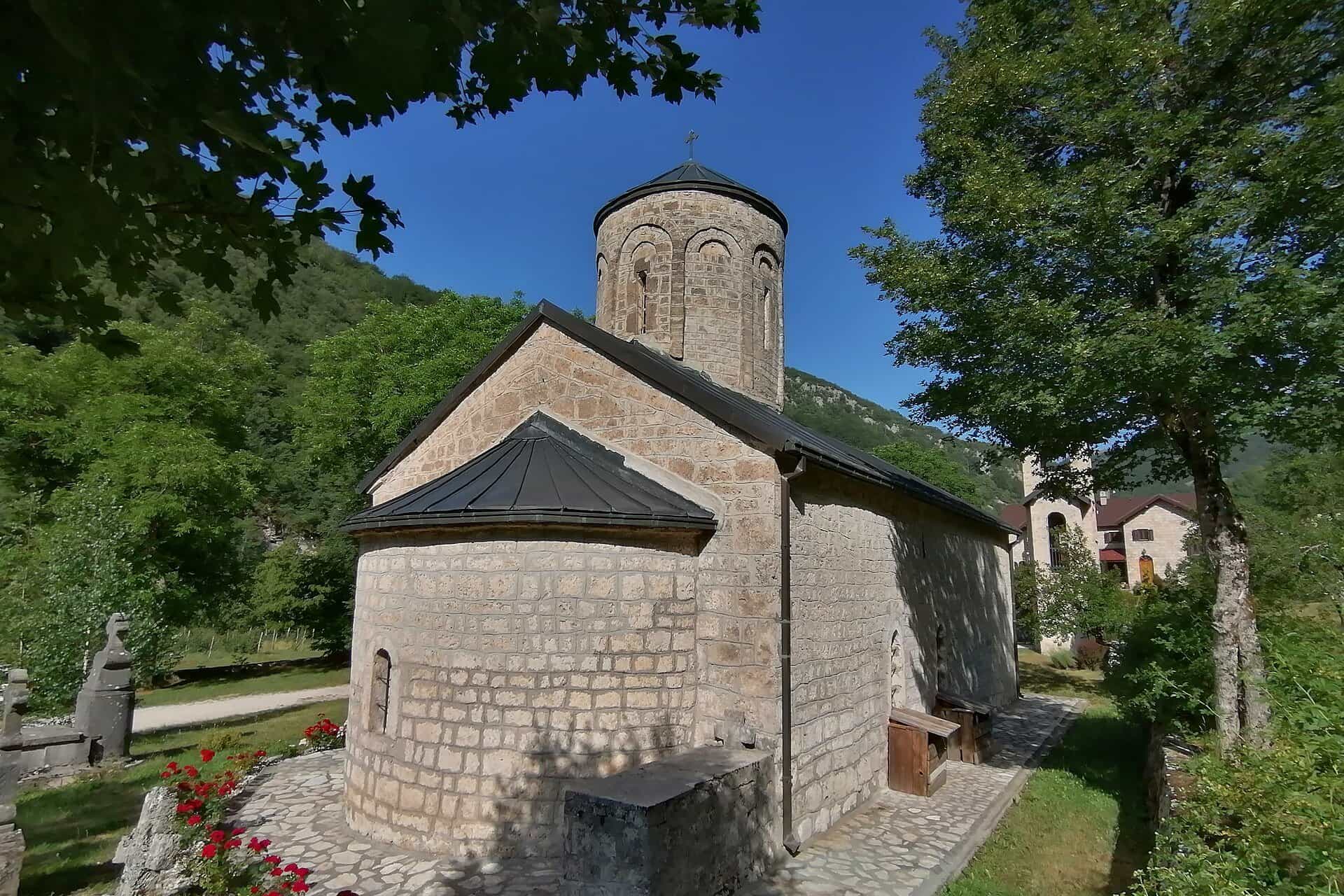
Podmalinsko Monastery, Šavnik
A medieval tufa church of St Archangel Michael in the Bukovica canyon below Tušina, dated to about 1252 by tradition, with the grave of Mirko Aleksić in its churchyard
Orthodox monastery with a medieval tufa church · Bukovica canyon below Tušina
Photo: Andrija12345678 · CC BY-SA 4.0
Podmalinsko Monastery (Manastir Podmalinsko) is a small Orthodox monastery with a medieval domed church of St Archangel Michael, built of tufa, on the right bank of the Bukovica below the cliffs of its canyon, about 3 km downstream of the village of Tušina in the Drobnjak area of Šavnik municipality. Tradition dates it to about 1252; a 1984 study of the building puts the church between the mid-14th century and 1465. It is 12.4 km from Šavnik, about 17 minutes by car. No opening hours are published.
- Dedicated to St Archangel Michael
- Dated About 1252 by tradition; mid-14th century to 1465 by a study of the building
- Church About 16.5 x 7.5 m, tufa stone, dome on four piers, stone iconostasis
- Churchyard Grave of Mirko Aleksić, with verses by Prince Nikola
- Where Bukovica canyon below Tušina, 12.4 km and 17 minutes by car from Šavnik
- Visiting No published hours; dress as in any church
The place
The monastery hides below the high cliffs of the Bukovica canyon, on a small fertile terrace where fruit trees still grow, close to the river and its waterfalls. Asphalt roads reach it from Boan through Tušina and from Šavnik. Together with Bijela Monastery it is one of the two monasteries to see around Šavnik, and a quiet place to rest.
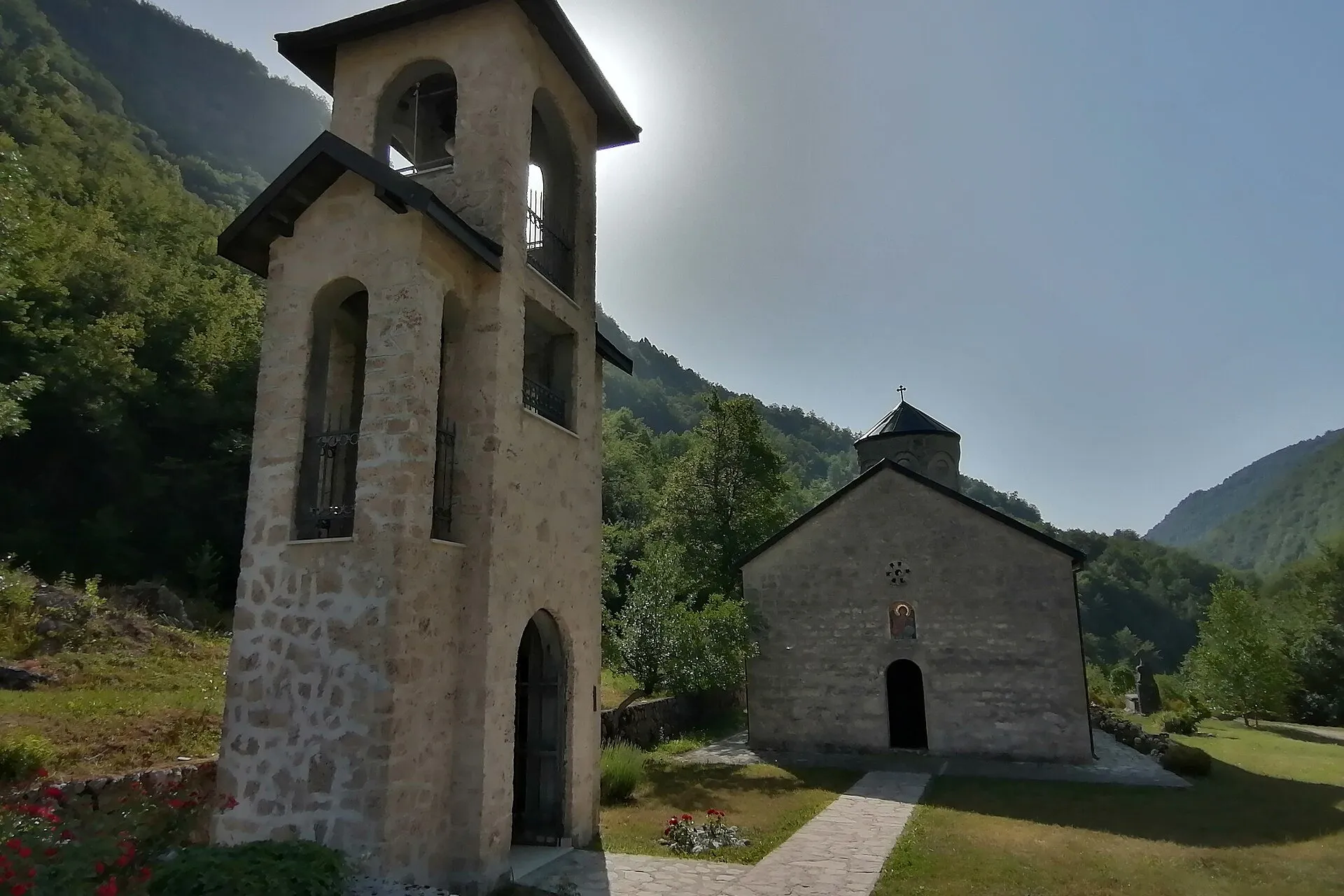
The church
The church is a rectangular single-nave building with a wide semicircular apse to the east, about 16.5 m long and 7.5 m wide outside. A round dome rises straight out of the roof, carried on four free-standing piers through pendentives, with four narrow windows in its drum. The whole church is built of tufa (sedra), a light stone prized by medieval builders and probably quarried nearby: tufa deposits show in the bed of the Bukovica.
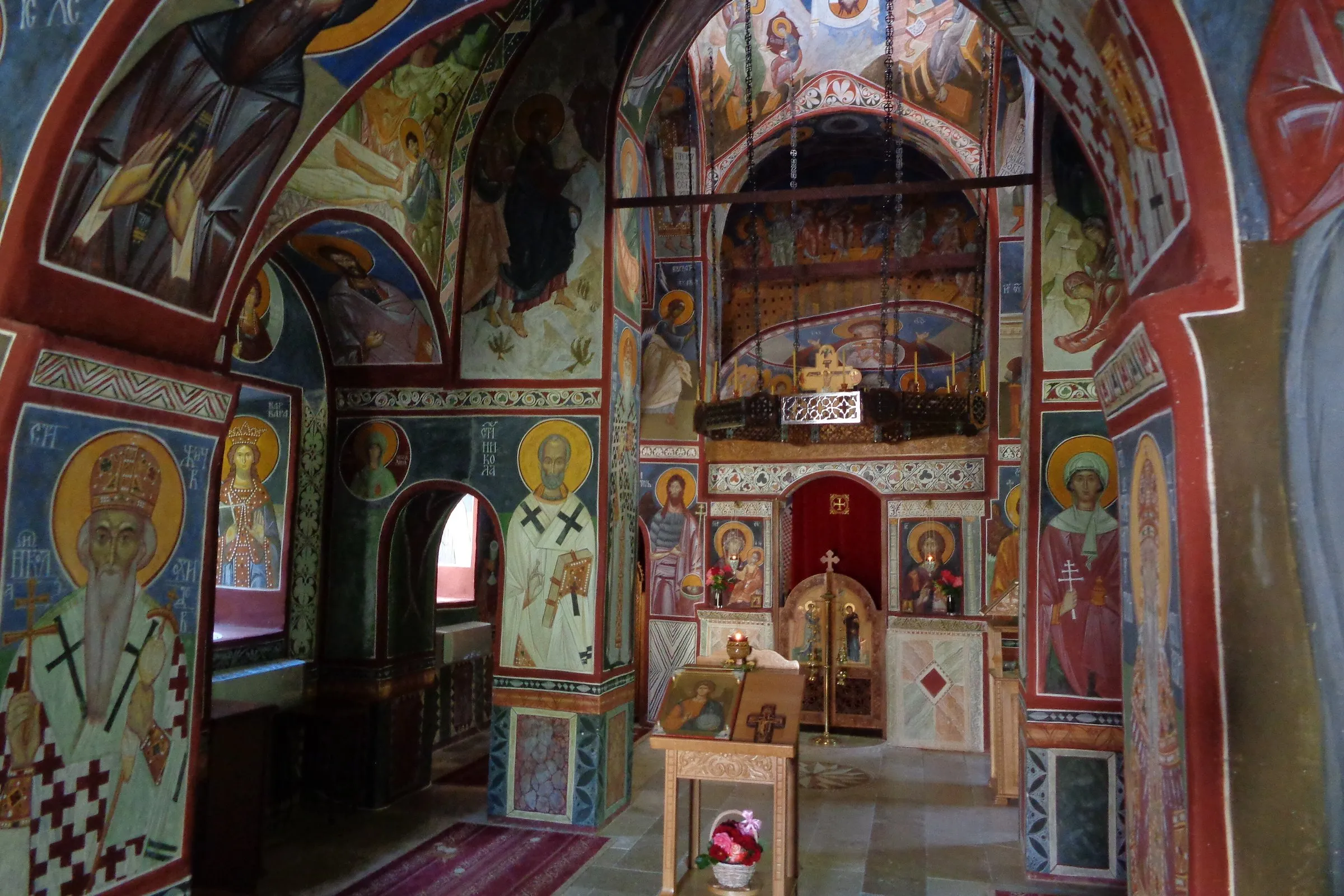
Inside, the iconostasis is of masonry, a feature known from medieval churches in Herzegovina and Bosnia. In the narthex is a walled, unopened tomb of an unknown person of rank, perhaps the founder or a restorer. In 1984 the walls were whitewashed, with traces of older wall painting on one pier and near the iconostasis.
The star-shaped rosette and the blind arcades on the drum recall the Raška and Morava schools of medieval building. The church closely resembles the church of Dovolja Monastery on the Tara, recorded in 1513, and was probably the work of the same builders. In 1984 the church had a large bronze bell cast in 1886 by the Zanutti foundry in Trieste, given by the priest Minko Trebješanin.
How old it is
Good to know: Local tradition, recorded in Tušina in 1973, places the founding in the time of the Nemanjić rulers, and the monastery itself counts from about 1252: the large restoration of 2002 marked 750 years. A 1984 study of the building dates the church, on the evidence of its architecture, to after the fall of the Serbian Empire in the mid-14th century and before 1465.
History
In 1870 the first school in Drobnjak opened in the monastery lodgings (konak); the hegumen Mihailo Ranković was its first teacher. The monastery later stood deserted until 1908, when the monk Janjušević rebuilt it; the shingle roof was probably replaced by galvanised sheet at that time. It was neglected again during the Second World War. In 1984 only the church survived whole, with ruins of the monastery buildings to its north. Its present look comes from the large restoration of 2002.
The grave of Mirko Aleksić
About ten gravestones stand east of the church. The largest belongs to Mirko Aleksić, remembered as the man who killed Smail-aga Čengić; verses by Prince Nikola are carved on it.
Visiting
Good to know: No opening hours, dress code or rules for guests are published, and whether the lodgings take visitors is not known: dress as in any church and check locally before counting on a visit inside.
Getting there
From the centre of Šavnik the monastery is 12.4 km, about 17 minutes by car, or 10.5 km and about 2 hours on foot. From Nikšić it is 59.1 km, about 1 hour 22 minutes by car. The other approach is the asphalt road from Boan through Tušina.
Nearby
- Šavnik, 12.4 km by car.
- The Bukovica and Tušina, the rivers of Šavnik, and the Komarnica with the Nevidio canyon.
- Durmitor National Park, north of Šavnik.
- More in the churches and monasteries guide.
Questions
When was Podmalinsko Monastery built?
Podmalinsko Monastery is dated to about 1252 by tradition, while a 1984 study of the building places the church between the mid-14th century and 1465.
Who is buried at Podmalinsko Monastery?
Podmalinsko Monastery's churchyard holds the grave of Mirko Aleksić, the man who killed Smail-aga Čengić, with verses by Prince Nikola carved on the stone.
How do I get to Podmalinsko Monastery?
Podmalinsko Monastery is 12.4 km from Šavnik, about 17 minutes by car, in the Bukovica canyon below Tušina; a second road comes from Boan through Tušina.
Timeline
13th-15th century
Founding
Tradition dates the founding to about 1252, in the time of the Nemanjić rulers; the architecture of the church points to the period between the mid-14th century and 1465.
1870
The first school
The first school in Drobnjak opens in the monastery lodgings; hegumen Mihailo Ranković is the first teacher.
1886
The bell
The priest Minko Trebješanin gives a large bronze bell cast by the Zanutti foundry in Trieste.
1908
First restoration
The monk Janjušević rebuilds the deserted monastery; the shingle roof is probably replaced by galvanised sheet.
1941-1984
Decline
Neglected during the Second World War; in 1984 only the church stands whole, with ruins of the monastery buildings to its north.
2002
Restoration
A large restoration, marking 750 years by the traditional date, gives the monastery its present look.

More churches & monasteries
Nearest by road first


Sources
Tourist Organisation Šavnik, Manastir Podmalinsko (St Archangel Michael, right bank of the Bukovica, about 1252, school of 1870, 1908 restoration, Second World War, 2002 restoration and 750 years, grave of Mirko Aleksić, place to rest) · National Tourism Organisation of Montenegro, Charming mountain towns (13th century; Podmalinsko and Bijela as the monasteries to see around Šavnik) · Slobodan S. Raičević, Manastir Podmalinsko kod Šavnika, Saopštenja XVI, 1984 (location and roads, dimensions, tufa, dome and piers, stone iconostasis, Raška and Morava features, Dovolja, tomb, bell of 1886, whitewashed walls, dating mid-14th century to 1465, Nemanjić tradition, 1908 rebuilding, ruins in 1984, gravestones and Prince Nikola's verses) · Municipality of Šavnik, about Šavnik (first school in Podmalinsko, 1870) · OpenStreetMap node 788060970 and node 788061171, ODbL · OSRM routing (OpenStreetMap data, ODbL)