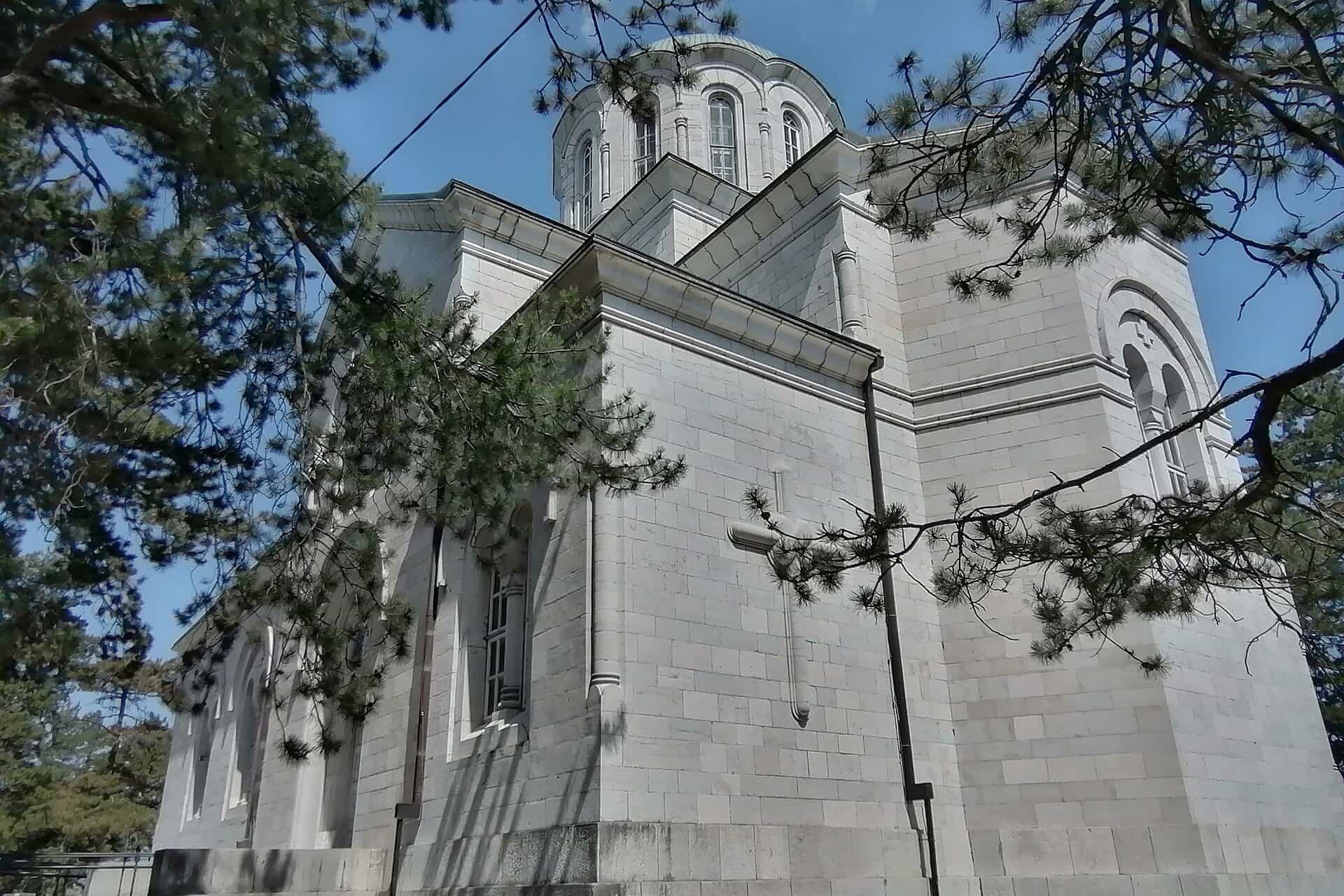
Cathedral of St Basil of Ostrog, Nikšić
Prince Nikola's memorial church of 1895-1900 on Petrova glavica, designed in Russia, with the names of 3,098 fallen fighters on its walls
Orthodox cathedral · Built 1895-1899, consecrated 1900 · Petrova glavica
Photo: Andrija12345678 · CC BY-SA 4.0
The Cathedral of St Basil of Ostrog (Saborna crkva Svetog Vasilija Ostroškog) is the main Orthodox church of Nikšić, on the low hill of Petrova glavica above Trg Šaka Petrovića. Prince Nikola built it in 1895-1899 as a memorial to the Montenegrins and Herzegovinians killed in the wars against the Ottomans of the late 1870s, and it was consecrated on 15 August 1900. The church is 853 m from the town centre, about 10 minutes on foot. It is a working church: no opening hours are published.
- Built 1895-1899, consecrated 15 August 1900
- Architect Mikhail Timofeevich Preobrazhensky
- Remembers 3,098 fallen fighters, named on the side walls
- Where Petrova glavica, Trg Šaka Petrovića, 10 minutes on foot from the centre
- Visiting A working church, no published hours; dress as in any church
Why it was built
In 1883, after Nikšić was freed from Ottoman rule, Prince Nikola decided to build a new, modern town there. In 1885 he announced to the townspeople a church in memory of the Montenegrins and Herzegovinians who had fallen in the wars against the Ottomans of the late 1870s, dedicated to St Basil of Ostrog. A commission chose the site in 1886, advised by Josip Slade, the author of the town plan: Slade first proposed the main square, then Petrova glavica, a hill about 12 m high.
The design came from Russia. Mikhail Timofeevich Preobrazhensky (1854-1930), an architect of church buildings, drew the plans at the request of the Holy Synod of the Russian Orthodox Church; he came to Nikšić in 1891 and presented the final plan the next year. The prince had one change made: the bell tower took the traditional open form known as a preslica. Works began on 4 July 1895 and were finished on 10 August 1899; the church was consecrated on 15 August 1900. Most of the money came from donations collected among believers in Russia.
The building
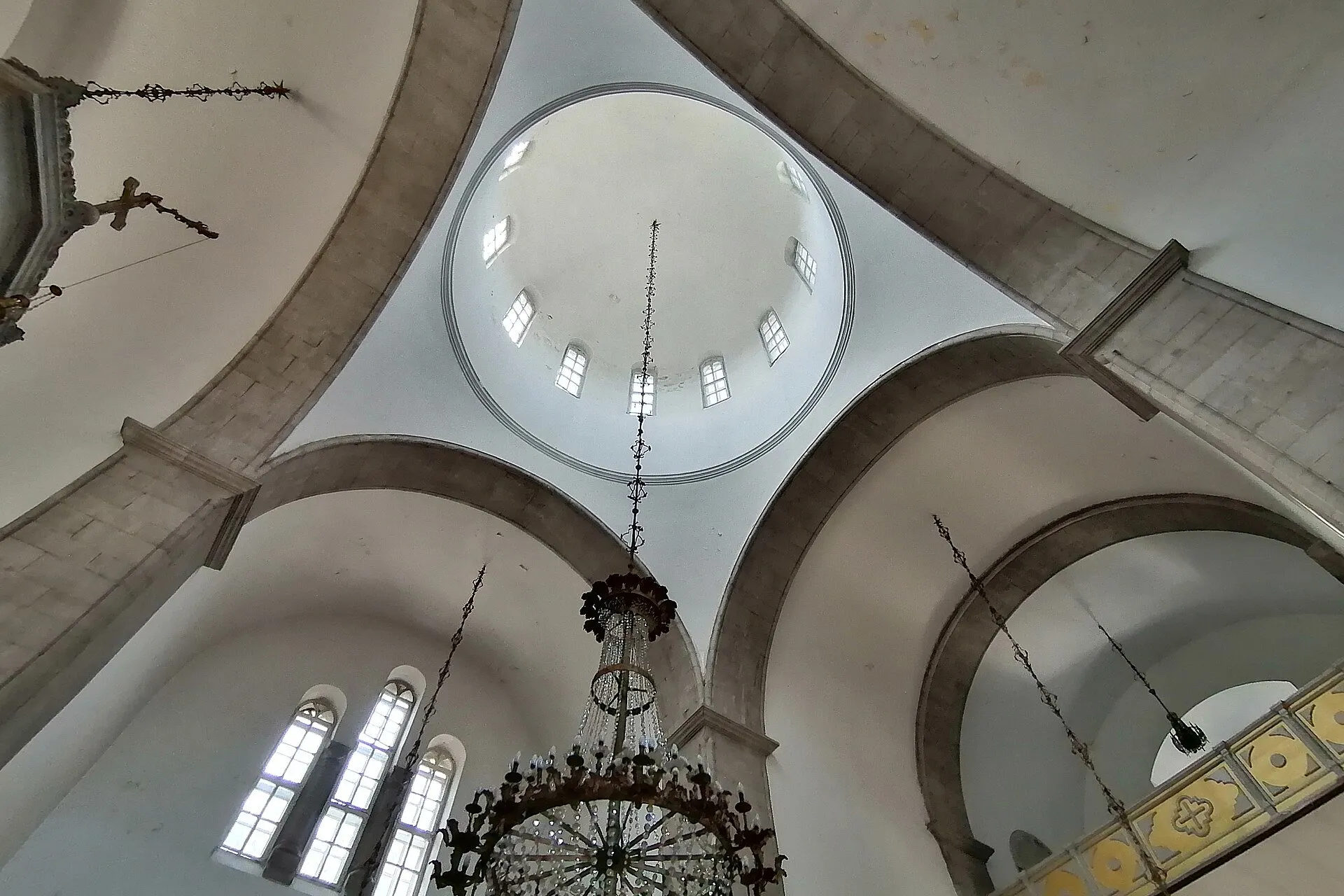
The cathedral is a three-nave church of white dressed stone from local quarries, cut by local masons and by masons from Italy and Dalmatia. The central part under the dome is 11 m high and 8.60 m wide; the drum has 12 windows, each 3.9 m high, and the dome is covered in copper, topped by a gilded ball of 60 cm and a gilded cross 2 m high. The bell tower is 14 m high with a copper roof; its clock was donated in 1929 by a watchmaker. When it was finished, it was the largest building of its kind in the country.
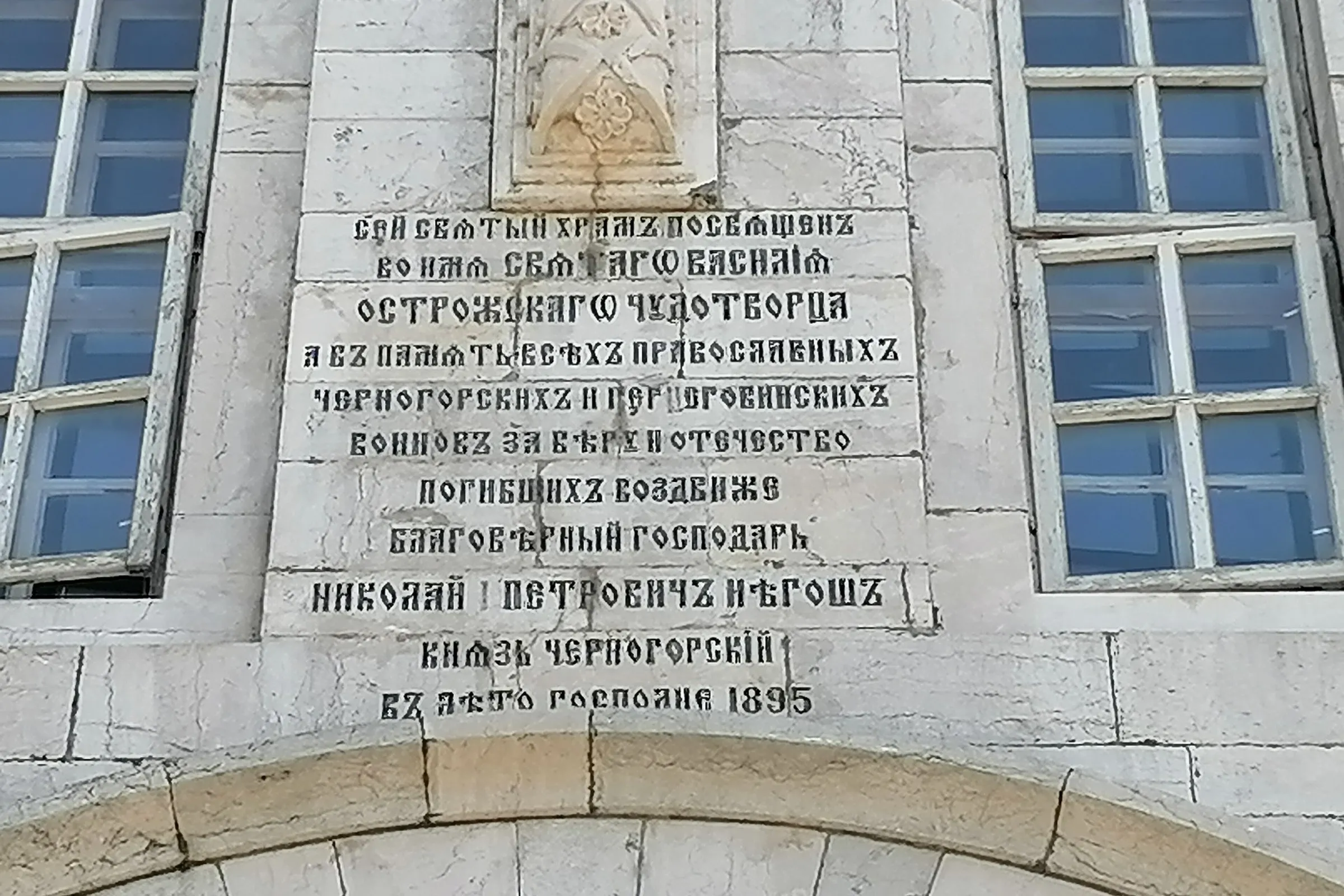
The church is reached by stairs from the west, from the square up to the plateau, and by driveways on the north and south sides. Beside it stand memorials to Stojan Kovačević (north) and Novak Ramov (south), erected in 1955. An inscription in Church Slavonic over the main door names Prince Nikola as the builder and the fallen as those remembered.
Inside
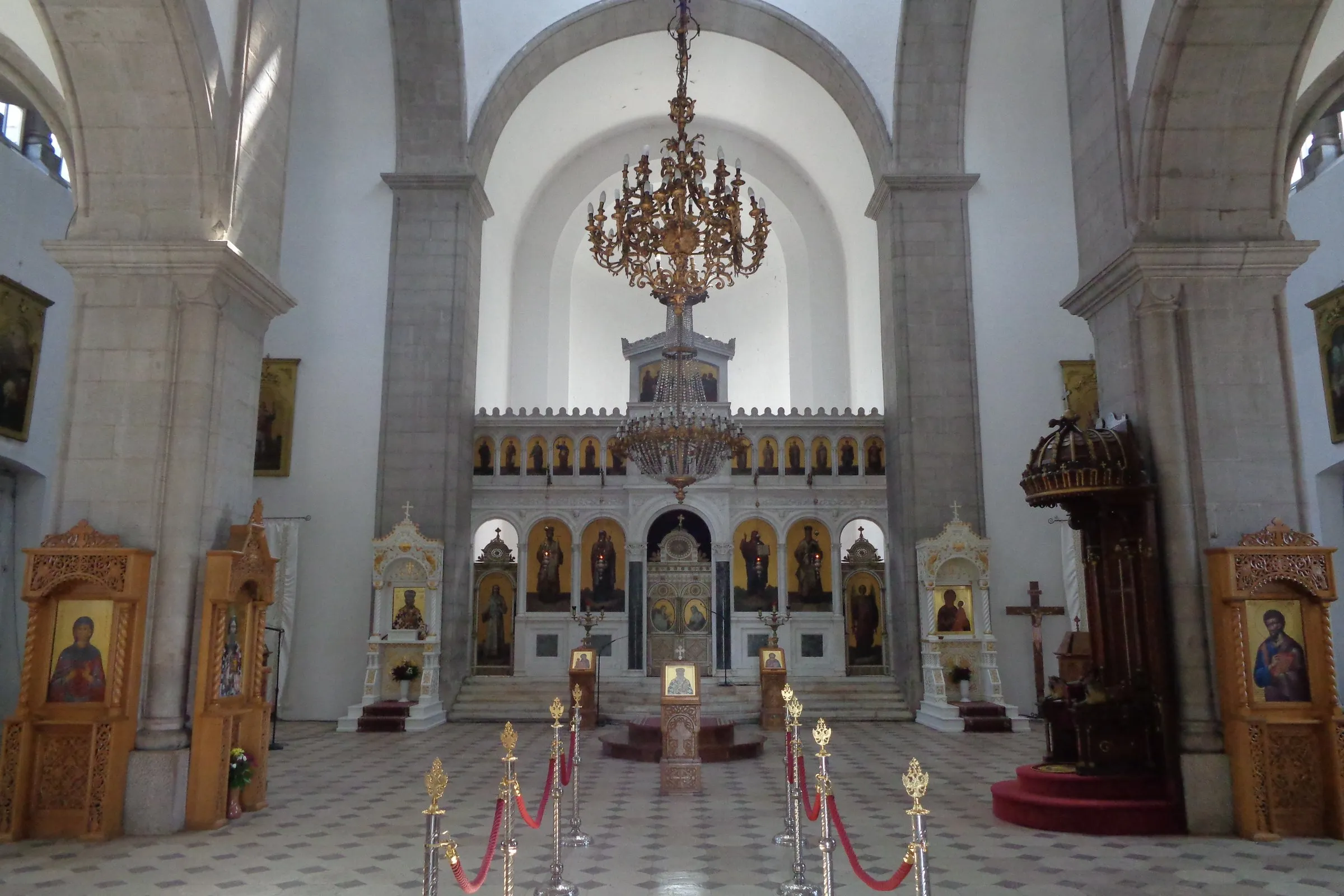
The names of 3,098 fallen fighters of the Montenegrin and Herzegovinian armies are displayed on the side walls. They were first embroidered on silk in gilded frames. There are no frescoes: in June 1899 the prince invited the painter Uroš Predić, who turned the job down as too large.
The furnishings were gifts. The icons were made in Russia, a gift of the Russian Synod; the iconostasis was given by the Greek benefactor Andreas Syngros; the four chandeliers came from Queen Elena of Italy, Prince Nikola's daughter.
Around the church
The cathedral is a protected cultural monument and part of one ensemble around Trg Šaka Petrovića: King Nikola's Palace (now the town museum), the Lapidarium with stećci of the 13th-15th centuries, and the city park. At the foot of Petrova glavica, close to the cathedral, stands the Church of Sts Peter and Paul, recorded from the 12th century, on an old stećci necropolis. Every year on 12 May, St Basil's day, a large procession in his honour is held in Nikšić.
Visiting
Good to know: The cathedral is a working church. No opening hours, service times or photo rules are published: dress as in any church, and check with the tourist office in Nikšić if you want to be sure of getting inside.
Getting there
From the centre of Nikšić the cathedral is 853 m, about 10 minutes on foot, or 1.0 km and 3 minutes by car. From the cathedral it is 210 m (3 minutes on foot) to King Nikola's Palace, 1.2 km (15 minutes) to the memorial on Trebjesa and 1.3 km (15 minutes) to Bedem fortress.
Nearby
- King Nikola's Palace, on the same square, 210 m on foot.
- Bedem (Onogošt), the fortress of Nikšić, 1.3 km on foot.
- Memorial to the fallen on Trebjesa, 1.2 km on foot.
- Ostrog Monastery, the monastery of St Basil, between Nikšić and Danilovgrad.
- More churches and monasteries in the churches and monasteries guide.
Questions
When was the Cathedral of St Basil of Ostrog in Nikšić built?
The Cathedral of St Basil of Ostrog was built in 1895-1899 and consecrated on 15 August 1900.
Who designed the Cathedral of St Basil of Ostrog?
The Cathedral of St Basil of Ostrog was designed by the Russian architect Mikhail Timofeevich Preobrazhensky, who presented the final plan in 1892.
Can I visit the Cathedral of St Basil of Ostrog?
The Cathedral of St Basil of Ostrog is a working church without published opening hours: dress as in any church and check with the tourist office in Nikšić.
History
1885
The vow
Prince Nikola announces a memorial church to the townspeople of the new town of Nikšić, dedicated to St Basil of Ostrog.
1886
The site
A commission advised by Josip Slade chooses Petrova glavica, a hill about 12 m high, after first considering the main square.
1891-1892
The design
Mikhail Timofeevich Preobrazhensky, sent at the request of the Holy Synod of the Russian Orthodox Church, comes to Nikšić and presents the final plan the next year; the prince changes the bell tower to the open preslica form.
1895-1900
Construction and consecration
Works run from 4 July 1895 to 10 August 1899, mostly paid for by donations from believers in Russia; the church is consecrated on 15 August 1900.
1929-1955
Clock and memorials
A watchmaker donates the clock of the bell tower in 1929; memorials to Stojan Kovačević and Novak Ramov are erected beside the church in 1955.
Closest places

More churches & monasteries
Nearest by road first


Sources
Tourist Organisation Nikšić, Kultura: Saborna crkva Sv. Vasilija Ostroškog and Trg Šaka Petrovića (Petrova glavica, memorial church, 3,098 names, the square ensemble, Sts Peter and Paul) · Vladimir Bojković, Characteristics and significance of the work of Russian architects in the city of Nikšić, Architecture and Engineering 8 (4), 2023 (Preobrazhensky, site choice, dates 1895-1900, dimensions, gifts, Predić, copper plates, memorials of 1955, 12 May procession) · Radio Slobodna Evropa, 1 June 2023 (the cathedral is a cultural property under state protection) · OpenStreetMap node 9248188917, ODbL · OSRM routing (OpenStreetMap data, ODbL)