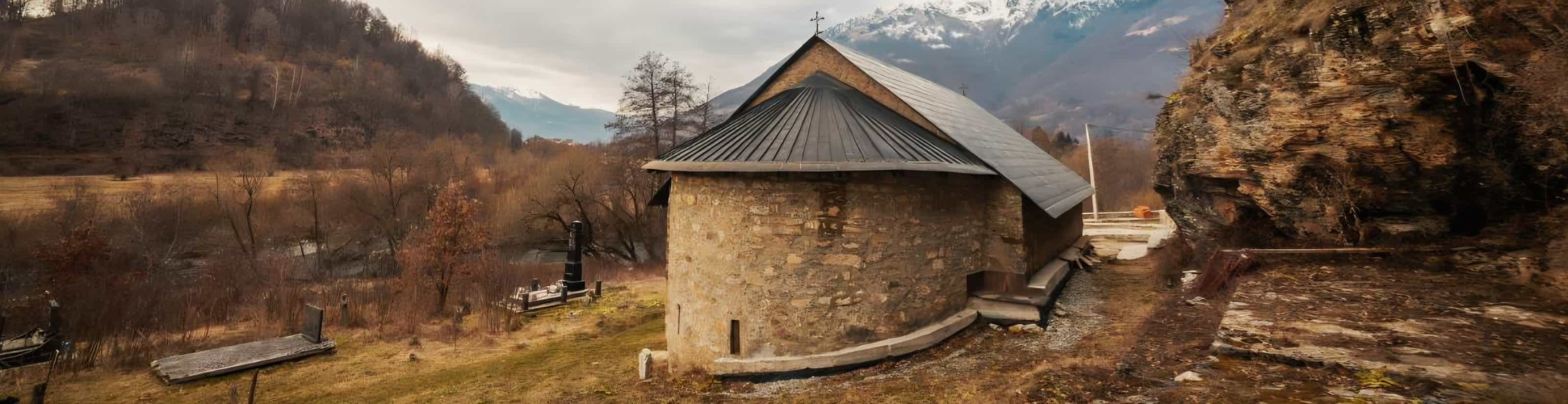
Holy Trinity Monastery, Brezojevice
Orthodox monastery at the foot of Gradac hill north of Plav, its church built in 1567 on older walls, with frescoes by one master
Orthodox monastery with a single-nave Byzantine-style church · Church built 1567 on the walls of an older monastery · Brezojevice
Photo: owner · owner-supplied
The Holy Trinity Monastery (Manastir Svete Trojice) is an Orthodox monastery of the Eparchy of Budimlja and Nikšić in Brezojevice, at the foot of Gradac hill north of Plav: 5.4 km by road, about 12 minutes by car. Its church was built in 1567 on the walls of an older monastery, which tradition dates 30 years before Visoki Dečani and other accounts to the 13th century. The single-nave church in the Byzantine style keeps badly damaged frescoes by one master, with several scenes still legible.
- Built 1567, on the walls of an older monastery
- Church Single nave, no dome, no bell tower
- Frescoes One master; the Dormition of the Virgin is fairly well preserved
- Protected Cultural monument since 1950
- Where Brezojevice, 5.4 km from Plav by road
History
The records say the church was built in 1567 on the walls of an older monastery, when the monks of Dečani told the hieromonk Nestor and his brethren to build or renew a monastery on the Lim. Tradition reaches further back: the first monastery was raised 30 years before Visoki Dečani and destroyed when the Ottomans took the Plav župa, and the present church stands on its ruins.
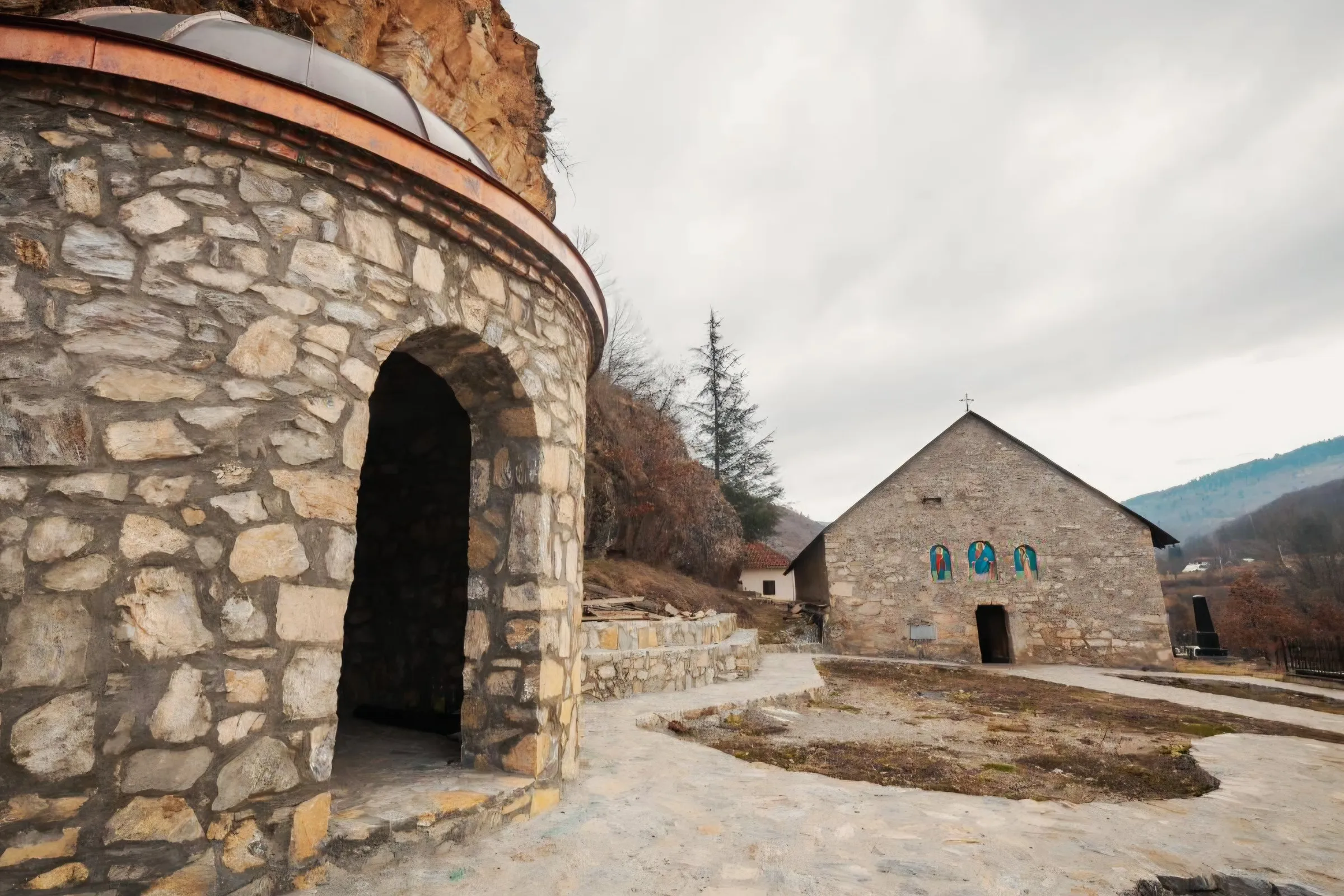
The monastery had ties with Visoki Dečani, the Patriarchate of Peć, Đurđevi Stupovi, Šudikova, Mileševa, Morača and Piva. Caravans and imperial roads passed by, nobles gave gold, silver, books and icons, and copying schools worked on Gradac. It was burned and wrecked several times, as recorded in 1912, 1941 and 1946; books were burned and valuables stolen, so little of that past survives. The monastery has been a protected cultural monument since 1950.
The church
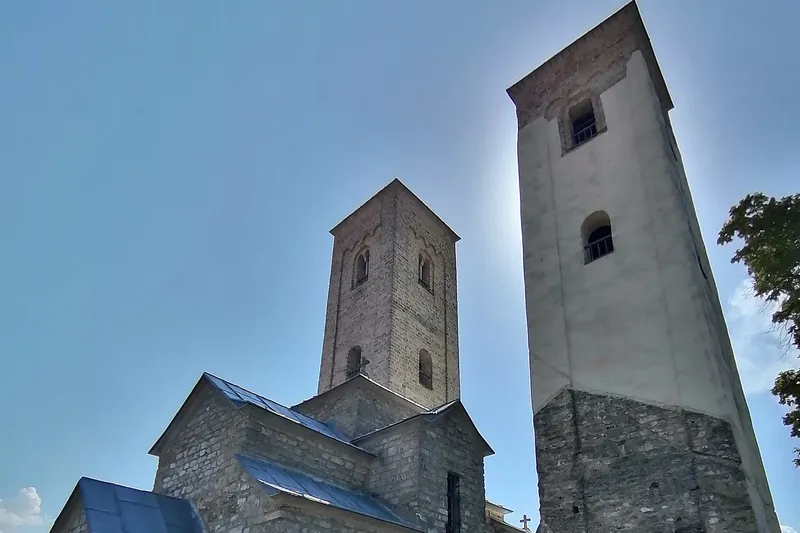
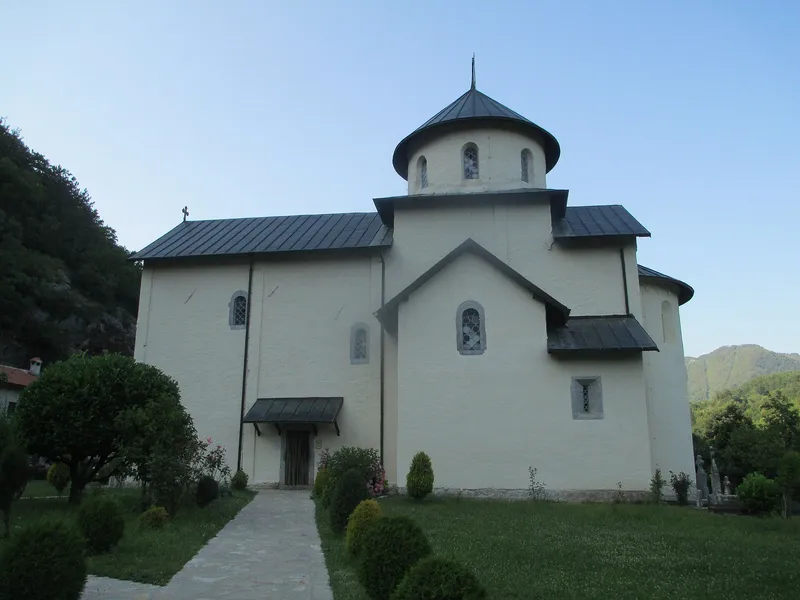
The church is in the Byzantine style: a single nave with a semicircular apse, a spacious square naos and a narthex, under a barrel vault carried by side arches. It has no dome and no bell tower; the bell tower was built later on Gradac hill above it. The architecture recalls older churches of the Morava-Raška style.
The frescoes
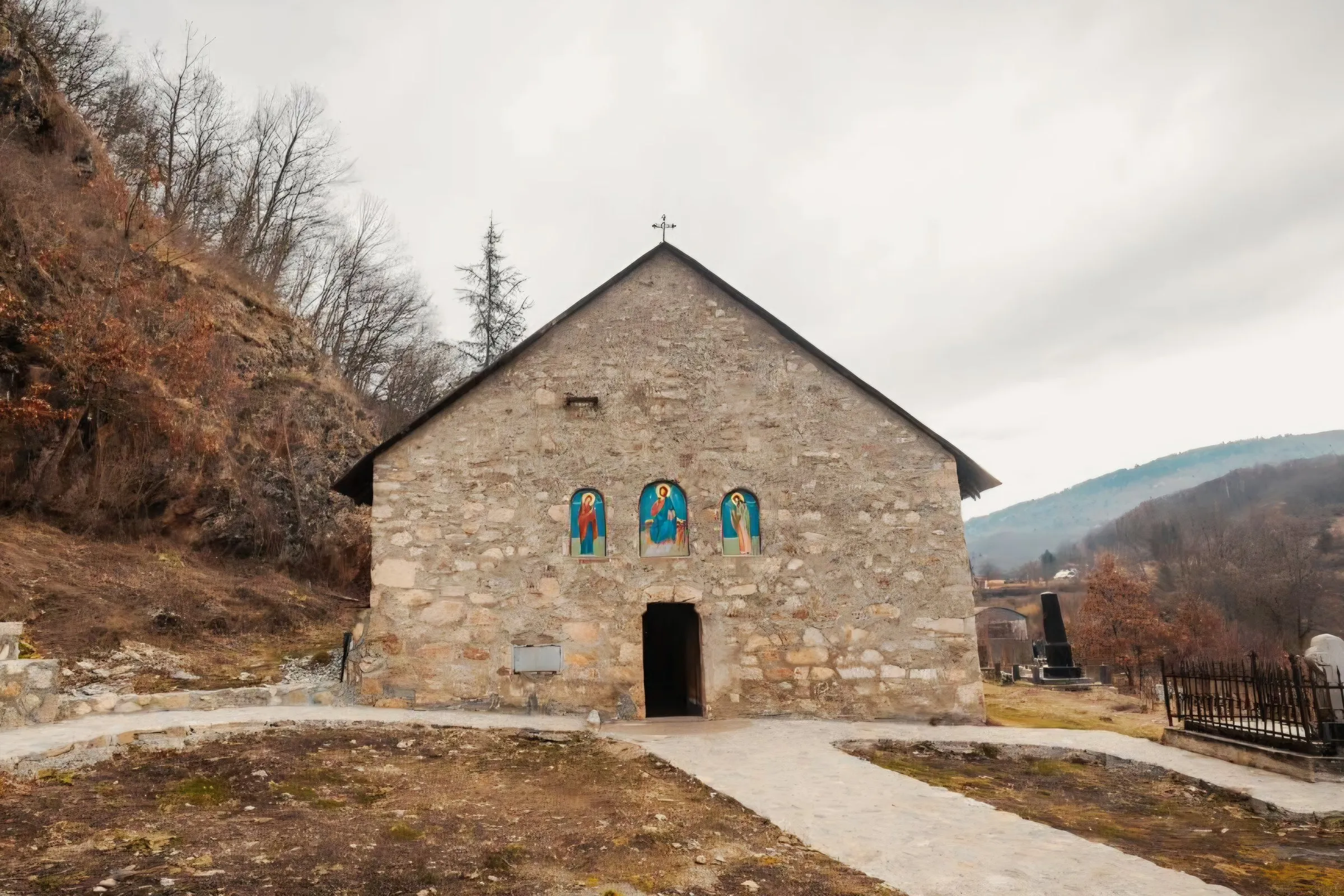
One master painted the frescoes. They are badly damaged and survive mostly as fragments, but these scenes and figures can still be made out:
- In the narthex, parts of the Last Judgement on the east wall and the Hospitality of Abraham above the entrance.
- On the west wall of the naos, St Nicholas.
- The Virgin with Christ in a niche, Sergius and Bacchus by the door and, to the right, a fragment of Stefan Nemanja.
- The Dormition of the Virgin above the door, one of the better-preserved scenes.
- A barely visible bust of St Sava in a niche.
- On the south wall, John the Baptist, busts of St Sergius and St Simeon, and three church dignitaries, one of them probably St Sava.
Getting there
The monastery is in Brezojevice, north of Plav: 5.4 km by road, about 12 minutes by car or 65 minutes on foot.
Good to know: Ask the tourist office in Plav when the church is open to visitors.
Nearby
- Plav, 5.4 km by road, with Redžepagić Tower and the Old Mosque.
- Plav Lake, from which the Lim flows.
- Visitor, the mountain above Plav and Plav Lake.
- Đurđevi Stupovi Monastery in Berane, the seat of the Eparchy of Budimlja and Nikšić.
- Vizier's Mosque and the churches of Gusinje.
Questions
When was the Holy Trinity Monastery in Brezojevice built?
The Holy Trinity Monastery in Brezojevice was built in 1567 on the walls of an older monastery, which tradition dates to 30 years before Visoki Dečani.
How far is the Holy Trinity Monastery from Plav?
The Holy Trinity Monastery is in Brezojevice, 5.4 km from Plav by road, about 12 minutes by car.
Which frescoes survive in the Holy Trinity Monastery?
The Holy Trinity Monastery keeps fragments of frescoes by one master, among them a fairly well preserved Dormition of the Virgin above the door.
Timeline
By tradition
First monastery
Tradition holds that the first monastery was raised 30 years before Visoki Dečani and destroyed when the Ottomans took the Plav župa.
1567
The present church
On the instruction of the monks of Dečani, the hieromonk Nestor and his brethren build the church on the walls of the older monastery.
1912, 1941 and 1946
Burned and wrecked
The monastery is burned and wrecked; books are burned and valuables stolen.
1950
Protection
The monastery becomes a protected cultural monument.



More churches & monasteries
Nearest by road first
Sources
Tourist Organisation Plav, Manastir Svete Trojice u Brezojevicama (eparchy, 1567, tradition, ties, destruction, architecture, frescoes) · JPNPCG, Management Plan NP Prokletije 2026-2030, Table 7 (protected 1950) · National Tourism Organisation, Charming mountain towns (13th century) · OpenStreetMap node 778585268, ODbL · OSRM routing (OpenStreetMap data, ODbL)