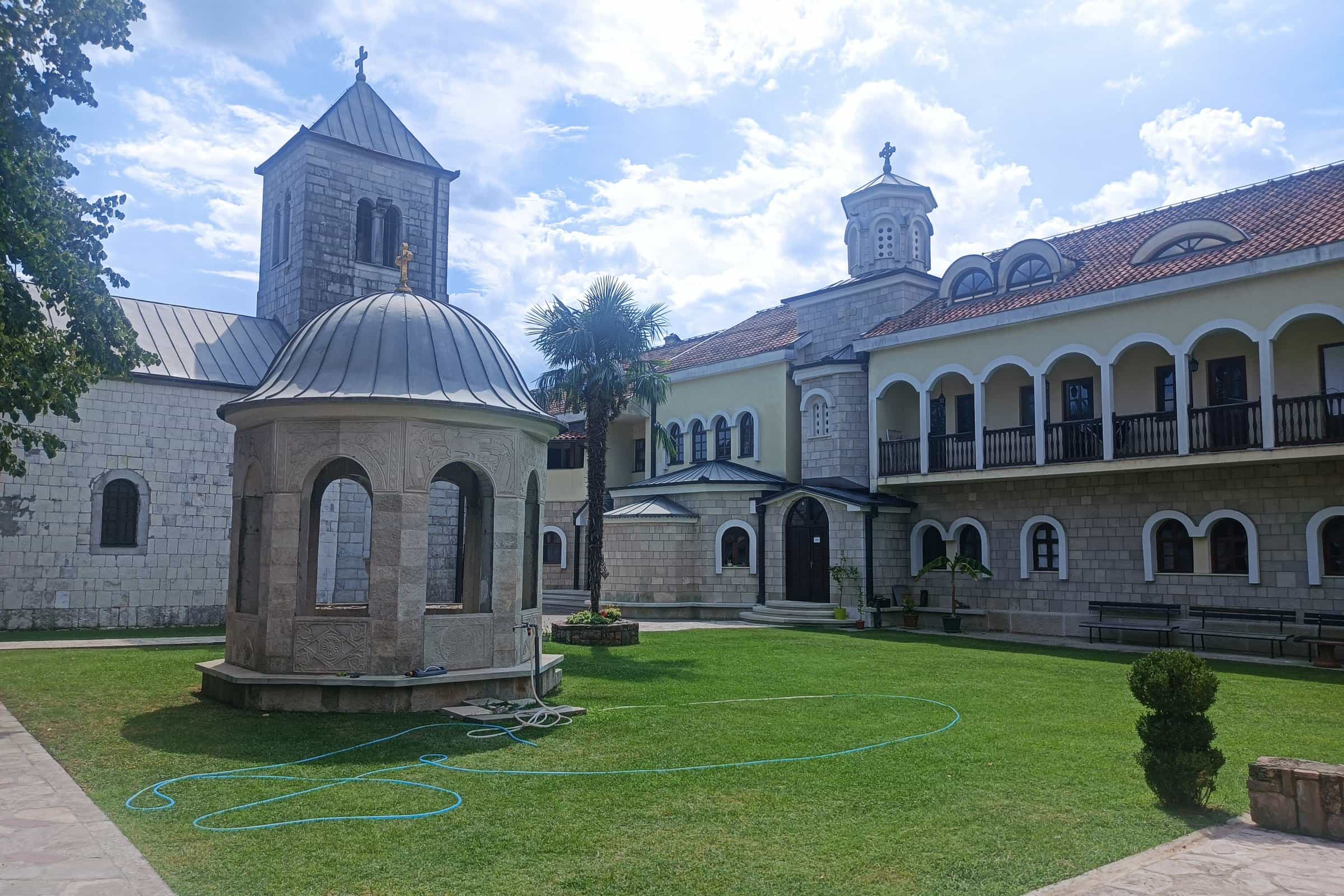
Ždrebaonik Monastery, Danilovgrad
A working convent on the Zeta near Danilovgrad: church of St Archangel Michael of 1818 and the relics of St Arsenije Sremac, here since 1919
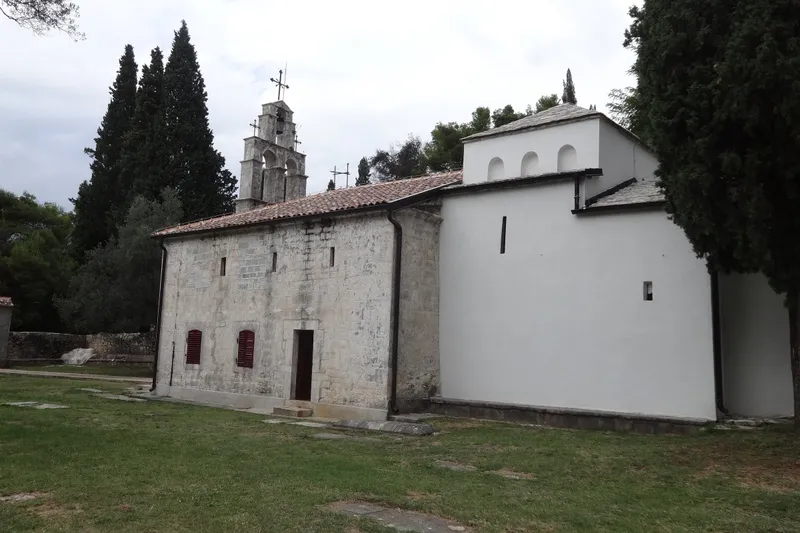
Monastery with the church of St Archangel Michael · Church of 1818 on late-16th or early-17th-century foundations · Left bank of the Zeta
Photo: Wikiwiki · CC BY-SA 3.0
Ždrebaonik Monastery (Manastir Ždrebaonik) is an Orthodox convent on the left bank of the Zeta in the Bjelopavlići plain, 2.4 km from the centre of Danilovgrad. Its church of St Archangel Michael was built in 1818 on foundations of the late 16th or early 17th century and keeps the relics of St Arsenije Sremac, the second Serbian archbishop, brought here from Ostrog in 1919. It is a working convent: no visiting hours are published, so check locally before you go.
- Church St Archangel Michael, built 1818 (inscription over the door) on older foundations
- Relics St Arsenije Sremac, St Sava's successor, here since 1919
- Convent A women's monastery since 1991; bell tower 1926, new konak with chapel 2000
- Visiting Working convent, no published hours or fee: check locally
- Where Left bank of the Zeta, 2.4 km (4 minutes by car) from Danilovgrad
History
No written record says when Ždrebaonik was founded. Studies by the heritage institute found traces of an older and much larger church, and the present church stands on foundations of the late 16th or early 17th century. Tradition ties the monastery to the Nemanjić dynasty and to a church first raised by the Serbian king St Stefan, with proof said to be kept at Morača Monastery; historians dispute this. The church of St Archangel Michael that stands today was built in 1818, as the stone inscription over its door records. The monastery was the centre of the Bjelopavlići clan's assemblies and decisions, and in 1875 the first agricultural school moved into its konak. The bell tower was added in 1926 by Srdan Popović.
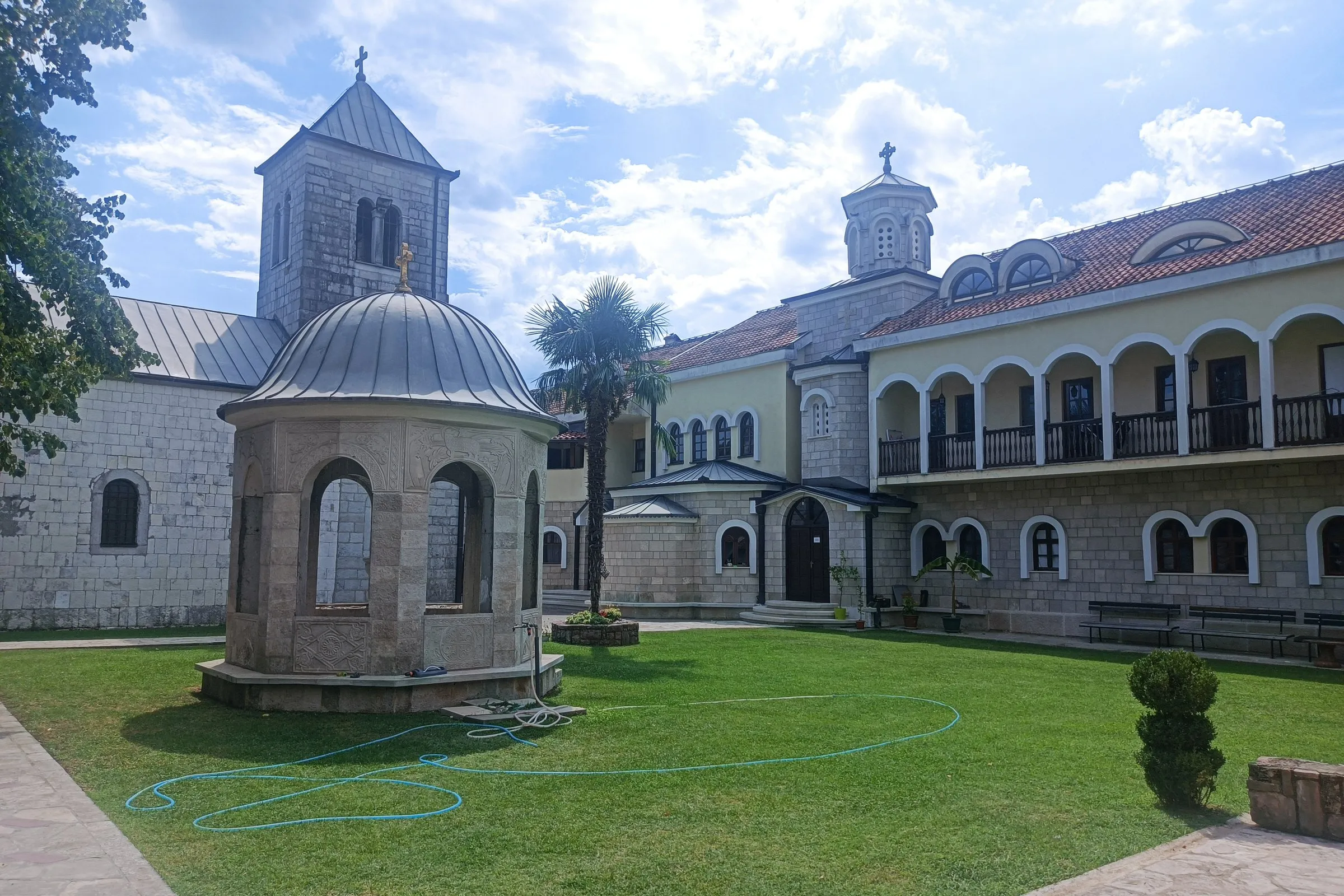
Since Metropolitan Amfilohije came to Montenegro in 1991, Ždrebaonik has been a women's monastery. A new konak with a chapel of St Arsenije was consecrated on St Michael's day, 21 November 2000.
The relics of St Arsenije Sremac
The church keeps the relics of St Arsenije Sremac, archbishop of Serbia and the successor of St Sava. After the Great Migration of 1690 they were kept in monasteries and hidden caves, for more than a hundred years at Dovolja monastery in the Tara canyon. In 1885 the state authorities took them away; they were kept at Kosijerevo monastery until it was destroyed in 1914, and then at Ostrog. In 1919 the Bjelopavlići brought them back from Ostrog to Ždrebaonik on their own, without permission from state or church, and both accepted the move afterwards. The feast of St Arsenije is marked here in November.
Visiting
Ždrebaonik is a working convent. No visiting hours, fees or rules are published: check locally before you go and dress as in any monastery.
Tip: Ćelija Piperska Monastery, 11.9 km (27 minutes) away by car, publishes daily hours of 08:00-18:00 and makes a natural second stop.
Getting there
From the centre of Danilovgrad the monastery is 2.4 km by car (about 4 minutes) or 2.2 km on foot (about 27 minutes). By car it is 19.6 km (33 minutes) to Ostrog, 11.9 km (27 minutes) to Ćelija Piperska and 27.0 km (39 minutes) to Dajbabe Monastery.
Nearby
- Danilovgrad, 2.4 km, 4 minutes by car.
- Ćelija Piperska Monastery, 11.9 km, 27 minutes.
- Ostrog Monastery, 19.6 km, 33 minutes.
- Dajbabe Monastery, 27.0 km, 39 minutes.
- Zeta, the river below the monastery.
- More in the churches and monasteries guide.
Questions
Whose relics are at Ždrebaonik Monastery?
Ždrebaonik Monastery keeps the relics of St Arsenije Sremac, the second Serbian archbishop, brought from Ostrog in 1919.
When was Ždrebaonik Monastery built?
The church of Ždrebaonik Monastery was built in 1818 on foundations of the late 16th or early 17th century; the founding of the monastery itself is not recorded.
Can I visit Ždrebaonik Monastery?
Ždrebaonik Monastery is a working convent without published visiting hours, 2.4 km from Danilovgrad: check locally before you go.
Timeline
Late 16th or early 17th century
Older church
An older, larger church stands on the site; the present church later rises on its foundations. Tradition ties the monastery to the Nemanjić dynasty.
1818
Present church
The church of St Archangel Michael is built, dated by the stone inscription over its door.
1875
Agricultural school
The first agricultural school moves into the monastery's konak.
1919-1926
Relics and bell tower
The Bjelopavlići bring the relics of St Arsenije Sremac from Ostrog; church and state accept it afterwards. Srdan Popović adds the bell tower in 1926.
1991-2000
Convent
Ždrebaonik becomes a women's monastery; a new konak with a chapel of St Arsenije is consecrated on 21 November 2000.

More churches & monasteries
Nearest by road first

Sources
Metropolitanate of Montenegro and the Littoral, Ženski manastiri (left bank of the Zeta, no founding record, older church, foundations late 16th or early 17th century, Nemanjić tradition disputed, 1818 inscription, Bjelopavlići assemblies, bell tower 1926, women's monastery 1991, konak and chapel 2000, relics: kept at Kosijerevo until 1914, then at Ostrog, brought to Ždrebaonik in 1920) · Metropolitanate, 10 November 2022, Metropolitan Joanikije at Ždrebaonik on the feast of St Arsenije (relics earlier at Dovolja in the Tara canyon, feast in November) · Metropolitanate, 13 September 2020, Metropolitan Amfilohije at Ždrebaonik (relics of St Arsenije) · Opština Danilovgrad, Danilovgrad - Istorija (St Stefan tradition with proof at Morača, agricultural school 1875, St Arsenije relics, the year 1856) · Radovan T. Femić, Translation of the relics of St Arsenije Sremac from Ostrog to Ždrebaonik in 1919, Istorijski časopis 71 (2022), abstract (1690, hidden caves, confiscated by the state in 1885, returned by the Bjelopavlići from Ostrog in 1919, accepted afterwards) · OpenStreetMap way 213904557, ODbL · OSRM routing (OpenStreetMap data, ODbL)