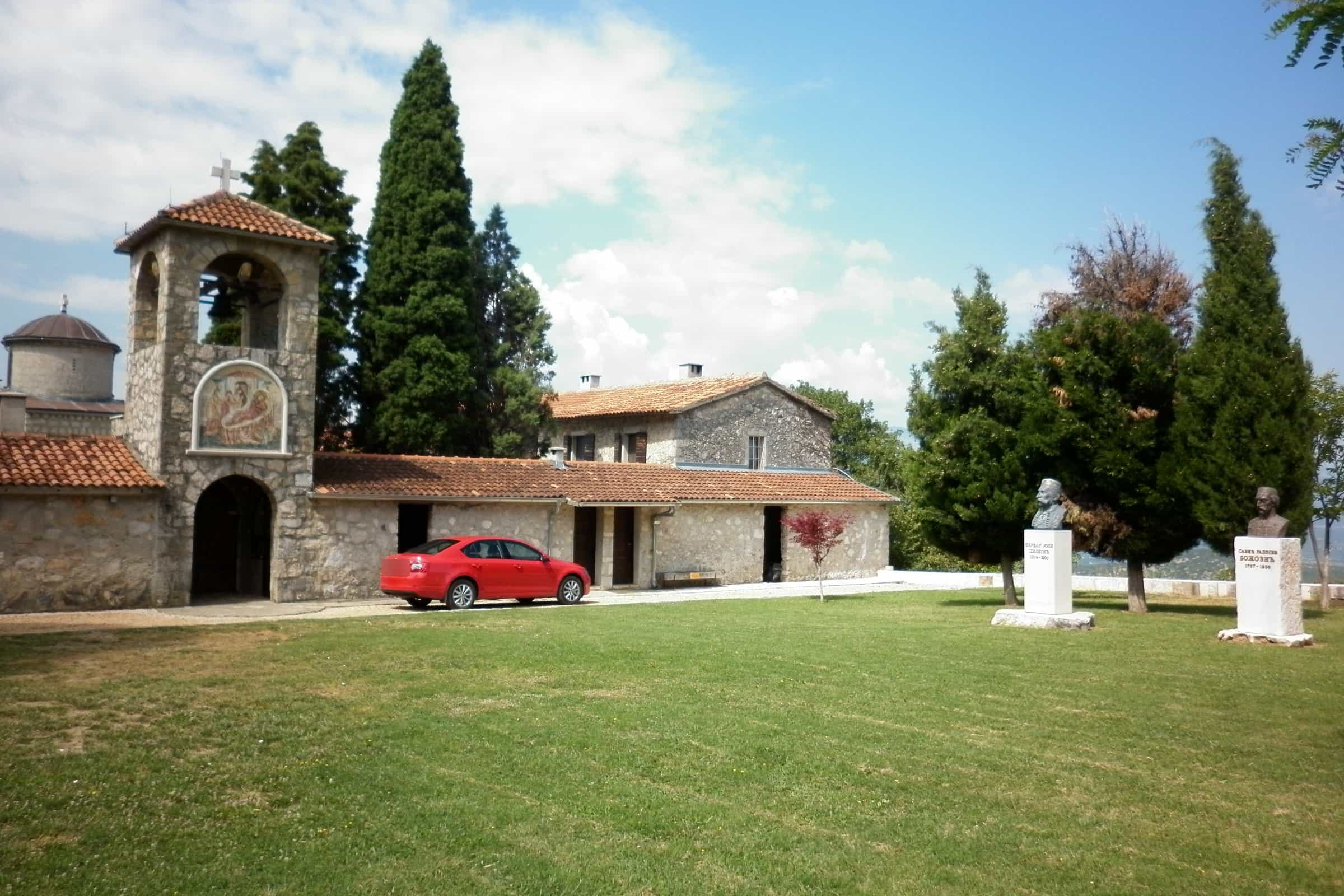
Ćelija Piperska Monastery
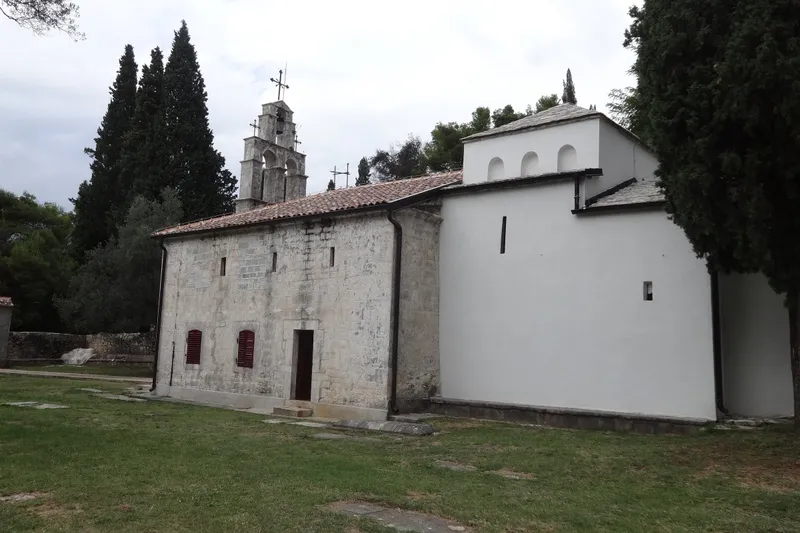
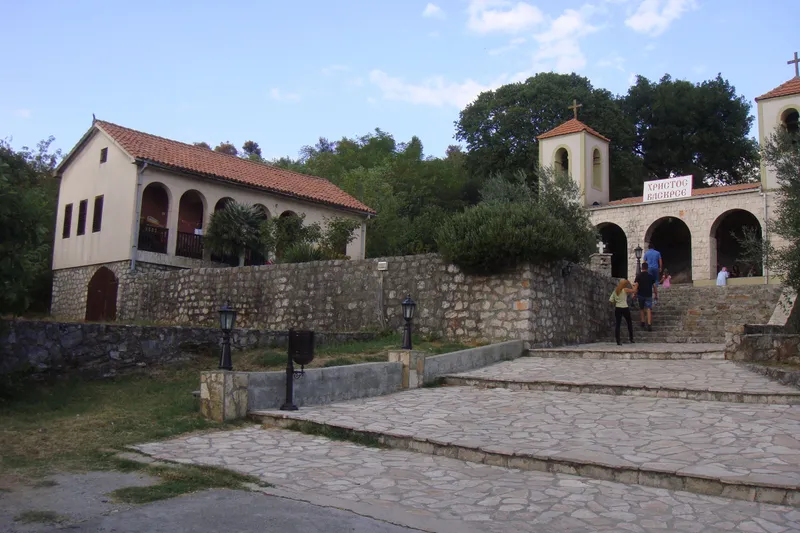
St Stefan Piperski's walled convent of the 17th century above Gornji Crnci, with his relics in the church of the Nativity of the Mother of God, open daily 08:00-18:00
Walled monastery with a single-nave domed church · Above Gornji Crnci
Photo: Andrija12345678 · CC BY-SA 4.0
Ćelija Piperska Monastery (Manastir Ćelija Piperska) is a walled Orthodox convent above the village of Gornji Crnci in Piperi, 17 km north of Podgorica, on a rock with a wide view over the Bjelopavlići valley. St Stefan Piperski founded it in the 17th century, and his relics lie in its church of the Nativity of the Mother of God. The convent is open to visitors every day 08:00-18:00. By car it is 17.2 km (about 39 minutes) from the centre of Podgorica over minor roads, and 14.4 km (about 30 minutes) from Danilovgrad.
- Founded 17th century by St Stefan Piperski; tradition dates the first church to about 1637
- Church Nativity of the Mother of God, 15.5 x 7 m, narthex 1815, bell tower 1823, renovated 1889
- Relics St Stefan Piperski (died 1697), in the church
- Hours Every day 08:00-18:00; no entry fee stated
- Where Above Gornji Crnci, Piperi, 17.2 km by car from Podgorica
Good to know: The monastery is counted among the sights and the listed cultural property of Podgorica; the municipal boundary on the map puts it in Danilovgrad municipality, near Spuž. Both towns are about half an hour away by car.
St Stefan Piperski and the founding
Stefan came from the Nikšić Župa and was tonsured at Morača Monastery. He hid from the Ottomans for seven years in a cave at Trmanje in Rovca before moving to Gornji Crnci in Piperi, where he was given land on the rise called Zborna Glavica. There he built a small cell and a little church; the cell (ćelija) gave the monastery its name. Tradition dates that first church to about 1637, while other accounts put Stefan's arrival and the church at about 1660. He was a contemporary of St Basil of Ostrog and died in 1697; about seven years later, in 1704, his body was found intact and moved into the church, where his relics remain. In 1749 Partenije Pavlović, vicar bishop of Sremski Karlovci, wrote hymns to him, and in 1925 Uroš Predić painted his icon for the chapel on Lovćen. The monastery's feast, St Stefan's day, falls in late May or early June.
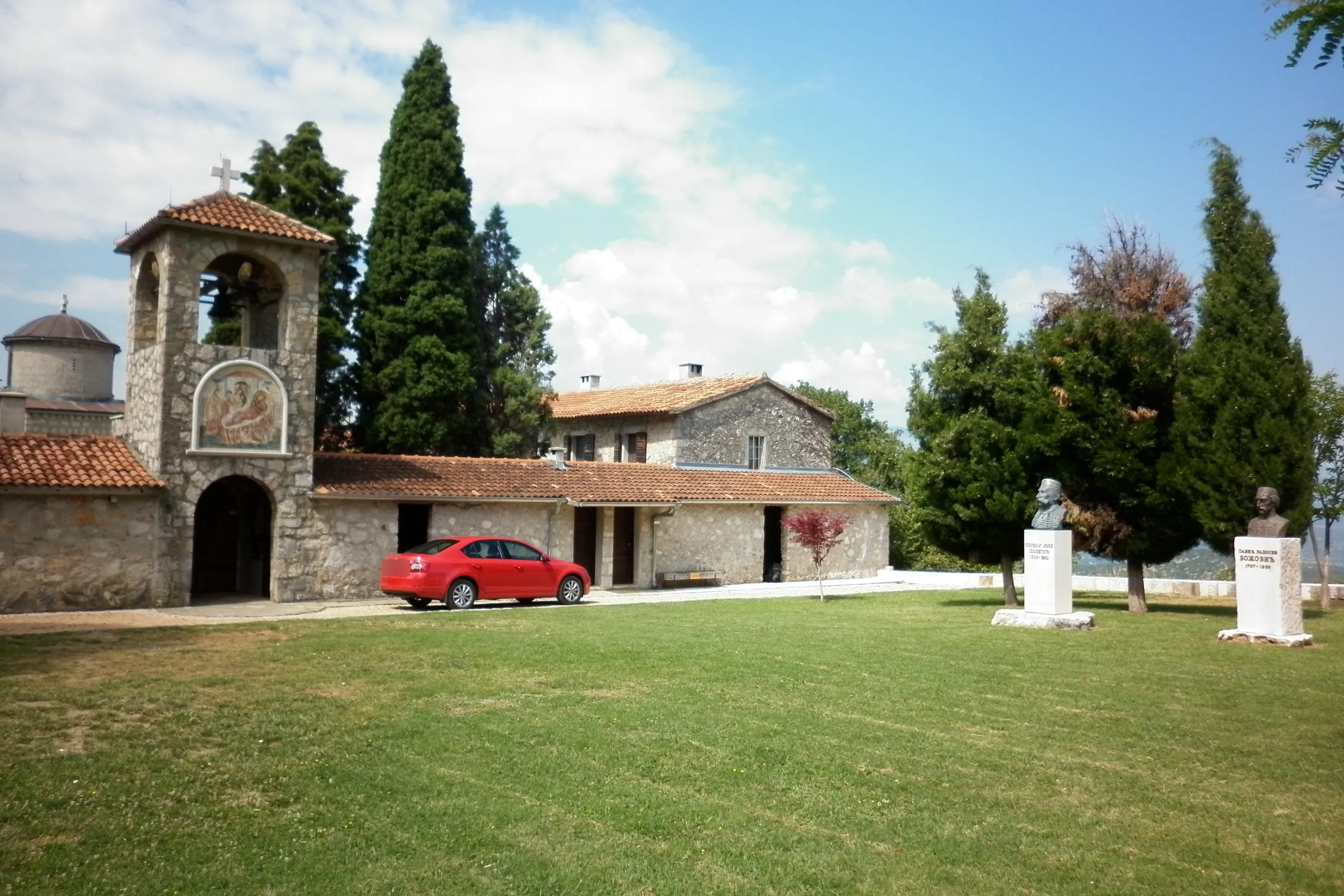
The church
The church of the Nativity of the Mother of God is a single nave with a semicircular apse, a dome on a round drum with four small windows and low side choir spaces (pjevnice); it is 15.5 m long and 7 m wide, built of rough stone without regular courses. Three steps lead up to the door, so the floor sits high and the interior feels low. The narthex was added in 1815 by abbot Mihailo Petrović, as the inscription over the entrance records; in 1823 Aleksije Vukotić built the bell tower, the dome and the right wing of the konak; a renovation followed in 1889. The walls are not painted. The iconostasis was made by the nuns after the renewal of 1994. A high wall closes the courtyard, with a vaulted gate on the north side.
Later history
For a time the monastery was a dependency of Ostrog. Metropolitan Petar II Petrović Njegoš opened a primary school here, one of three he founded in Montenegro; it worked until 1948. The library, counted with those of Cetinje and Morača among the richest in Montenegro, burned in the Second World War, and after the war the authorities took about 550 rala of land and forest, the church, konak and school fell into disrepair and most buildings were abandoned. In 1987 the hieromonk Lazar, later abbot of Ostrog, came and restored the buildings, and counts as the second founder. The monastery was fully renewed in 1994 and has its present look since then; with Metropolitan Amfilohije's blessing it became a women's monastery for the first time. The sisters make the Stefalaz balm and run a publishing house and an icon workshop.
Visiting
The convent is open every day 08:00-18:00, and no entry fee is stated. Dress rules are not published: dress as in any monastery.
Tip: The monastery pairs well with Ždrebaonik Monastery near Danilovgrad, 11.9 km (27 minutes) away by car, on a day of Bjelopavlići monasteries.
Getting there
From the centre of Podgorica the monastery is 17.2 km by car, about 39 minutes on slow minor roads through Piperi. From Danilovgrad it is 14.4 km (about 30 minutes). Other monasteries by car: Ždrebaonik 11.9 km (27 minutes), Dajbabe 23.8 km (50 minutes), Ostrog 30.7 km (58 minutes).
Nearby
- Ždrebaonik Monastery, 11.9 km, 27 minutes by car.
- Danilovgrad, 14.4 km, 30 minutes.
- Podgorica, 17.2 km, 39 minutes.
- Dajbabe Monastery, 23.8 km, 50 minutes.
- Ostrog Monastery, 30.7 km, 58 minutes.
- More in the churches and monasteries guide.
Questions
When is Ćelija Piperska Monastery open?
Ćelija Piperska Monastery is open to visitors every day 08:00-18:00; no entry fee is stated.
Who founded Ćelija Piperska Monastery?
Ćelija Piperska Monastery was founded in the 17th century by St Stefan Piperski, who built a small cell and church above Gornji Crnci; tradition dates the first church to about 1637.
How far is Ćelija Piperska from Podgorica?
Ćelija Piperska Monastery is 17.2 km by car from the centre of Podgorica, about 39 minutes on minor roads.
History
17th century
Founding
St Stefan Piperski, tonsured at Morača, settles above Gornji Crnci and builds a small cell and church; tradition says about 1637, other accounts about 1660.
1697-1704
Death and relics
Stefan dies in 1697; in 1704 his body is found intact and moved into the church.
1815-1889
Additions and school
Abbot Mihailo Petrović adds the narthex (1815); Aleksije Vukotić builds the bell tower, dome and right wing of the konak (1823); renovation in 1889. Njegoš opens a primary school that works until 1948.
1940s
War and decline
The library burns in the war; land and forest are taken afterwards and the buildings fall into disrepair.
1987-1994
Renewal
Hieromonk Lazar restores the buildings from 1987; the monastery is fully renewed in 1994 and becomes a women's monastery.
Closest places
 Ždrebaonik Monastery, DanilovgradMonument12 km · 25 min
 Duklja (Doclea), Roman cityMonument14 km · 35 min
 DanilovgradTown14 km · 30 min
 Monument to fallen fighters, DanilovgradMonument14 km · 30 min
 Monument to the Partisan Fighter, GoricaMonument16 km · 35 min
 Monument to Vladimir VysotskyMonument17 km · 40 min
More churches & monasteries
Nearest by road first

Sources
Metropolitanate of Montenegro and the Littoral, Ženski manastiri (above Gornji Crnci, founder, tradition about 1637, narthex 1815, bell tower 1823, renovation 1889, Ostrog dependency, Njegoš school to 1948, post-war losses, renewal 1994) · Metropolitanate, Prilog istoriji svještenog manastira Ćelija Piperska, 2 June 2023 (1884 description: site, wall and gate, Morača tonsure, Trmanje cave, death 1697, relics) · Metropolitanate, Slava manastira Ćelija Piperska, 30 May 2010 (feast, contemporary of St Basil of Ostrog) · Manastir Ćelija Piperska, official site (17 km from Podgorica, founder's life, about 1660, relics 1704, 1749 hymns, 1925 Predić icon, church 15.5 x 7 m and description, dates, library, Lazar 1987, women's monastery, balm, publishing, icon workshop, hours 08:00-18:00) · Tourist Organisation Podgorica, The Monastery Ćelija Piperska (rock with a view over Bjelopavlići, 1637, no frescoes, iconostasis by the nuns after 1994) · Portal Analitika, 9 May 2017, Nepokretna baština Crne Gore: Podgorica (register summary: founded 1637, enlarged 1815-1889, listed cultural property) · OpenStreetMap way 331572836, ODbL · OSRM routing (OpenStreetMap data, ODbL)