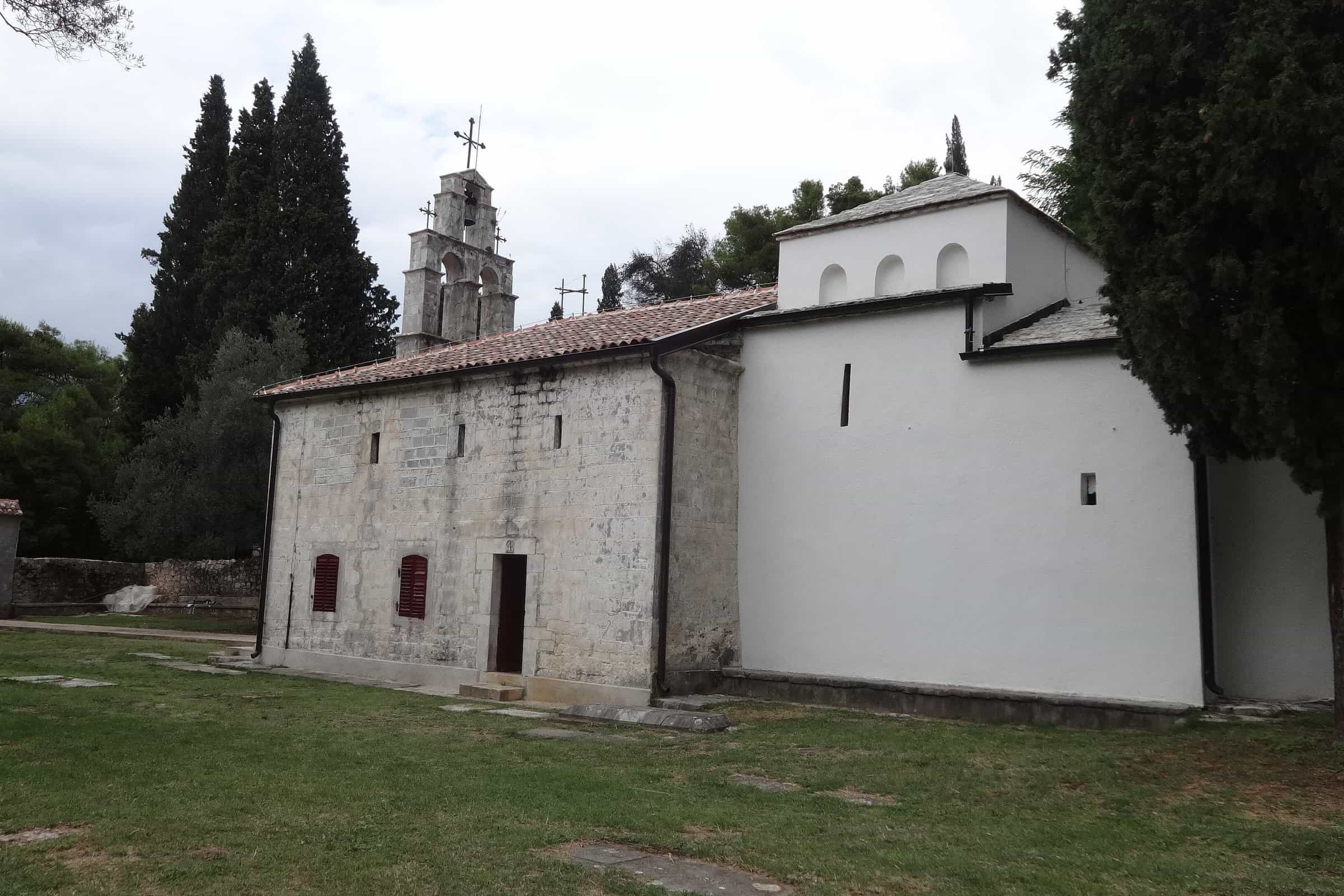
Church of St George under Gorica, Podgorica
The oldest Orthodox church in Podgorica, a pre-Romanesque building of the 10th-11th century at the foot of Gorica hill, with frescoes of the late 16th century
Pre-Romanesque single-nave church with a dome · Foot of Gorica hill
Photo: Colomen · CC BY-SA 4.0
The Church of St George under Gorica (Crkva Svetog Đorđa pod Goricom) is the oldest Orthodox church in Podgorica: a small single-nave building at the foot of Gorica hill, in the old town cemetery on Ulica 19. decembra. Its core is pre-Romanesque, of the 10th-11th century, its frescoes date from the late 16th century, and it is still a working parish church. From the city centre it is 0.7 km on foot, about 8 minutes.
- Built 10th-11th century core; first written records only from the 18th century
- Frescoes Late 16th century, probably the 1570s
- Tradition Stefan Nemanja received his first baptism here
- Later additions Narthex with bell gable 1880, iconostasis 1881
- Where Foot of Gorica hill, 0.7 km on foot from the centre
History
No record fixes when the church was built. By its architecture it belongs to the pre-Romanesque monuments of the 10th-11th century and shares features with small coastal churches of that time; a wider span of the 9th-11th century and a narrower one, the second half of the 11th century, are also given. Tradition holds that Stefan Nemanja, born in old Ribnica, received his first baptism here. The first written records come only from the 18th century, but in 1539 the printer and voivode Božidar Vuković of Podgorica left ten ducats to the church in his will. The frescoes were painted in the late 16th century, probably in the 1570s.
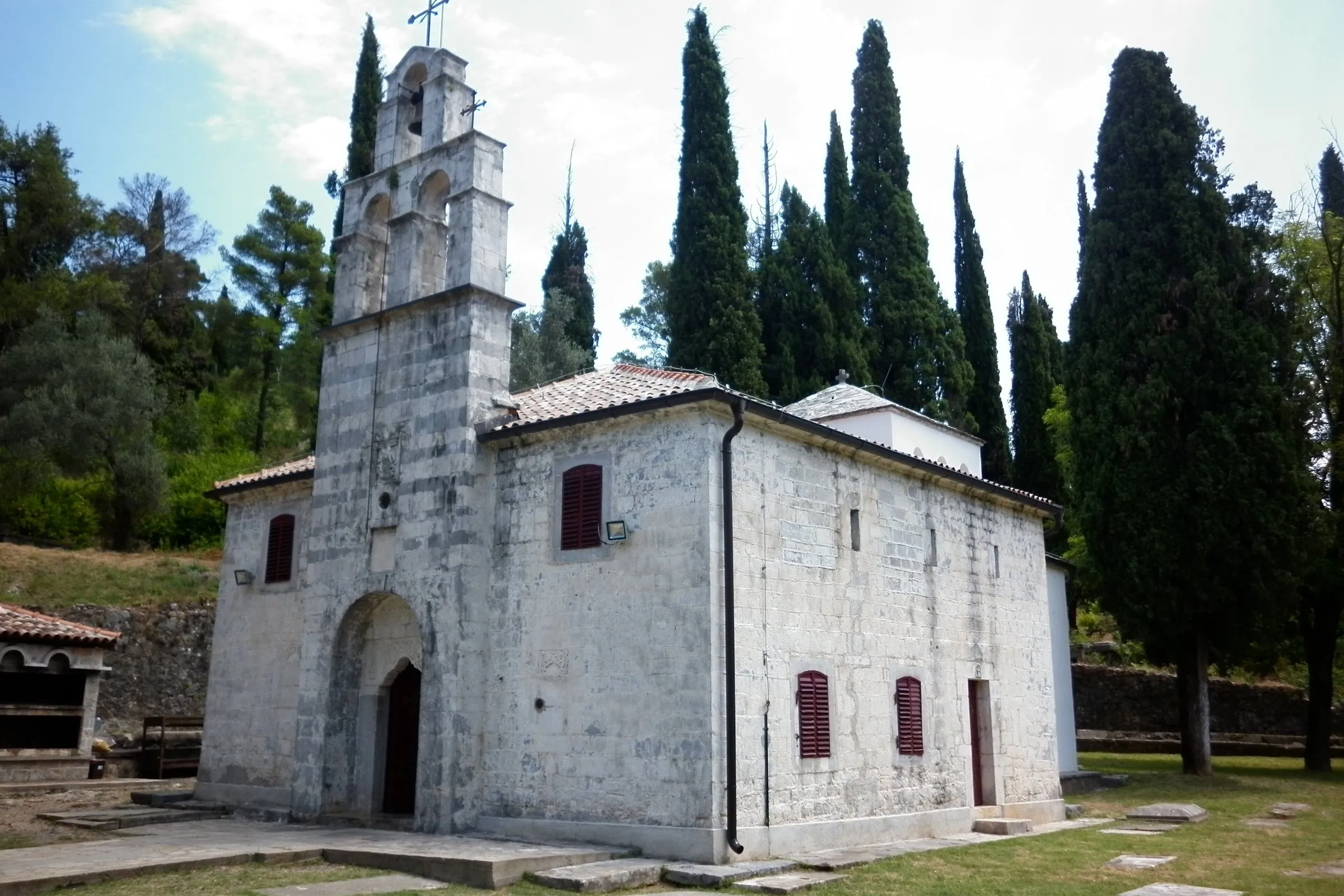
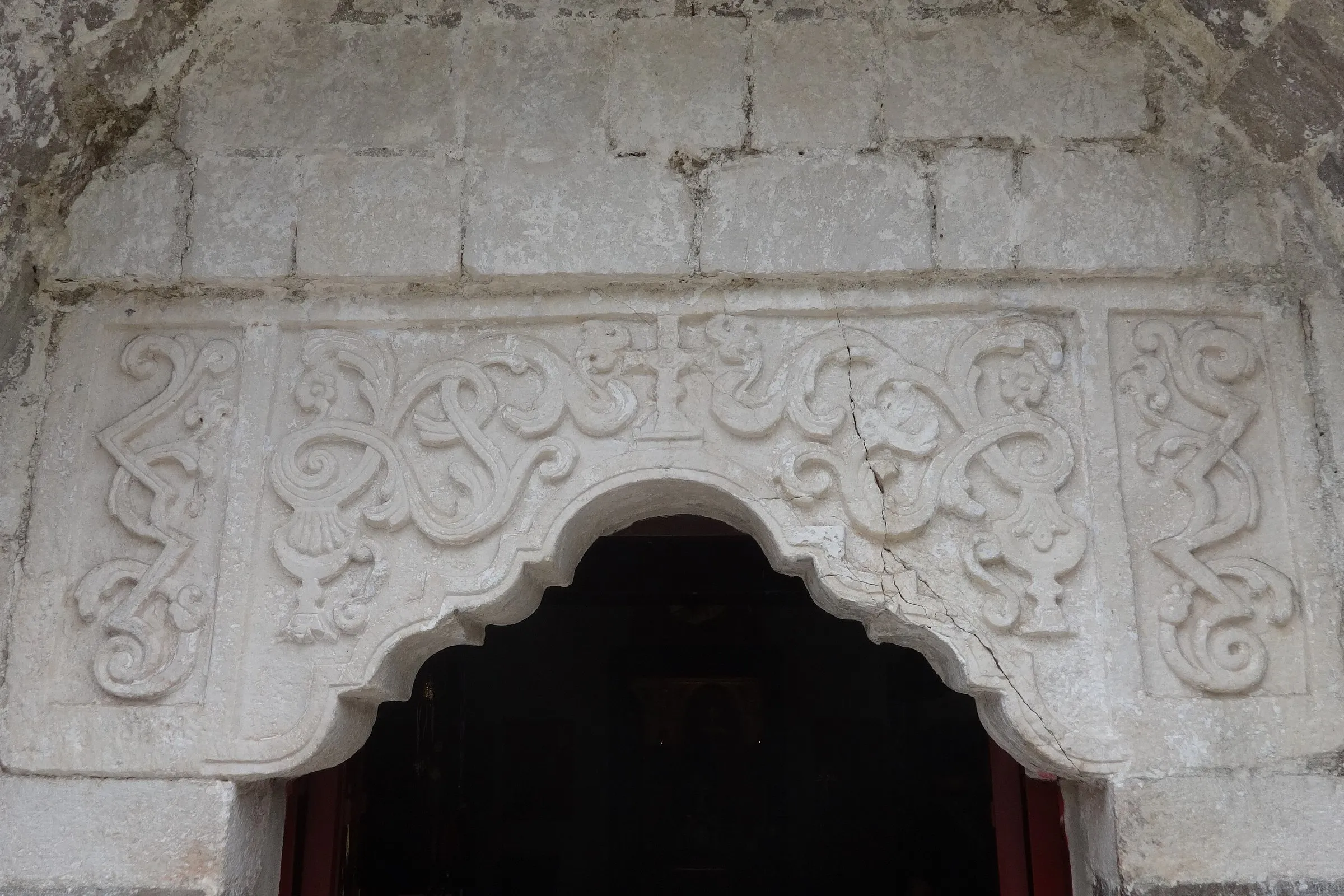
In 1747 the church received a Gospel book printed in Russia, and in 1764 an icon by the painter Petar. In 1856 the Orthodox townspeople obtained Ottoman permission to repair it. In 1880, after Podgorica was freed from Ottoman rule, a narthex with a bell gable was added on the west side, dated by the inscription over the entrance; the iconostasis by the Đinovski brothers followed in 1881. In 1931 the old bell tower and the low blind dome were pulled down and replaced by a taller false dome, and the outer walls were encased in concrete. Research and conservation led by the architect Jovan Nešković began in 1963, and the church partly regained its older look. Because of all these rebuildings its original appearance is not fully preserved.
The building
The church was originally a single nave with a west entrance, an east apse, a central dome and probably three bays. Today it has two: a domed central bay and an eastern bay under a barrel vault, ending in a semicircular apse. Whether a western bay ever existed is unresolved, as no foundations have been found. The wide rectangular narthex on the west carries the bell gable of 1880. The walls reuse ancient stone, a niche, a door jamb and a marble block, perhaps brought from Duklja. Older walls under the east end served as foundations for the apse, so the site was built on before the church. Graves found around the building, mostly oriented west-east, are later than the church.
The frescoes
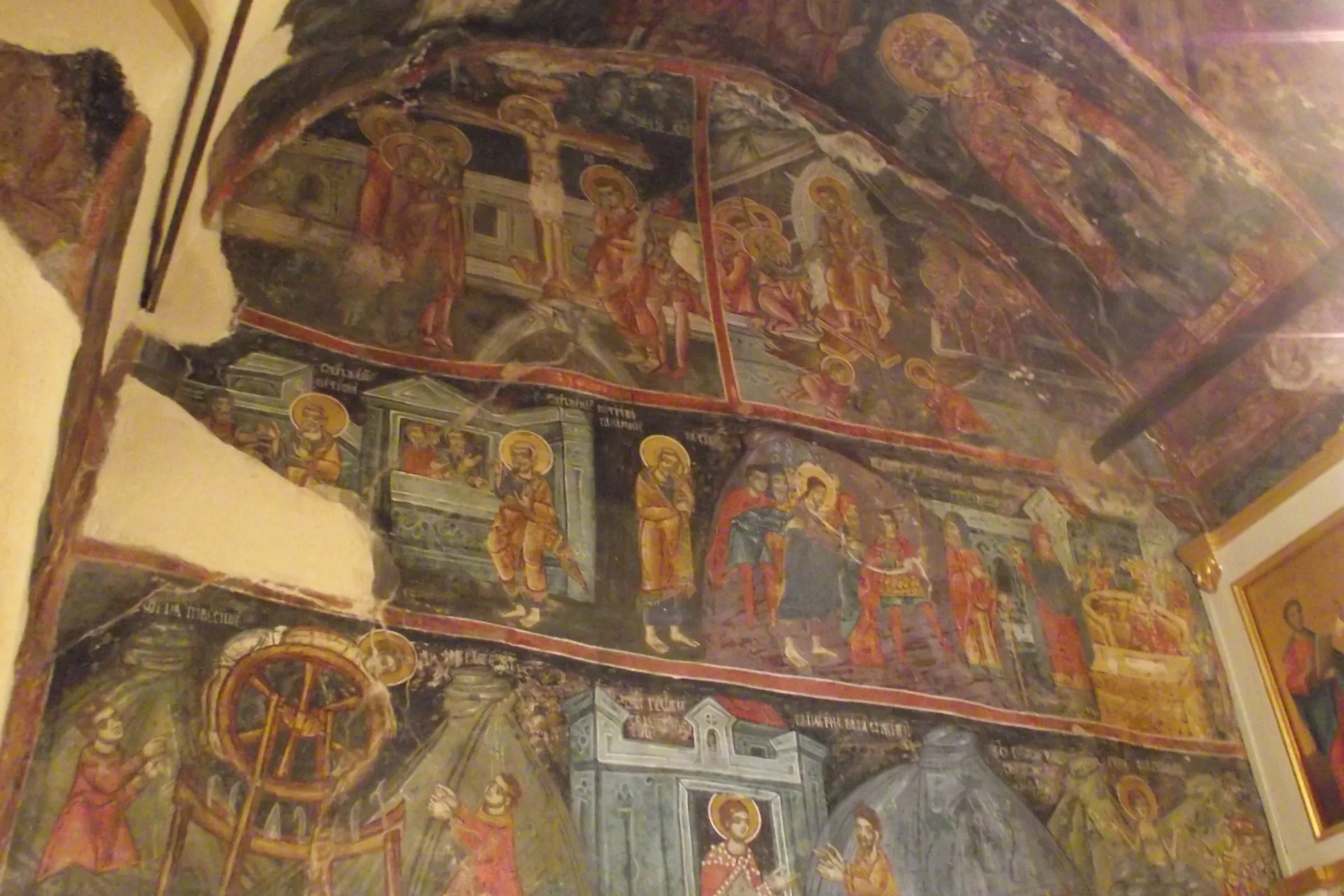
The wall paintings are attributed to the circle of painters who worked at Brezojevice near Plav (1567), Budisavci (1568), Nikoljac in Bijelo Polje (1570s) and Morača (1574-1578). In the dome are Christ Pantocrator, the Heavenly Liturgy with angels and sixteen prophets, with the Evangelists in the pendentives. On the walls are the great feasts (the Annunciation, the Presentation, the Crucifixion, the Descent into Hades), a Passion cycle and a cycle of the life and martyrdom of St George, whose visible scenes are on the north wall; in the apse, the Virgin with Christ and the Communion of the Apostles. Much of the painting is darkened by soot and some walls are still uncleaned.
Good to know: This is a working parish church. No visiting hours are published, and service times change: ask locally when the church is open.
Getting there
The church is at the foot of Gorica hill on Ulica 19. decembra, 0.7 km from the centre of Podgorica (about 8 minutes on foot) or 1.1 km by car (about 3 minutes). On foot it is 987 m (about 12 minutes) from the City Museum, 1.2 km (14 minutes) from the old Ribnica bridge, 1.3 km (16 minutes) from the Clock Tower and 2.0 km (24 minutes) from the Cathedral of Christ's Resurrection.
Tip: The marked trail Gorica-Malo brdo-Duklja (11.3 km) starts at the church and ends at the Roman ruins of Duklja.
Nearby
- Gorica, the hill above the church, with the viewpoint and the start of the trail.
- Duklja, the Roman town at the end of the trail from the church.
- Old Ribnica bridge and Clock Tower, 1.2 and 1.3 km on foot.
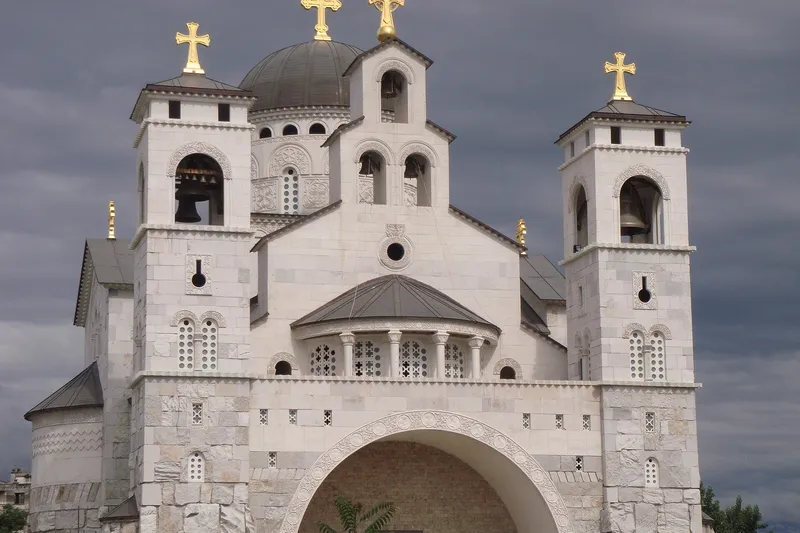
- Cathedral of Christ's Resurrection, 2.0 km on foot.
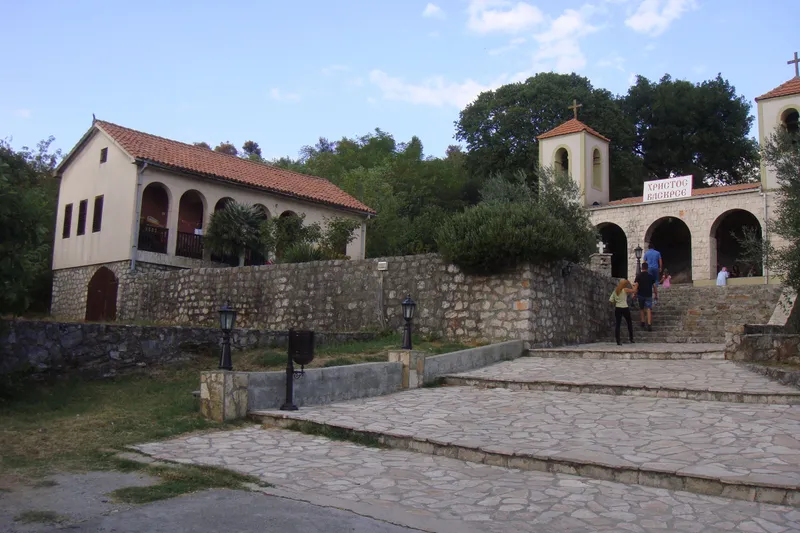
- Dajbabe Monastery, another Podgorica monastery.
- Other churches on the churches and monasteries hub.
Questions
How old is the Church of St George in Podgorica?
The Church of St George under Gorica has a pre-Romanesque core of the 10th-11th century, which makes it the oldest Orthodox church in Podgorica; its frescoes are from the late 16th century.
Where is the Church of St George in Podgorica?
The Church of St George stands at the foot of Gorica hill in the old town cemetery, 0.7 km on foot from the centre of Podgorica.
Was Stefan Nemanja baptised in the Church of St George?
By tradition Stefan Nemanja, born in old Ribnica, received his first baptism in the Church of St George under Gorica.
Timeline
10th-11th century
Built
The church is built as a single nave with a central dome, on a site with older walls; by tradition Stefan Nemanja receives his first baptism here.
1539-1570s
Vuković's will and the frescoes
Božidar Vuković of Podgorica leaves ten ducats to the church in his will; the frescoes are painted in the late 16th century.
1856-1881
Repair and additions
Ottoman permission to repair the church (1856); after liberation a narthex with a bell gable is added (1880) and the Đinovski brothers make the iconostasis (1881).
1931
Remodelling
The old bell tower and low dome are pulled down for a taller false dome; the walls are encased in concrete.
From 1963
Conservation
Research and conservation under the architect Jovan Nešković; the church partly regains its older look.


More churches & monasteries
Nearest by road first


Sources
Tourist Organisation Podgorica, The Church of St George (foot of Gorica, 9th-11th century, remodelled several times) · Tourist Organisation Podgorica, brochure Manastiri Podgorice, October 2025, p. 4 (oldest Orthodox church, pre-Romanesque 10th-11th century, Nemanja tradition, first records 18th century) · Parish of St George under Gorica, O crkvi (cemetery, dating, 1539, 1747, 1764, 1856, 1880, 1881, 1931, 1963) · Parish of St George under Gorica, Arhitektura (plan, bays, narthex, reused stone, older walls, graves) · Parish of St George under Gorica, Freske (dating, painters' circle, programme, soot) · Tourist Organisation Podgorica, Hiking and Cycling (marked trail Gorica-Malo brdo-Duklja, 11.3 km, starting at St George's Church) · OpenStreetMap way 197800217, ODbL · OSRM routing (OpenStreetMap data, ODbL)