Former legations of Cetinje
The embassy buildings of the royal capital: five purpose-built legations of 1898-1912 and the town houses of six more missions, on a walk of eight short legs
Former diplomatic buildings of the royal capital · Historic core of Cetinje
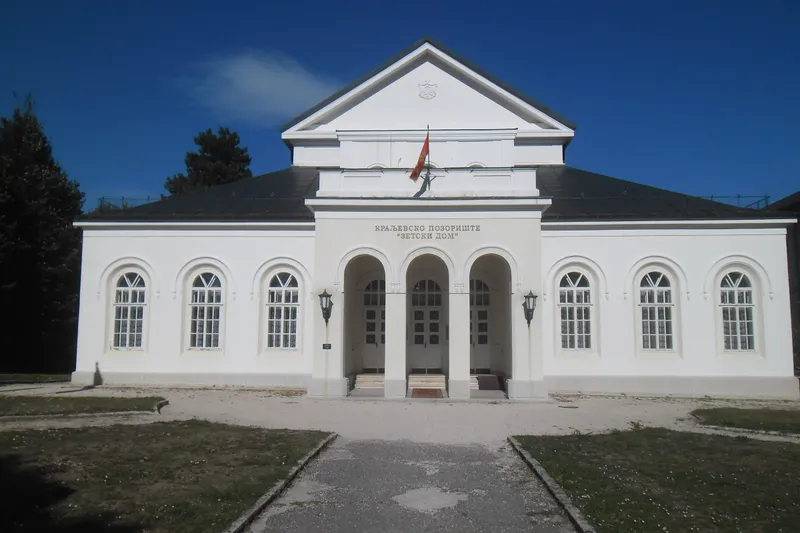
Photo: Schokifaktor · CC BY-SA 4.0
The former legations of Cetinje are the embassy buildings of the small royal capital: after the Congress of Berlin recognised Montenegro's independence in 1878, eleven legations and two consulates opened here. Austria-Hungary, Russia, Italy, France and Britain built their own houses between 1898 and 1912; Serbia, Turkey, Greece, Bulgaria, Germany and Belgium used town houses near the palace. The buildings on the walk below are all within a 15-minute walk of the centre and are seen from the street: inside you can go only where the present user is open to the public, the Ethnographic Museum in the Serbian legation and the National Library in the Italian and French ones.
- Purpose-built Austro-Hungarian (1898), Russian (1903), Italian (1910), French (1910), British (1912)
- Town houses Turkish (bought in 1888), Serbian, Bulgarian, German, Greek legations and the Belgian consulate
- Street of diplomats Katunska street, today Njegoševa
- Open inside Only the Ethnographic Museum (Serbian legation) and the National Library (Italian and French legations)
- Protection Cultural monuments of categories II and III
- Walk Dvorski trg to the Italian legation in eight legs, the longest 597 m
The diplomatic capital
Independence brought diplomats, and the diplomats brought a new social life to the town. In 1896 Prince Nikola declared that Cetinje would stay the capital for good, and the missions started building. Austria-Hungary was first, then Russia, Italy, France and Britain put up purpose-made buildings; the others used ordinary town houses close to the palace. Katunska street, today Njegoševa, was the street of the missions and their staff, and the legations laid out landscaped gardens around their buildings.
A walking order
The legs below are measured on foot. Start on Dvorski trg and finish at the National Library on the edge of town; the return to the centre from there is 1.1 km (14 minutes).
- Serbian legation (Ethnographic Museum) and the Bulgarian house, both on Dvorski trg.
- British legation on Njegoševa, 199 m from the Bulgarian house (3 minutes); the German house is 84 m further along the same street (1 minute).
- Turkish legation, 211 m from the British (3 minutes).
- Russian legation, 217 m from the Turkish (3 minutes).
- Back through the centre (490 m, 6 minutes) to the French legation, 242 m north of it (3 minutes), with the Vlach Church 189 m away.
- Austro-Hungarian legation, 542 m from the French (7 minutes).
- Italian legation (National Library), 597 m from the Austro-Hungarian (8 minutes).
Austro-Hungarian legation
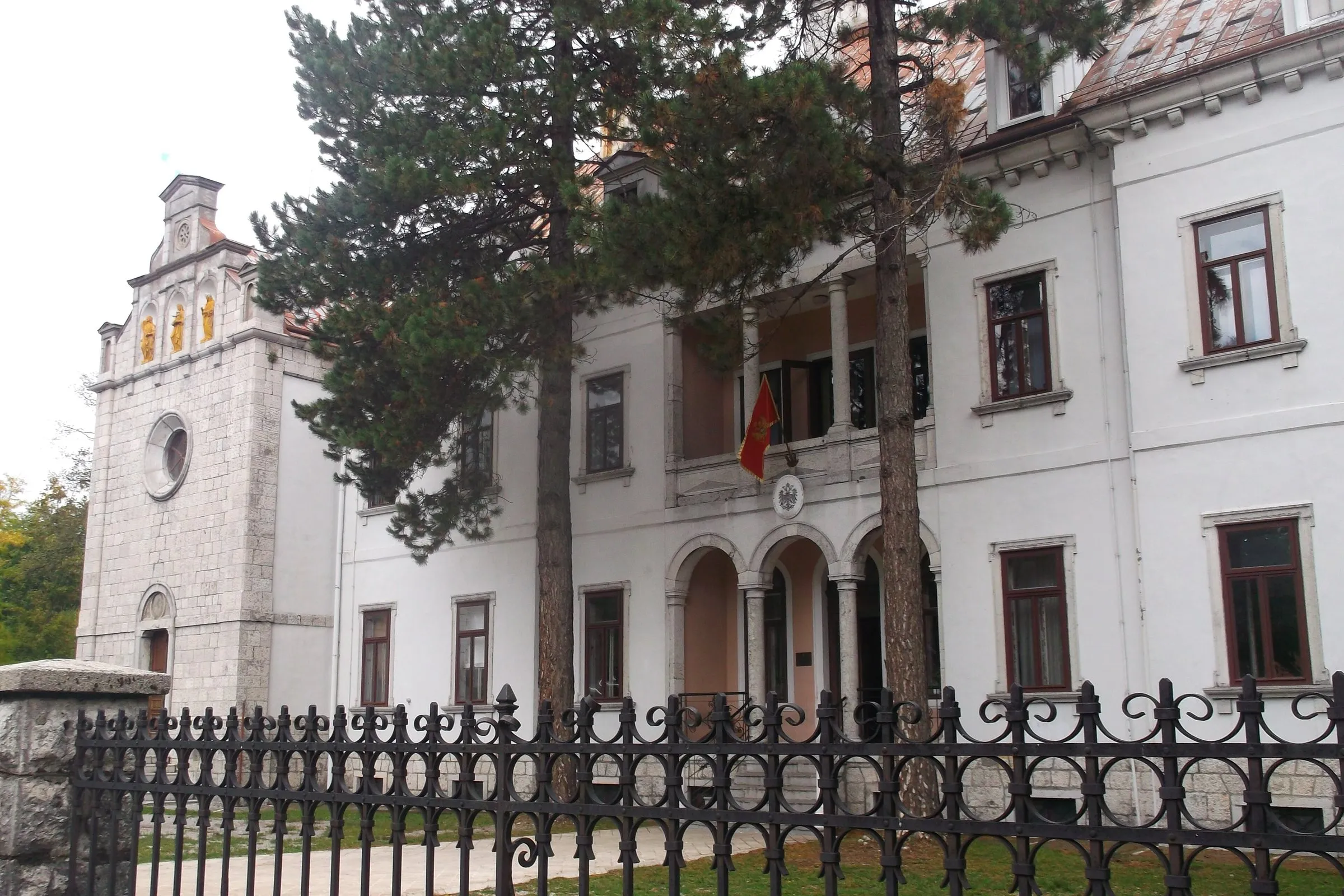
The land at the end of Bajova street was bought in 1896 with Prince Nikola's approval and the building was finished in 1898 (some give 1899), to a design by Josip Slade Šilović of Trogir, the architect of Zetski dom. It is a stone building on a strong plinth; the main entrance is a porch of three arches with a loggia above. It has its own Roman Catholic chapel with a neo-Romanesque west front, an oculus, niches with statues of the Virgin and archangels and two neo-Gothic windows on the north side; the chapel's marble altar was later moved to the Catholic church of St Anthony of Padua in Cetinje. The plot keeps its wrought-iron fence on a low wall and a tennis court. The legation worked until the First World War; between the wars the building housed the command of the Zeta Division, after 1945 schools, and from 1983 the institute for the protection of cultural monuments, with a larger repair in 2000. Cultural monument of category II.
Russian legation
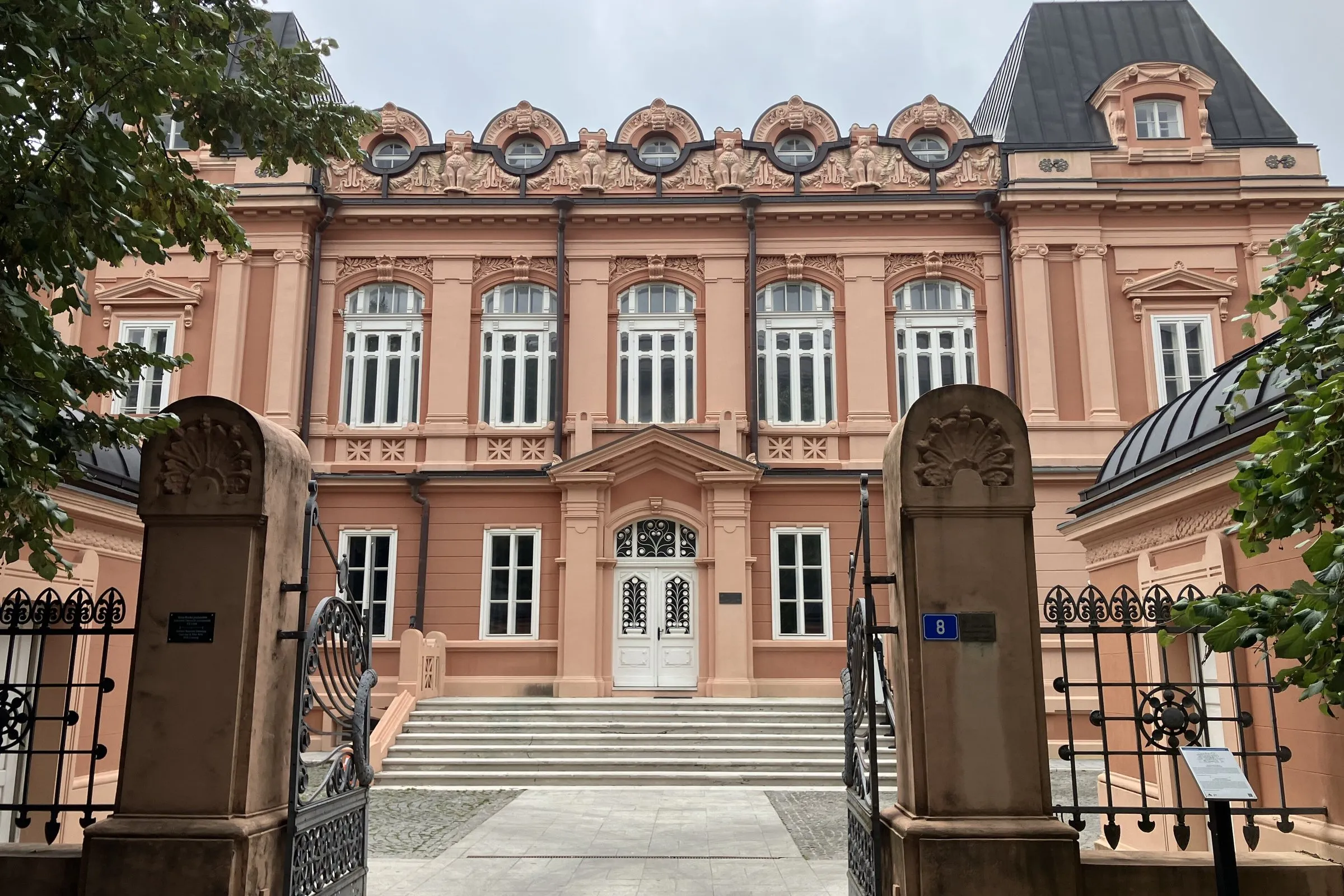
In 1900 the Russian government decided to build; its envoy Konstantin Arkadyevich Gubastov chose the site, which Prince Nikola gave to Russia by a decree of May 1900. The Italian architect Corradini designed it; building started in May 1900, the roof was on by October 1901, and the legation moved in with a ceremony in 1903. It stands in a large garden behind a wrought-iron fence and gate with two guard houses, and its main front carries baroque stucco (garlands, palmettes, oculi in the mansard roof): one of the most lavish buildings in Cetinje. The legation closed in 1915. The building later served as a girls' grammar school and a teachers' school, from 1953 as the children's ward of the Danilo I hospital, and after the 1979 earthquake as the Faculty of Culturology and then the Fine Arts Academy. A fire broke out in the attic on 14 June 2012. The state, which owns the building, rebuilt it in 2014-2017 with UNDP for EUR 2.75 million; the works ended in July 2017 and the use permit followed on 31 October 2017. Cultural monument of category II.
Italian legation (National Library)
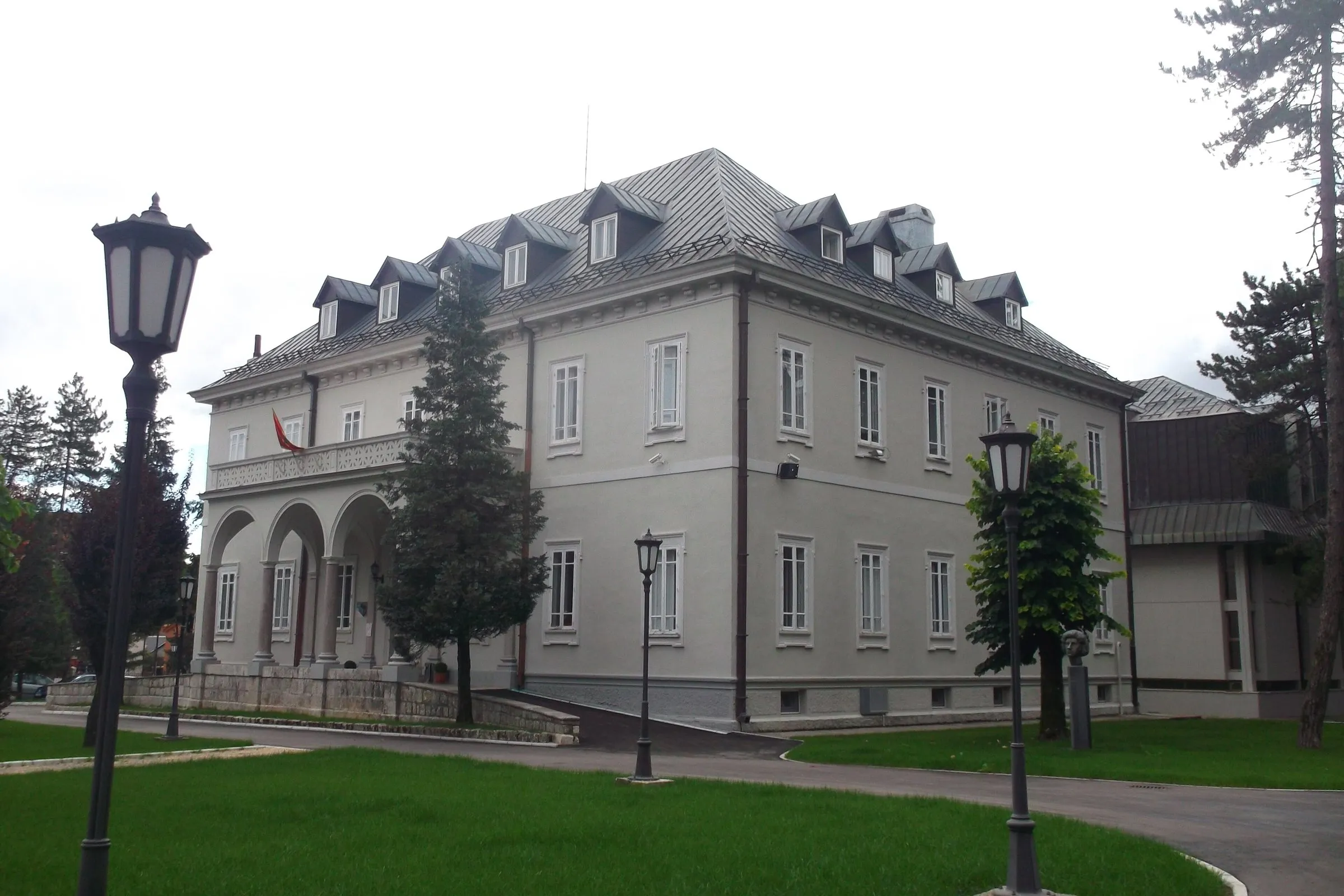
The Italian legation stands at the north-west entrance to town, at the fork of the roads to Lovćen and to Njeguši and Kotor. Building started in 1905, stopped, resumed in 1909 and was finished in 1910, also to a design by Corradini. The façades are calm, with a porch and a ceremonial balcony over it, stucco ceilings in the halls, a park and a tennis court; the grounds cover 2.2 ha. The legation worked until 1915 (1916 in some accounts). The National Library of Montenegro Đurđe Crnojević has used the building since 1960: it holds the library's management, cataloguing and acquisition departments, the CIP, ISBN and ISSN agencies, the COBISS centre, exhibition halls and the reading rooms of four special collections. A seven-storey stack with 45 km of shelving stands on its south-west side. Works on the building were funded by a Norwegian government donation in 2006.
French legation (National Library)
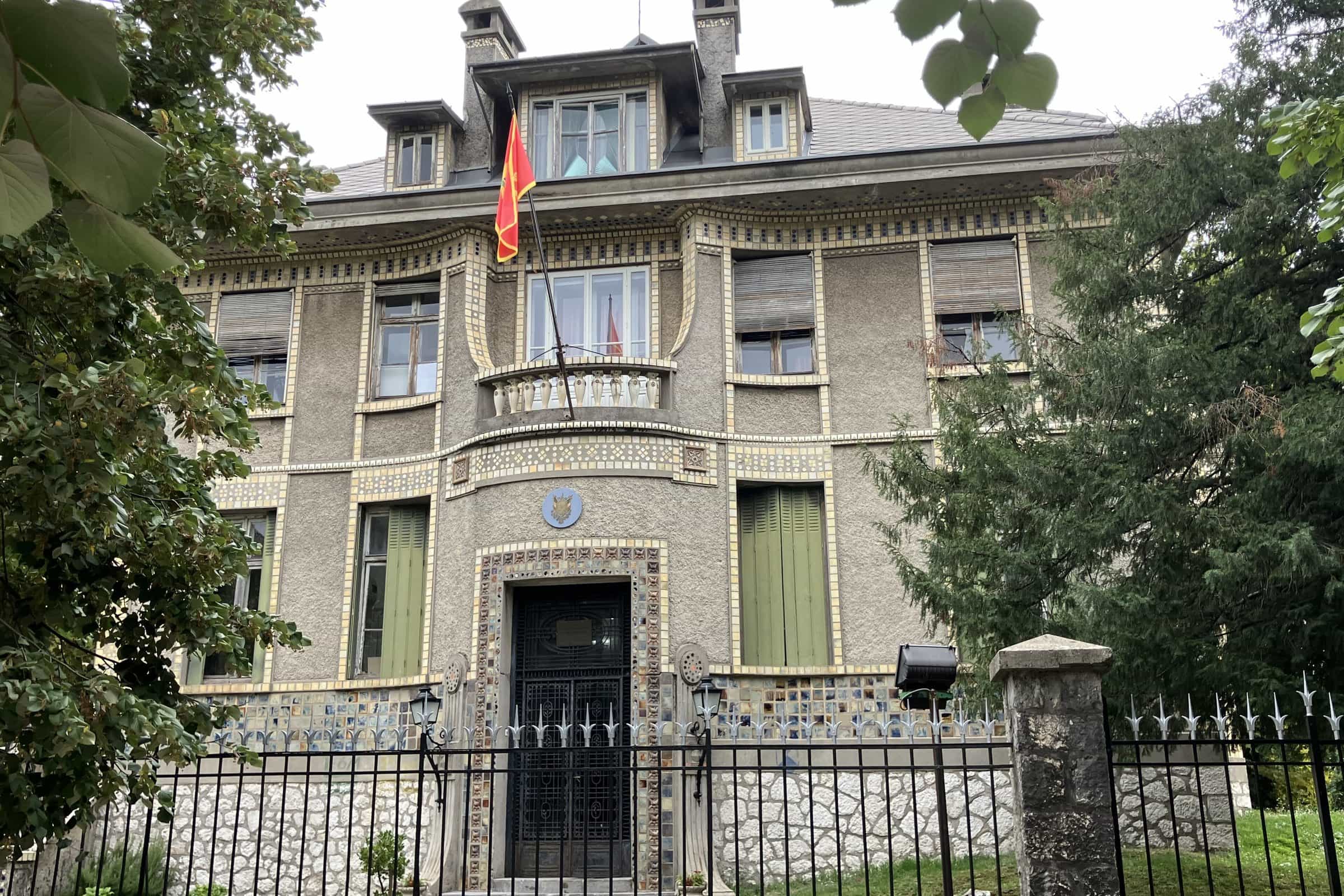
The municipality gave France the land on Katunska (now Njegoševa) street, and the building was finished in 1910, on the eve of the proclamation of the kingdom. It was designed by Paul Gaudet, working with the Perret Frères firm run by Auguste Perret. It is the first building in Cetinje in the Secession style: a rough stone plinth, rustic concrete and coloured ceramic tiles on the façades, a convex entrance with a balcony over it, and inside a half-spiral reinforced-concrete staircase and nine fireplaces. It ranks as perhaps the most valuable building in Cetinje. The legation worked until 1915 (1916 in some accounts); the building was police headquarters during the Second World War, then a post office and a bank, and since 1949 part of the National Library. It houses the library's museum department, the collection of old and rare books, bequests, the conservation workshop, reading rooms and a French Corner; a research and restoration project has been prepared for a future Book Museum here. Cultural monument of category II. The Lovćenska vila monument and the Vlach Church are next door.
Good to know: Three of the buildings are open to visitors: the Italian and French legations, where the National Library's exhibition halls and reading rooms are the only way to see a purpose-built legation from the inside, and the Serbian legation, which is the Ethnographic Museum. The others are seen from the street.
British legation (Music Academy)
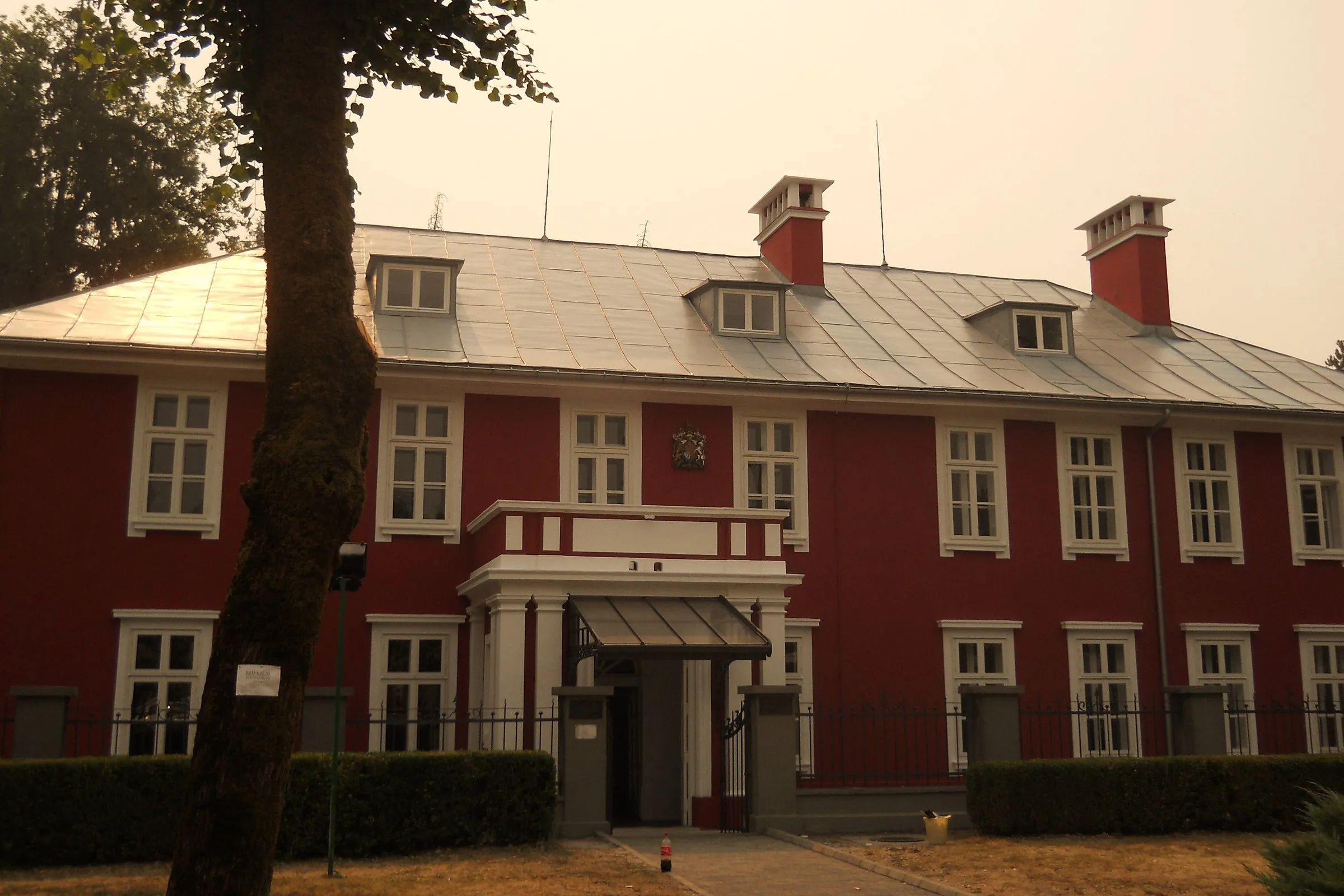
Built in 1912 on the main street to a design by the English architect Harty, who also designed two cottage-style villas in town, the British legation is in the spirit of an English country house: a simple two-storey building with a porch, a low wall with a wrought-iron fence, a garden in front and the town park behind. It houses the Music Academy of the University of Montenegro. Cultural monument of category II.
Turkish legation (Faculty of Dramatic Arts)
This simple rectangular two-storey house in the centre was built in the early 1880s for vojvoda Mašo Vrbica. Its unfinished rooms saw the first performance of Prince Nikola's Balkanska carica on 2 January 1884, before Zetski dom existed; the theatre is 107 m away. In 1888 the Ottoman envoy Dževat Pasha asked the prince to let him buy the house for the legation, which worked here until 1912. Today it is the Faculty of Dramatic Arts. Cultural monument of category III.
Serbian legation (Ethnographic Museum)
Serbia's mission was first in the house of Jovo Milunović (Piper) in Katunska street, moved in 1907 to the house of Gavro Vuković on Dvorski trg, was raised to a legation in 1909 and closed in 1915, before the Austro-Hungarian army entered Cetinje. The house is a typical Cetinje town house with plastered façades. It is the Ethnographic Museum of Montenegro, the one former legation with a museum you can walk into; its hours are on the museum page.
The other town houses
Bulgaria rented vojvoda Ivo Radonjić's house in Dvorska street, on Dvorski trg; Germany the house of Jovan Milunović-Piper on Njegoševa, 84 m from the British legation; Greece rented houses in Katunska street; and Belgium had an honorary consul, Vuk Vuletić, in his own house near the palace. These are ordinary town houses, seen from the pavement.
Visiting
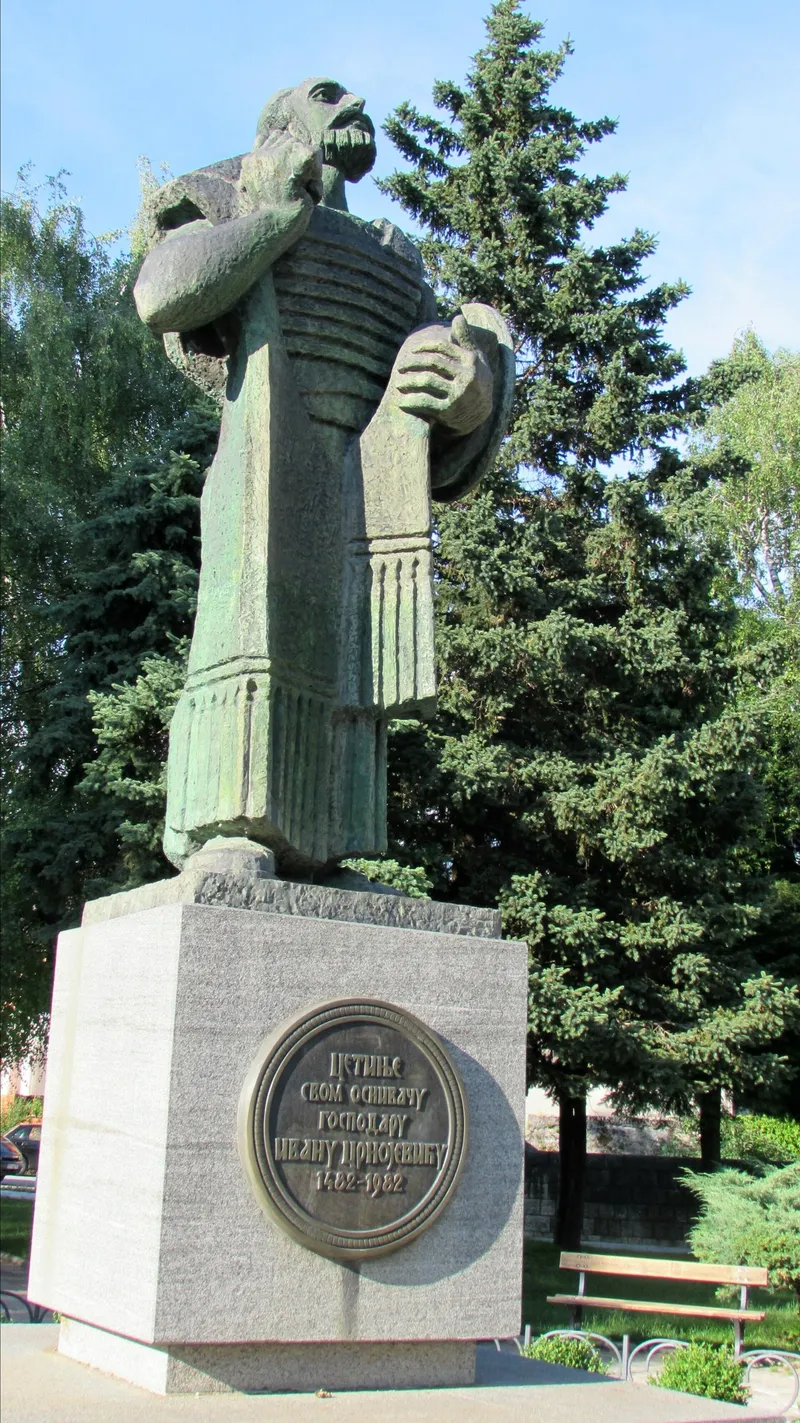
None of the buildings is open as a legation sight. The walk is outdoors and free; the Ethnographic Museum has its own hours and tickets (on its page), and the National Library's public rooms are open in its working hours. The faculties and the academy are not open to visitors. Dvorski trg, where the walk starts, also has the Ivan Crnojević monument and King Nikola's Museum, the palace the legations clustered around; the Art Museum is in the former Government House, by the same architect Corradini as the Russian and Italian legations.
Tip: The Turkish legation is 107 m from Zetski dom and the Russian 241 m, in the same block as the theatre, so the theatre fits the walk between the Turkish and Russian legations.
Getting there
All the legations are inside the historic core of Cetinje. On foot from the centre: French legation 242 m (3 minutes), Turkish 273 m (4 minutes), Serbian 341 m (5 minutes), British 474 m (6 minutes), Russian 490 m (6 minutes), Austro-Hungarian 708 m (9 minutes), Italian 1.1 km (14 minutes).
Nearby
- Ethnographic Museum, in the former Serbian legation on Dvorski trg.
- Zetski dom, 107 m from the Turkish and 241 m from the Russian legation.
- Vlach Church, 189 m from the French legation.
- Lovćenska vila, in front of the Vlach Church, next to the French legation.
- King Nikola's Museum, the palace on Dvorski trg.
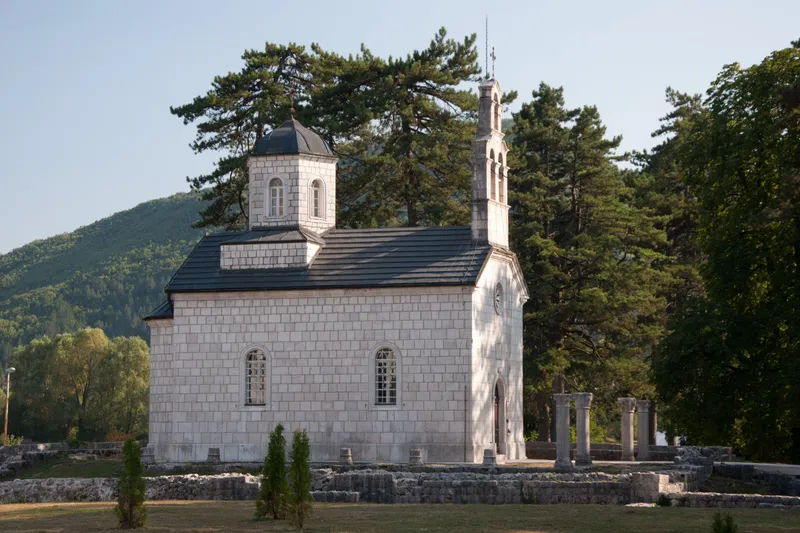
- Court Church on Ćipur, 434 m from the British legation.
- Art Museum of Montenegro, in the former Government House by Corradini.
- More in the monuments guide.
Questions
Why does Cetinje have so many embassy buildings?
Cetinje was the capital of independent Montenegro from 1878, and eleven legations and two consulates opened there; five of them, Austria-Hungary, Russia, Italy, France and Britain, built their own houses between 1898 and 1912.
Can I go inside the former legations of Cetinje?
The former legations of Cetinje are seen from the street, except the Serbian legation, which is the Ethnographic Museum, and the Italian and French legations, whose public rooms belong to the National Library.
Which legation in Cetinje is the most valuable?
The former French legation of 1910 on Njegoševa street, the first Secession building in Cetinje with coloured ceramic tiles on its façades, ranks as perhaps the most valuable building in the town.
History
1878
Independence and the first missions
The Congress of Berlin recognises Montenegro's independence; eleven legations and two consulates open in Cetinje.
1896-1898
Austria-Hungary builds first
Prince Nikola declares that Cetinje stays the capital for good; Austria-Hungary buys land and finishes its legation by 1898, the first purpose-built one.
1900-1903
Russian legation
Russia builds its legation on land given by the prince, to a design by Corradini, and moves in with a ceremony in 1903.
1910
Italian and French legations
The Italian legation by Corradini and the French legation by Paul Gaudet with Perret Frères are finished, on the eve of the kingdom.
1912
British legation
The British legation by the English architect Harty is built on the main street in the spirit of an English country house.
1912-1916
The legations close
The legations close during the First World War, the Serbian before the Austro-Hungarian army enters Cetinje.
1949 onwards
New uses
The French legation becomes part of the National Library in 1949 and the Italian one in 1960; the Serbian becomes the Ethnographic Museum, the British the Music Academy, the Turkish the Faculty of Dramatic Arts.
2012-2017
Russian legation rebuilt
After a fire in the attic of the former Russian legation on 14 June 2012, the state rebuilds it in 2014-2017 with UNDP; the use permit is issued on 31 October 2017.
More monuments
Nearest by road first


Sources
Ministry of Culture, Sports and Media of Montenegro, Management Plan of the Historic Core of Cetinje (2009), pp. 18, 28, 33, 36-37, 49-52 (eleven legations and two consulates, 1896 capital decision, who built and who rented, Katunska street, gardens, each legation's site, architect, years, description and 2009 use, St Anthony altar, categories) · National Library of Montenegro Đurđe Crnojević, Buildings (Italian legation 1910, Corradini, library since 1960, departments, stack with 45 km of shelving, 2.2 ha; French legation 1910, Paul Gaudet with Perret Frères, Secession, police HQ in WWII, library since 1949, departments, French Corner) · Government of Montenegro, Informacija o rekonstrukciji bivšeg Ruskog poslanstva na Cetinju (22 December 2017): reconstruction with UNDP, EUR 2,750,000, works finished July 2017, use permit 31 October 2017, state ownership · Tourist Organisation Cetinje, Landmarks (the town of former embassies; Austro-Hungarian legation) · Dragica Đurašević Miljić, Arhitektura u doba kralja Nikole, Matica no. 64 (2015), pp. 371-372, 384-388 (later uses of the Austro-Hungarian and Russian legations, 2012 fire, Italian legation 1905-1910, Norwegian donation 2006, French legation uses, Book Museum project) · MNE magazin, 21 November 2016, Cetinje's list of cultural properties (the legations among them) · Royal Theatre Zetski dom, history and location (the 1884 performance in the Vrbica house, later the Turkish legation) · OpenStreetMap, ODbL: node 10904818338 (French), way 93195622 (Austro-Hungarian), way 167047317 (Russian), node 425067617 (Italian, National Library), way 167047302 (British, Music Academy), way 209882856 (Turkish, drama academy), way 209747828 (Serbian, Ethnographic Museum), node 12869493201 (Bulgarian), way 207459193 (German) · OSRM routing (OpenStreetMap data, ODbL)