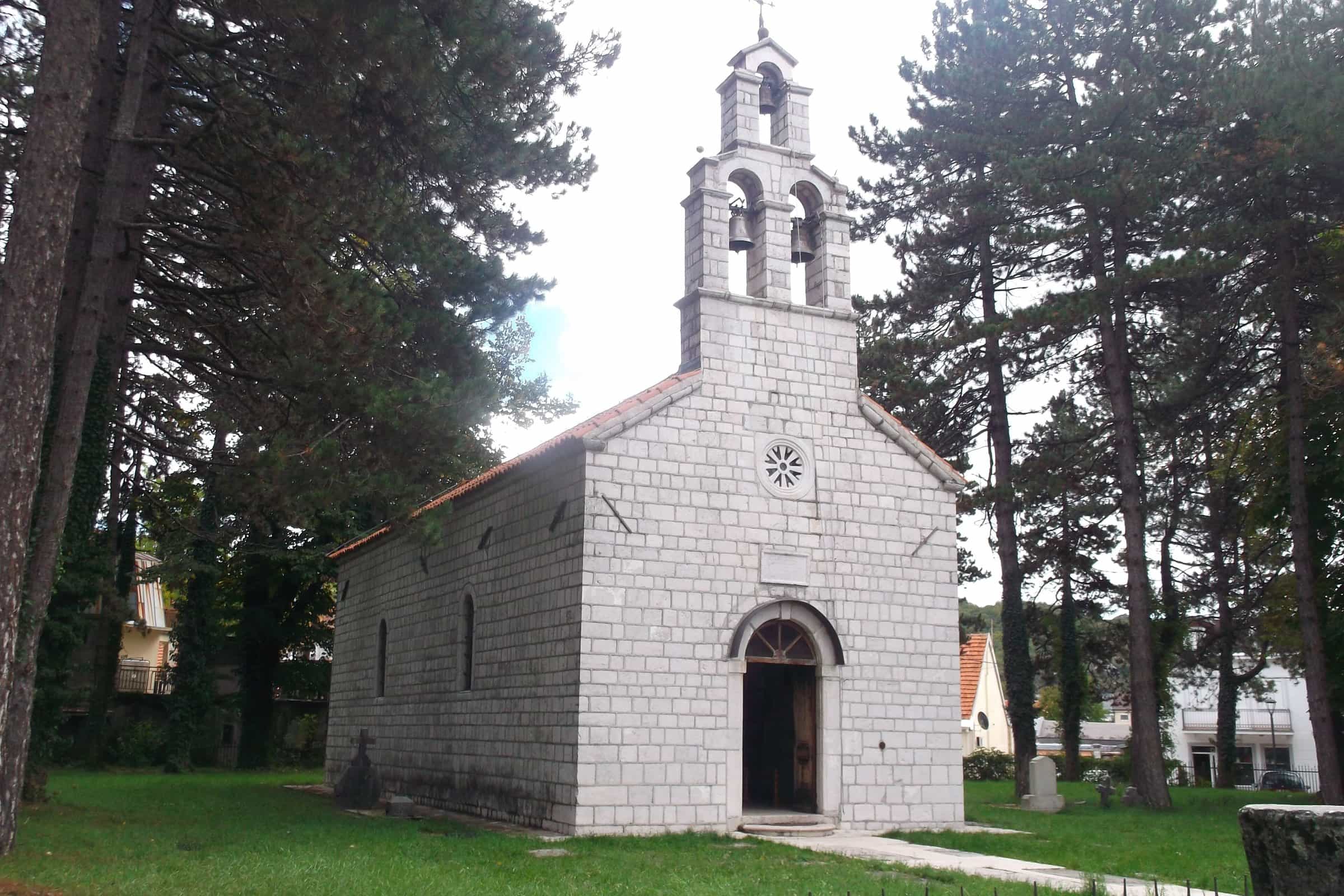
Vlach Church, Cetinje
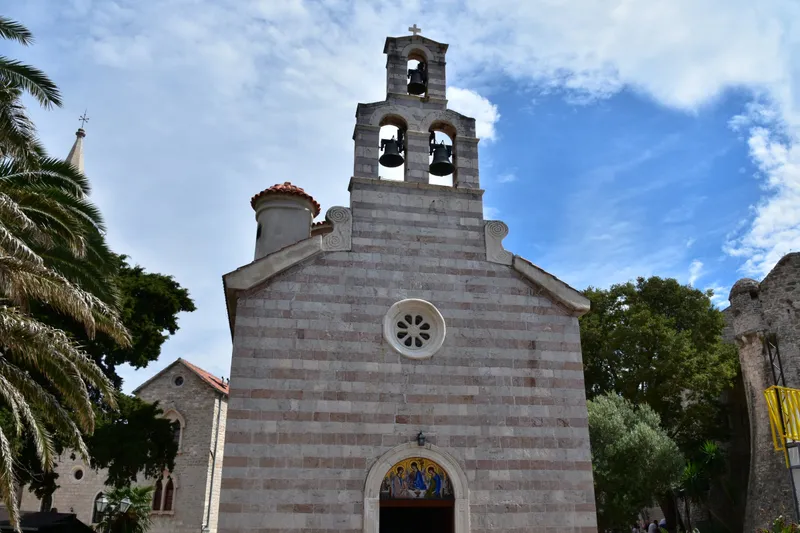
Cetinje's oldest church, first recorded in 1450 and rebuilt in 1864, behind a fence of 1,544 rifle barrels taken from the Ottomans
Orthodox church of the Nativity of the Virgin · First recorded 1450, present building 1864, fence 1897 · Grahovska street
Photo: Сергей Наруков · CC BY 3.0
The Vlach Church (Vlaška crkva) is the oldest church recorded in Cetinje, dedicated to the Nativity of the Virgin. A church stood here by 1450, before Ivan Crnojević built his court and monastery in the field; the building you see dates from 1864. Its churchyard fence, put up in 1897, is made of 1,544 rifle barrels taken from the Ottomans. The church is 291 m from the town centre, 4 minutes on foot, on Grahovska street. It is a working church without published opening hours; the fence, the churchyard and the monuments in front can be seen from the street at any time.
- First recorded 1450, as an older church on this site
- Present building 1864, rebuilt from the foundations and enlarged
- Fence 1,544 rifle barrels, put up in 1897
- Protection Cultural monument, category II
- In front A medieval stećak and the Lovćenska vila monument (1939)
- Where Grahovska street, 4 minutes on foot from the centre
Older than the town
The church was built by Vlach herders who had their summer pastures (katuni) in the Cetinje field below Lovćen and probably lived there before Ivan Crnojević moved his court here in 1482. The first church was a simple structure of wattle and stakes, woven with twigs and plastered with mud. It was rebuilt three times before it took its final form in 1864. One of those rebuildings happened in the 15th century: a Venetian coin of that century was found in the foundation of the apse of a smaller church uncovered under the present floor.
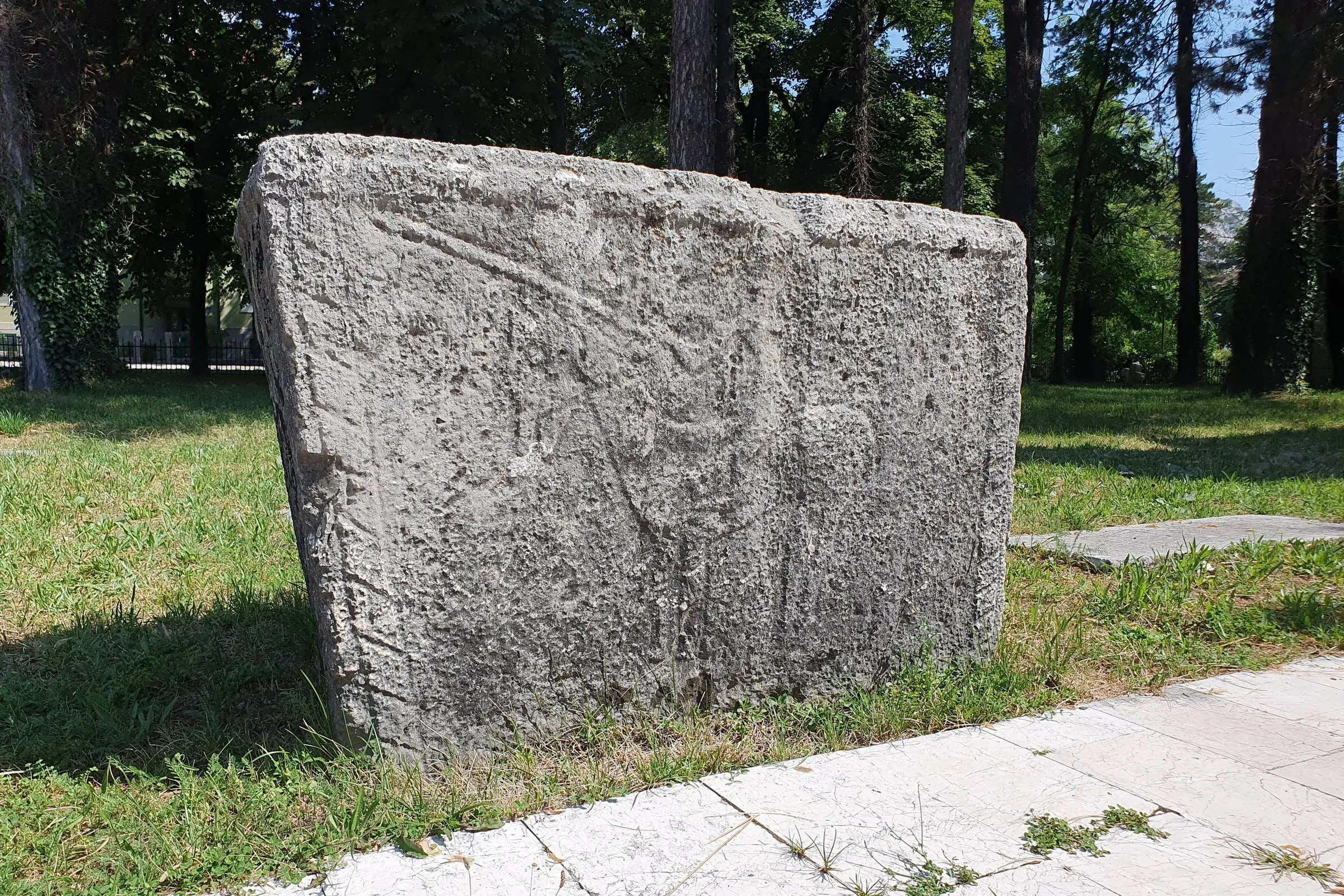
Around the church lay a necropolis of about 150 stećci, the carved medieval tombstones of the western Balkans. The dating of the stećak that still stands in front of the church, together with the 1450 mention, points to a permanent settlement here at the turn of the 14th and 15th centuries.
Good to know: The year 1450 is often given as the year the church was built. It is the year of the first written mention of an older church on this site; the present building is from 1864.
The 1864 rebuilding and the fence of rifles
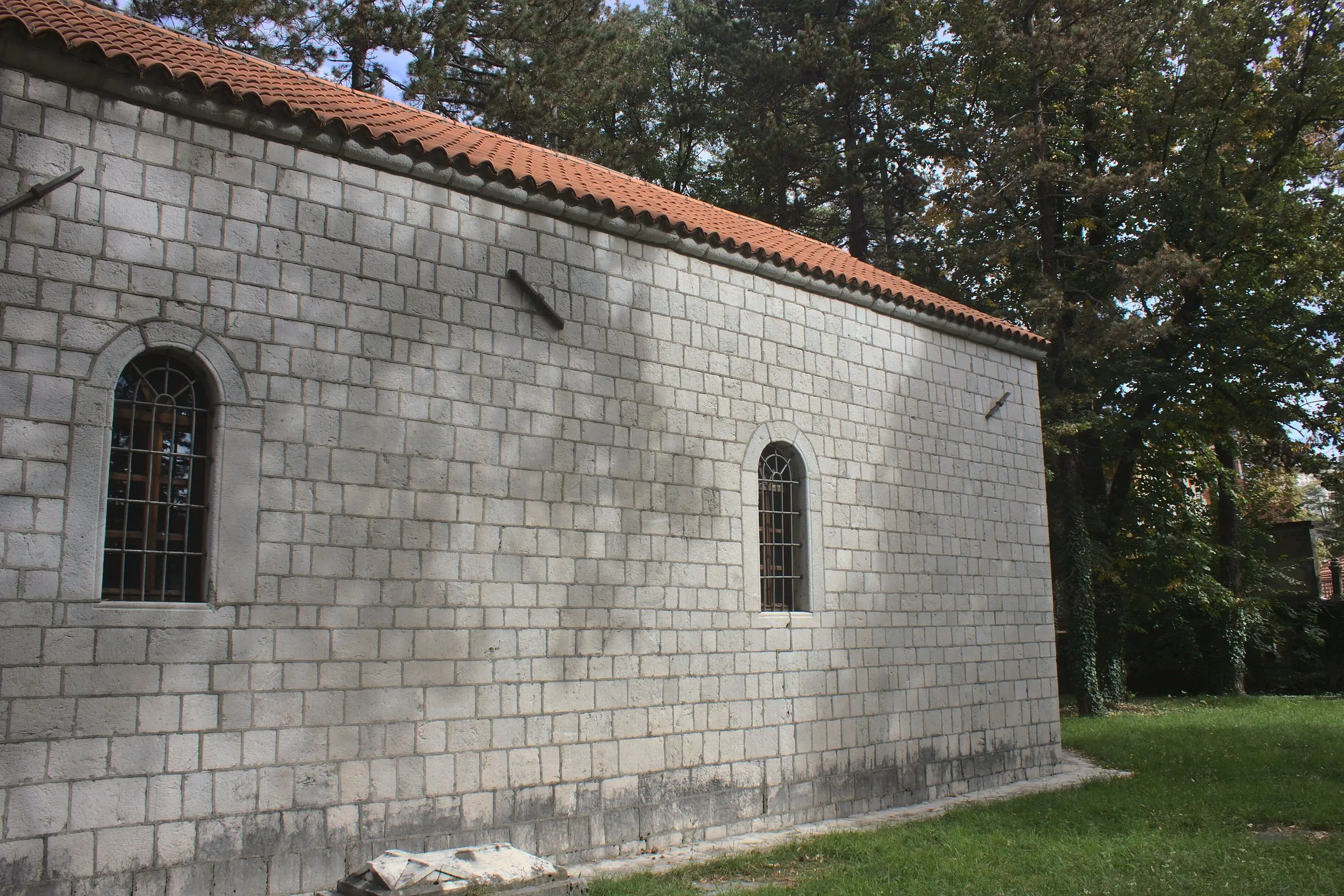
In 1864 the church was rebuilt from the foundations and enlarged. Medieval tombstones from the necropolis around it were built into the new foundation walls.
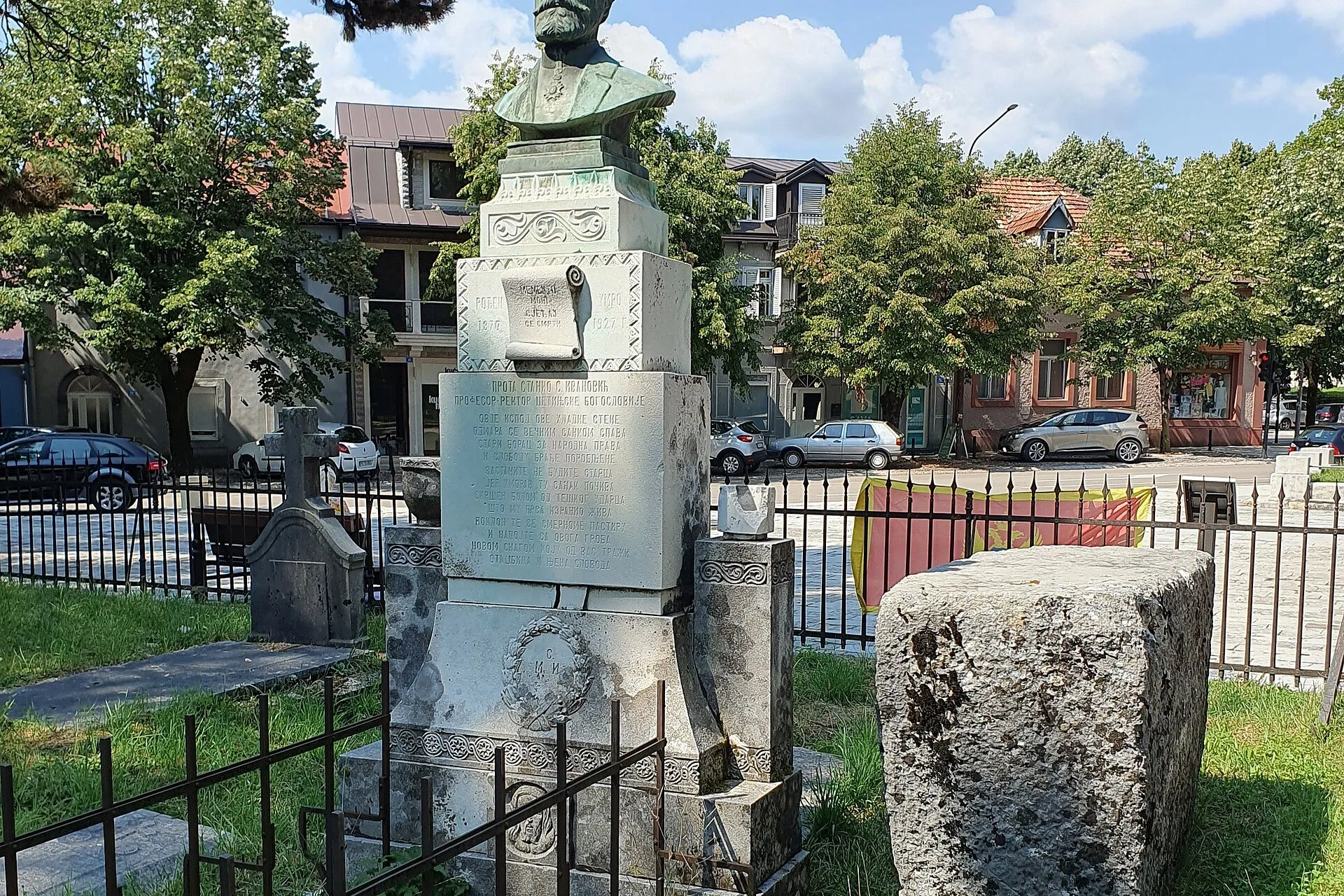
The fence around the churchyard went up in 1897. It is made of 1,544 rifle barrels taken from the Ottomans in the battles of Grahovac, Vučji Do and Fundina (some accounts count 1,550). It is best seen from the pavement along Grahovska street.
The river and the cemetery
Until the end of the 17th century the river Cetinje crossed the field, and near this church it split into two branches: one ran towards the monastery, the other to the big sinkhole in Donje polje. The churchyard also served as the town cemetery. In the 1870s it was still at the edge of town; as Cetinje grew the church ended up in the centre and the cemetery filled, so in 1894 the town built the Kapelica chapel in Donji Kraj with a new cemetery around it.
What you see
The church of 1864 stands behind its fence of rifle barrels, with old gravestones in the churchyard and a stećak in front of it. On the plateau in front, near the former French legation, stands the Lovćenska vila, a monument by the sculptor Risto Stijović from 1939. The church is a protected cultural monument of category II.
Visiting
The Vlach Church is in religious use. Opening hours, service times and rules for visitors are not published: dress as in any church, and check with the tourist office in Cetinje if you want to be sure of seeing the inside. The fence, the churchyard stones and the monuments can be seen from the street.
Tip: The former French legation, now part of the National Library and one of the former legations of Cetinje, is 189 m away (3 minutes). Seen together with the Lovćenska vila and the Princess Ksenija monument, the church makes a short loop of a few hundred metres.
Getting there
From the centre of Cetinje the church is 291 m on foot, about 4 minutes, or 259 m by car. From the church it is 107 m to the Lovćenska vila, 227 m to the Princess Ksenija monument, 482 m to Zetski dom (6 minutes), 497 m to the Biljarda (7 minutes) and 576 m to Cetinje Monastery (8 minutes).
Nearby
- Lovćenska vila, 107 m, 2 minutes on foot.
- Former French legation, 189 m, 3 minutes.
- Princess Ksenija monument, 227 m, 3 minutes.
- Zetski dom, 482 m, 6 minutes.
- Biljarda, 497 m, 7 minutes.
- Ivan Crnojević monument on Dvorski trg, 509 m, 7 minutes.
- Cetinje Monastery, 576 m, 8 minutes.
- King Nikola's Museum, 640 m, 8 minutes.
- Court Church on Ćipur, 684 m, 9 minutes.
- Mausoleum of Bishop Danilo, 1.3 km, 16 minutes.
- More churches in the churches and monasteries guide.
Questions
How old is the Vlach Church in Cetinje?
The Vlach Church is the oldest church recorded in Cetinje: a church on this site is first mentioned in 1450, and the present building dates from 1864.
What is the fence of the Vlach Church made of?
The fence of the Vlach Church, put up in 1897, is made of 1,544 rifle barrels taken from the Ottomans in the battles of Grahovac, Vučji Do and Fundina.
Can I visit the Vlach Church?
The Vlach Church is a working church without published opening hours; the fence and churchyard can be seen from the street, and the tourist office in Cetinje can tell you when it is open.
History
1450
First mention
An older church on this site, built by Vlach herders with summer pastures in the Cetinje field, is first mentioned in writing. A necropolis of about 150 stećci lay around it.
15th century
Rebuilt
A smaller church is rebuilt in the 15th century: a Venetian coin of that century was found in the foundation of its apse under the present floor.
1864
Present building
The church is rebuilt from the foundations and enlarged, taking its present form; medieval tombstones are built into the foundation walls.
1894
New town cemetery
The churchyard, by then in the town centre, is full; the town builds the Kapelica chapel in Donji Kraj with a new cemetery.
1897
Fence of rifles
The churchyard fence of 1,544 rifle barrels taken from the Ottomans at Grahovac, Vučji Do and Fundina is put up.
1939
Lovćenska vila
The Lovćenska vila monument by Risto Stijović is placed on the plateau in front of the church.

More churches & monasteries
Nearest by road first


Sources
Ministry of Culture, Sports and Media of Montenegro, Management Plan of the Historic Core of Cetinje (2009), pp. 26, 33, 36-42, 49 (1450 mention, Vlach herders, wattle church, Venetian coin, 1864 rebuilding, stećci, fence of 1,544 barrels 1897, river Cetinje, cemetery and Kapelica 1894, category II, Lovćenska vila) · MNE magazin, 21 November 2016, Cetinje's list of cultural properties (the Vlach Church among them) · OpenStreetMap node 420798730, ODbL · OSRM routing (OpenStreetMap data, ODbL)