Our Lady of the Rocks
The man-made islet off Perast: a church on a crag where a painting of the Mother of God was found in 1452, a museum of Perast seafaring, and the fašinada every 22 July
Man-made islet with a Catholic church and museum · Bay of Kotor
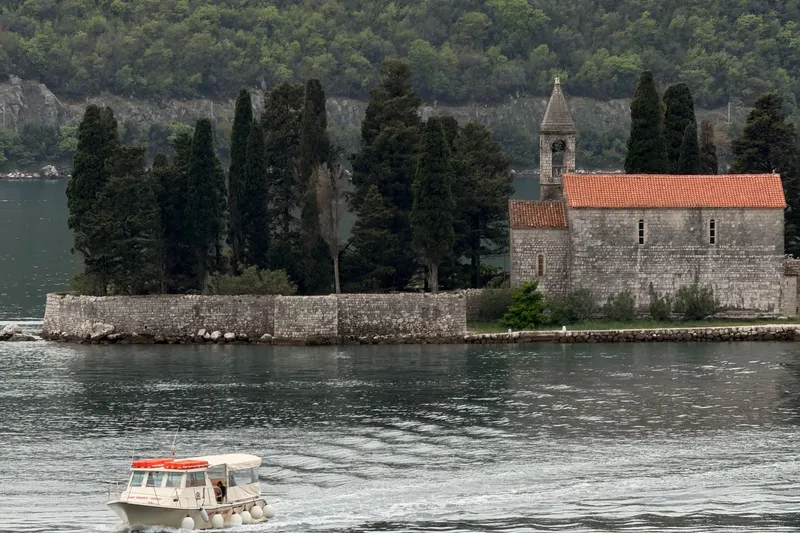
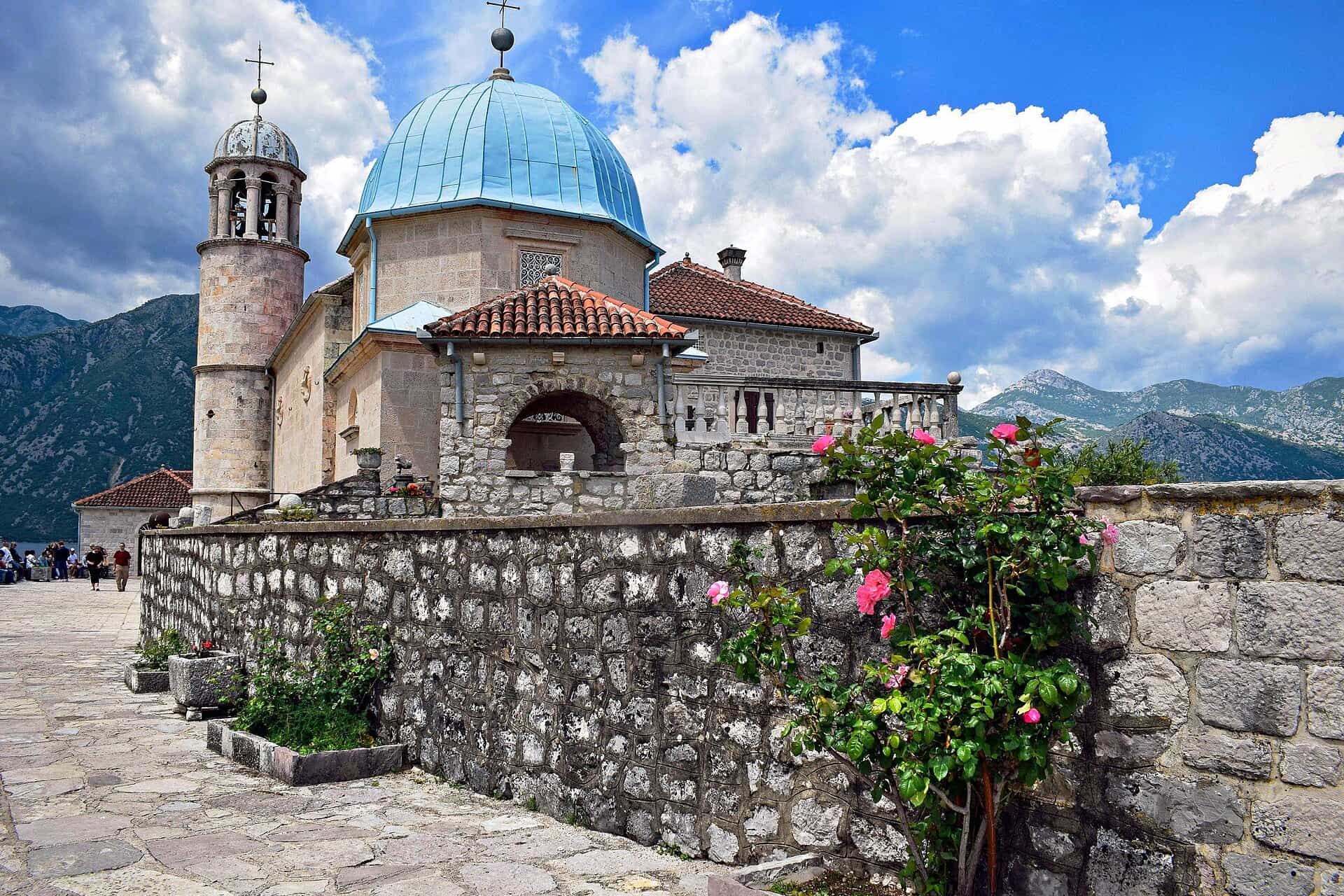
Photo: Jocelyn Erskine-Kellie · CC BY-SA 4.0
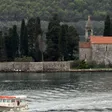
Our Lady of the Rocks (Gospa od Škrpjela) is the man-made islet off Perast in the Bay of Kotor, in the municipality of Kotor. For centuries the people of Perast sank stones and worn-out sailing ships around a crag in the bay until there was ground enough for a church, and the church's main altar stands over the spot where, by legend, the Mortešić brothers found a painting of the Mother of God in 1452. Beside the church is a small museum of Perast's seafaring, and every 22 July the town rows out in decorated boats to throw stones into the sea around the islet, a custom called the fašinada. It is the most visited of the bay's churches and the usual stop on boat tours from Perast and Kotor.
Our Lady of the Rocks tours
Sponsored Kotor: #1 Rated Blue Cave, Secret Tunnels & Lady of the RocksRating 4.8 (3,201)from €49.99
 Blue cave, Mamula island, Submarine tunnels and Our lady of the Rocks (3h)Rating 4.8 (701)from €38.97
 Kotor: Perast & Our Lady of the Rocks Island - Every 2 HoursRating 4.8 (714)from €35
 Kotor: Top Rated Blue Cave, Submarine Tunnels & Lady of the RocksRating 4.7 (193)from €38.08
Tours, ratings and prices: Viator.
All tours in Our Lady of the RocksGetting there
The islet is reached only by boat. Small boats shuttle from the Perast waterfront, and the bay tours from Kotor and Perast call here as well. Perast itself is on the coast road between Kotor and Risan: by car it is 13.8 km and about 22 minutes from Kotor, 20.7 km and about 35 minutes from Tivat, 29.1 km and about 47 minutes from Herceg Novi, 37.6 km and about 53 minutes from Budva and 87.9 km and about 1 hour 54 minutes from Podgorica. These are free-flow driving times with no allowance for summer traffic along the bay or the queue at the Kamenari-Lepetane ferry.
Tickets and hours
Entry to the church and the museum is paid, and the boat from Perast is paid separately; neither is set by an official tariff, so take the price from the boatmen on the waterfront and at the museum door. There are no posted opening hours either; the boats run while there are passengers, and the museum is a working part of a Catholic sanctuary, not a gallery with fixed hours.
What to see
- The church, with the main altar built above the crag of the 1452 legend. The painting of the Mother of God that the Mortešić brothers are said to have found is the reason the islet exists.
- The paintings of Tripo Kokolja, the Baroque painter from Perast, whose cycle covers the walls and ceiling; 68 canvases are usually counted.
- The silver votive plates around the altar, offerings from Perast's seafaring families.
- The museum in the building beside the church, an archaeological and ethnographic collection: finds from the bay, paintings of Perast ships, ship equipment and navigational instruments.
- Hijacinta Kunić's embroidery, kept in the museum: an embroidered picture of the church's altar that the Perast woman worked partly with her own hair.
The islet's authenticity, rarity and state of preservation are among the reasons the bay was inscribed as the Natural and Culturo-Historical Region of Kotor, a UNESCO World Heritage site since 1979.
The fašinada
Every 22 July the men of the old Perast families, the parish priest and members of the Boka Navy row decorated boats from the shore below the town (Pošta, also written Pošova) to the islet and throw stones into the sea around it, repeating the act that built the island. The procession has been held on that date since 1452 and is on Montenegro's list of national intangible cultural heritage since 2013. If you want to watch it, the Perast waterfront is the place: the boats leave from there and return there.
History
The islet began as a crag barely above the water. After the 1452 find the people of Perast started heaping stones around it and, over the following centuries, sank old ships loaded with rock to widen the base. A first church stood on the islet by the mid-15th century. Most of the church that stands there now dates from after 1666, and the presbytery under the dome was built in 1720-1725 to plans by the builder Ilija Katičić; the Kokolja paintings belong to the same Baroque period. The silver plates, the ship paintings and the embroidery in the museum all come from Perast's seafaring families.
How long does it take?
The islet is small: the church, the museum beside it and a walk round the shore. Most visitors combine it with the boat trip and a stop in Perast, whose waterfront and church of St Nicholas face the two islands.
SponsoredBay of Kotor boat tourson ViatorSt George, the island next door
A few hundred metres away lies St George, a natural island with a 12th-century church of the same name and the old graveyard where the people of Perast were buried. In 1813, when the people of Perast took the Holy Cross fortress above the town, the French garrison withdrew to St George and set up cannons there.
Nearby
- St George island, the natural island beside it.
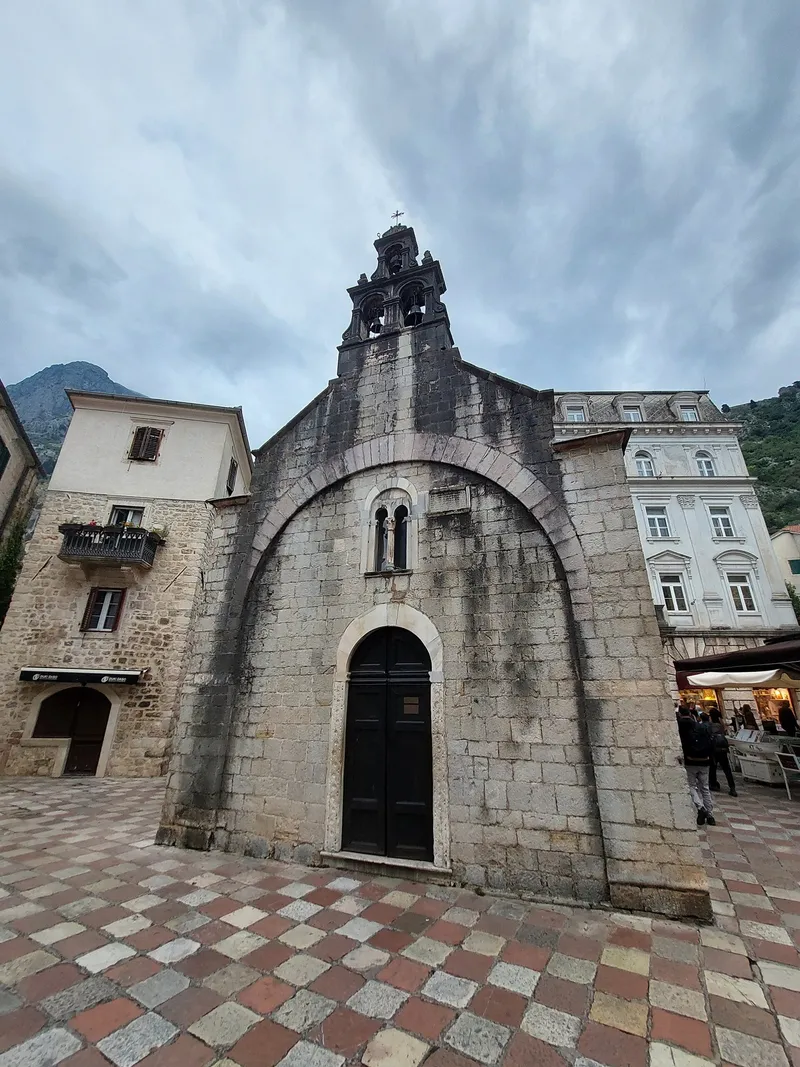
- Kotor walls and the Church of St Luke in Kotor.
- Maritime Museum, Kotor, for the bay's seafaring history.
- Boat tour of the Bay of Kotor, which calls at the islet.

History
1452
The painting on the crag
By legend, the Mortešić brothers found a painting of the Mother of God on the crag. The fašinada has been held every 22 July since then.
15th-18th century
The islet built up
Stones and old sailing ships loaded with rock were sunk around the crag until there was ground for a church. A first church stood here by the mid-15th century; most of the present church dates from after 1666, and its domed presbytery was built in 1720-1725 to plans by Ilija Katičić. The Baroque paintings by Tripo Kokolja of Perast belong to the same period.
1979
UNESCO
The Natural and Culturo-Historical Region of Kotor, which includes Perast and its islands, was inscribed on the World Heritage List.
2013
Fašinada recognised
The fašinada was entered on Montenegro's list of national intangible cultural heritage.
On these trips
- 3 days in Montenegro: Kotor, Lovćen, BudvaDay 2 · Perast, Our Lady of the Rocks and Herceg Novi
- Day trips from Budva: Kotor, Cetinje, SkadarTrip 1 · Kotor, the fortress walk and Perast
- 7 days in Montenegro: coast to Durmitor loopDay 2 · Perast, Our Lady of the Rocks and Herceg Novi
- Day trips from Kotor: 7 trips with drive timesTrip 1 · Perast and Risan by road
- 10 days in Montenegro: the full loop by carDay 2 · Perast, Our Lady of the Rocks and Herceg Novi
Sources
Kotor Tourist Organisation, Our Lady of the Rock and St. George · National Tourism Organisation of Montenegro, Cultural heritage: UNESCO · Visit-montenegro.com, Our Lady of the Rocks (secondary: 68 Kokolja paintings) · Kotor Tourist Organisation, Our Lady of the Rock and St. George; Fašinada (kotor.travel API articles) · Routes computed with OSRM on OpenStreetMap data (ODbL), town centre to the Perast waterfront · Kotor Diocese, Gospa od Škrpjela (first church mid-15th century; present ensemble mostly after 1666; presbytery 1720-1725 by Ilija Katičić), read 2026-11-01 · Horvat-Levaj, K., Ilija Katičić in the Baroque reconstruction of Dubrovnik and Perast, Anali Zavoda za povijesne znanosti HAZU u Dubrovniku 44 (2006): Perast commissioned Katičić in 1720, domed sanctuary