Ulcinj Salina Nature Park
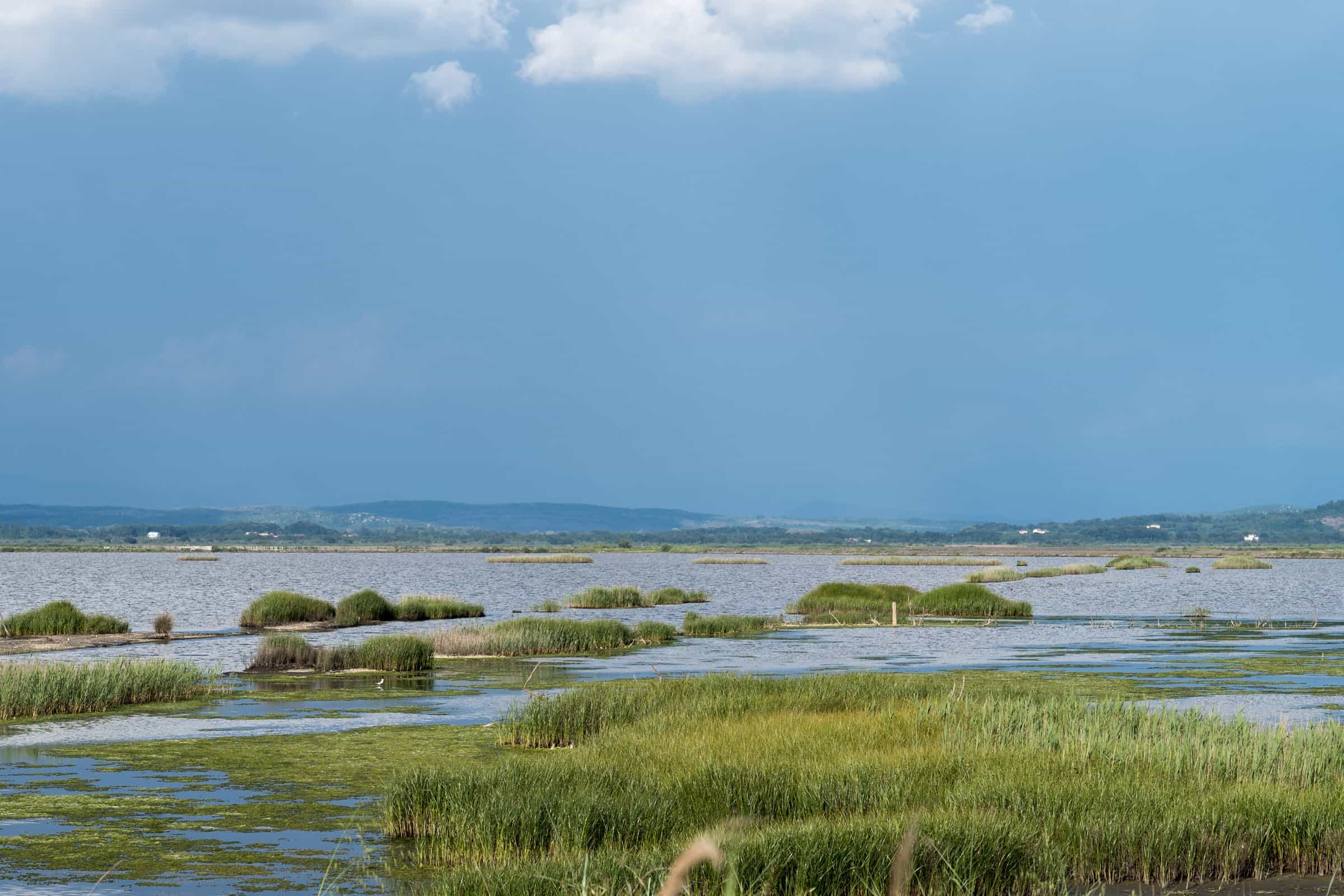
Former salt works in the Bojana delta near Ulcinj, a nature park and Ramsar wetland since 2019: 1,477 ha of pans and dykes, about 250 bird species, flamingos.
Nature park · Ulcinj
Photo: Alexkom000 · CC BY 4.0
Ulcinj Salina (Ulcinjska solana) is a nature park of 1,477 ha of former salt pans in the delta of the Bojana, just outside Ulcinj near the Albanian border. Ulcinj's municipal assembly declared it a nature park on 24 June 2019; on 1 July 2019 it became Ramsar site no. 2399, a wetland of international importance. About 250 bird species have been recorded, the greater flamingo is the park's leading species, and in spring and autumn more than 100,000 waterbirds may use the pans in a single day. The way in is Solanski put, 3.8 km by road from the centre of Ulcinj, and entry is charged.
A salt works turned wetland
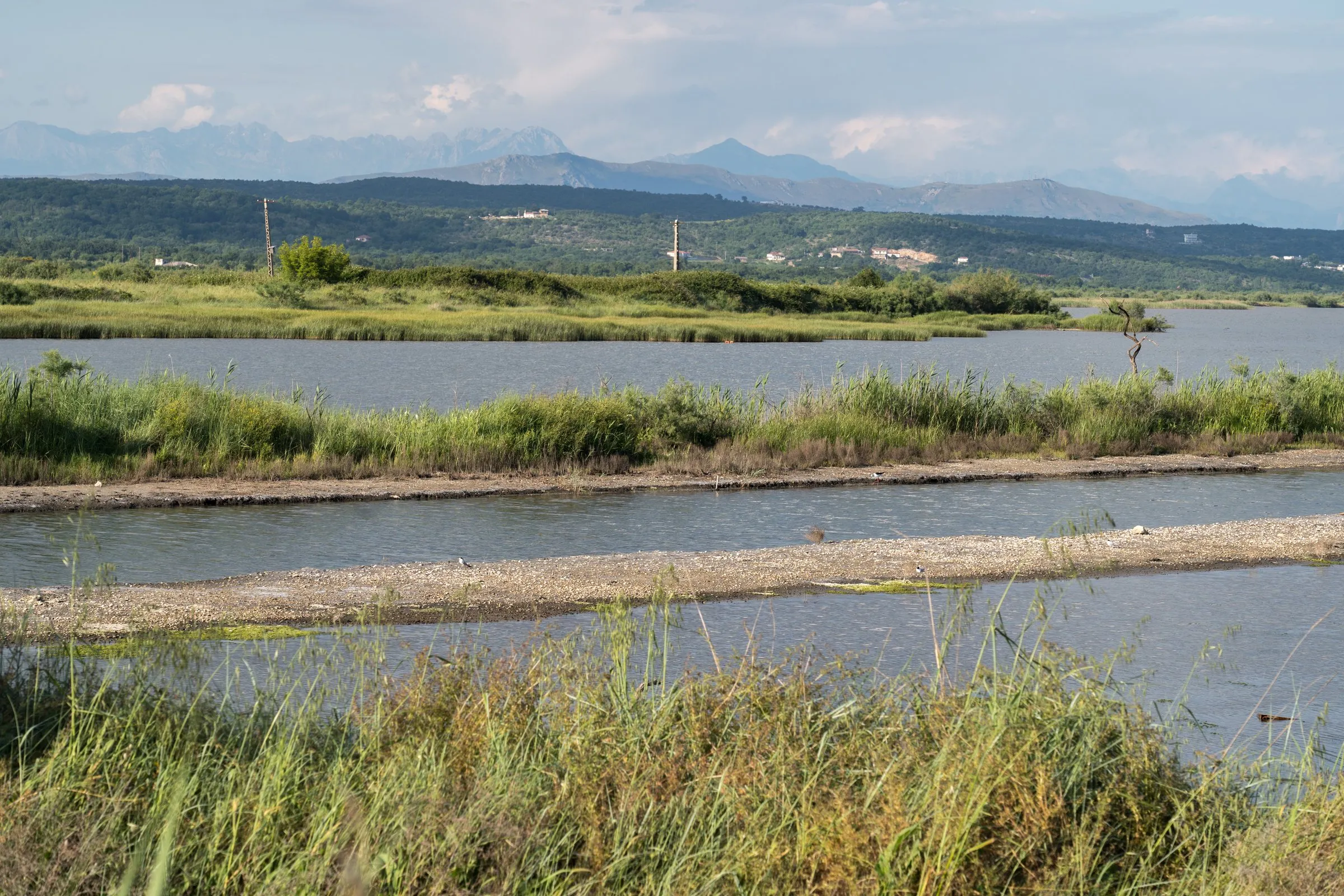
In the 19th century this was Zoganjsko blato, a brackish marsh of about 25 km² that nobody could cross on foot. Drainage began in 1913: the Port Milena canal joined the marsh to the sea and a dyke cut it off from the Bojana, at first to fight malaria. The decision to build a salt works came in 1920, building started in 1927 and the works were finished in 1934; the first salt was harvested in 1935. A refinery followed in 1970, and mechanised production between 1984 and 1994 brought the record harvest, 59,353 tonnes in one year. Salt production stopped in 2013. Ramsar describes the site as the largest salina on the Adriatic.
About 14.5 km² of the park is salt pans, divided by dykes into the old evaporation, crystallisation and reservoir basins. Sea water reaches them through Port Milena, the pumping station at Rt Đerane and a feeder canal; a drainage canal around the whole site keeps out the fresh water of the marshes and fields around it. The protection decision calls the salina an artificial and semi-natural wetland, one that keeps its character only while people go on managing the water.
Birds and other wildlife
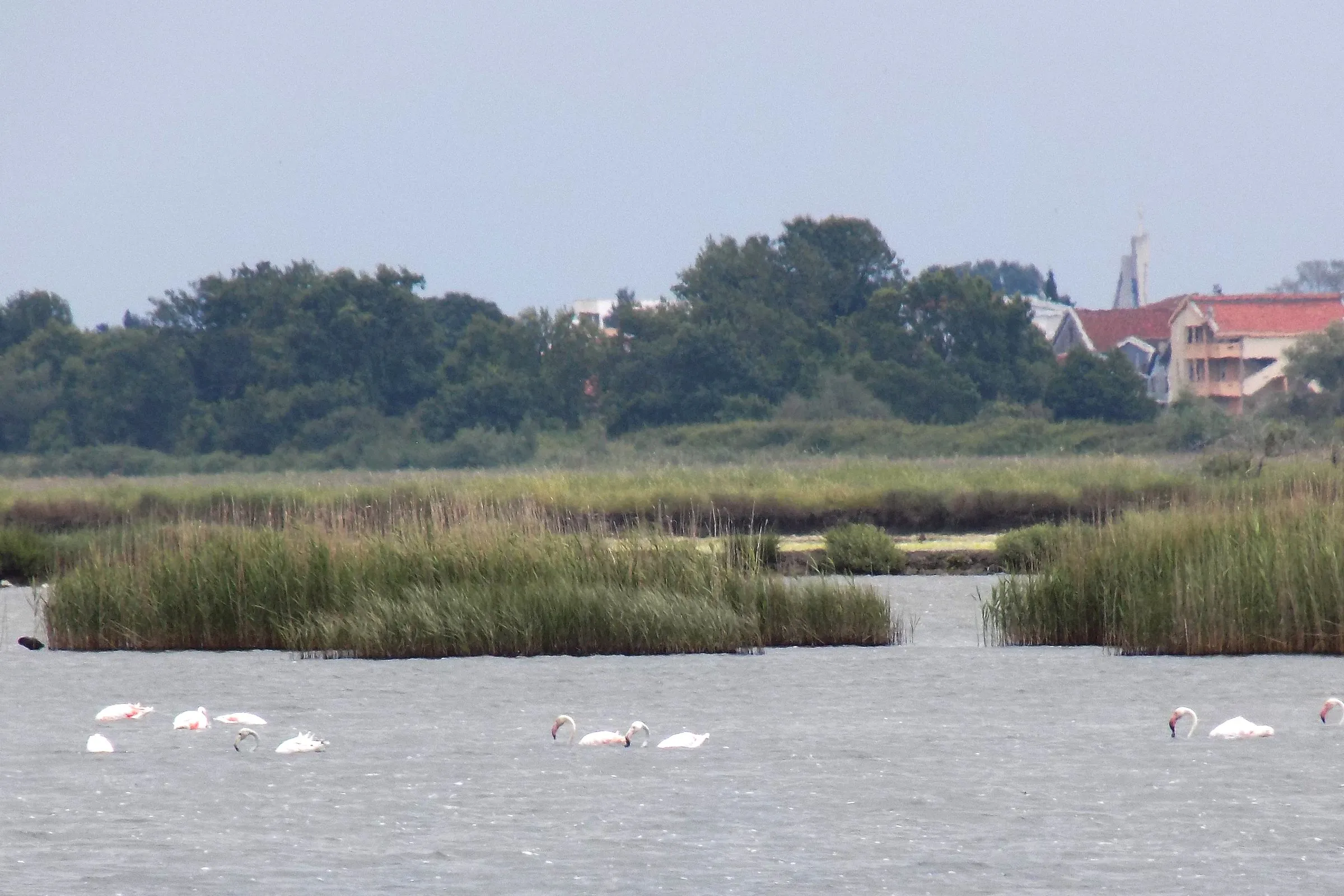
Ramsar ranks the salina as the most important wintering, nesting and feeding site for birds on the eastern Adriatic coast and a key stopover on the Adriatic flyway. Ramsar counts 252 bird species, 20 of them globally threatened; the protection decision gives about 250, with 17 globally threatened and 69 rare. More than 15,000 birds are present on a winter day, and the spring and autumn migrations bring the largest numbers.
The greater flamingo (Phoenicopterus roseus) is the leading species. The decision orders nesting islands for flamingos in the Jezero II pan, islands or rafts for little terns and common terns, nest boxes for common shelducks, a feeding site for Eurasian spoonbills, pumping that keeps pan 6 open for collared pratincoles, and steep earth banks for bee-eaters and sand martins near pumping station 31.
The pans hold the most important population of the Mediterranean killifish (Aphanius fasciatus) on the eastern Adriatic coast. European pond turtles, Eurasian otters and golden jackals live in the park, and Ramsar adds the Albanian water frog. Brine shrimp live in the saltiest pans. Salt-loving plants such as glasswort (Salicornia) and Spergularia salina cover the pan floors; the Salicornia herbacea plant community has been described nowhere else in Montenegro. Since salt making stopped, this vegetation risks giving way to commoner plants, which would change the birdlife too.
Zones and rules for visitors
The park has three zones. Zone I, under strict protection, holds the pans where birds feed, nest and winter: Jezero 1 and 2, Štojski 1 and 2, Zoganjski 1 and 2, part of the evaporation pans and the meadow. A patrol road on a dyke runs around them, and visits there are allowed only in limited numbers. Zone II, under active protection, is the salt-making part: the Kneta pans, the crystallisation pans and the reservoirs. Zone III, for sustainable use, takes in the old administration building and warehouse, the refinery and the visitor spaces.
- Stay on the marked trails; walking off them is banned in zones II and III.
- No cars or motorbikes inside the park: only maintenance and official vehicles may drive, stop or park.
- No hunting, and no catching, chasing or disturbing birds or other animals; nests and eggs stay untouched, above all in the breeding, migration and wintering seasons.
- No picking protected plants, no fires, no dumping of waste.
- The decision provides for a ban on drone and glider flights over the salina; the general rules are on the drone rules page.
- Birdwatching, guiding and filming can carry their own fees, set by the manager.
Visiting
Entry is charged. The decision names two trails: the educational trail is open all year, the ecological trail is closed from November to March. The tracks to pumping station 31 and to the old birdwatching platform are passable. There is no usable platform: of the two built in the past, one collapsed and the other, at the end of the main dyke between the Kneta pans and the evaporation pans, is not safe.
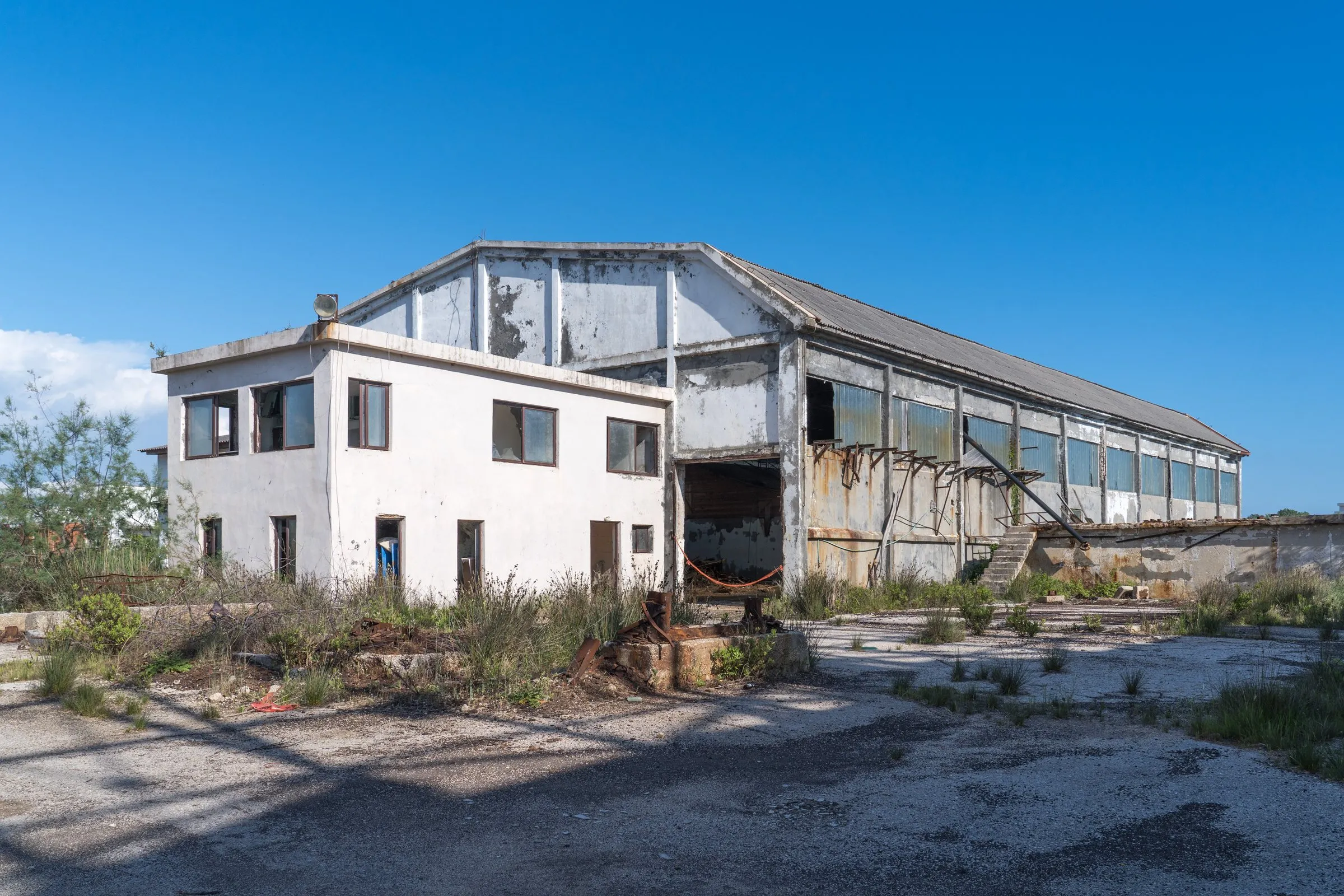
The former workers' canteen, a bird and salt museum from 2006, has been turned by the Centre for Protection and Research of Birds (CZIP) into a visitor information centre with objects from the old factory and sculptures of the salina's birds. No guide or printed map is offered at the entrance; nature NGOs and local guides run guided days and school trips, often on dates such as World Wetlands Day. One tourist sign stands on the road, at the turn onto Solanski put, and online map pins do not mark the entrance: follow Solanski put, not a pin in the middle of the pans.
When to go
Spring and autumn are the migration seasons, when more than 100,000 waterbirds may stop on a single day to feed and rest. In winter more than 15,000 birds are present every day. Bird ringing runs in September and October, during the autumn migration. From November to March only the educational trail is open.
Getting there
The salina lies between Ulcinj, the Bojana and the Albanian border, and Solanski put is the road in. Distances by road to the salina buildings at the end of Solanski put:
Velika plaža and Ada Bojana are the beaches on the same stretch of coast.
Protection and management
Before the state protected the salina, the salt company did: a workers' council banned hunting in 1984, and in 2004 the company board declared the site a private nature park and closed it to hunting, fishing and visitors. It has been an Important Bird Area since 1989, a nature park and a Ramsar site since 2019 and a candidate Emerald site together with Velika plaža, and in 2026 it was proposed for the Natura 2000 network as part of the Bojana sites.
The national parks enterprise, JP Nacionalni parkovi Crne Gore, has run the salina since 2016 under a lease of the property of the bankrupt salt company AD Solana "Bajo Sekulić". A 2025 amendment of the declaration hands management to a company founded jointly by the Government and Ulcinj municipality; the two signed the founding contract on 30 January 2026. The management plan for 2026-2030 aims to bring back traditional, non-industrial salt making by 2035. The other coastal wetland is Tivatska solila in Tivat; the lake upstream is Skadar Lake National Park.
Questions
Are there flamingos at Ulcinj Salina?
Yes, the greater flamingo is the leading bird species of Ulcinj Salina, and the park's protection decision orders nesting islands for it in the Jezero II pan.
Can you visit Ulcinj Salina?
Yes, Ulcinj Salina is open to visitors on its marked trails and entry is charged; the educational trail is open all year, while the ecological trail closes from November to March.
When is the best time to see birds at Ulcinj Salina?
Spring and autumn migration is the best time at Ulcinj Salina, when more than 100,000 waterbirds may use the pans in one day; in winter more than 15,000 birds are present daily.
How far is Ulcinj Salina from Ulcinj?
Ulcinj Salina is 3.8 km by road from the centre of Ulcinj, about 9 minutes by car, at the end of Solanski put.
Can you fly a drone over Ulcinj Salina?
No, the decision protecting Ulcinj Salina provides for a ban on drone and glider flights over the salt pans.
Is Ulcinj Salina a national park?
No, Ulcinj Salina is a nature park declared by Ulcinj municipality in 2019 and a Ramsar wetland; the national parks enterprise has run it under a lease since 2016.
Closest places
 Ženska plaža (Women's Beach)Beach4 km · 10 min
 Clock tower (Sahat kula), UlcinjMonument4.5 km · 9 min
 Pasha's Mosque and the hammam, UlcinjMonument5 km · 10 min
 Mala plaža (Small Beach), UlcinjBeach5.1 km · 10 min
 Church-Mosque and Ulcinj MuseumMonument5.3 km · 11 min
 Ulcinj Old Town and Balšić TowerMonument5.3 km · 11 min
More nature parks
Nearest by road first


Sources
Ulcinj municipal assembly, Decision declaring Ulcinjska solana Nature Park, no. 02-126/19-24, 24 June 2019 (PDF) · JP Nacionalni parkovi Crne Gore, Management plan for Ulcinjska solana Nature Park 2026-2030, draft for consultation (DOCX) · Ramsar Sites Information Service, annotated list for Montenegro (Ulcinj Salina, site 2399) · OSRM car routes on OpenStreetMap data (ODbL), times without traffic