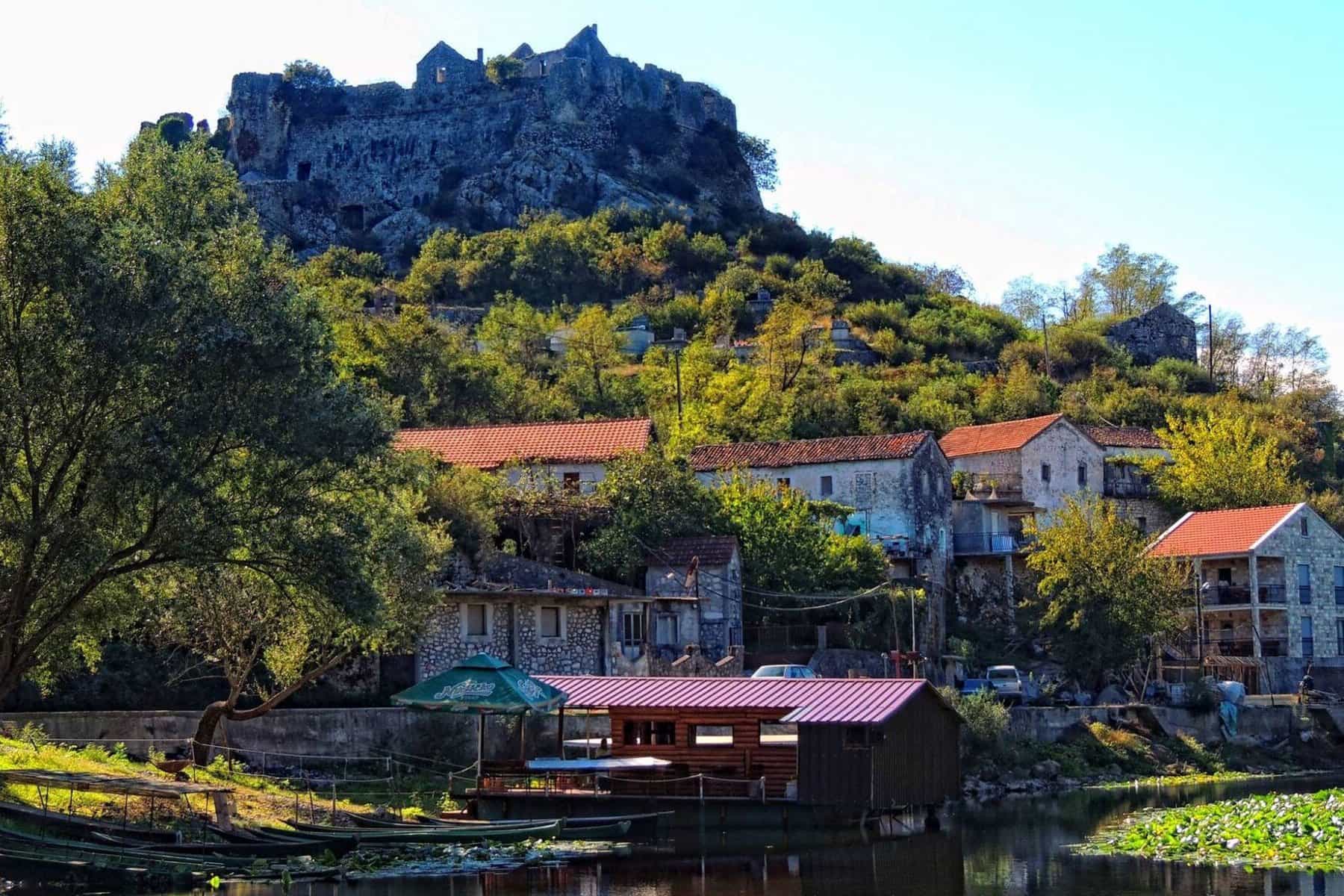
Žabljak Crnojevića fortress
Ruined 15th-century seat of the Crnojević lords on a hill above Skadar Lake, an Ottoman border fort until 1878
Medieval and Ottoman fortress with lower town · Hill above the Morača delta
Photo: Zoran Kurelić Rabko · CC BY-SA 3.0
Žabljak Crnojevića is a ruined medieval fortress on a conical hill above the Morača delta, on the north shore of Skadar Lake inside the national park. It was the seat of the Crnojević lords of Zeta in the 15th century, before Ivan Crnojević moved his capital to Cetinje, and then an Ottoman border fort for four hundred years. You come for the walls, up to 15 m high and 2 m thick, the semicircular main tower and the wide view over the lake. It is an unstaffed ruin reached by car from Golubovci in about 26 minutes, with a walk up at the end. Parts of the wall have collapsed; keep to what is safely reachable.
What you see
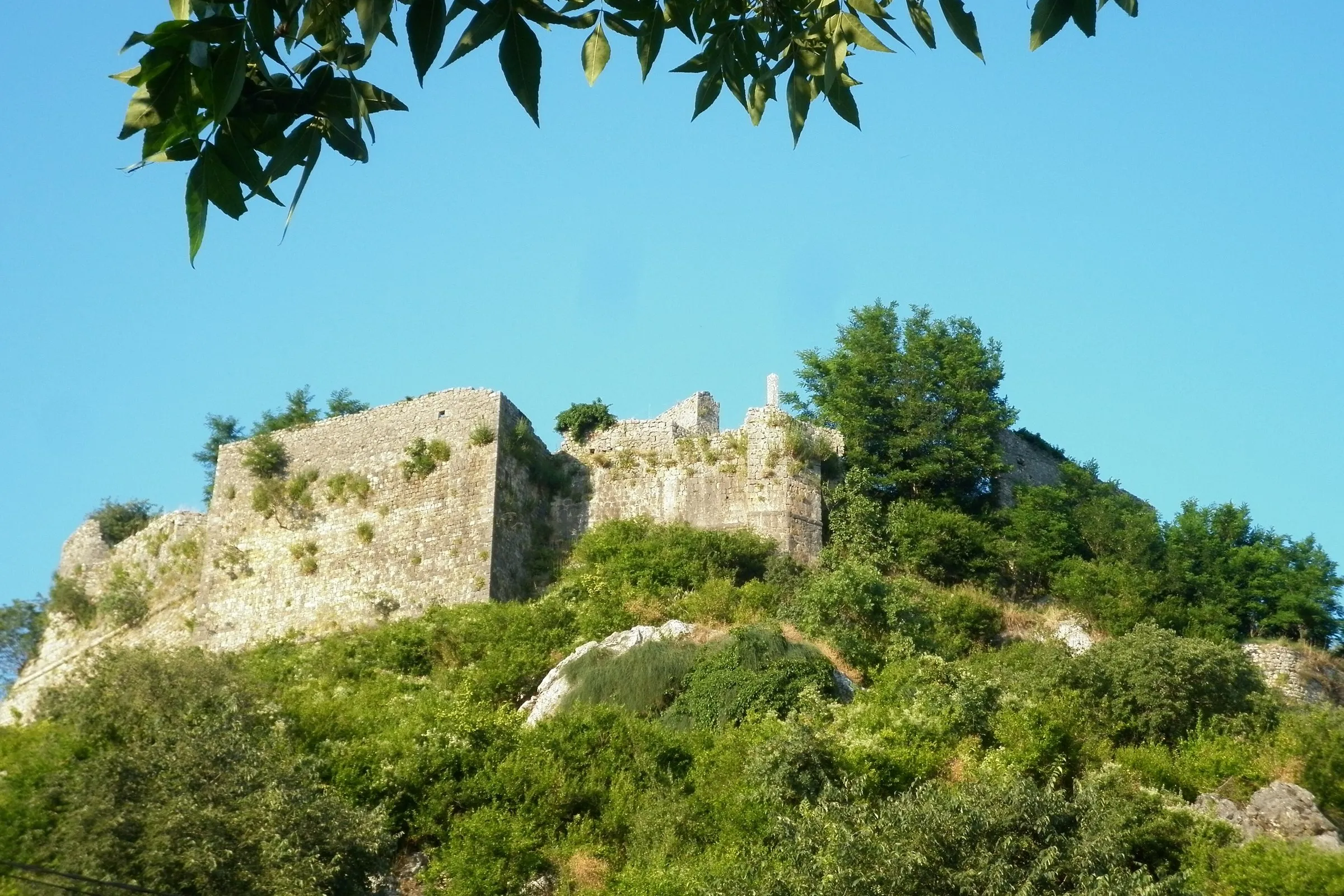
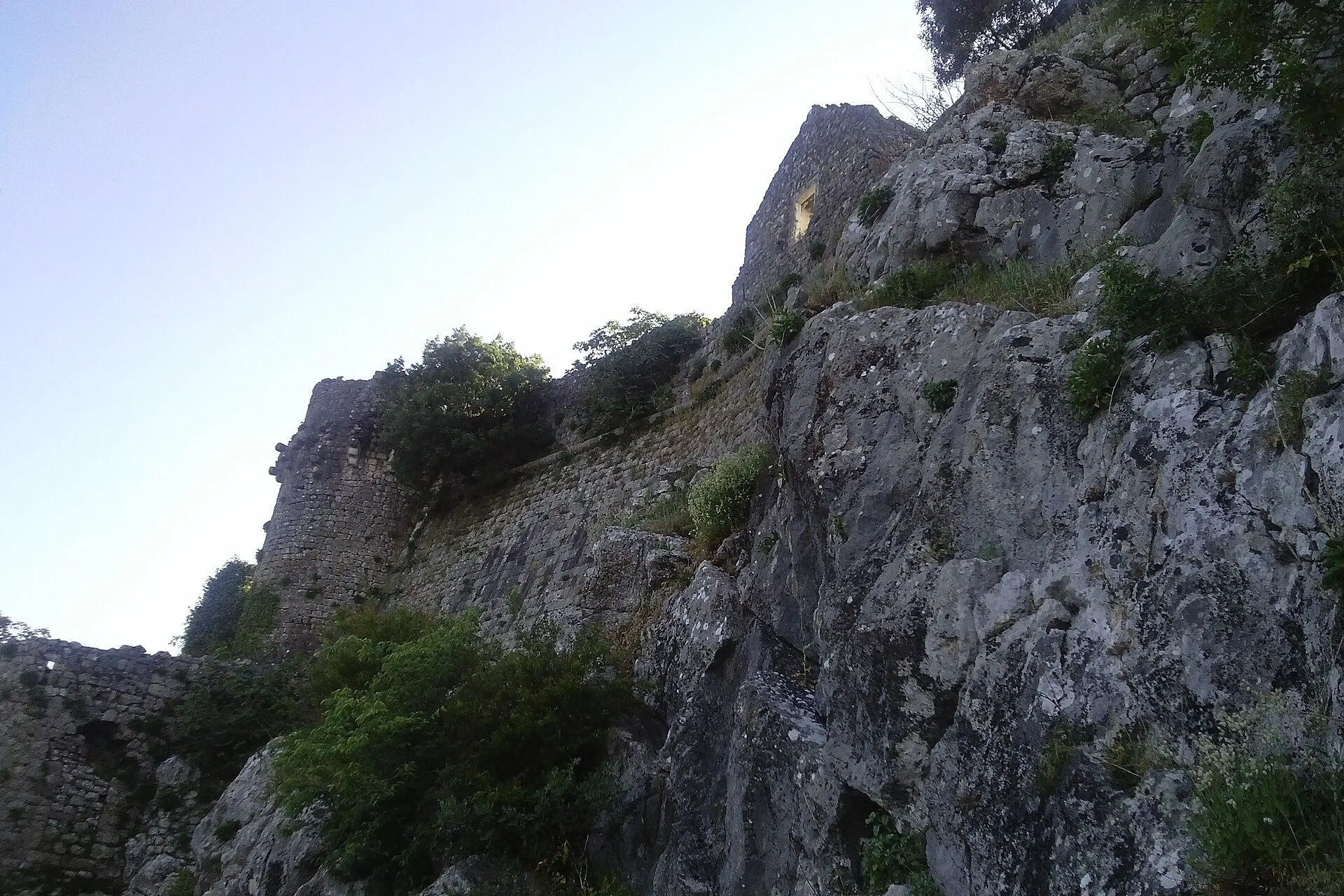
- The walls enclose a plateau of about 1,500 m² on top of the hill. Ramparts rise up to 15 m and are 2 m thick, with six towers. The older parts are hewn stone in lime mortar from the Ottoman rebuilding; the newer parts show Venetian masonry traits. Nothing from the Crnojević period survives above ground: the fortress you see is Ottoman in form.
- The main tower, semicircular, on a rock, with windows, gun loops and machicolations.
- The entrance: a vaulted passage with stairs, the town gate with a landing, and a stair up to the plateau. The threshold and lintel of the oldest gate survive.
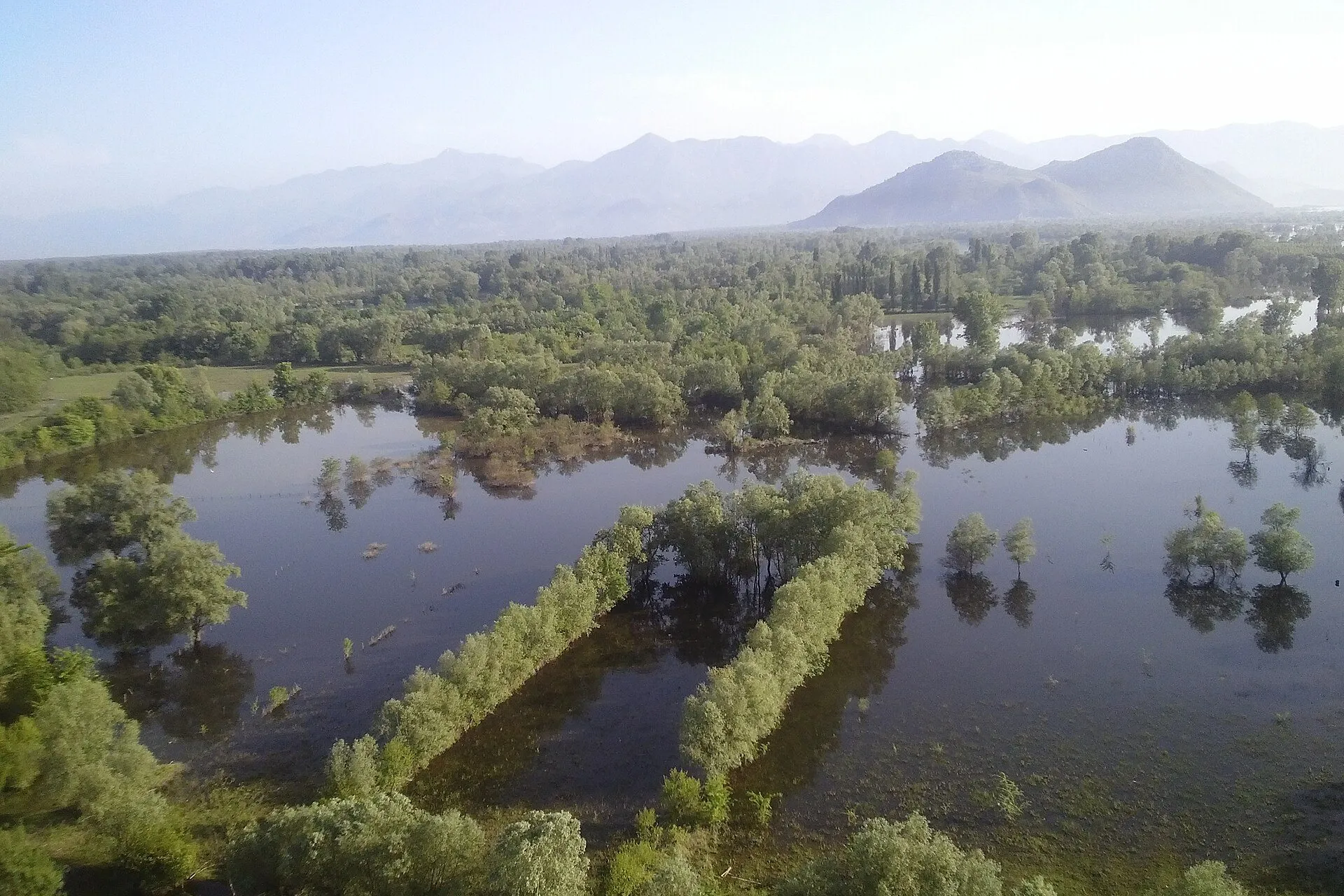
- The view over Skadar Lake and the Morača delta.
- The village of Žabljak Crnojevića below the hill, with 26 residents, and the Church of St George built in 1886 near the site of the former mosque.
Much of the wall has collapsed and not every part of the fortress can be reached safely. There is no staff, fence or published safety signage; take care near the edges, especially with children.
History in short
The first walls on the hill probably date from the early Middle Ages. From 1403 to 1435 it was the seat of Lješ Crnojević, then the capital of Stefan Crnojević, lord of Upper Zeta, who strengthened it with Venetian help. Ivan Crnojević succeeded him in 1465; the complex then held the Crnojević court, the Church of St George, a cistern and housing for officials and the garrison.
In 1475, expecting to lose Žabljak, Ivan built a smaller fort and monastery at Obod above Rijeka Crnojevića and moved his seat there; the Ottomans took Žabljak the same year. Ivan briefly retook it with Venetian help in 1481, but in 1482 the Ottomans took it again and held it for four centuries. The church became a mosque and the court a barracks. A walled town (podgrađe) grew below the fortress: about 50 houses in 1582 and 250 homes in 1614, a trade and market centre.
Montenegrin forces freed the fortress in 1835 under Petar II Petrović Njegoš, but it was returned to the Ottomans under Russian pressure; the Ottomans then repaired the walls and raised the north side by a metre. It was freed again in 1852 under Prince Danilo and again returned; the border of 1859 ran just below the settlement. Only in 1878, after the Congress of Berlin, did Žabljak finally become part of Montenegro. Settlers from Ceklin came, the mosque in the lower town was pulled down and the Church of St George was built near it in 1886. Under the Kingdom of Yugoslavia a gendarmerie post stood in the fortress, later a school; it was abandoned probably by the late 1970s. It has been a protected cultural property since 1948.
Getting there
The fortress is reached from the Zeta plain. Drive times without traffic to the hill: from Zeta (Golubovci) 10.9 km, about 26 minutes; from Podgorica 21.8 km, about 38 minutes; from Cetinje, which administers the site, 47.5 km. The last stretch is on foot up the hill. No official description of the path or parking is published; ask at the national park visitor centre or in Golubovci. The park also marks a mountain-bike route from Dodoši to Žabljak Crnojevića, and boat tours on the lake include the fortress as a stop.
Visiting
Žabljak Crnojevića is an open, unstaffed ruin. No ticket, opening hours or visiting rules are published; check with the national park or local guides before you go, and wear shoes you can scramble in.
Nearby
- Zeta (Golubovci), 10.9 km by road, about 26 minutes.
- Skadar Lake National Park and Skadar Lake.
- Skadar Lake viewpoints.
- Kayaking on Skadar Lake.
- Virpazar, the lake's main boat harbour.
- Rijeka Crnojevića, where Ivan Crnojević built his fort at Obod in 1475.
- Monument to Ivan Crnojević in Cetinje.
Questions
What was Žabljak Crnojevića? Žabljak Crnojevića was the seat of the Crnojević lords of Zeta in the 15th century, from Lješ Crnojević in 1403 to Ivan Crnojević, who left it for Obod in 1475 as the Ottomans closed in.
Is Žabljak Crnojevića free to visit? Žabljak Crnojevića is an unstaffed open ruin with no published ticket or hours; check with the national park before you go.
How do you get to Žabljak Crnojevića? Žabljak Crnojevića is 10.9 km from Golubovci (Zeta) and 21.8 km from Podgorica by road, about 26 and 38 minutes, with a walk up the hill at the end.
Is Žabljak Crnojevića safe to explore? Žabljak Crnojevića has collapsed sections of wall and no barriers, so not every part can be reached safely; stay on firm ground and away from the edges.
History
1403-1465
Crnojević seat
Seat of Lješ Crnojević, then capital of Stefan Crnojević, lord of Upper Zeta, strengthened with Venetian help.
1465
Ivan Crnojević
Ivan Crnojević succeeds Stefan; the fortress holds the court, the Church of St George, a cistern and quarters for officials and garrison.
1475-1482
Ottoman conquest
Ivan moves his seat to Obod at Rijeka Crnojevića; the Ottomans take Žabljak. Retaken in 1481, lost again in 1482 for four centuries; the church becomes a mosque.
1582-1614
The lower town
A walled lower town grows: about 50 houses in 1582, 250 homes in 1614.
1835-1886
Border fort and liberation
Freed under Njegoš in 1835 and under Prince Danilo in 1852, each time returned; the 1859 border runs just below the settlement. Finally Montenegrin after the Congress of Berlin; the Church of St George is built in 1886.
20th century
Abandonment
Gendarmerie post, then a school; abandoned probably by the late 1970s. Protected cultural property since 1948.
More fortresses


Sources
Government of Montenegro, Studija lokacije za područje Žabljak Crnojevića (history and description) · National Parks of Montenegro, Skadar Lake management plan 2026-2030 (protection since 1948, village population, MTB route) · National Tourism Organisation, Fortresses (ramparts, towers, masonry) · OpenStreetMap relation 15505766, ODbL · OSRM routing (OpenStreetMap data, ODbL)