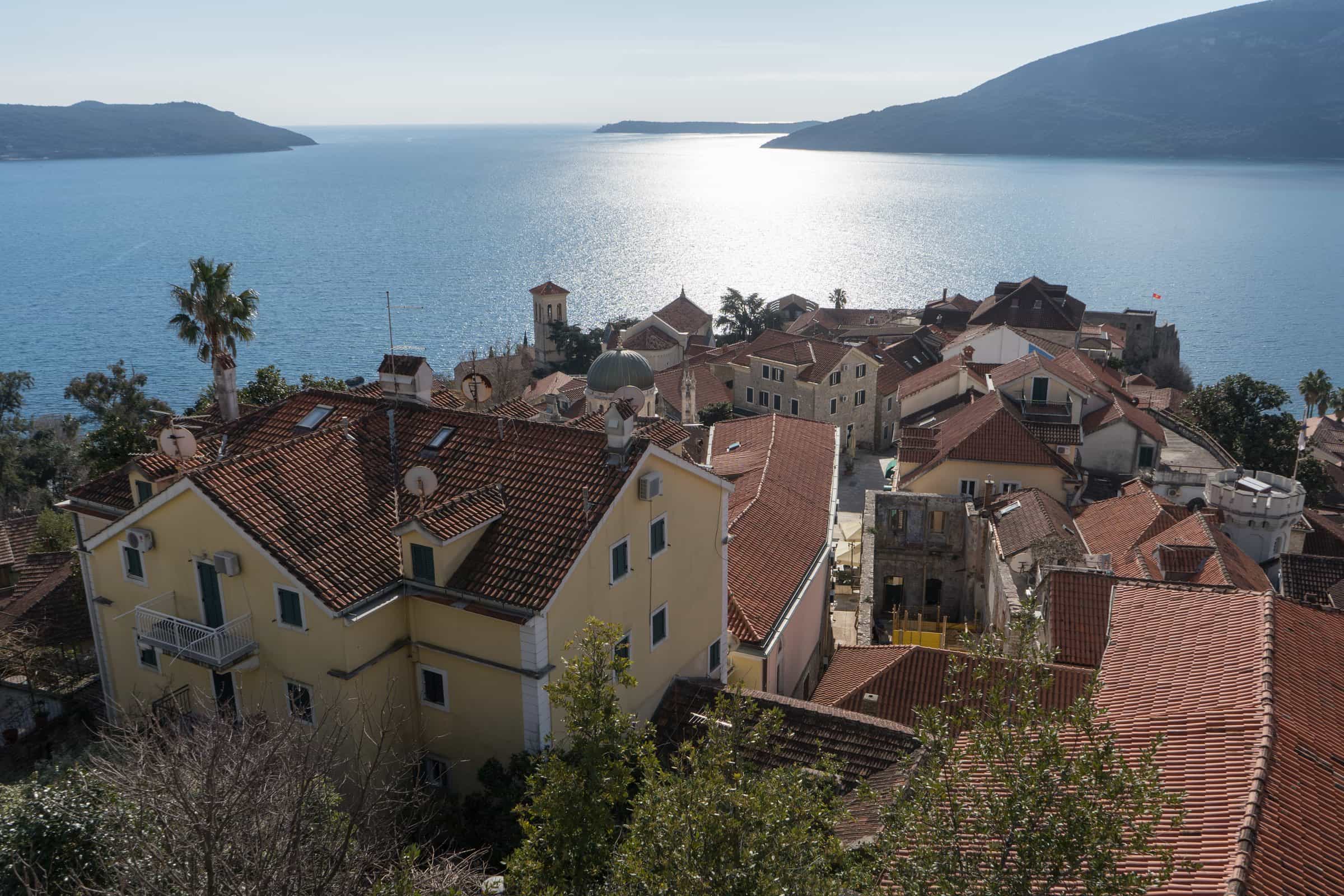
Herceg Novi Old Town
The walled town of 1382 between Kanli Kula and Forte Mare, entered under the clock tower, with the churches of St Michael and St Jerome
Walled old town between two fortresses · Herceg Novi town centre
Photo: Alexkom000 · CC BY 4.0
Herceg Novi Old Town is the walled core of Herceg Novi, founded in 1382 and built on a steep slope between Kanli Kula at the top and Forte Mare by the sea. You enter under the clock tower, climb stepped lanes to the palm-lined square of Trg Herceg Stjepana with the Church of St Michael the Archangel, and pass the Church of St Jerome, the town's patron, on the way down. Individual visitors pay nothing to walk in; organised groups pay a €1 excursion tax per person. The two fortresses have their own tickets.
What you see
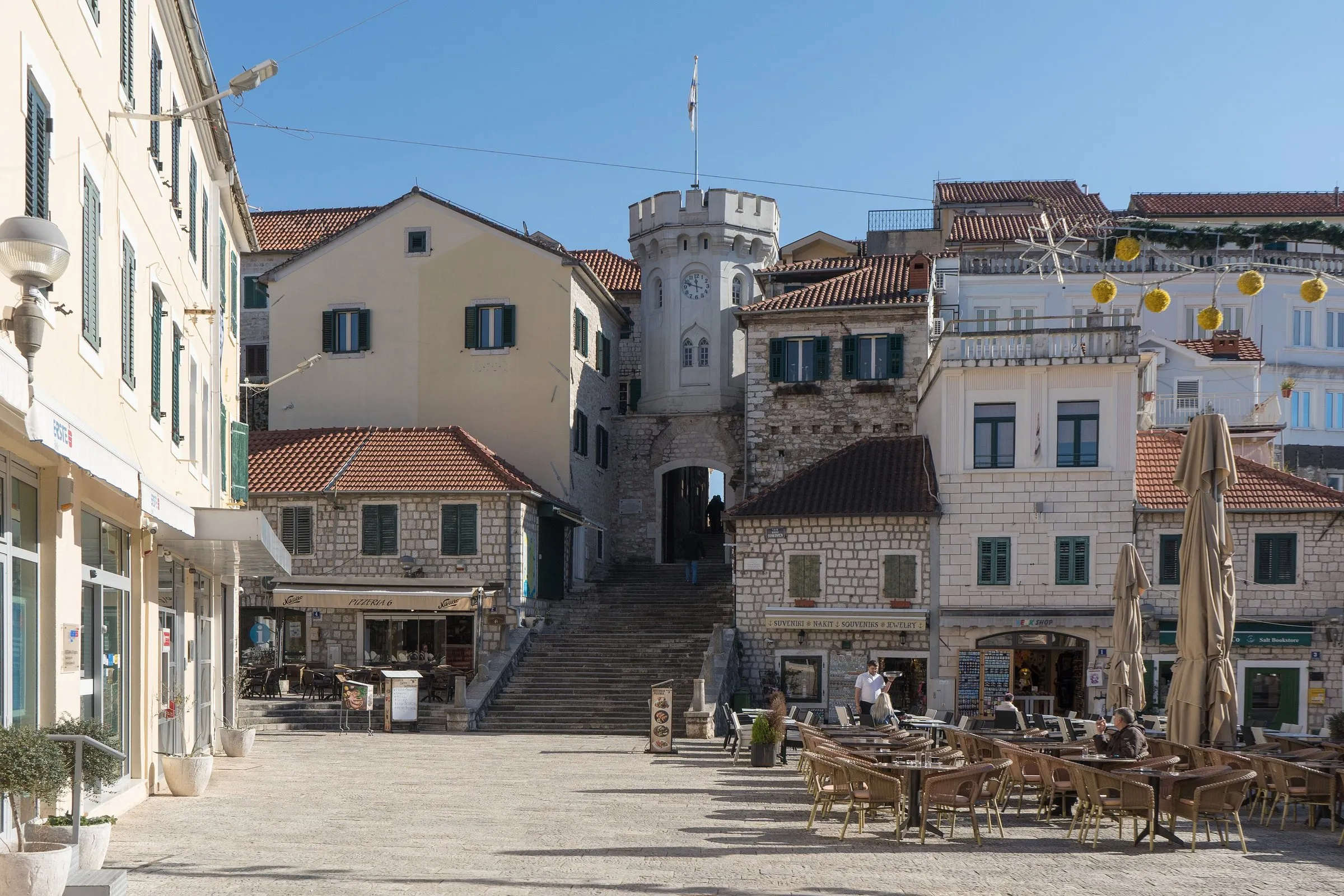
- The clock tower (Sat kula), the gate of the Old Town, built in 1667, with the Black Madonna in its passage. Own page: Clock tower, Herceg Novi.
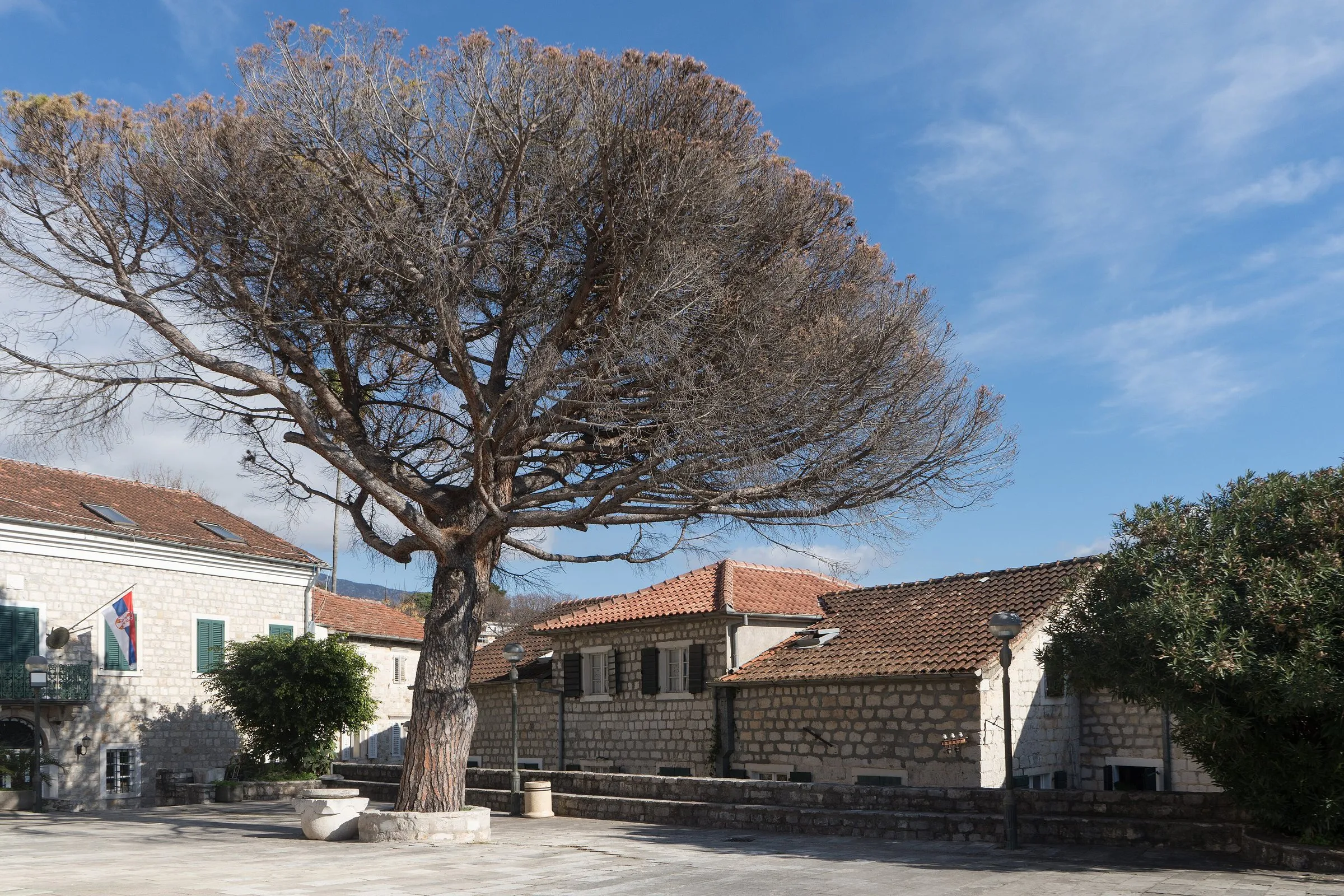
- Trg Herceg Stjepana, known as Belavista for its view: stone paving and palms about a hundred years old along all four sides.
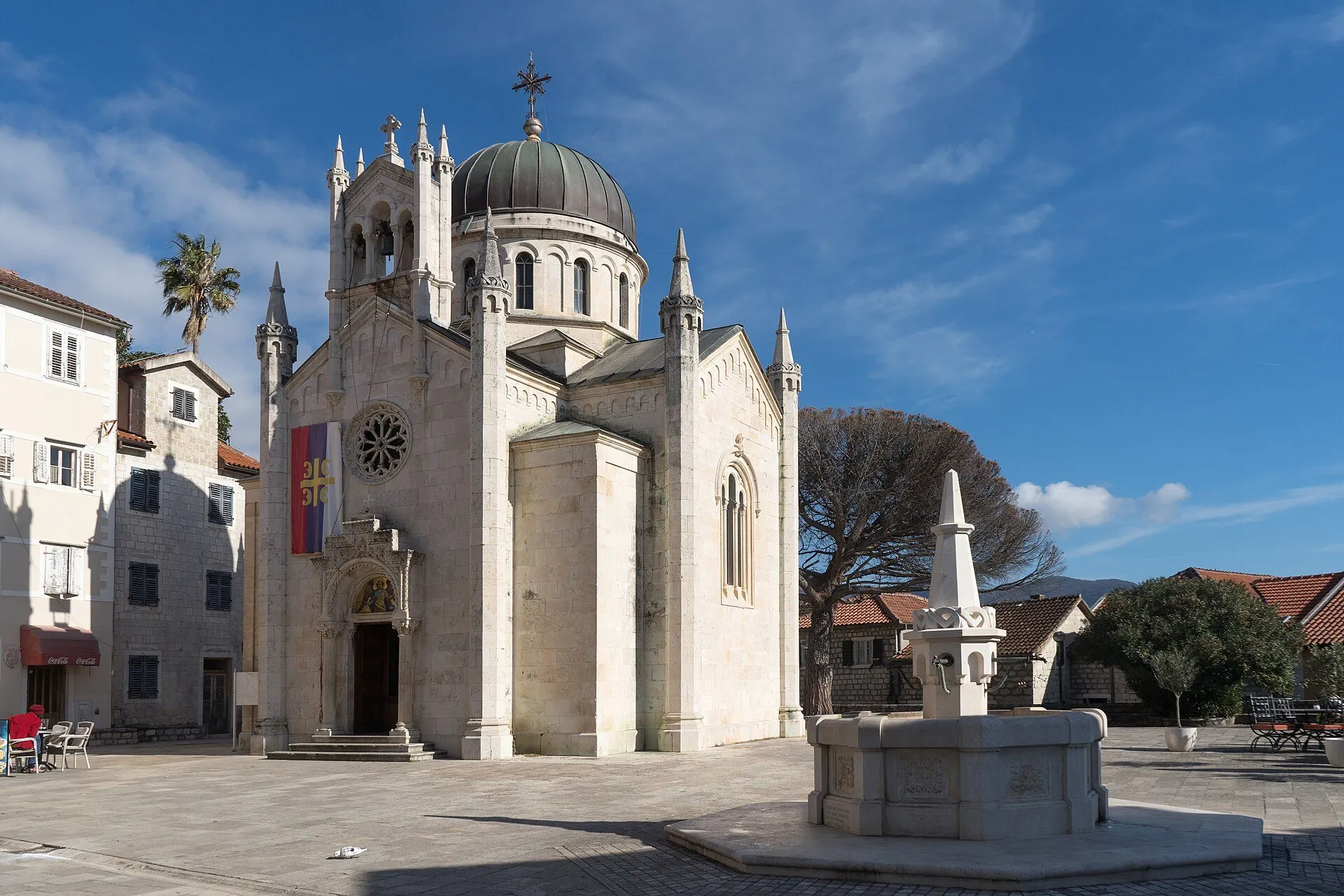
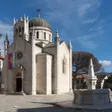
- The Church of St Michael the Archangel on the square: begun in 1883, raised by 1905 to a design by Milan Karlovac and consecrated in 1911. Greek-cross plan in Korčula stone, a Byzantine layout with Romanesque-Gothic and Islamic decoration, a marble iconostasis by the master Bilinić of Split and icons by the Czech painter Franjo Ciglar. Liturgy on Sundays and holidays at 10:00; on Christmas Eve the badnjak is burnt on the square.
- The Church of St Jerome on Trg Miće Pavlovića, dedicated to the town's patron. The first church was begun in 1688, the year after the liberation from the Ottomans, and consecrated by Archbishop Andrija Zmajević of Perast; the present church dates from 1856. It holds an icon of St Anne by Tripo Kokolja and a treasury counted among the richest in Montenegro after Savina. Feast day 30 September.
- Kanli Kula, the Ottoman fortress at the northernmost point of the Old Town, built in 1539 on the ruins of an older tower, now an open-air stage. Own page: Kanli Kula.
- Forte Mare, the sea fort whose first walls Herceg Stjepan raised in the first half of the 15th century. Own page: Forte Mare.
- The steps. The Old Town is a stack of stepped lanes between the two fortresses; many artists sell their work directly from small galleries along the way.
The Old Town has a small private Mikhail Bulgakov museum, opened on 2 September 2020: personal belongings, manuscripts, photographs and documents of the writer and his family, with costumes and props from stage productions of his works. A bust of Bulgakov was unveiled there in July 2025. Opening hours are not published: check with the local tourist information.
History in short
The Bosnian king Tvrtko I founded a new town in the bay of Topla in 1382 to compete with Dubrovnik in the salt trade; he named it Sveti Stefan, and it was also called Novi, Castrum Novum and Castel Nuovo. The relief at the clock tower records that he laid the foundations in May 1382. The present name comes from Herceg Stjepan Vukčić Kosača, who held court here and died in the town in 1466; he raised the first walls of Forte Mare.
The Ottomans took the town's older tower in January 1482 and later built Kanli Kula on its ruins. After a short Spanish interlude in 1538-1539, Ottoman rule lasted until 1687, when Venice took the town; Venetian rule ended in 1797. Austria held it until 1806, Russia in 1806-1807 and France until 1814. The town was liberated on 28 October 1944. The earthquake of 1979 damaged Kanli Kula and Forte Mare; both were repaired.
Getting there
The Old Town starts at the clock tower on the main street through the town centre and runs downhill to the sea. Its lanes are pedestrian and stepped. For parking and buses see the Herceg Novi page.
Fees and rules
Visitors in organised groups (through agencies or registered providers) pay an excursion tax of €1 per person to enter the Old Town; children under 12 and some other groups are exempt. It is paid at the tourist information bureau on Trg Nikole Đurkovića 1 or at the bureau by the bus station, X Hercegovačke 20. Individual visitors pay no tax. Tickets for Kanli Kula and Forte Mare are on their own pages.
Nearby
- The Pet Danica promenade, on the seafront below the Old Town.
- Španjola fortress on the hill above the town.
- Savina Monastery, 2 km east.
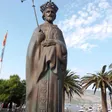
- Monument to King Tvrtko I, the town's founder.
- Herceg Novi City Museum.
- Igalo and its waterfront to the west.
- Orjen, the mountain behind the town.
Questions
Is Herceg Novi Old Town free to enter? Herceg Novi Old Town charges no entry for individual visitors; only organised groups pay a €1 excursion tax per person, and the two fortresses sell their own tickets.
When was Herceg Novi founded? Herceg Novi was founded in 1382 by the Bosnian king Tvrtko I, who laid the foundations in May of that year and named the town Sveti Stefan.
Why is it called Herceg Novi? Herceg Novi takes its name from Herceg Stjepan Vukčić Kosača, who held court in the town and died there in 1466.
What is there to see in Herceg Novi Old Town? Herceg Novi Old Town has the clock tower gate, Trg Herceg Stjepana with the Church of St Michael, the Church of St Jerome, Kanli Kula at the top and Forte Mare by the sea, joined by stepped lanes.
History
May 1382
Founded by Tvrtko I
King Tvrtko I of Bosnia lays the foundations of Sveti Stefan, later Novi, in the bay of Topla to compete with Dubrovnik in the salt trade.
First half of the 15th century
Herceg Stjepan
Herceg Stjepan Vukčić Kosača holds court here and raises the first walls of Forte Mare; he dies in the town in 1466 and gives it its name.
1482-1687
Ottoman town
The Ottomans take the older tower in January 1482 and later build Kanli Kula; a Spanish interlude in 1538-1539; Ottoman rule until 1687.
1687-1814
Venice and after
Venice holds the town until 1797, then Austria, Russia (1806-1807) and France (to 1814); the first Church of St Jerome is begun in 1688.
1883-1979
Modern town
The Church of St Michael the Archangel is built on Trg Herceg Stjepana (1883-1911); the town is liberated on 28 October 1944; the 1979 earthquake damages both fortresses.
More old towns
Nearest by road first


Sources
Herceg Novi Tourist Organisation, Sat kula (clock tower and Old Town excursion tax) · Herceg Novi Tourist Organisation, Crkva Sv. Arhangela Mihaila · Herceg Novi Tourist Organisation, Crkva Sv. Jeronima · Herceg Novi Tourist Organisation, attractions (Kanli kula 1539) · Municipality of Herceg Novi, The history · National Tourism Organisation, Old towns of Montenegro · OpenStreetMap relation 10165033, ODbL · Tourist Organisation Herceg Novi, Mikhail Bulgakov Museum (opened 2 September 2020, collection) · Municipality of Herceg Novi, Otkrivena bista Mihaila Bulgakova u Herceg Novom (7 July 2025)